Flying Termites and Swarm Season: What It Means for Your Home
When you see flying termites (alates) around your home, it usually means a nearby colony may already be feeding on your structure. These dark, straight-bodied insects with equal-length wings swarm in warm, humid weather to start new colonies. Indoors, discarded wings, mud tubes, and hollow-sounding wood are major red flags. Act fast by calling a professional, reducing moisture, and sealing entry points. Next, you’ll see how to spot, time, and prevent termite swarms more effectively.
Key Takeaways
- Flying termites (alates) signal a mature nearby colony; they themselves don’t eat wood, but indicate workers may already be damaging your home.
- Swarming usually occurs in warm, humid weather after rain in spring or late summer, depending on termite species and region.
- Indoor swarmers, discarded wings, mud tubes, or hollow-sounding wood are strong warning signs of an active termite infestation.
- Protect your home by sealing cracks, fixing leaks, improving drainage, removing wood-to-soil contact, and keeping mulch and debris away from the foundation.
- Contact professional pest control promptly for inspection and treatment options, and schedule regular annual inspections to prevent or limit structural damage.
What Flying Termites Are and Why They Swarm
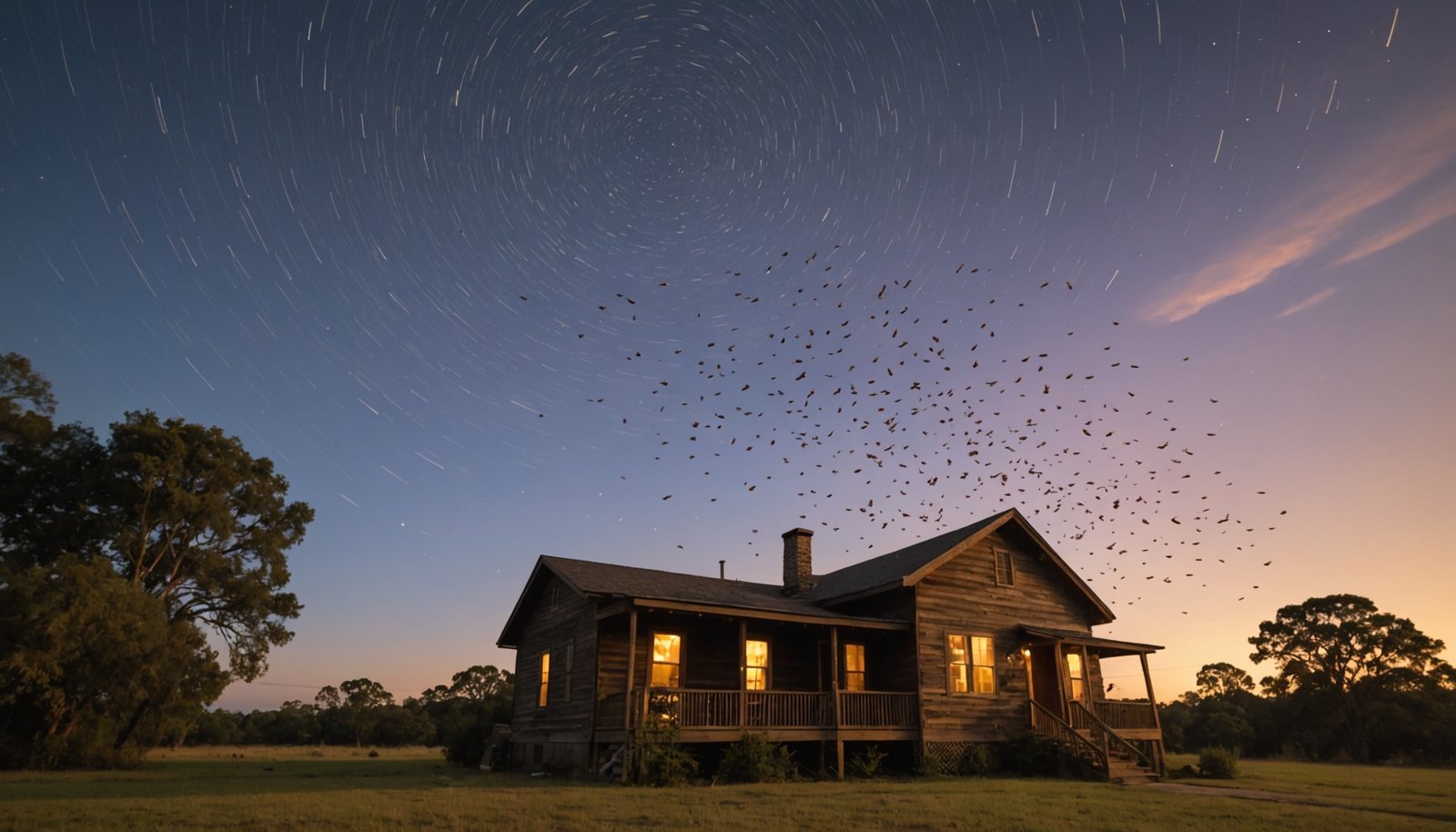
Although they might look like harmless flying ants at first glance, flying termites—called alates—are the reproductive members of a termite colony that emerge in coordinated swarms to start new nests.
Often mistaken for flying ants, alates are swarmers leaving mature colonies to start new termite nests
You’re seeing the colony’s breeders: dark brown, cigar-shaped insects about 3/8 inch long, with straight, bead-like antennae and two pairs of equal-size, translucent wings.
They don’t appear randomly. Swarming serves one purpose: reproduction and dispersal. When a colony reaches maturity—often after at least five years—it releases alates to mate and establish new colonies, increasing genetic diversity and helping the species adapt and spread to new locations. In many temperate areas, these swarms most commonly occur in spring swarming when rising temperatures and soil moisture create ideal conditions.
Warm temperatures, high humidity, and recent rainfall trigger these events, especially when soil temperatures rise above 70°F.
Colonies build swarm tubes as launch sites, then alates take short, weak flights, usually lasting only seconds. Afterward, they shed their wings, pair up, and search on foot for a protected place to start laying eggs.
How to Tell Flying Termites From Ants
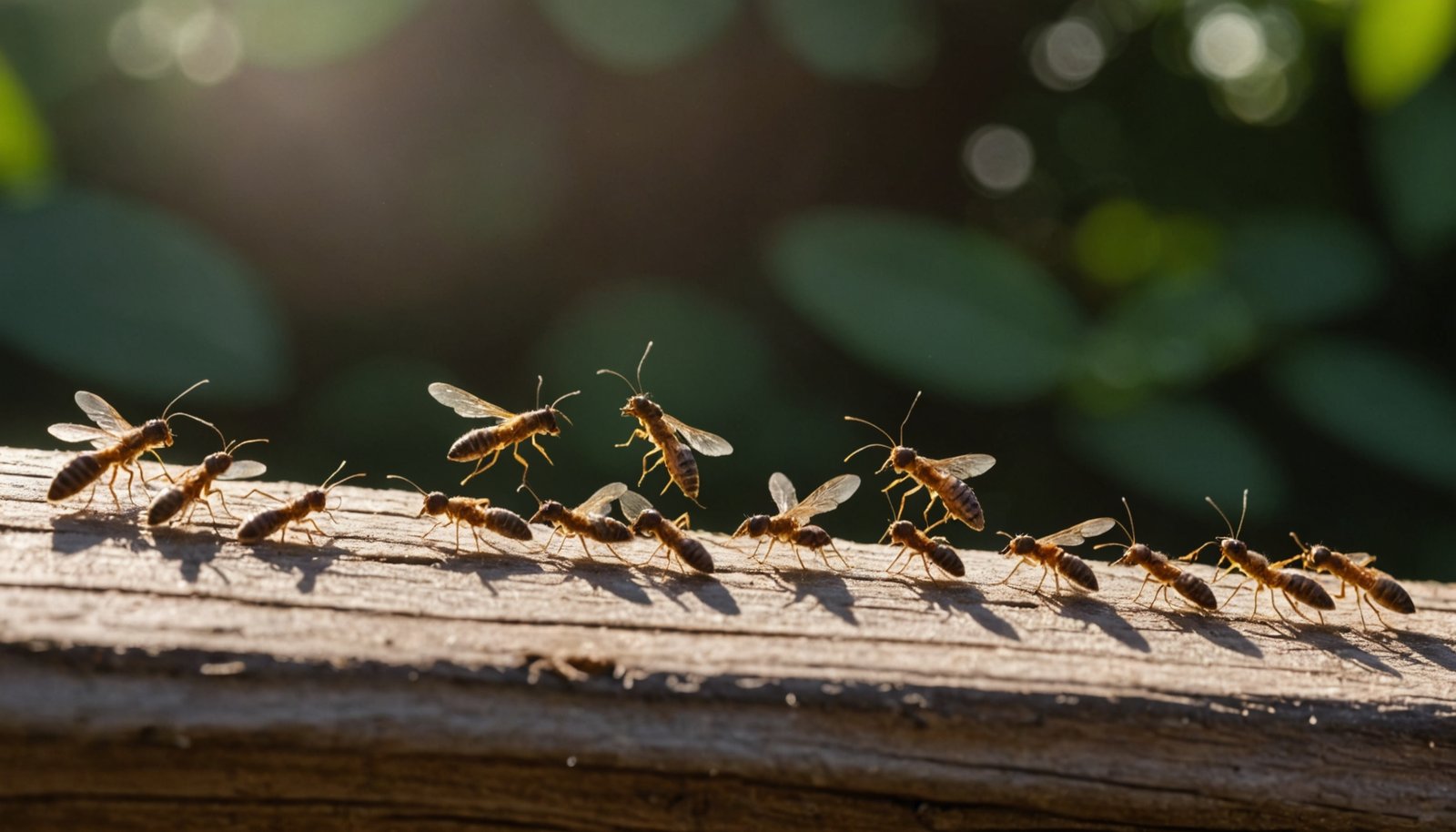
Ever wonder whether those winged insects around your lights are termites or ants? Start by checking the body.
Termite swarmers have straight, tube-like bodies with no pinched waist and a soft feel. Flying ants show three clearly separated segments with a narrow “waist” and a harder body.
Next, look at the antennae.
Termite antennae are straight or slightly curved, bead-like, and shorter. Flying ant antennae bend sharply at about 90 degrees; the first segment is very long and stick-like.
Now examine the wings.
Termites have four wings of equal length, about twice their body size. They’re white, translucent, held flat over the body, and stack neatly. Ants have front wings longer than the back pair, shorter overall, slightly brown or yellow, and held angled above the body. While swarming can look alarming, remember that swarmers themselves are not the ones causing structural damage—that role belongs to the hidden worker termites.
Finally, notice what’s left behind.
Termites shed wings quickly, leaving piles; flying ants keep theirs much longer.
How a Termite Swarm Can Damage Your Home
When you see a termite swarm, you’re actually getting a rare glimpse of a much bigger threat that’s usually hidden inside your walls and foundation. Eastern subterranean termites are responsible for the vast majority of termite-related structural damage in the U.S., causing billions of dollars in losses each year.
Those winged termites may not eat your home themselves, but they signal colonies that feed silently year-round, hollowing wood and weakening key structures.
Hidden Structural Destruction
While flying termites might look harmless, their sudden appearance usually signals a mature colony quietly eating away at your home’s structure. By the time you notice swarmers inside, termites have likely already breached your home’s envelope and begun feeding on hidden wood, floors, and support beams. Even if you only see a few swarmers, they often indicate a mature colony capable of causing significant structural damage if not promptly treated.
You don’t see the workers, but they’re tunneling behind walls and under floors, hollowing out key framing members. Their mud tubes and “swarm castles” may blend in with dirt or resemble water damage, so you underestimate the risk until repairs become extensive and expensive.
To picture what’s happening out of sight, imagine:
- Support beams riddled with maze-like galleries.
- Ceilings and floors slowly sagging and buckling.
- Walls hiding crumbling studs and ruined trim.
Silent Year-Round Feeding
Although swarms grab your attention, termites do their real damage quietly, feeding inside your home day and night all year long. Subterranean workers tunnel in, then eat wood from the inside out, leaving a thin shell that looks sound until it suddenly fails. You won’t hear chewing, feel vibrations, or see obvious damage while they steadily strip away cellulose. As they break down wood and plant matter, termites also contribute to nutrient cycling in the surrounding soil, gradually enriching the ground beneath and around your home.
They stay active year-round. Cold weather may slow them, but it rarely stops feeding, especially in mild or coastal climates. Warm, humid conditions only accelerate growth and consumption.
| Termite Behavior | Impact on Your Home |
|---|---|
| Silent internal feeding | Damage builds with no visible warning |
| Year-round activity | Risk persists well beyond swarm season |
| Protected mud-tube foraging | Hidden access to structural wood |
| Growing, mature colonies | Faster, compounding wood loss over time |
Early Warning Red Flags
Even a brief termite swarm can leave behind clear warning signs that your home’s already under attack. By the time you see flyers, a mature colony may already be tunneling through beams, subfloors, and wall studs.
These early red flags show how fast a swarm can turn into serious structural trouble:
- Swarmers indoors – Flying termites around lights or windows mean they’ve emerged from a nearby nest and are likely already inside walls, weakening supports you can’t see.
- Discarded wings – Piles near sills, doorways, or spider webs act like a calling card that swarmers mated, shed wings, and targeted your home.
- Mud tubes and hollow wood – Pencil-sized tubes and hollow-sounding, blistered wood reveal hidden highways and feeding galleries.
When Termite Swarm Season Starts (And Why It’s Shifting)
Termite swarm season doesn’t hit all at once or in the same way—it rolls out in waves that depend on species, region, and weather. You’ll usually see subterranean termites first, from March into early summer, often on warm, still mornings after rain. Eastern subterranean termites peak in April, then dark Southern species follow in May. Formosan termites typically explode in late spring evenings, especially around May, while drywood termites often wait until late summer and fall.
Where you live matters just as much as what’s in your soil or walls. In the Southeast—Mississippi, Alabama, Georgia, Florida—swarm season starts earlier because warmth and humidity arrive sooner, and parts of the Gulf Coast can see activity almost year‑round.
| Region/Species | Typical Swarm Timing |
|---|---|
| Eastern subterranean | April (mornings) |
| Dark Southern subterranean | May (mornings) |
| Formosan termites | Late spring evenings |
| Drywood termites | Late summer–fall (August–November) |
What to Do Immediately If You See Flying Termites
If you spot flying termites, your first move is to confirm what you’re seeing by checking their straight antennae, thick waist, equal-length wings, and any piles of shed wings.
Once you’re sure they’re termites, you’ll want to protect your home by closing and sealing entry points, reducing outdoor lights, and limiting their access to wood and moisture.
At the same time, you should contact a professional pest control service immediately so they can assess the infestation and recommend urgent treatment.
Confirm They Are Termites
Suddenly notice winged bugs around your lights or windows and aren’t sure what they are? You need to confirm they’re termites, not ants or flies, before you decide what to do next.
Look closely at what you’re seeing:
1. Body and antennae
Check for a straight, beaded antenna, a thick, uniform waist, and a soft body about 1/4–3/8 inch long, tan to black.
2. Wings and leftovers
Termite swarmers have two pairs of equal-length, translucent wings that extend past the body. Look for piles of identical shed wings on windowsills and near doors.
3. Flight and nearby clues
Termites drift and hover, unlike darting flies or ants. Tap nearby wood for hollow sounds and scan for mud tubes.
Protect Home Entry Points
Once you’ve confirmed you’re dealing with swarmers, act fast to shut down their easiest entry points. Start by vacuuming visible swarmers so they don’t spread.
Then seal cracks in walls, roofs, window frames, and foundations. Caulk gaps where siding meets foundations, around sill plates, and along window and door trim. Replace worn weatherstripping and seal around pipes, cables, and other penetrations.
Cut down moisture that draws termites in. Fix leaky plumbing and A/C units, clean gutters, and make sure water drains away from your foundation and roof.
Outside, remove dead wood, stumps, wood mulch against the house, and piles of lumber, paper, or firewood touching soil.
Finally, reduce bright lighting near doors and windows, and use warmer “bug” bulbs on timers.
Call Professional Pest Control
You’ve sealed entry points and cut down moisture, but seeing a burst of flying termites still calls for immediate expert help. Swarmers signal an active colony you can’t reach with sprays or foggers. Instead of panicking, act fast and gather evidence so professionals can respond accurately and quickly.
- Stabilize the situation: Vacuum swarmers, turn off nearby indoor lights, and avoid spraying. Mark swarm entry spots with tape so the technician can find them immediately.
- Document activity: Take close-up photos and save a few swarmers in a sealed container for species identification and treatment planning.
- Call pest control now: Request an urgent inspection, even after hours. Ask about bait systems, liquid barriers, or fumigation if damage appears severe.
How to Protect Your Home Before Next Termite Swarm Season
Before the next wave of flying termites appears, taking a few proactive steps now can make your home far less inviting to a swarm.
Start by reducing moisture: fix leaking faucets, pipes, roofs, and sprinkler systems, clean gutters, divert standing water, and water plants in the morning so soil and mulch dry out.
Check crawl spaces, birdbaths, and around air conditioners for damp areas.
Maintain proper clearances by keeping mulch only 2–3 inches thick and at least 6 inches from your foundation.
Guarantee 18 inches between soil and wooden parts of your home, store firewood elevated and 20 feet away, and trim vegetation off the structure.
Seal entry points by caulking cracks, sealing utility penetrations, replacing worn weatherstripping, and repairing loose mortar.
Direct downspouts away from your foundation.
Finally, remove wood debris, use rock or pine straw instead of heavy mulch, clear cardboard, and schedule annual professional inspections and treatments.
Conclusion
When you spot flying termites, you’re seeing a warning, not just a nuisance. By knowing how to tell them from ants, acting quickly when you see a swarm, and taking steps to protect your home before each swarm season, you’ll stay ahead of costly damage. Don’t wait for visible destruction—schedule inspections, seal entry points, reduce moisture, and consider professional treatments now so your home stays solid, safe, and termite‑free.