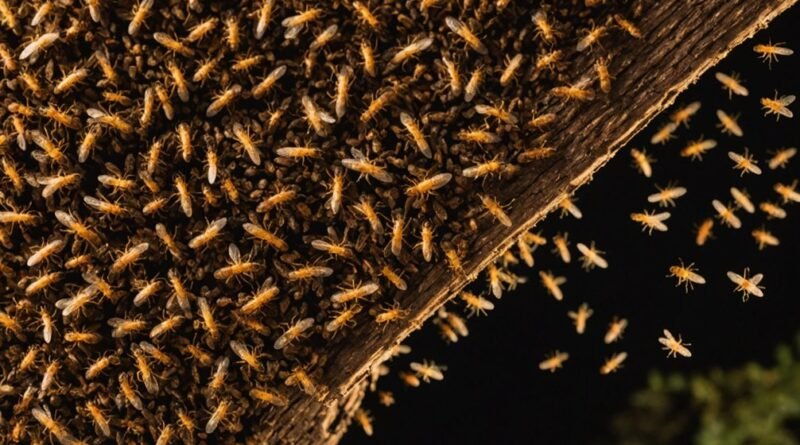
Do Termites Swarm at Night or During the Day?
You’ll see termites swarm both during the day and at night, depending on the species and season. Most subterranean termites swarm on warm, rainy spring days, often near your foundation. Formosan and many drywood termites swarm on humid evenings and gather around lights from late spring into fall. Any swarm means a mature colony may be close and possibly feeding on your home, so it’s worth understanding exactly what their timing can tell you.
Key Takeaways
- Subterranean termites usually swarm during the day in spring, often after warm weather and rainfall.
- Formosan subterranean termites typically swarm at night, especially around dusk, from late spring into summer.
- Drywood termites mostly swarm at night from late summer into fall, often around exterior lights.
- Night swarming species are strongly attracted to artificial lights, causing large, visible swarms in urban areas.
- Seeing swarmers—day or night—indicates a nearby mature colony and potential structural infestation.
When Do Termites Swarm (Day vs. Night)?
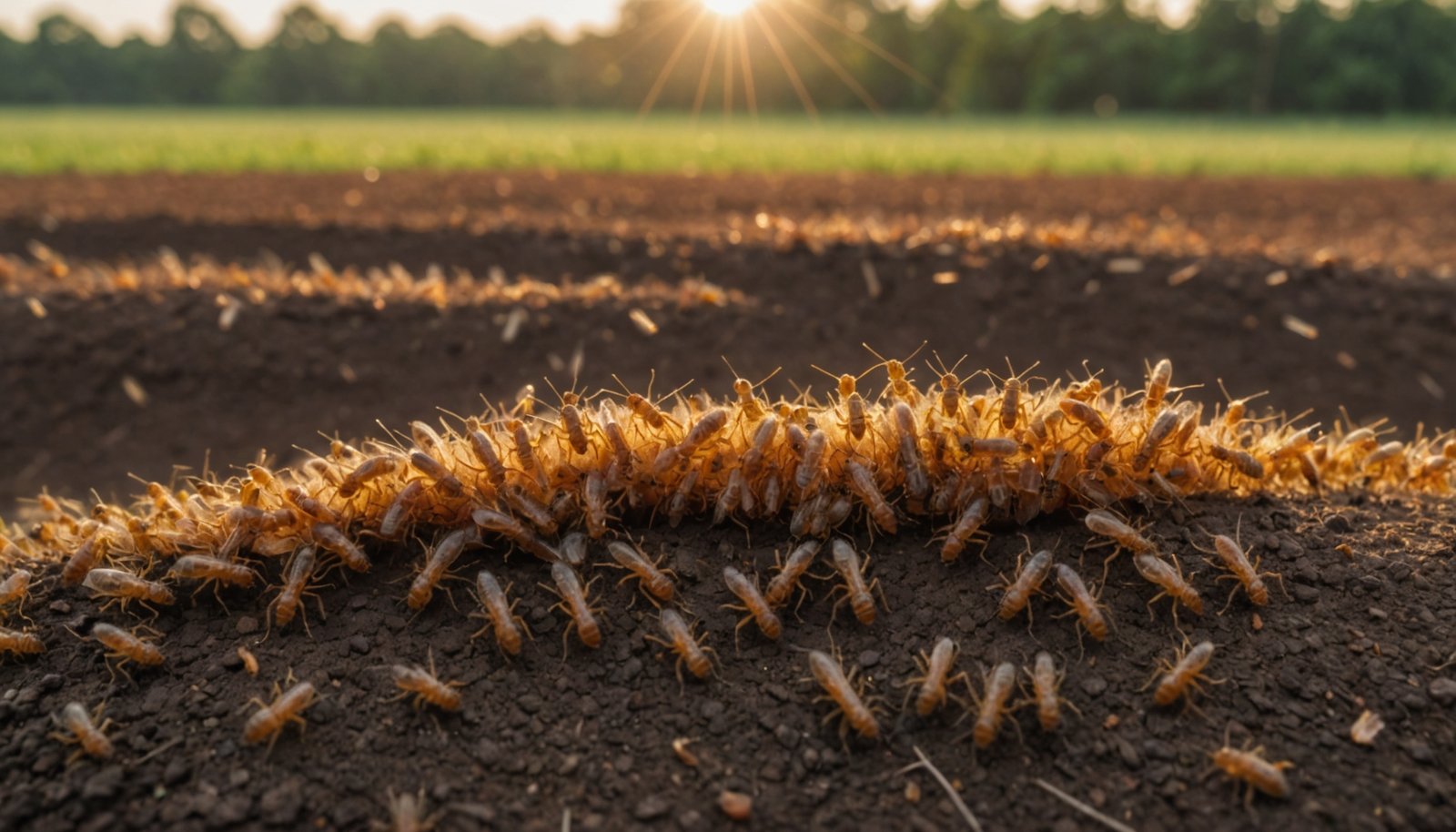
When termites swarm depends heavily on the species and the time of year. You’ll see clear differences between day‑swarming and night‑swarming species, and those patterns help you identify what you’re dealing with. Swarming activity signals potential structural damage risk, so it’s important to pay attention whenever you notice sudden bursts of winged insects around your home.
Subterranean termites usually swarm during the day. They favor warm, calm, sunny conditions, often right after rain. In many regions, spring is their main swarming season, with peak activity from March through May in places like Southern California. Some species also swarm in fall, but still tend to use daylight hours.
Formosan termites, by contrast, typically swarm at night, especially at dusk on warm, humid, windless evenings. Their evening flights can appear in large numbers around lights, particularly during late spring and summer, with peaks from April through June.
Across regions, warm temperatures, recent rainfall, and high humidity reliably trigger swarming, whether you notice it in full daylight or around outdoor lights after dark.
Why Some Termites Swarm at Night
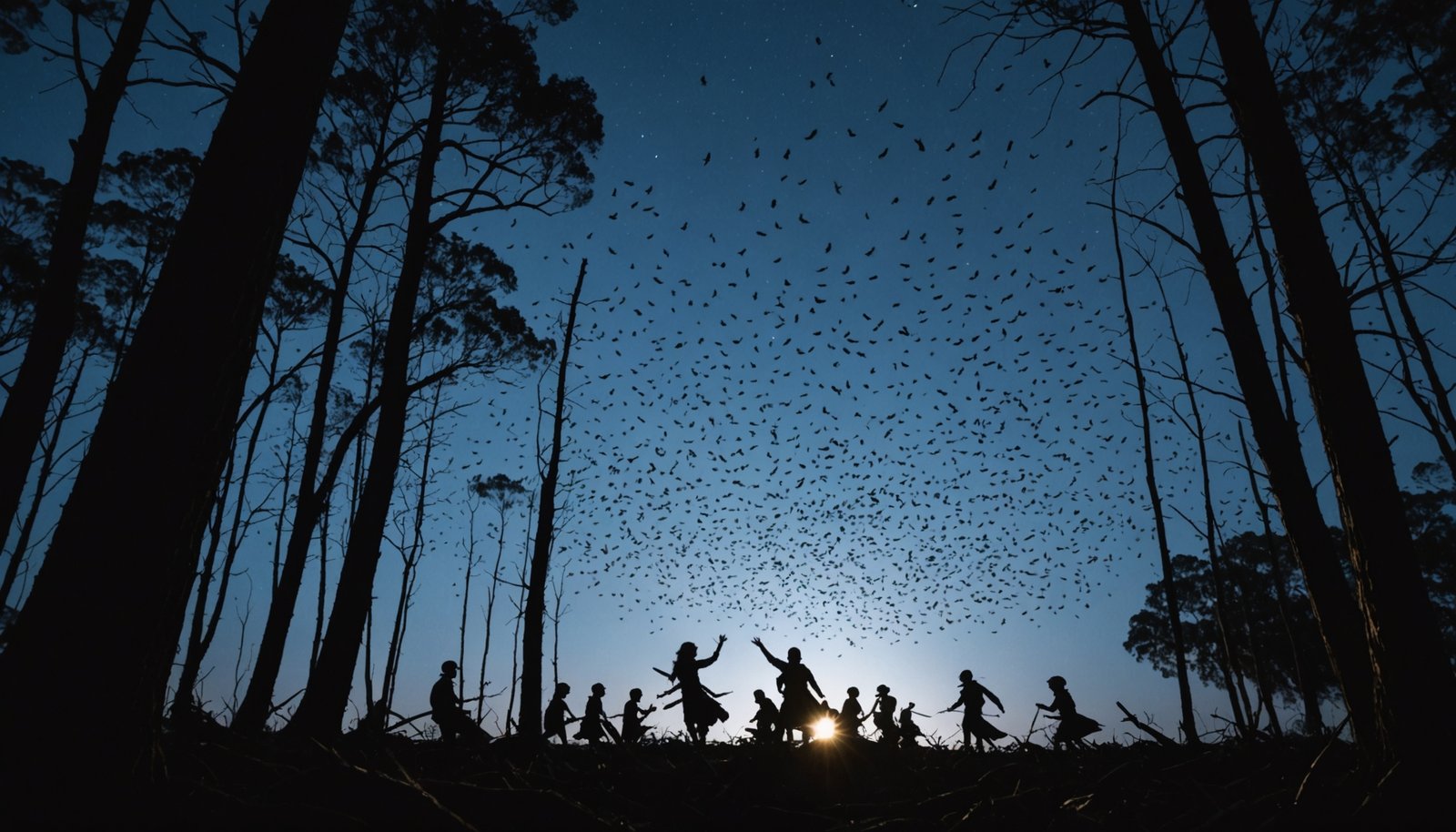
Although many termite species take to the air in broad daylight, others have evolved to swarm under cover of darkness to boost their odds of survival. When you see drywood or Formosan termites flying at night, you’re watching an adaptation shaped by intense daytime predation. By swarming after sunset, these vulnerable winged termites avoid birds and other visual hunters that easily spot them in bright light. Night conditions also offer higher humidity, which helps prevent delicate swarmers from drying out during flight. At the same time, artificial lights now guide many nocturnal species, even though that behavior has become risky around homes. In tropical regions, nighttime swarming often coincides with warm, humid evenings following rainfall, when moist conditions give new colonies the best chance to establish.
| Reason | How It Helps Termites | What You Might Notice |
|---|---|---|
| Fewer predators | Less bird activity at night | Swarms mainly after dark |
| Low visibility | Harder for hunters to see termites | Brief, sudden cloud-like swarms |
| Higher humidity | Reduces dehydration | Night flights after warm, damp evenings |
| Light attraction | Aids navigation | Swarmers clustering around porch lights |
| Urban settings | Amplifies light effects | Huge accumulations at windows and streetlights |
When Different Termite Species Swarm Each Season
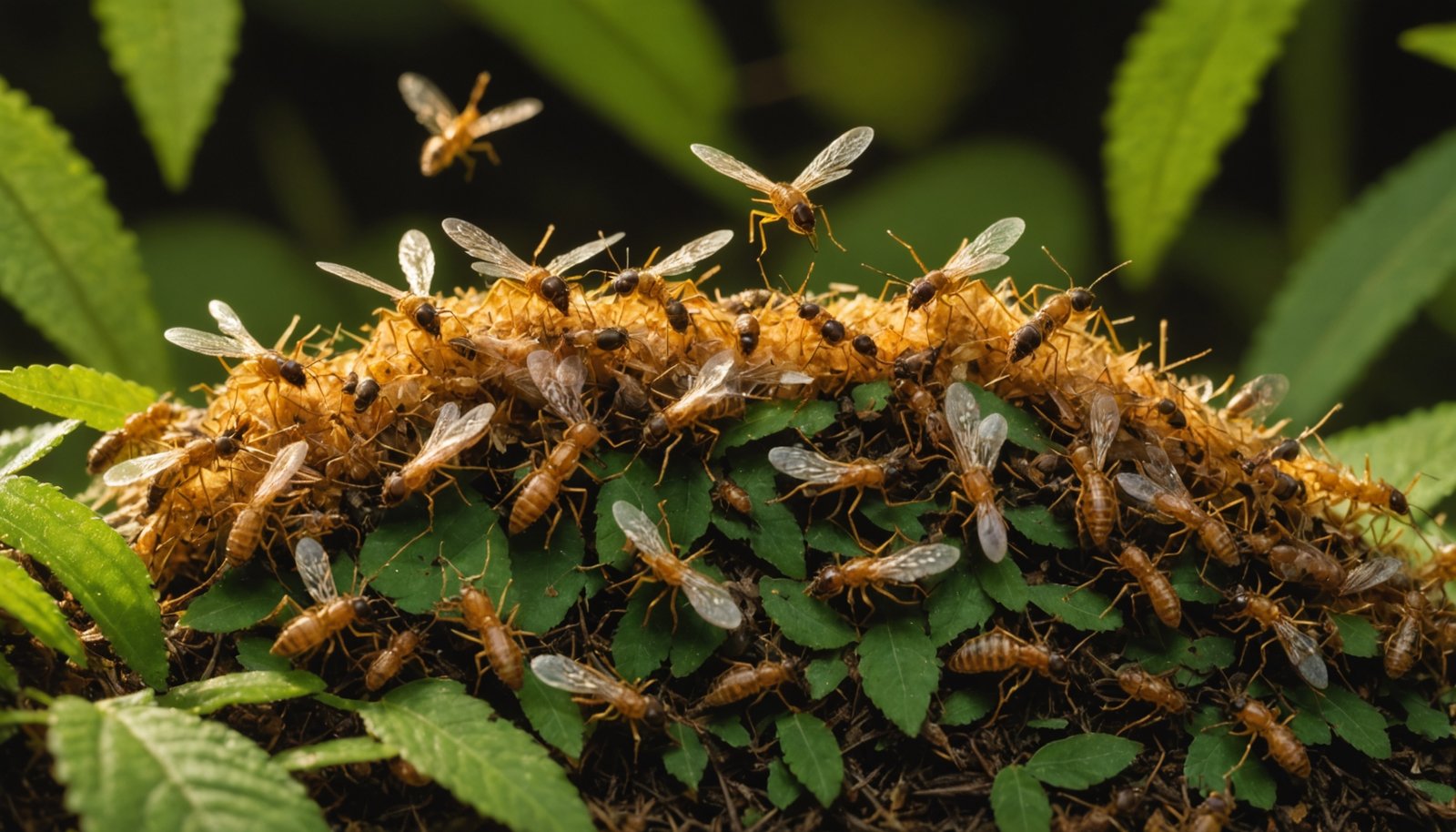
Night-flying behavior is only half the story; each termite species also follows a fairly consistent calendar for swarming. You’ll see the earliest action from eastern subterranean termites, which usually kick off between February and May, especially on warm, sunny, post-rain spring days when temperatures push past 70°F and humidity soars. Their presence often signals nearby termite activity and a potentially large, established colony in or near the home.
Eastern subterranean termites start swarming as early as February on warm, humid post-rain spring days
In the Southeast, including Georgia and North Carolina, that mid-morning to mid-afternoon window is prime time.
Formosan subterranean termites wait until late spring and early summer, with powerful evening and night swarms from May through July, often clustered around outdoor lights after thunderstorms.
Drywood termites push activity later, with flights from late summer into fall, and extended seasons in warmer regions.
Across the country:
- Most spring swarms cluster in March–May
- Coastal areas often see earlier flights
- High humidity consistently boosts swarm intensity
- Warmer states can experience multiple swarm waves
- Mild autumns can stretch drywood activity into fall
How to Recognize Termite Swarms Around Your Home
How can you tell if those flying insects around your house are just nuisance bugs or a sign of a serious termite problem? Start by looking closely at their bodies.
Termite swarmers have straight antennae, not the elbowed kind you see on winged ants. Their two pairs of wings are equal in length, fringed with visible veins, and lie flat over a dark brown or black body about 1/4 to 3/8 inch long, with a pale abdomen. Since many termites are more active after dark, you might notice increased termite activity at night around outdoor lights or windows.
Next, watch when and where they appear. Subterranean termites usually swarm during warm, humid days after rain, often near foundations or soil.
Drywood and Formosan termites typically swarm at night and flock to porch lights, windows, and other bright spots.
Indoors, piles of dead swarmers or discarded wings on windowsills, near doors, or under lights mean termites didn’t just pass through—they emerged nearby.
You may also spot mud tubes or odd dried mud patches on walls or ceilings.
What a Termite Swarm Means for Your Home and Next Steps
Those winged termites you spot around your home aren’t just a nuisance; they’re a warning that a mature colony has already moved in nearby and workers are likely feeding on your house year-round.
Swarmers themselves don’t chew wood, but they confirm the colony has breached your home’s envelope and hidden workers may be hollowing beams, trim, and subfloors. In the U.S., eastern subterranean termites alone infest at least 600,000 homes every year, underscoring how common—and costly—these seemingly minor swarms can become.
Left alone, termites quietly cause thousands of dollars in damage that your homeowner’s insurance almost never covers.
Here’s what a swarm really means—and what you should do next:
- Expect an active infestation, not a minor, one‑time event.
- Schedule a professional termite inspection as soon as possible.
- Follow treatment recommendations promptly to stop ongoing feeding.
- Reduce soil‑to‑wood contact, mulch, and debris along your foundation.
- Plan for regular inspections and maintenance to prevent reinfestation.
Conclusion
When you see a termite swarm—day or night—it’s a clear warning sign you shouldn’t ignore. Swarmers mean a nearby colony’s mature and possibly looking to expand into your home. Watch for winged termites, discarded wings, and mud tubes, then act fast. Document what you see, reduce moisture, and call a licensed termite professional. By responding quickly, you’ll protect your home’s structure, value, and peace of mind for years to come.