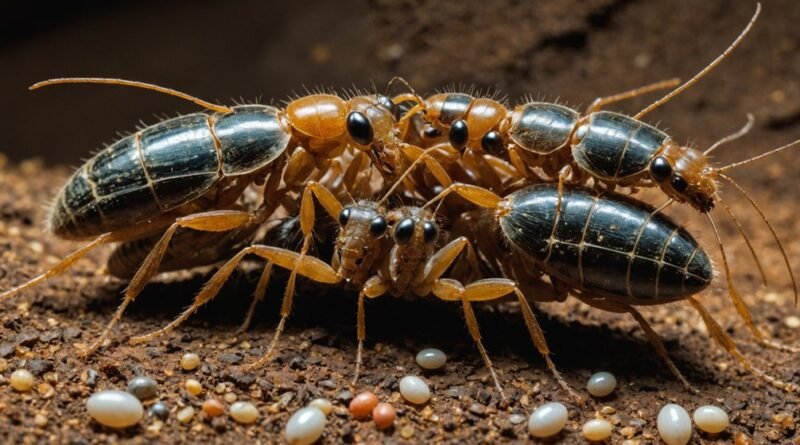
Termite Queen: What She Looks Like, Her Role and Colony Size
You’ll find that a termite queen is a pale, bloated “egg factory” deep underground, with a normal-sized head and legs but a soft, sausage-like abdomen that can reach 4–6 inches long. She lays an egg about every three seconds, driving colony growth to millions of individuals over decades. Her pheromones suppress rival queens and control worker and soldier numbers, so if you continue, you’ll see how she truly rules colony size and survival.
Key Takeaways
- A termite queen is a pale, sausage‑shaped insect with a normal‑sized head and legs but an enormous, translucent, egg‑swollen abdomen.
- She is the colony’s primary reproductive and chemical “command center,” founding the nest and regulating caste development through powerful pheromones.
- A mature queen can lay about one egg every three seconds, producing roughly 30,000–40,000 eggs per day.
- Her sustained egg production over decades can generate well over 100 million offspring, driving colony expansion and long‑term stability.
- Large, established colonies supported by a long‑lived queen can reach millions of termites, with workers, soldiers, and secondary reproductives maintained by her pheromonal control.
What Is a Termite Queen and Why She Matters?
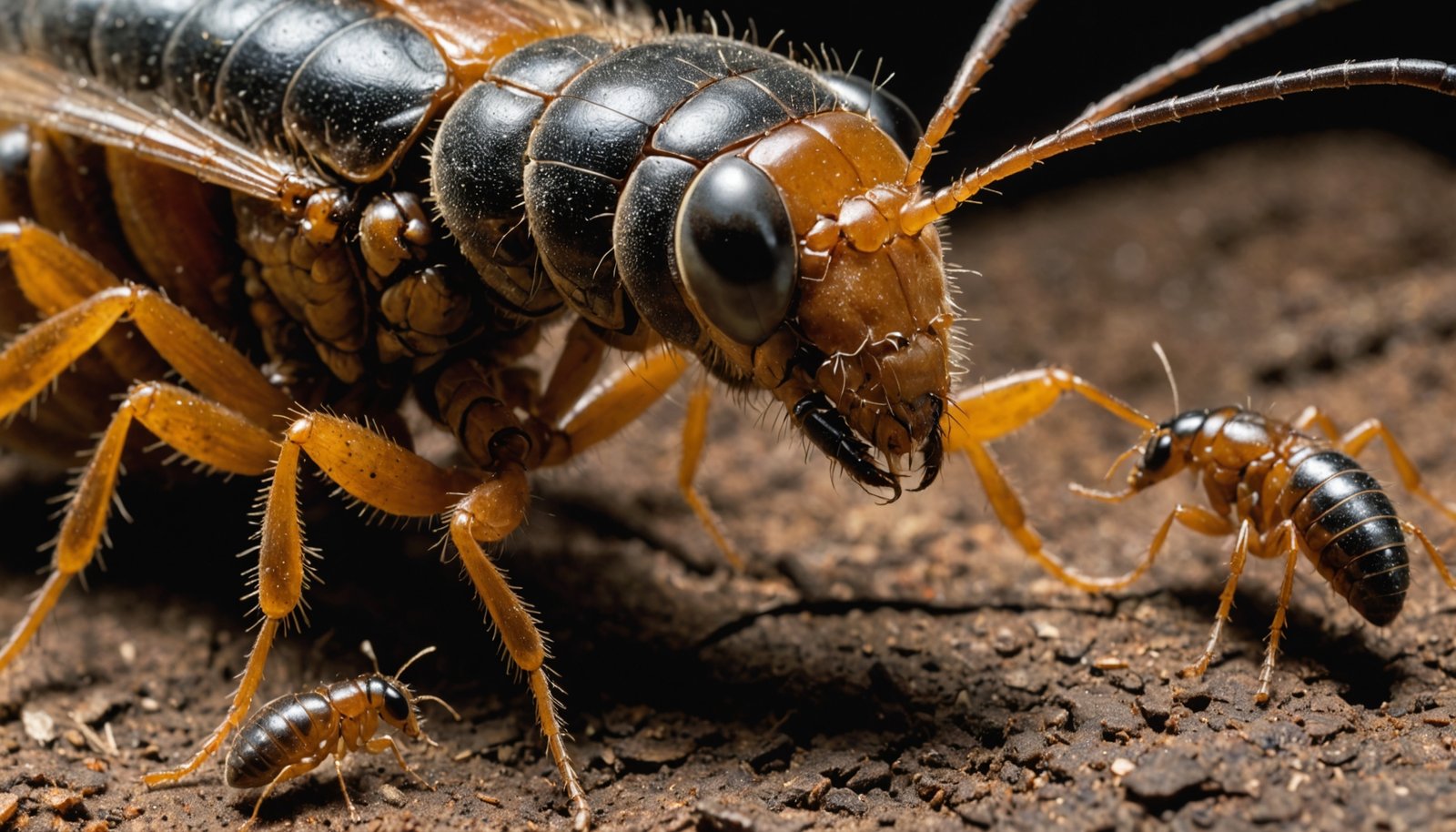
At the heart of every termite colony stands the queen, the single insect whose survival and productivity determine whether the entire nest thrives or collapses. You can think of her as the colony’s reproductive engine and command center. After a mating flight, one queen and one king burrow into wood or soil to start a new nest. From that moment, the queen drives everything: growth, survival, and long‑term stability. As the largest termite in the colony, she can reach an enormous size as her abdomen expands to accommodate continuous egg production.
In the early years, she’s the only reproductive, steadily laying more eggs as the colony develops. By about year five, she can produce thousands of eggs each day, fueling explosive population growth. Her pheromones keep other females from becoming fertile, regulate development, and coordinate tasks, so workers know where to go and what to do.
If the queen dies or weakens, secondary queens may develop, but without effective reproduction at the center, the entire colony eventually collapses.
What Does a Termite Queen Look Like?
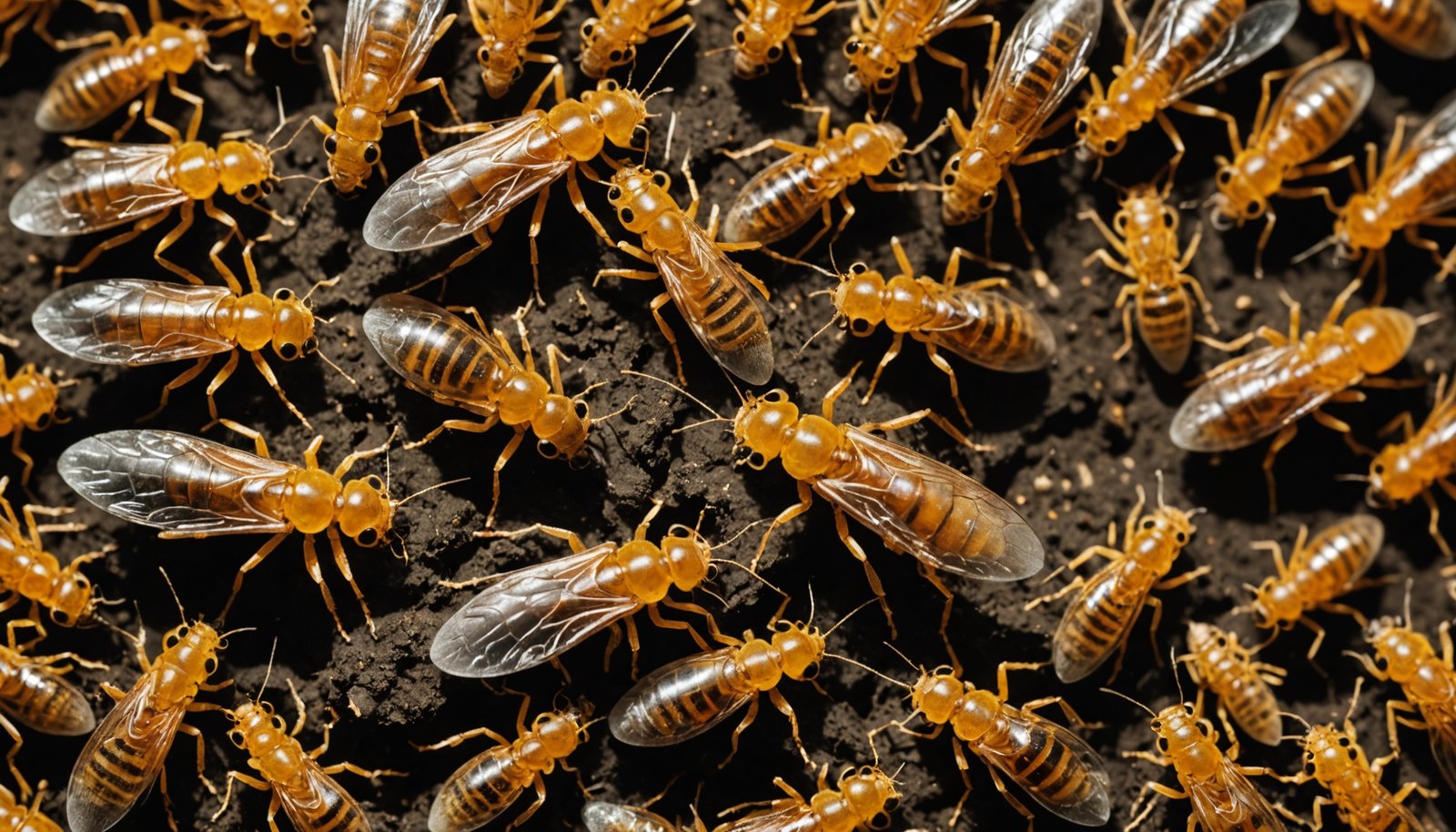
A termite queen hardly looks like an ordinary insect; she more closely resembles a pale, living sausage attached to a normal‑sized head and legs. You’ll see an abdomen stretched to 4–6 inches long—about the size of your index finger—while her head and legs stay swarmers‑sized, creating a bizarre mismatch. This massive swelling, called physogastry, makes her the largest termite in the colony, over a hundred times longer than workers. Because she is the colony’s sole primary reproductive early on, her entire body is specialized for continuous egg production, which drives the growth and survival of the nest.]
Her exoskeleton stretches so thin it often looks translucent, giving her a soft, grub‑like appearance. In subterranean species, she may appear cream, milky white, pale yellow‑brown, or even black, while dampwood queens range from light to dark brown, sometimes with reddish tones.
She’s wingless, permanently grounded after shedding her wings post‑mating. At full size she’s fundamentally immobile, her small legs unable to move the enormous, soft body that defines her as the colony’s queen.
How a Termite Queen’s Body Changes to Lay Eggs
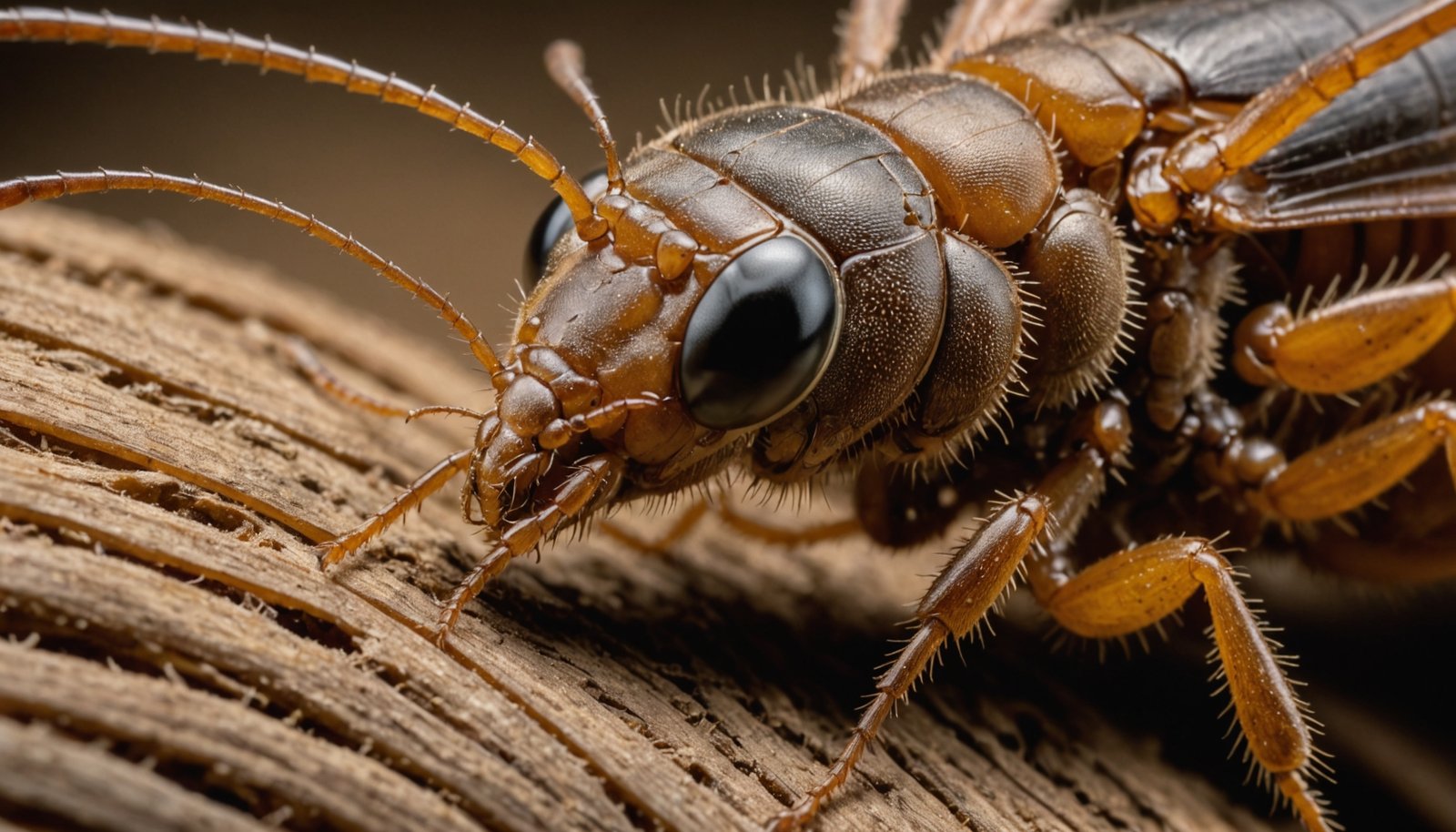
Unlike the swollen, sausage‑like queen you might picture, her body doesn’t start that way—it gradually transforms as she prepares for a lifetime of egg‑laying. You’d see nymphs that could’ve become winged adults instead shift path, molting through a brachypterous stage with short wing buds before turning into wingless, neotenic queens.
Each molt nudges the body toward reproduction and away from worker‑like duties. As she matures, her weight more than doubles—from about 2.5–4.1 mg in the first year to 5.5–8.3 mg in old, fully physogastric queens.
Her abdomen stretches into a soft, bloated reservoir, packed with developing eggs and tissues specialized for oogenesis. Inside, her ovaries and accessory glands dominate her metabolism.
Energy that would’ve fueled movement or defense now feeds egg production. Over years, this physogastric state stabilizes, letting her maintain a high, steady reproductive output across long seasons.
How Many Eggs a Termite Queen Lays Each Day
Once her body finishes reshaping into an egg‑making machine, the sheer volume she produces each day is staggering. You’re looking at a queen that can lay an egg about every three seconds, adding up to roughly 30,000 eggs in 24 hours. Across termite species, daily output generally reaches into the thousands and can climb to 20,000 or more, with high‑performance queens routinely hitting that 30,000‑egg mark. In addition to this extreme productivity, termite queens and kings can maintain decades‑long lifespans, continuing to fuel and stabilize their colonies for much of their lives. In some South African species, researchers have recorded queens laying up to 40,000 eggs per day. Their swollen abdomens exist purely to sustain this nonstop production, and worker termites immediately collect and care for each new egg as it appears. At 30,000 eggs a day, a single queen can lay nearly 11 million eggs in a year. Over a long life, that rate scales into well over 100 million, showing you how one queen fuels explosive colony growth.
How a Termite Queen Controls the Termite Colony
Guiding a vast underground society, the termite queen controls her colony through powerful chemical messages rather than force. You can think of her as a living command center, constantly releasing pheromones that shape nearly every aspect of colony life. These pheromones can even suppress reproductive development in other females, preventing them from becoming queens and ensuring she remains the primary egg-layer.
These chemical signals keep workers and soldiers focused on their roles, regulate which termites become which caste, and coordinate task allocation so the nest runs smoothly. Her secretions also suppress the development of secondary reproductives. As long as her pheromone “signature” remains strong, other termites don’t step up to replace her, preserving a single, centralized source of authority.
This continuous chemical broadcasting holds the colony together. Workers respond to her scent trail as they move through galleries, and soldiers stay on alert where she indirectly directs them.
Even far from her chamber, termites sense her influence through shared contact, food exchange, and grooming, which spread her pheromones throughout the nest.
How a Termite Queen Shapes Colony Size and Lifespan
When you look at a termite colony’s size and lifespan, you’re really seeing the long-term impact of the queen’s egg production, pheromonal control, and replacement system. You’ll see how her daily output and chemical signals regulate how many workers, soldiers, and new reproductives the colony can support. You’ll also examine how her exceptional longevity and eventual turnover to successor queens shape the colony’s overall stability and duration. In addition, the queen’s pheromones help regulate caste ratios so that enough worker termites are produced to maintain foraging and nest care, which directly influences how large and long-lived the colony can become.
Egg Production And Growth
Early on, she lays only about 0.3 large eggs per day, seeding robust first workers. As worker numbers rise, she shrinks egg size, boosts output, and drives explosive growth.
| Stage/Condition | Eggs per Day | Growth Effect |
|---|---|---|
| Founding queen | ~0.3 | Slow start, large larvae |
| Mature *Reticulitermes* | ~24.7 | Steady expansion |
| Subterranean range | 1,000–30,000 | Rapid population rise |
| Peak prolific species | 30,000–40,000 | Massive, long‑lived colonies |
| 5‑year worker increase | 1,000 → 300,000 | Exponential workforce growth |
Pheromonal Colony Regulation
Although a termite queen looks like little more than a swollen egg sac, she governs colony size and lifespan through a sophisticated chemical language. You can think of her pheromones as a constant broadcast: volatile compounds like 2-methyl-1-butanol, n-butyl-n-butyrate, and nerolidol drift through the nest, telling workers, “No more queens needed.”
At the same time, cuticular hydrocarbons on her body and eggs act as contact signals of genuine fertility.
These cues:
- Inhibit workers and nymphs from maturing into neotenic queens, keeping queen numbers ideal.
- Steer caste balance so you get enough workers and soldiers instead of wasteful extra reproductives.
- Trigger worker behaviors—feeding, grooming, shaking—that fine-tune her output and maintain reproductive harmony.
Queen Longevity And Turnover
Those pheromones that keep the colony organized also buy the queen time—lots of it. You’re looking at an insect that can live 10–25 years, and in some species close to 50.
While workers last 1–2 years, the queen stays productive for about seven peak years, laying thousands of eggs daily and potentially 100 million over her life.
She doesn’t burn out because her body runs differently from a worker’s. High antioxidant enzymes, strong DNA repair, and well-maintained mitochondria slow cellular damage.
As she ages, her abdomen swells massively while her head and legs stay small, eventually trapping her in the breeding chamber. That long, uninterrupted reproductive run lets a single queen drive colony growth and infestation pressure for decades.
Conclusion
By now, you can see the termite queen is the engine that keeps a colony alive and growing. Her body transforms so she can lay staggering numbers of eggs, and her chemical signals keep every termite in line. When you understand her power over colony size and lifespan, you realize why spotting signs of termite activity early—and acting fast—matters so much for protecting your home.