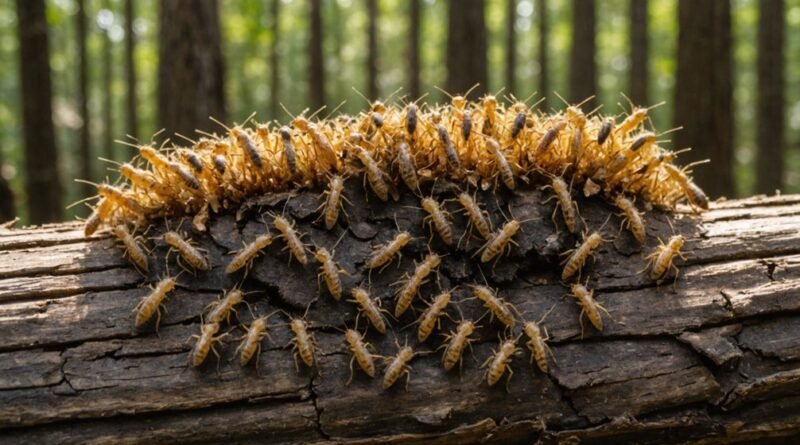
Conehead Termites: Emerging Invasive Threat in the US
Conehead termites are an aggressive invasive species spreading from the Caribbean into the southern U.S., especially Florida. You’ll spot them by their cone‑shaped soldier heads, above‑ground paper‑mache‑like nests, and thick mud tubes on trees, walls, or structures. They destroy wood up to five times faster than native termites and attack homes, furniture, and valuable trees. If you live in a warm, humid region, you’ll want to understand exactly how they spread, where they nest, and how to stop them.
Key Takeaways
- Conehead termites are invasive, highly destructive termites from Central/South America now established in southern Florida, especially Broward County.
- They consume wood up to five times faster than native termites, attacking structural timber, furniture, and living trees like citrus and avocado.
- Colonies can exceed one million termites, with multiple queens, aggressive soldiers, and expansive foraging networks extending over 5,000 m².
- They spread mainly via infested wood, mulch, landscaping materials, and short-range flights of winged swarmers, posing significant biosecurity risks across warm U.S. regions.
- Early detection, professional treatment, moisture control, and strategic landscaping and construction practices are critical to prevent establishment and spread.
What Are Conehead Termites and Why They Matter
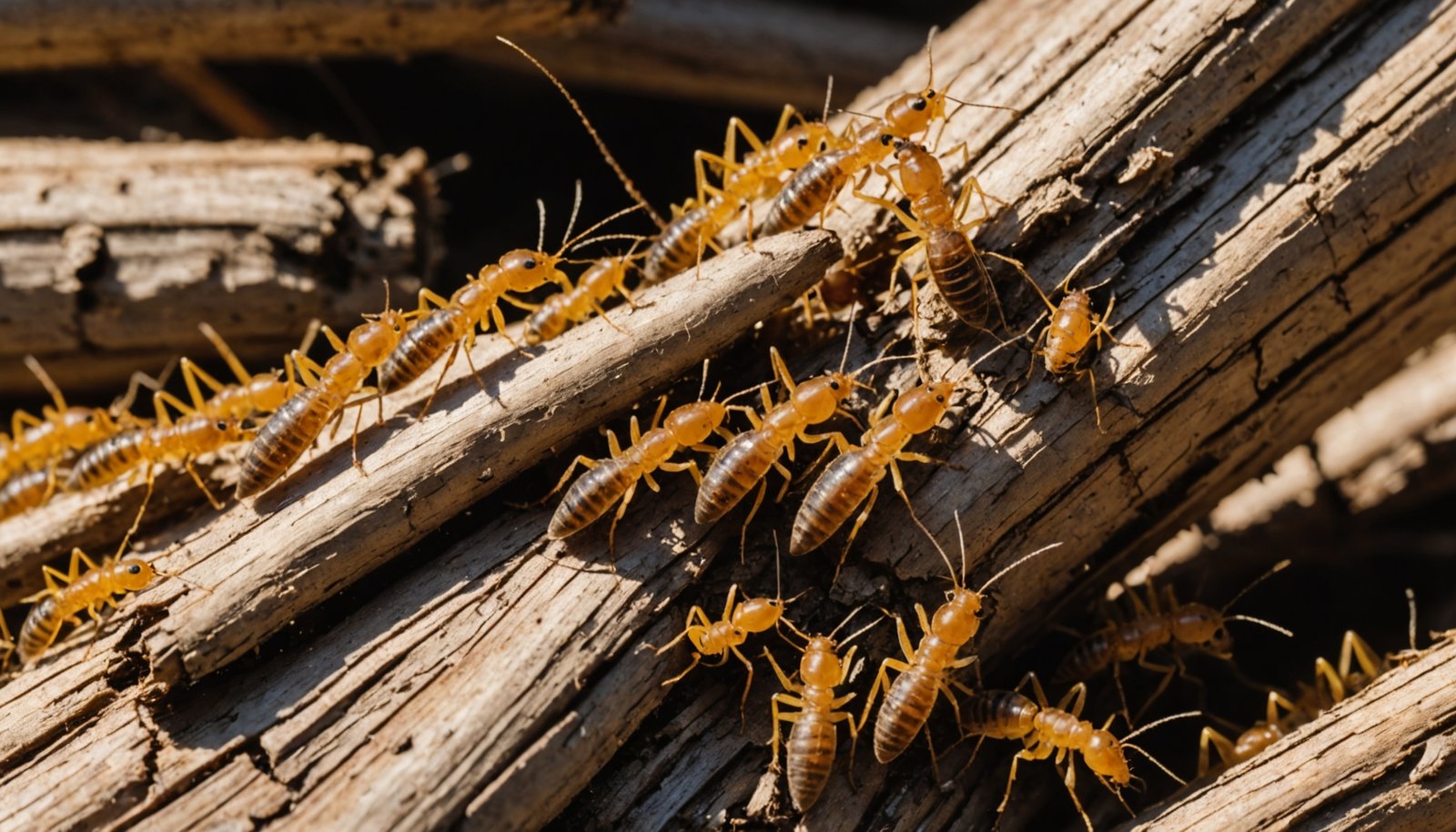
Conehead termites (Nasutitermes corniger) are an aggressive, invasive termite species native to Central and South America and the Caribbean, now recognized by U.S. authorities as a serious biosecurity threat.
You’re dealing with a species that thrives in warm, humid, tropical-like climates and can hitchhike in infested materials and cargo, as already seen in isolated introductions to California.
You should care about coneheads because they destroy wood up to five times faster than most native termites and don’t need soil contact, so they can establish directly above ground. Their large, exposed basketball nests on trees and structures make them unusually easy to spot compared with most native, hidden-dwelling termite species.
Large colonies, often exceeding a million termites, can feed simultaneously on structural lumber, trees, furniture, fence posts, cardboard, paper, roots, and even grass, rapidly compromising buildings and killing landscaping and shade trees.
Their above-ground “highway” foraging, moving over surfaces like ants, gives them a powerful advantage for rapid spread if they become established in new U.S. regions.
How to Identify Conehead Termites in the US
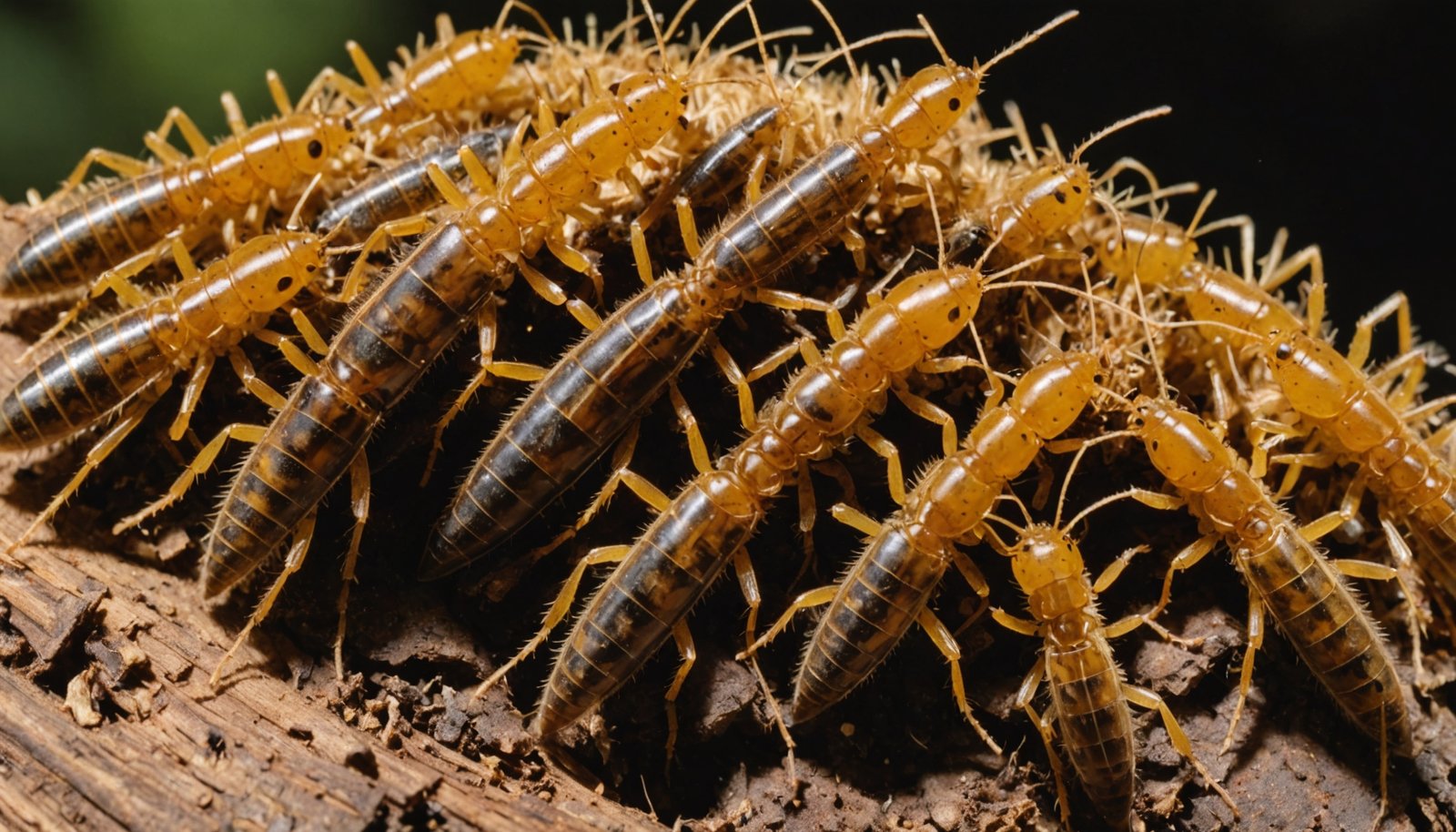
When you know what to look for, you can spot conehead termites by their distinct body features and unusual nests.
You’ll learn how their cone‑shaped soldier heads, creamy workers, and dark swarmers set them apart from other termites.
You’ll also see how their exposed ball-shaped nests and thick mud tubes on surfaces signal an active infestation.
These termites can form colonies of over 1 million termites, making early identification and professional treatment especially important.
Key Physical Features
Distinctive heads, body colors, and sizes make conehead termites surprisingly easy to recognize once you know what to look for. You’ll see three main castes: soldiers, workers, and swarmers, each with its own look.
Soldiers stand out first. They’re about 5 mm long, with cream bodies and dark brown to black cone‑shaped heads. The pointed “nose” (nasus) replaces large jaws and sprays defensive fluid. Tiny mandibles and six short hairs on the head help confirm what you’re seeing. In many infestations, soldiers can make up about 20% of the entire colony.
Workers appear softer and smaller, usually around 3 mm. They’re creamy white, lack cone‑shaped heads, and include:
- Larger females
- Smaller males
- Both with similar pale coloration
Swarmer adults are largest, dark brown, and winged, with two thick veins along each leading wing edge.
Nests And Mud Tubes
Although the insects themselves can be hard to spot, conehead termite nests and mud tubes are often obvious if you know where to look.
Above-ground nests look like large, dark brown, bumpy paper-mache balls stuck to trees, fences, or walls. Smaller ones are nearly spherical; larger nests stretch into lumpy ovals, sometimes basketball-sized or bigger, and can weigh dozens of pounds. Deep in the center, the queen occupies a reinforced chamber that is specially built to protect her.
You may also face completely hidden underground nests. These sit in soil, roots, trunks, or stumps, with no visible mound, and you’ll only suspect them when tunnels or foragers appear nearby.
Mud tubes are your other key clue: dark, straw-like highways about 5 mm wide, branching for many yards along trees, walls, and vegetation, often thicker and more widespread than the nests themselves.
Conehead Termite Biology and Why They’re So Destructive
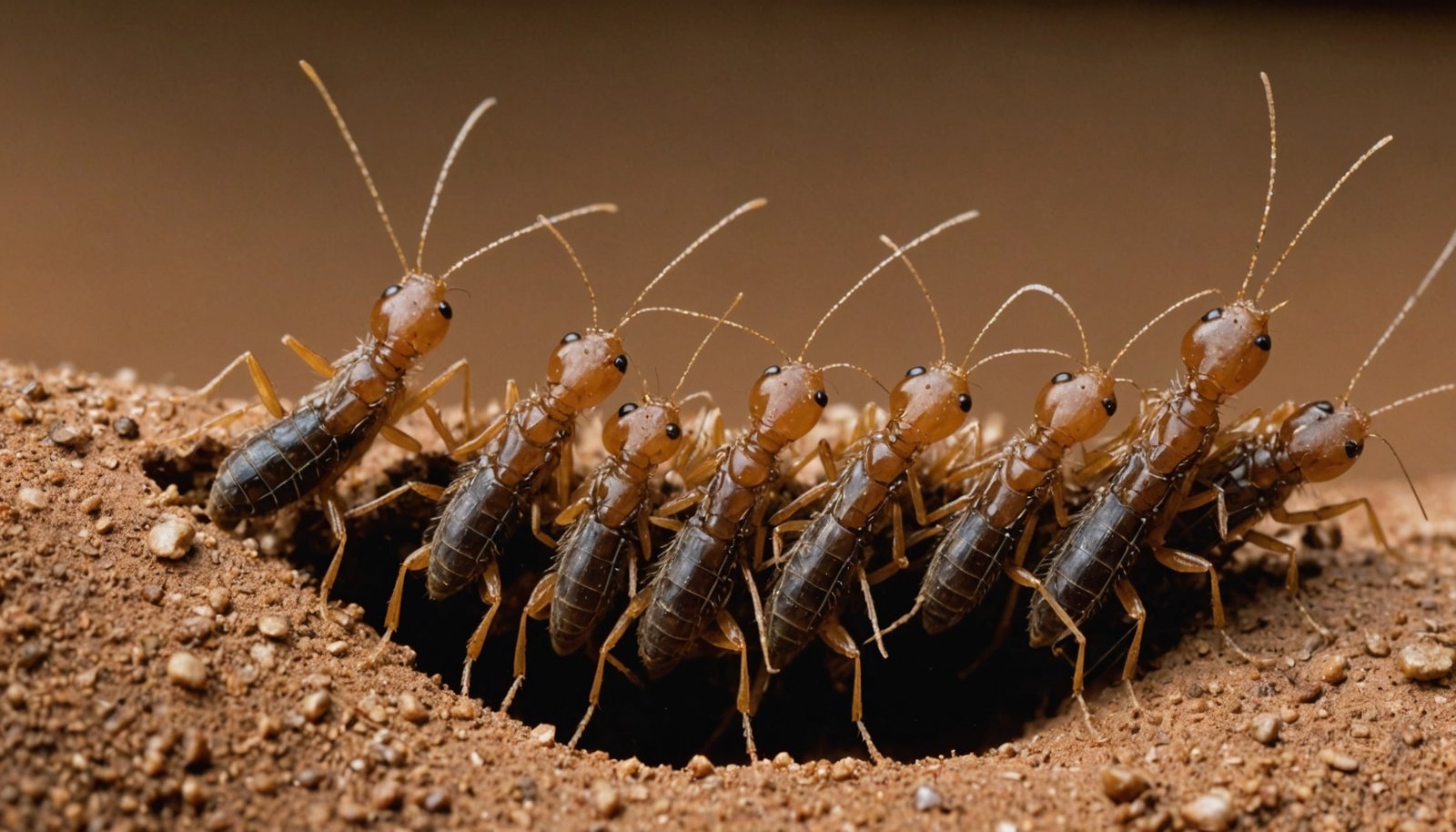
When you understand how conehead termites expand their colonies so fast, you see why a small problem can turn into a neighborhood-scale infestation.
Their biology supports explosive population growth, with massive colonies and multiple queens quickly producing new nests. With as much as 20–30% soldiers in each colony, conehead termites are unusually well-defended, which helps their nests survive and keep expanding once they become established.
Because they build large, above-ground carton nests and mud “highways” on trees, walls, and structures, they can spread and damage your property far more rapidly than most native termites.
Rapid Colony Expansion
Because conehead termites combine explosive growth with flexible reproduction, a single undetected colony can turn into a major infestation in just months. They can stay hidden in wood for years, then suddenly surge.
Within months, a tennis‑ball‑sized hub holding 10,000–16,000 termites can expand to a basketball‑ or even watermelon‑sized nest over 25 cm tall.
As numbers climb, colonies quickly reach 50,000 workers and soldiers, and large colonies can exceed one million termites. You’re not dealing with a slow, linear increase; their growth curve is explosive:
- Nest volume multiplies several times in a single wet season
- Foraging networks spread across up to 5,000 m² from one colony
- Multiple queens and budding satellite nests compound reproduction every year
Above-Ground Nesting Strategy
Unlike most termites that stay hidden underground, conehead termites build bold, above‑ground nests and highways that turn your yard or structure into a multi‑level feeding zone.
You’ll find nests at tree bases, in branches, shrubs, open ground, trash piles, even on walls and cement blocks. Young colonies may stay hidden for years, then suddenly erupt into basketball‑sized domes.
These dark brown to black “mud balls” are actually lightweight cartons made from digested wood, saliva, and feces. Their crisp, bumpy surface blends with leaf litter and bark.
Coneheads connect nests to food and moisture with narrow, covered tunnels that run over soil, fences, trees, and buildings.
Conehead Termite Damage to Homes, Trees, and Yards
Conehead termites can quietly turn homes, trees, and entire yards into structural and ecological hazards. They don’t care if wood’s dry, wet, decayed, hard, or soft—load‑bearing beams, plywood, framing, and trim all become food.
Because colonies expand underground and inside wood, you often won’t notice them until they’ve already compromised structural supports, damaged furniture, and hollowed fence posts.
Your trees and ornamentals are equally exposed. Coneheads feed on dead portions of live citrus, mango, avocado, and coconut palms, as well as bamboo and dead palm leaf axils.
As they overwhelm branches and roots, trees and shrubs can decline or die, and typical orange oil treatments won’t stop them.
In your yard and nearby natural areas, they consume native trees, shrubs, grasses, and roots, stripping vegetation above ground while tunneling below.
This combined assault can:
- Kill valuable fruit trees
- Degrade landscaping
- Accelerate long‑term property damage
Where Conehead Termites Are Now: and How They Spread
You’ll find conehead termites currently confined to a small but worrisome foothold in southern Florida, centered in Broward County.
Even within this limited range, they’re spreading between neighborhoods and properties largely because people unknowingly move infested wood, mulch, or landscaping materials.
To protect your home and community, you need to understand where these colonies are established now and how your everyday actions can help—or hinder—their spread.
Current U.S. Infestations
Today’s conehead termite threat in the U.S. centers almost entirely on a tightly defined zone in Broward County, Florida, where infestations stretch through the Dania Beach area of Fort Lauderdale.
You’re most likely to encounter them along the Dania Cut-Off Canal, especially near the Fort Lauderdale-Hollywood International Airport and the Old Griffin Road site, where colonies span a few hundred meters on each bank.
You should picture a mosaic of infested spots rather than a single solid block.
Coneheads occupy:
- Natural wooded patches and mangroves
- Residential and commercial landscapes and fences
- Roadsides and sloped canal banks
They nest above ground and below the surface, then forage 24/7 in covered galleries, attacking trees, shrubs, roots, structures, outdoor furniture, and any accessible cellulose.
Pathways Of Spread
Although their U.S. footprint remains centered in Broward County, conehead termites have several efficient pathways for spreading into new areas. They likely arrived in Florida on an infested ship or pleasure boat that docked at a private marina, allowing a single breeding population to establish in Dania Beach in 2001.
From there, you see them spread naturally when winged reproductives fly, workers walk across lawns and pavement, and colonies move along tree canopies. Their narrow brown foraging tunnels, often less than ½ inch wide, can extend 40 feet or more from nests and run over trees, walls, and fences.
Human-assisted movement poses added risk as infested cargo, landscaping materials, and boats move among coastal cities and ports.
Why Conehead Termites Are a High-Risk Invasive Threat
Because conehead termites combine aggressive dispersal, broad habitat tolerance, and explosive population growth, they pose a uniquely high‑risk invasive threat in the US.
You’re not dealing with a minor nuisance; you’re facing a pest that moves fast, adapts easily, and builds numbers before you even know it’s there.
They hitchhike in wood crating, pallets, plants, and furniture, so your properties can be exposed through routine commerce.
From a single introduction near Dania Beach, they’ve already spread over 13 km, and APHIS has intercepted them at ports from California to New York.
They also threaten an unusually wide range of sites:
- Agricultural fields, orchards, and wooden fences
- Homes, sheds, furniture, and stored wood or paper
- Forests, grasslands, canals, and even minimally managed natural areas
Polygynous colonies with multiple queens let them expand quickly, turning a single overlooked population into multiple, entrenched infestations that are difficult and costly to eliminate.
Nesting Habits: Where Conehead Termites Build and Hide
While many termites stay hidden deep in the soil, conehead termites break the rules by building large, visible nests above ground as well as concealed colonies below the surface. You’ll see above‑ground “carton” nests on trees, shrubs, fence posts, or even open ground. They look like dark brown, bumpy basketball‑sized (or larger) lumps, often tucked into branches, debris piles, or cement blocks and disguised with leaf litter or vegetation.
Conehead termites also build compact underground nests, only a few centimeters across, using rocks or blocks to shield moist, temperature‑stable voids. Even when you don’t see a nest, their broad foraging tunnels expose activity.
| Nest / Structure Type | Where You’re Likely to Find It |
|---|---|
| Epigeal (ground) nests | Lawns, open soil, grasses, landscape beds |
| Arboreal (tree) nests | Trunks, branches, stumps, roots, dense shrubs |
| Structural nests | Attics, crawl spaces, roofs, sheds, fences |
| Hidden object nests | Debris piles, scrap wood, furniture, tool handles |
| Foraging tunnels | Over soil, up trees, along walls and foundations |
Florida’s Conehead Termite Eradication Program
You benefit from a program that’s unique worldwide, guided by protocols published in the Journal of Integrated Pest Management. Crews destroy nests, then apply termiticide to trees, stumps, structures, tunnels, and surrounding soil, using power spraying to punch through thick debris and dense vegetation.
They also manage infested sites aggressively by:
- Stripping trash, dead wood, and overgrowth so insecticides reach termites
- Pruning vegetation away from structures to break “bridges”
- Working with local PMPs and municipalities to monitor, adapt, and contain spread
Conehead Termite Prevention Tips for Homeowners and Pros
Although conehead termites are aggressive invaders, practical prevention steps dramatically cut your risk of an infestation.
Start outside: trim shrubs and tree branches so they don’t touch walls, mow and edge regularly, and keep mulch or wood debris at least 12 inches from the foundation. Store firewood 20 feet away.
Control moisture, since damp soil attracts termites. Maintain proper grading, keep gutters and downspouts clear and draining away, and fix plumbing and outdoor leaks fast.
In crawl spaces, use vapor barriers, dehumidifiers, and maintain at least 24 inches of clearance.
Build in defenses. Favor concrete foundations with ventilation gaps, seal exposed wood or shield it with metal, and use steel mesh, select sands, and caulk to block entry points and cracks.
Choose pressure-treated or naturally resinous woods and consider borate treatments.
For higher-risk areas, work with licensed pros to apply soil termiticides, install bait systems, and perform regular inspections.
How California and Other States Can Stay Ahead of Conehead Termites
Even before conehead termites reach California in force, state agencies and communities can build defenses that make large-scale invasions far less likely.
You start by tightening detection: prioritize visual inspections for above‑ground carton nests, mud tubes, and foraging tunnels on trees, fences, and structures, especially in southern coastal zones.
Require annual professional termite inspections and integrate monitoring traps into new construction and major renovations.
You also need a strong regulatory backbone. Treat *Nasutitermes corniger* strictly as a regulated invasive: mandate CDFA reporting for any unusual above‑ground termite activity, restrict private treatment attempts, and rely on licensed pest professionals following standardized eradication and quarantine protocols.
To stay ahead, coordinate policy, training, and site management so they reinforce each other:
To stay ahead, align policy, training, and site management into one coordinated conehead‑termite defense system
- Train residents, HOAs, and property managers to recognize conehead signs
- Enforce safe disposal of wood, yard waste, and construction debris
- Promote vegetation thinning and yard hygiene to reduce nesting sites
Conclusion
You’re not powerless against conehead termites. By knowing how to spot them, where they nest, and how they spread, you can protect your home, trees, and community. Stay alert for suspicious mounds, surface tunnels, and unusual termite swarms, and act fast if you see signs. Work with licensed pros, follow local reporting guidelines, and support eradication efforts. When you stay informed and proactive, you help stop this invasive pest before it takes hold.