Does Mulch Attract Termites? What Homeowners Need to Know
Mulch doesn’t actually lure termites to your yard, but it can help them thrive if they’re already nearby. Organic mulches hold moisture and can hide termite activity, especially when piled thickly against your foundation. Softer woods and decaying chips pose more risk than cedar, cypress, or inorganic options like gravel. Keep mulch thin, pulled back 1 foot from your foundation, and your soil well-drained. Next, you’ll see how different mulches and placements change your real risk.
Key Takeaways
- Mulch does not “attract” termites from far away, but it can help nearby colonies stay longer by keeping soil moist and comfortable.
- Organic mulches with cellulose, especially softwood chips and decaying wood, pose the highest risk because they provide both food and moisture.
- Inorganic mulches like gravel and rubber don’t feed termites but can still shelter them by preserving moisture and hiding activity near foundations.
- Keep mulch at least 1 foot from the foundation, only about 1 inch deep near walls, and maintain a 6‑inch clear inspection strip.
- Combine proper mulch placement with drainage improvements, a soil termiticide barrier, physical barriers, and regular inspections to reduce termite risk.
Does Mulch Really Attract Termites to Your Home?
Mulch often gets blamed for “attracting” termites, but research doesn’t back up the idea that it lures them in from the surrounding landscape. Field studies show termites show up just as often under eucalyptus, hardwood, pine bark mulch, pea gravel, and even bare soil.
Mulch doesn’t summon termites; studies find them just as often under gravel or bare soil
In other words, simply spreading mulch doesn’t make your yard a termite magnet. Termite damage usually progresses slowly over time, so homeowners typically have time to evaluate options and choose appropriate control measures if activity is found.
You also don’t make termites scout more aggressively by adding mulch. Their initial foraging rate doesn’t increase in mulched areas. Instead, when termites randomly wander into mulch, they’re more likely to stay because it’s a comfortable spot, not because the mulch pulled them in from a distance.
Mulch isn’t a powerful food source, either. When termites feed only on bark mulches, they die at rates similar to starved termites.
Your yard already offers roots, stumps, and other wood; mulch is just one more minor option, not a special attractant.
How Mulch Changes Termite Activity Around Your Foundation
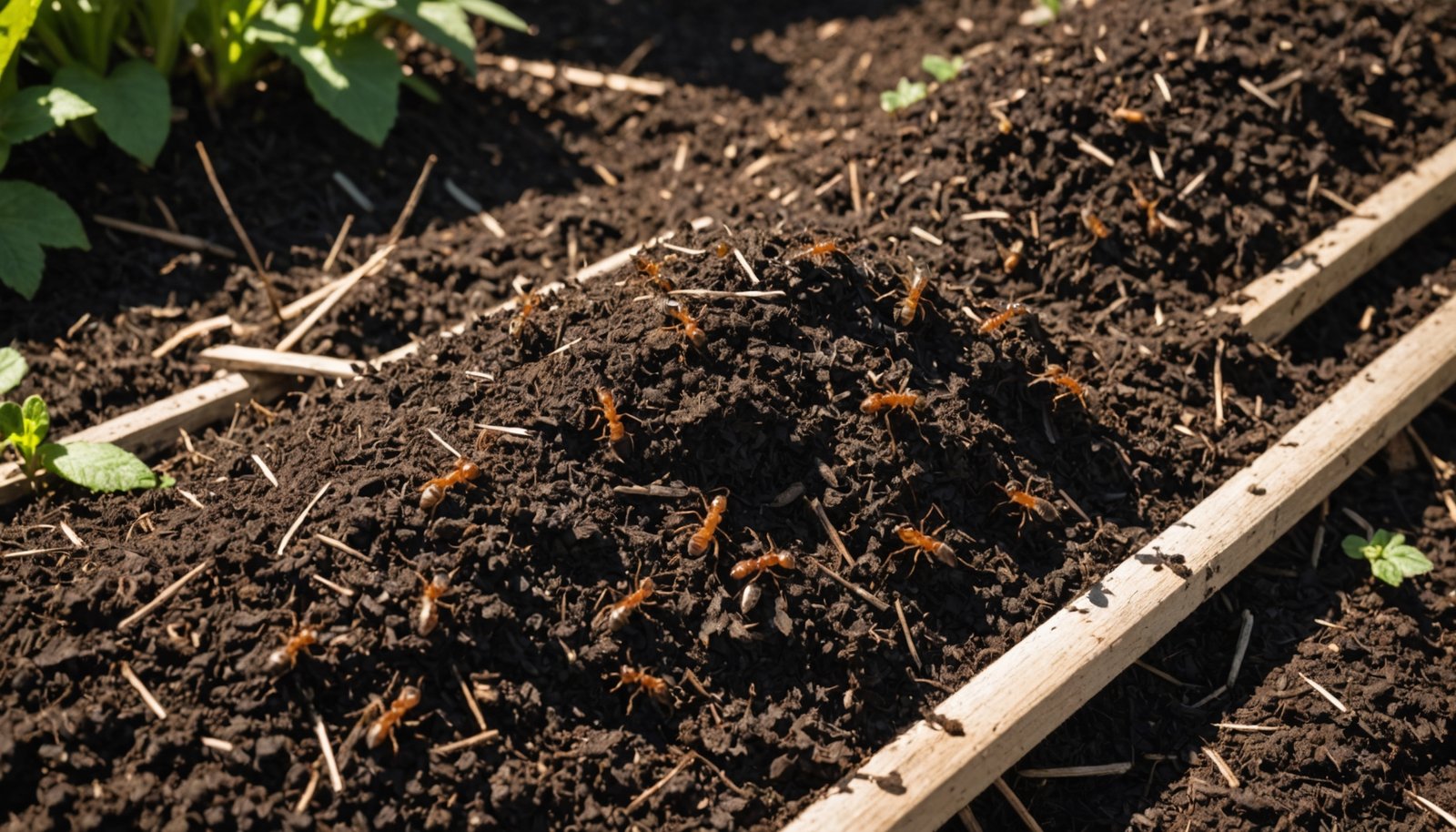
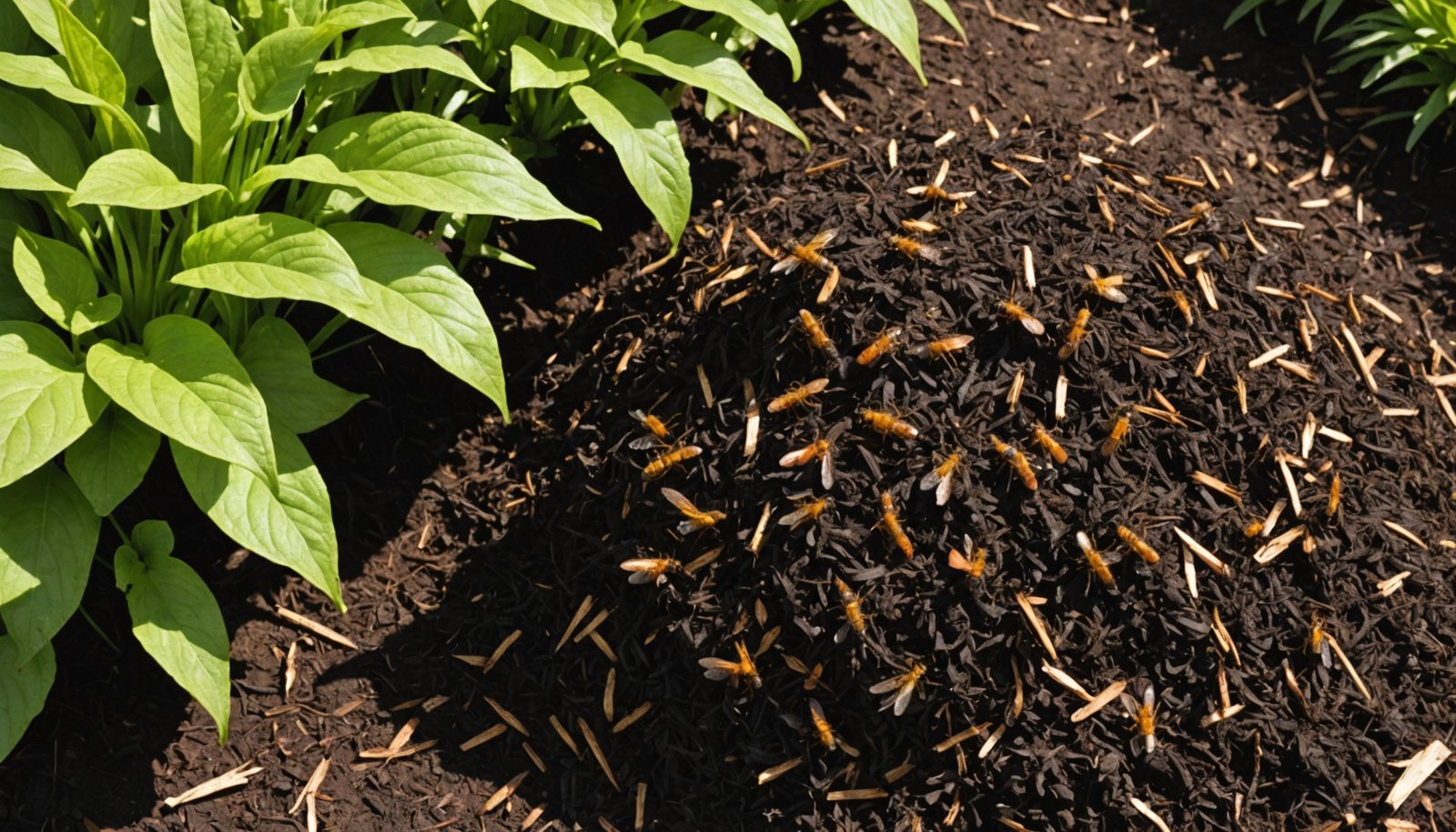
Although mulch doesn’t lure termites in from afar, it can dramatically change how they behave once they’re near your foundation. By trapping moisture in the top inches of soil, mulch keeps conditions damp and humid—exactly what termites prefer. They’ll move through this moist layer in thin tunnels, spending more time foraging and increasing the odds they’ll discover vulnerable parts of your home. Overly thick mulch layers can also create ideal hiding spots that make it harder to detect early signs of termite activity during routine inspections.
Mulch also buffers temperature swings. Soil under mulch stays cooler and more stable than bare ground, creating a protected “thermal shadow” where termites can stay active longer, especially under gravel.
Here’s how those changes play out around your foundation:
| Mulch Effect | Termite Response |
|---|---|
| Moisture retention | Longer foraging, higher survival near your foundation |
| Temperature moderation | Stable feeding and movement in protected soil zones |
| Cover and proximity to home | Hidden “highway” that can reach wood and bypass soil treatments |
Keeping mulch managed reduces these advantages for termites.
Mulch Types and Termites: Which Materials Are Riskier?
When you’re choosing mulch, you’re not just picking a look—you’re also shaping how attractive your yard is to termites. Some types of mulch are actually less appealing to termites because they provide fewer moisture and food resources for them to exploit.]
You’ll want to understand how different organic mulches, from cedar to cypress and melaleuca, either deter or encourage termite activity.
You should also compare these with inorganic options like gravel and stone, which change moisture and foraging patterns in a different way.
Organic Mulches And Termites
Even though all wood-based mulches share some termite risk, certain organic materials clearly invite more trouble than others. Any organic mulch holds moisture and offers cover, so termites can forage through it and even bridge soil termiticide treatments. [Cedar mulch typically remains effective for 3–5 years before needing replacement, giving homeowners a relatively long-lasting layer of termite resistance.]
Decaying chips and bark also resemble their natural food.
Still, not all wood is equal. Cedar and cypress heartwood contain natural oils that repel termites and shorten their lifespan; studies show eastern red cedar mulch can kill most termites in controlled tests.
Cypress heartwood and other resistant woods like melaleuca, eucalyptus, and California redwood are rarely eaten and act more as deterrents.
In contrast, pine bark mulch, especially from softwoods like slash and loblolly pine, holds moisture and provides favored food, making it riskier near your foundation.
Inorganic Mulches And Termites
Wood-based mulches vary in how much they encourage termite activity, but inorganic options change the picture in a different way. Stone, gravel, and rubber don’t contain cellulose, so they’re not food. Still, they can shelter termites by holding moisture and covering soil, giving foragers protected pathways to roots, stumps, or your foundation. By choosing inorganic mulch near your foundation and keeping it shallow and well‑drained, you can lower the odds that termites will find favorable conditions next to your home.
| Inorganic Type | Termite Food? | Key Risk Factor |
|---|---|---|
| Stone/Gravel | No | Longer feeding at nearby stations once found |
| Rubber | No | Moist, sheltered zones for insects |
| Any Inorganic | No | Covered routes that hide termite travel |
| Bare Soil | No | Less cover, easier inspection |
Research shows inorganic mulches don’t draw termites from afar or boost initial scouting. Your main concern is how close that covered, moist strip comes to your home’s walls.
Organic vs. Inorganic Mulch: What’s Safest Near the House?
When you’re spreading mulch next to your house, the choice between organic and inorganic materials changes how attractive that zone is to termites.
You’ll want to understand how wood-based mulches compare to gravel or stone, and why termites sometimes show surprising activity under rock beds.
How Mulch Types Differ
Although both organic and inorganic mulches can change how attractive your yard is to termites, they don’t pose the same level of risk right next to your house. Organic mulches contain cellulose, hold moisture, and slowly decompose, so they can both feed termites and keep soil damp and stable. Softwood chips are riskiest; bark-based and naturally resistant woods like cedar, cypress, and melaleuca are safer choices.
Inorganic mulches—stone, gravel, rubber, and plastics—don’t feed termites and usually dry out faster. However, they still create a shaded cover that lets termites forage longer underneath.
| Mulch Type | Termite Food? | Moisture Effect |
|---|---|---|
| Softwood chips | High | High |
| Hardwood bark | Moderate | Moderate |
| Cedar/cypress | Low | Moderate |
| Rubber | None | Low |
| Stone/pebbles | None | Low |
Termite Activity In Gravel
Even though gravel and other inorganic mulches don’t feed termites, research shows they can actually let termites feed longer once they’re already in the area.
Studies using underground monitors found termites consumed considerably more material beneath gravel than under organic mulch or bare soil. Pea gravel, in particular, created sheltered conditions that extended how long termites foraged at each station.
You’re not seeing more termites show up just because you use gravel. Discovery rates and termite counts in monitors stayed about the same across all mulch types.
Gravel didn’t change deeper soil moisture or temperature enough to dry termites out, either. Instead, it simply protected them at the surface, reducing temperature extremes and letting termites spend more time feeding on buried roots, stumps, or debris.
Best Choices Near Foundations
As you choose mulch near your home’s foundation, the safest option depends less on looks and more on how each material affects termites. Organic mulches feed termites with cellulose and lock in moisture, especially softwood chips, which research shows can increase termite presence near foundations.
If you want organic mulch close to the house, use cedar, cypress, or melaleuca. Their natural oils repel termites, and heartwood versions offer the strongest deterrence.
For the lowest risk, pick inorganic mulch—gravel, stone, or rock. They don’t decompose, don’t hold much moisture, and don’t interest termites. Rubber mulch also lacks cellulose but costs more, can leach zinc, and is flammable.
Whatever you choose, keep mulch 1 foot from the foundation and only about 1 inch deep.
Mulch Placement and Maintenance to Lower Termite Risk
While mulch can protect plants and improve soil, how you place and maintain it largely determines whether it discourages termites or shelters them.
Mulch is beneficial, but placement and upkeep decide whether it deters termites or invites them in.
Start by keeping mulch away from vulnerable wood and controlling moisture so termites don’t get a protected highway into your home.
Here’s how to lower risk with smart placement and upkeep:
- Maintain a 6–12 inch gap between mulch and any wooden foundation, siding, or fences, and keep a clear 6-inch inspection strip against your foundation so you can spot subterranean termite activity.
- Limit mulch depth to 2–3 inches, and use an even thinner layer within 12 inches of the foundation to let soil dry naturally and make conditions less favorable for termites.
- Manage moisture: slope soil away from the house, avoid watering right next to walls, and turn mulch periodically to improve aeration and drainage.
- Inspect beds regularly, remove decayed debris, and refresh mulch annually to reduce attractive, decomposing material.
Termite Prevention Near Your Foundation Beyond Mulch
Beyond smart mulch placement, you’ll protect your home far more effectively by hardening the zone right against your foundation, where termites actually gain access.
Pros typically start with a continuous soil termiticide barrier around all foundation elements—walls, piers, chimney bases, and pilasters—by trenching, treating, then backfilling treated soil to at least 4 feet deep where needed, while avoiding drains.
You can also use physical barriers. A 4‑inch‑deep, 20‑inch‑wide band of 16‑grit sand along the foundation slows termite movement.
Metal termite shields between foundation tops and sill plates or piers force termites to build visible tubes. Cap hollow‑block foundations with at least 4 inches of reinforced concrete, and keep a 6‑inch gap between soil and siding on slabs.
Support all this with dry conditions and tight construction: maintain gutters, fix leaks fast, keep plants off the foundation, seal cracks and utility penetrations, and consider monitoring/baiting systems as a supplement.
Conclusion
Mulch doesn’t automatically mean termites, but it can create conditions they love if you’re not careful. When you choose the right mulch, keep it properly placed, and maintain a clear, dry zone around your foundation, you dramatically cut your risk. Pair smart mulch habits with regular inspections and professional prevention when needed, and you’ll enjoy the benefits of mulch without inviting termites closer to your home.