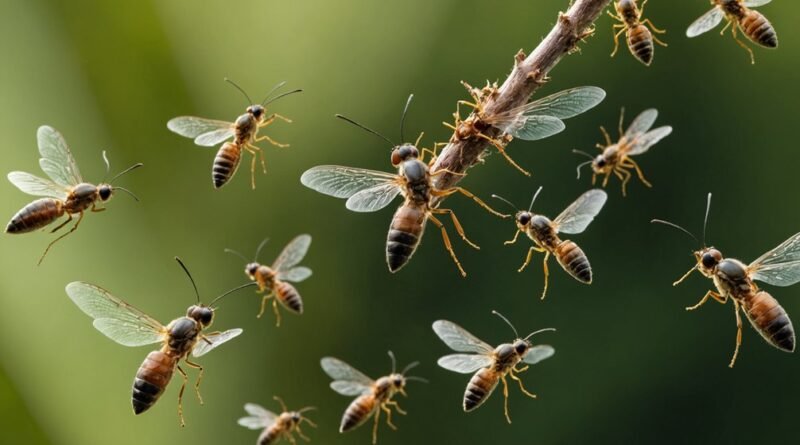
Flying Termites vs Flying Ants: How to Spot the Difference Fast
You can spot flying termites vs flying ants fast by checking three things. Ants have bent, elbowed antennae and a narrow “waist”; termites have straight antennae and a thick, straight body. Termite wings are equal in length, clear, and often shed in piles; ant front wings are longer, tinted, and usually stay attached. Termites move slower and signal serious hidden wood damage, while ants are usually less destructive, and the next steps show exactly what to look for.
Key Takeaways
- Termites have straight, bead-like antennae and thick waists; flying ants have elbowed antennae and a narrow, pinched “waist.”
- Termite swarmers have four equal, clear wings that stack evenly; flying ants have larger front wings that are tinted and more pointed.
- Piles of identical shed wings near windows or foundations usually indicate termites; mixed wing sizes and active trails suggest ants.
- Termites move slowly and drift when swarming, often after rain; flying ants move quickly and typically appear during warmer, dry weather.
- Flying termites signal possible serious, hidden structural wood damage; flying ants usually indicate more localized, moisture-related problems.
Ants vs Termites: 10-Second ID Checklist
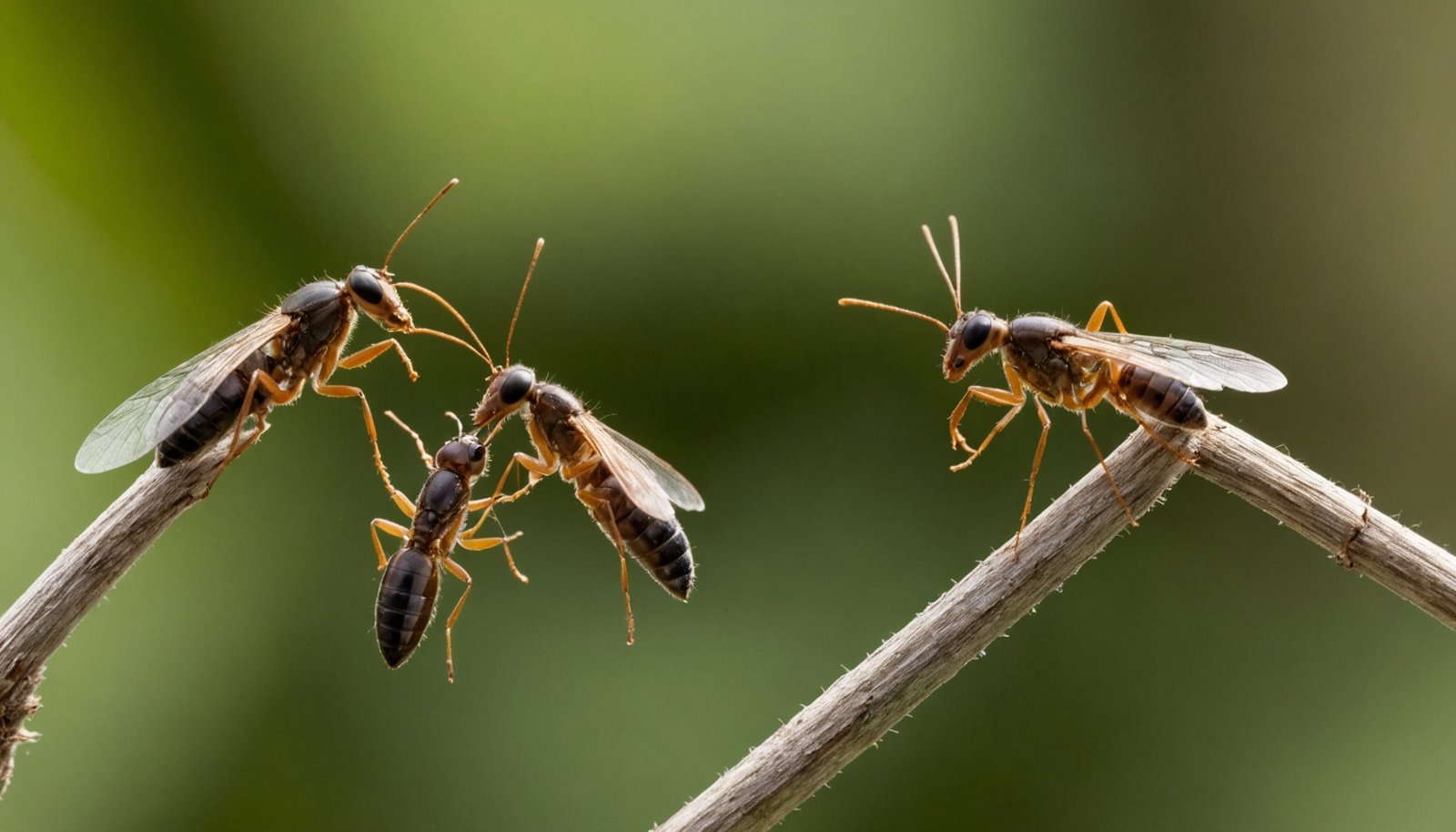
Next, zoom in on the antennae. Flying ants have bent, elbowed antennae with a sharp angle you can spot even with a basic close look. Termites have straight, bead-like antennae that resemble tiny balls on a string; they may droop, but they don’t kink. Termite wings often break off easily, so finding piles of perfectly matched, shed wings indoors is a strong sign you’re dealing with termites rather than ants. Finally, scan for clues around them. Trails and mixed groups of winged and wingless insects usually mean ants. Piles of identical, shed wings or insects disappearing into wood strongly suggest termites and a possible structural infestation.
Wing Differences: Length, Shape, and Shedding
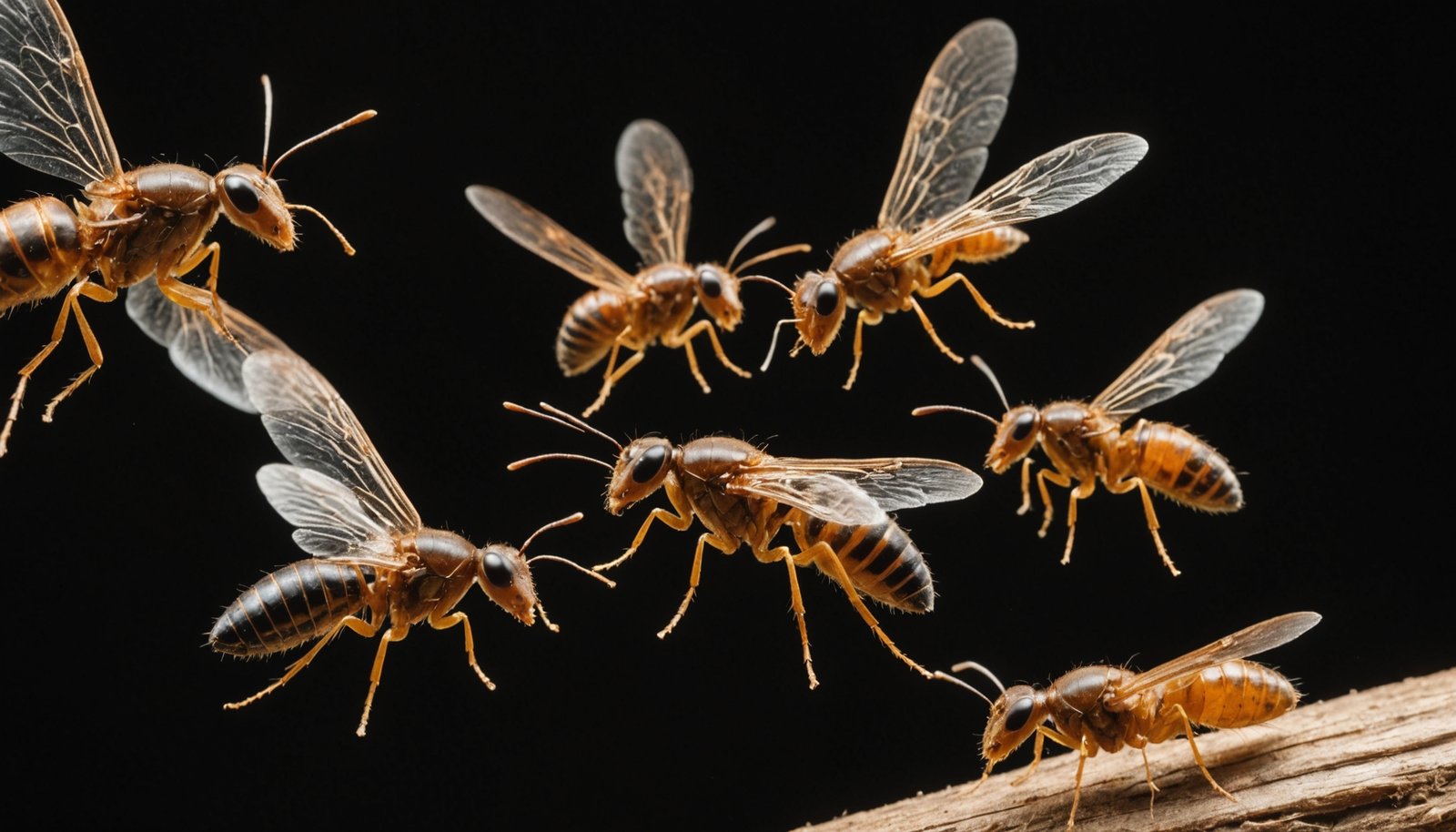
Once you’ve checked antennae and behavior, focus on the wings, because they tell you a lot at a glance.
Termite swarmers have four wings that are all the same length, and each wing is roughly twice the length of the body. The wings lie straight back and stack so neatly they almost look like a single white paddle on each side. After swarming, these termites shed their delicate wings around windowsills, doors, or light sources, leaving small piles that signal an established colony nearby.
Flying ants, by contrast, have front wings that are noticeably larger than the hind wings. Their wings look more proportionate to body length, not dramatically oversized.
Shape and color help too. Termite wings are clear or white-translucent and straight, with no tint. When stacked, they appear bold, bright, and uniform.
Flying ant wings are tinted—often brownish, sometimes yellowish—and the tips look more pointed, with a visible cleft between front and back wings.
Finally, check the ground: termite wings detach and pile up quickly after mating; ant wings usually don’t.
Body Shape and Antennae: Waistline and “Elbows
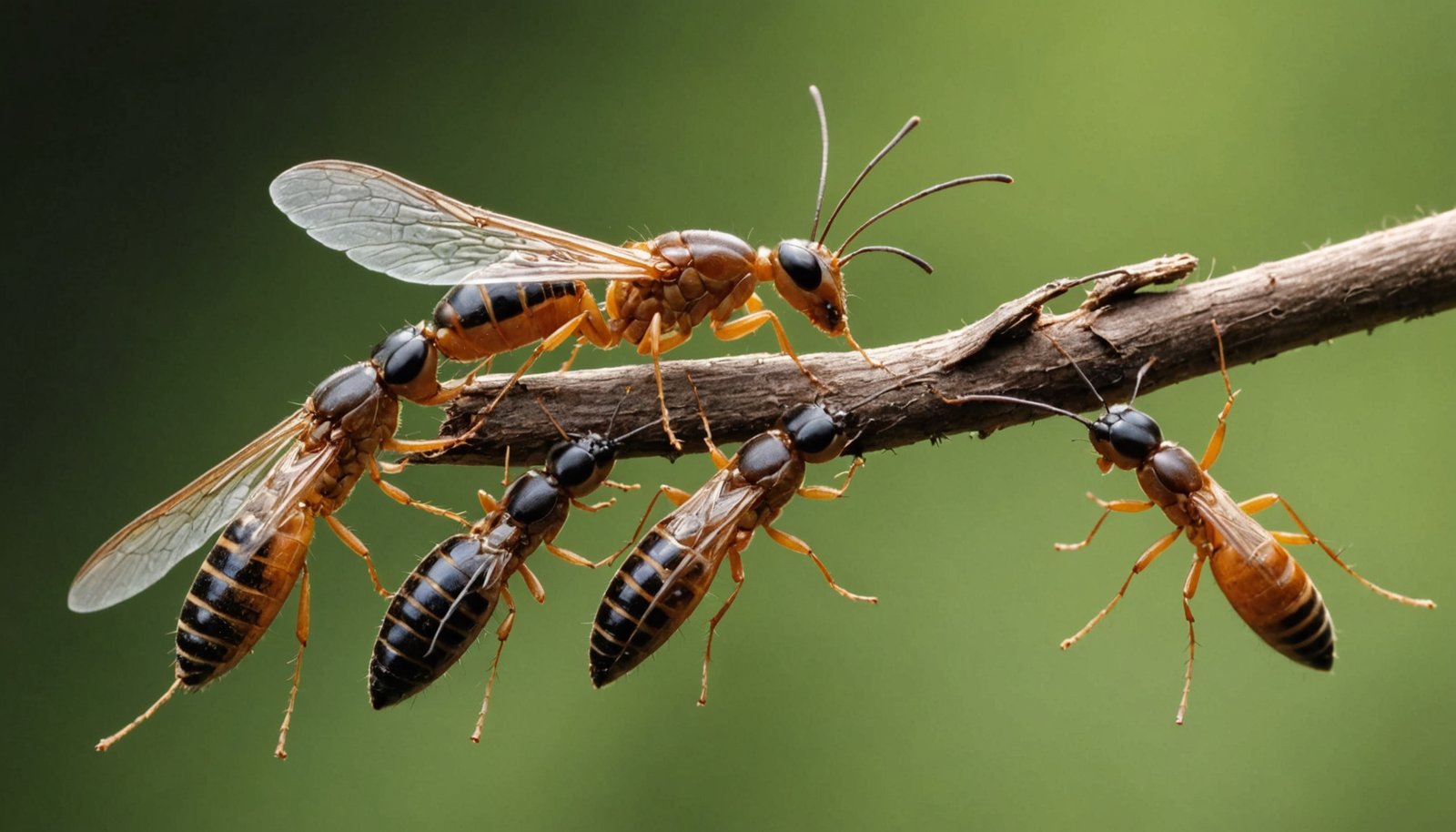
When you’re staring at a mystery insect, start by checking its waistline and antennae.
Termites have straight, uniform bodies and antennae that run in an unbroken line, while flying ants show a sharply pinched middle and clear bends near the base of each antenna. Termites also lack the distinct segmentation you see in ants, giving them a more uniform, tube-like body.
If you learn to spot these termite waists and antenna “elbows,” you’ll separate termites from ants in seconds.
Termite Waists And Bodies
Although termites and ants can look similar at a glance, their waists and overall body shapes quickly set them apart. When you spot a winged insect indoors, focus on the midsection. Termites have a broad, straight waist with no narrowing, while ants show a tight, pinched “hourglass” look that clearly divides the body. Unlike ants, termites appear more uniform in shape because their rectangular bodies lack the dramatic narrowing at the waist.
Use this mental snapshot:
- Termites look uniform from head to end, like a tiny cigar.
- Their bodies appear as two fused parts, without obvious separation.
- Ants show three clear segments: head, thorax, and abdomen.
- The ant’s waist visibly cinches in, creating a wasp-like profile.
- Even on very small insects, a straight waist points to termite, a squeezed one to ant.
Antennae Shape And Bends
After you’ve checked the waist, shift your focus to the antennae, because their shape offers an even clearer clue.
Termite antennae are straight or only gently curved, with no elbow near the head. They’re shorter than ant antennae and look like tiny, evenly beaded strings pointing straight out. You don’t need a magnifying glass—just note that they never bend sharply. Because termite antennae are straight and shorter, they’re a reliable clue that you may be dealing with termites, which typically require prompt professional treatment.
Flying ant antennae always show a distinct elbow. There’s a clear angle close to the head on workers, swarmers, and carpenter ants.
When you view them from the side, you’ll see three body segments and that obvious bend. Because wings can fall off and waists can be hard to judge, straight vs. elbowed antennae remain the most reliable distinction.
Color and Swarming: When You’ll See Each Insect
Color and flight patterns make it much easier to tell flying ants from termites once you know what to look for.
Flying ants usually look darker and more segmented, with black, brown, or reddish bodies and wings that appear rigid and slightly tinted, especially toward the tips.
Termite swarmers look more uniform in color, with blackish-brown to black bodies and pale, almost milky or smoky wings that seem soft and rounded.
You’ll most often see both insects swarming in spring, especially around windows and doors.
Watch how they move and where their wings end up.
- Dark, pointed wings that look stiff and unequal in length signal flying ants.
- Pale, rounded wings of equal length indicate termites.
- Fast, purposeful movement and quick scattering point to ants.
- Slow, drifting movement and tight clustering point to termites.
- Piles of identical shed wings near lights strongly suggest termite swarmers.
What Flying Termites vs Flying Ants Mean for Your Home
Spotting whether those winged insects are ants or termites doesn’t just satisfy curiosity—it changes how worried you should be. When you see flying termites, you’re looking at a warning that your home’s structure might already be under attack. They don’t just pass through; they signal a mature colony feeding on wood, flooring, or even wallpaper, often out of sight and for years. That’s why termite damage can slash your home’s value and trigger disclosure requirements when you sell.
Flying ants usually mean something different: damp or rotted wood that they’re hollowing out for nests, not eating. Repairs are annoying and can be pricey, but they rarely rival termite losses.
| Insect Type | What It Usually Means for Your Home |
|---|---|
| Flying termites | Possible major hidden structural damage |
| Flying ants | Localized damage, often tied to moisture problems |
| Termites present | Higher risk to equity and required disclosure |
| Ants present | Repairs needed, but typically manageable costs |
Immediate Steps to Take If You Suspect Termites
Once you suspect termites, move quickly but methodically so you don’t miss early warning signs. Start with a focused inspection: scan your foundation walls for pencil-thin mud tubes, then tap exposed beams, joists, and trim for hollow or papery sounds.
Use a flashlight in basements, crawl spaces, and attics to spot frass (wood-colored pellets), blistered paint, or soft, crumbling wood. Check around exterior meters, fuse boxes, and foundation cracks for possible entry points.
Next, call a licensed termite professional and request a WDI report. They’ll use tools like moisture meters and infrared cameras to confirm activity, species, and damage.
Call a licensed termite pro for a WDI report using moisture meters and infrared cameras to verify damage
While you wait, prep your home by clearing clutter from walls, pulling items two feet from the foundation, and protecting food and plants.
To picture what to look for, imagine:
- Vein-like mud tubes on concrete
- Buckling baseboards
- Shed wings on windowsills
- Small kick-out holes in wood
- Sawdust-like frass on floors
Conclusion
Now you can spot the clues in seconds—wing shape, waistline, antennae, color, and when they swarm. If you see flying ants, you’re probably dealing with a nuisance. If you see flying termites, your home could be at risk. Use what you’ve learned to check your windows, lights, and foundations, then act fast. When in doubt, call a pro and protect your home before hidden damage spreads.