How Much Does Termite Treatment Cost? (2026 Complete Guide)
You’ll typically spend a few hundred to several thousand dollars on termite treatment in 2026, depending on your home’s size, the infestation’s severity, and the method you choose. Basic spot treatments start around $150–$500, while standard whole-home jobs usually run $700–$2,000. Severe infestations, tenting, or large homes can push costs above $5,000. You’ll also want to factor in inspection fees, repair costs, and annual protection plans, which you can understand in more detail next.
Key Takeaways
- Termite treatment typically ranges from $225 for minor jobs to over $8,000 for whole-home tenting, with most standard treatments costing $700–$2,000.
- Costs depend on home size, region, and infestation severity; small homes may pay $225–$900, while large or multi-unit buildings can exceed $5,000.
- Treatment method matters: liquid soil barriers usually cost $1,000–$3,200, bait systems $1,500–$3,000, and tenting $1,200–$2,500 for severe infestations.
- Subterranean termite treatments often run $3–$20 per linear foot, while drywood or dampwood treatments usually cost $225–$2,500+, sometimes reaching $8,000.
- Ongoing protection such as termite bonds and monitoring plans generally costs $400–$1,600 annually, helping prevent future infestations and expensive structural repairs.
How Much Does Termite Treatment Cost in 2026?
When you’re budgeting for termite treatment in 2026, you can expect costs to range widely—from about $225 for minor spot treatments up to $8,000 or more for whole-home tenting and severe infestations.
Most standard extermination jobs fall between $700 and $2,000, but basic chemical or bait treatments can be as low as $150 to $505 when the problem’s caught early. Termite inspection fees typically range from $0 to $250, with some companies offering free inspections.
If you need more intensive work, such as extensive structural treatments or combining methods, you could pay $2,500 to $5,000 or more.
Whole-home tent fumigation typically lands between $2,000 and $8,000, especially when infestations are advanced.
On top of the initial visit, you’ll likely pay for protection going forward.
Annual termite warranties and monitoring plans usually cost $400 to $1,600, depending on the company, coverage level, and your risk factors.
These recurring costs help you catch new activity before it becomes another expensive infestation.
Termite Treatment Costs by Home Size
Termite treatment costs scale quickly with your home’s size because pros price most methods by square foot or linear foot of foundation and perimeter.
Termite treatment pricing rises quickly with home size since most pros charge per square or linear foot
For small homes under 1,500 square feet, you’ll typically pay $225 to $900 for subterranean termite work, with minor infestations often running $263 to $620. Basic small jobs can start as low as $75, while localized spot treatments cost about $6 to $8 per square foot. Most small single-family homes land around $700 to $1,000.
For medium homes, costs climb with added area and perimeter. Standard infestations usually fall between $700 and $2,000, though the national average hovers near $694. Perimeter chemical work runs $3 to $20 per linear foot. Many homeowners also budget an additional $100 inspection fee to confirm the presence and extent of termites before committing to treatment.
Large homes and multi-unit buildings see the steepest bills. Whole-structure projects often exceed $5,000 and can top $9,300 for severe infestations, especially when extensive coverage and labor are required.
Termite Treatment Costs by Method
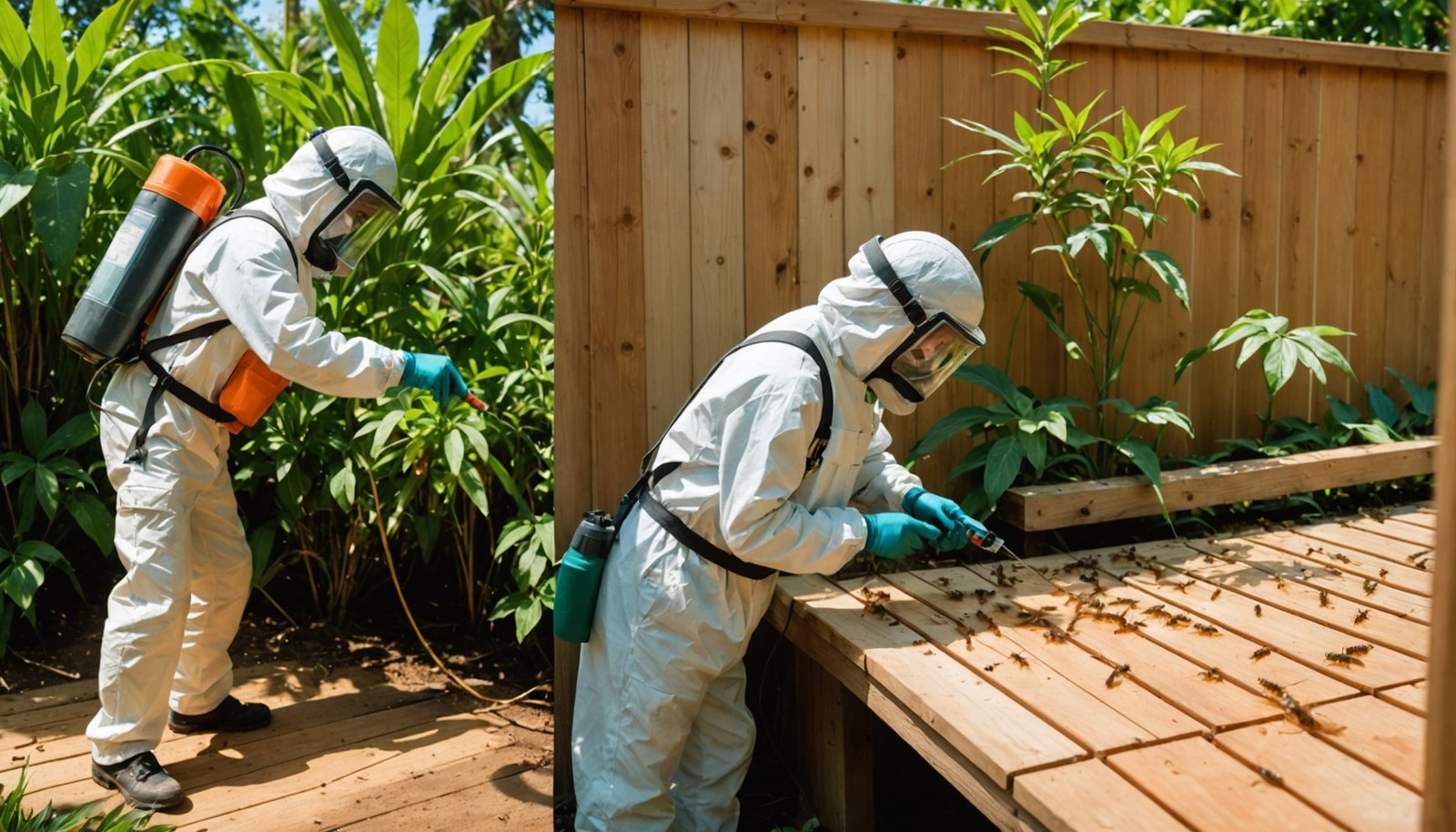
When you compare termite treatment options, costs vary widely depending on whether you choose chemical soil treatments, bait stations, or full-home tenting. Each method targets termites differently, comes with its own price range, and affects how long you’ll need to be out of your home. Tenting is one of the most expensive pest control methods, often costing homeowners between $2,000 and $5,000 for a full-home treatment. Understanding these differences helps you match the treatment method to your infestation level and budget.
Chemical Soil Treatments
Among the most common and cost-effective termite control options, chemical soil treatments create a protective barrier around your home’s foundation. Pros drill small holes around the perimeter, inject liquid termiticide, and sometimes spray key entry points so termites carry the chemical back to underground colonies. Because chemical treatment usually costs less per linear foot than bait systems, it’s often the more budget-friendly option for larger homes. You’ll usually pay by linear foot of foundation, averaging $3 to $20 per foot, with most homeowners spending $1,000 to $3,200 for a full liquid barrier.
To picture the costs:
- A small 46-foot bedroom wing might run $138 to $736.
- A typical Phoenix 2,500 sq.ft. home often costs $320 to $1,260.
- Moderate subterranean termite jobs range from $225 to $900.
- Severe, whole-home infestations can exceed $2,000, especially in large homes.
Bait Stations and Tenting
While liquid soil barriers shield your foundation from the outside, bait stations and whole-home tenting take a different approach to stopping active colonies.
Bait systems surround your home with stations every 15–20 feet, drawing in worker termites that carry slow-acting poison back to the colony. For a 2,000-square-foot home, initial installation averages about $1,000, with full-home systems typically totaling $1,500–$3,000, or $8–$12 per linear foot. Options like Sentricon Always Active often start around $900. Many companies include a transferable warranty with bait systems that can be passed to future buyers and adds resale value and peace of mind.
You’ll also pay about $200 per year for inspections, monitoring, and bait replacement, which can make long-term costs higher than a one-time liquid treatment.
For severe or widespread infestations, tented fumigation ($1,200–$2,500) may be necessary to reach hidden termites throughout the entire structure.
Termite Treatment Costs by Termite Type
When you look at termite treatment costs, the species you’re dealing with matters just as much as the method.
Subterranean termites often require perimeter trenching, liquid barriers, or bait stations, while drywood and dampwood termites usually call for wood removal, localized spot treatments, or even whole-house tenting.
Subterranean Termite Treatment Costs
You’ll usually see pricing based on linear footage around your foundation, at roughly $3 to $20 per foot, or about $320 to $1,260 for a 2,500-square-foot home.
- Picture a trench circling your foundation, filled with chemical barrier.
- Bait stations dotting garden beds like small utility caps.
- Technicians probing soil along every exterior wall.
- A full-perimeter shield quietly blocking hidden colonies.
Drywood and Dampwood Pricing
Drywood and dampwood termites almost always sit at the higher end of the termite treatment cost spectrum because they live inside the wood itself, not in the soil.
You’ll typically pay $225 to $2,500+ for either type, but severe, whole-home tenting can push totals toward $8,000.
For drywood termites, pros often start with bait stations for early infestations. Larger colonies usually need gas fumigation or heat treatment, and sometimes whole-home tenting, which drives up labor and material costs.
Dampwood termites fall in a similar price range. You’ll usually combine removal of infested wood with borate or liquid termiticide applications.
In advanced cases, tented fumigation becomes necessary. These specialized, intensive methods are why drywood and dampwood treatments cost more than subterranean work.
Texas Termite Costs vs. National Averages
Although Texas termite treatment prices fall close to national norms, they typically trend slightly lower across most scenarios and locations. You’ll usually pay around $500 for a liquid treatment on a 2,500-square-foot home, compared with national exterior barrier projects that can climb to $2,500.
Texas termite treatments usually cost less than national averages, often around $500 for a typical home
Even large or severe infestations in Texas often sit just under U.S. averages.
Here’s how Texas stacks up so you can picture real numbers:
- Perimeter size – For 200 linear feet, you might spend $575–$3,080 in Texas versus $600–$3,200 nationally, saving a bit as the perimeter grows.
- Infestation size – A small Texas infestation runs about $240–$1,155, slightly below the $250–$1,200 national band.
- City snapshots – Austin often lands in the mid-$300s, while Houston averages about $515, still competitive nationally.
- Treatment methods – Texas liquid barriers typically range $500–$2,500, and bait systems $1,200–$2,500, often under comparable national setups.
Termite Inspection, Repair, and Annual Plan Costs
While treatment prices get the most attention, the real long‑term costs of termites often come from inspections, repairs, and ongoing protection plans. A standard termite inspection typically runs $75 to $150, with many companies offering free inspections for non–real estate purposes.
One-time inspections can range from $50 to $350, depending on your home’s size, location, and accessibility.
If you’re buying or selling, expect specialized fees. A termite inspection for a home sale averages about $165, while official reports or clearance letters usually cost $100 to $200. VA loan inspections run about $50 to $150, and FHA inspections about $100 to $200.
For ongoing protection, a termite bond—which combines warranty, extermination, and prevention—usually costs $500 to $2,000.
Annual plans with routine pest control and inspections often cost $100 to $300 per quarter. After treatment, repairs might range from $200 to $500 for minor damage, but severe issues can reach $3,000.
How to Budget and Save on Termite Treatment
Termite costs add up fast once you factor in inspections, repairs, and annual plans, so you’ll want a clear strategy for what you spend on treatment itself.
Start by matching the method to your infestation. Subterranean termites often respond well to liquid barriers at $4–$16 per linear foot or bait systems around $1,500–$3,000, which can be cheaper than full fumigation.
Use these tactics to picture and control your budget:
- Imagine a floor plan: you treat only one wing with a $350–$1,000 spot treatment instead of tenting the whole house for $1,500–$5,000.
- Picture a calendar: you lock in a $65–$400 annual plan instead of scrambling for a $1,200 emergency job.
- Line up quotes: compare providers like Terminix ($400–$1,500/year) vs. Orkin ($500–$1,600).
- Visualize damage spreading: early $150–$400 treatment prevents repairs that can top $5,000.
Conclusion
Termites are expensive, but they’re manageable when you plan ahead. By understanding how treatment costs vary by home size, method, and termite type—especially in Texas—you can choose the right approach without overpaying. Schedule inspections regularly, compare quotes, and ask about warranties and annual plans to spread out costs and prevent surprise damage. When you stay proactive, you’ll protect your home, your budget, and your peace of mind for years to come.