
Orange Oil Termite Treatment: Pros, Cons and Effectiveness
Orange oil termite treatment uses d‑limonene to kill drywood termites on contact, making it a low‑toxicity, “green,” and convenient option for small, accessible infestations. You avoid tenting, moving out, and heavy chemicals. However, it only kills termites it directly reaches, won’t stop subterranean termites, offers no lasting protection, and can miss hidden galleries, leading to reinfestation. It’s best as a limited spot treatment, and there’s more you should know before deciding.
Key Takeaways
- Orange oil is a low-toxicity, d‑limonene-based spot treatment best suited for small, accessible drywood termite infestations—not subterranean or widespread problems.
- It kills termites and eggs on contact inside drilled galleries but has limited penetration and no long-lasting residual protection.
- Effectiveness in real homes is highly variable, with reported termite mortality ranging roughly from partial control to near elimination.
- It offers minimal disruption, no tenting or evacuation, and can be economical compared with whole-structure fumigation for localized infestations.
- For hidden, structural, or extensive infestations, whole-structure treatments like fumigation are generally more reliable than orange oil spot treatments.
Is Orange Oil Termite Treatment Right for Your Home?

When you’re weighing orange oil for termite control, the first question is whether your home’s problem fits what this treatment actually does well.
Orange oil works best when you’ve got a small, localized drywood termite issue in accessible wood. If a pro can drill every 3–5 inches along visible galleries and thoroughly inject, you may see strong results and decent value, especially versus whole-house fumigation.
You shouldn’t choose orange oil if you’re dealing with subterranean termites or a widespread, hard‑to‑map infestation. It can’t reach underground colonies or hidden structural areas, and missed galleries mean termites survive and spread. Because orange oil treatments are biodegradable and break down relatively quickly in the environment, they don’t provide long-lasting residual control once the initial application has dissipated.
There’s also little residual protection; survivors or new swarmers can re‑enter untreated wood, so follow‑up inspections and repeat spot treatments are common.
How Orange Oil Termite Treatments Actually Work

To understand whether orange oil really fits your situation, you need to see what it actually does inside the wood. The active ingredient, D-limonene from orange peels, attacks drywood termites on contact. It penetrates their waxy outer layer, dissolves the exoskeleton, and breaks down cell membranes. This disruption wrecks their respiratory system, causing dehydration and death within minutes, often “melting” termites and eggs hidden in galleries. Although it kills quickly, orange oil has a relatively short residual effect, remaining active for only a few days after application.
A technician drills tiny 1/16-inch holes into infested trim or beams, then injects orange oil directly into termite tunnels. The oil moves through the wood’s porous cells by capillary action for several hours before evaporating. During that window, it kills any termites it touches and can repel others from treated zones.
However, it only works where the oil actually reaches. It doesn’t travel through soil, so it’s unreliable against large or hidden subterranean colonies and often leaves untreated termites elsewhere.
Pros of Orange Oil Termite Treatments for Homeowners
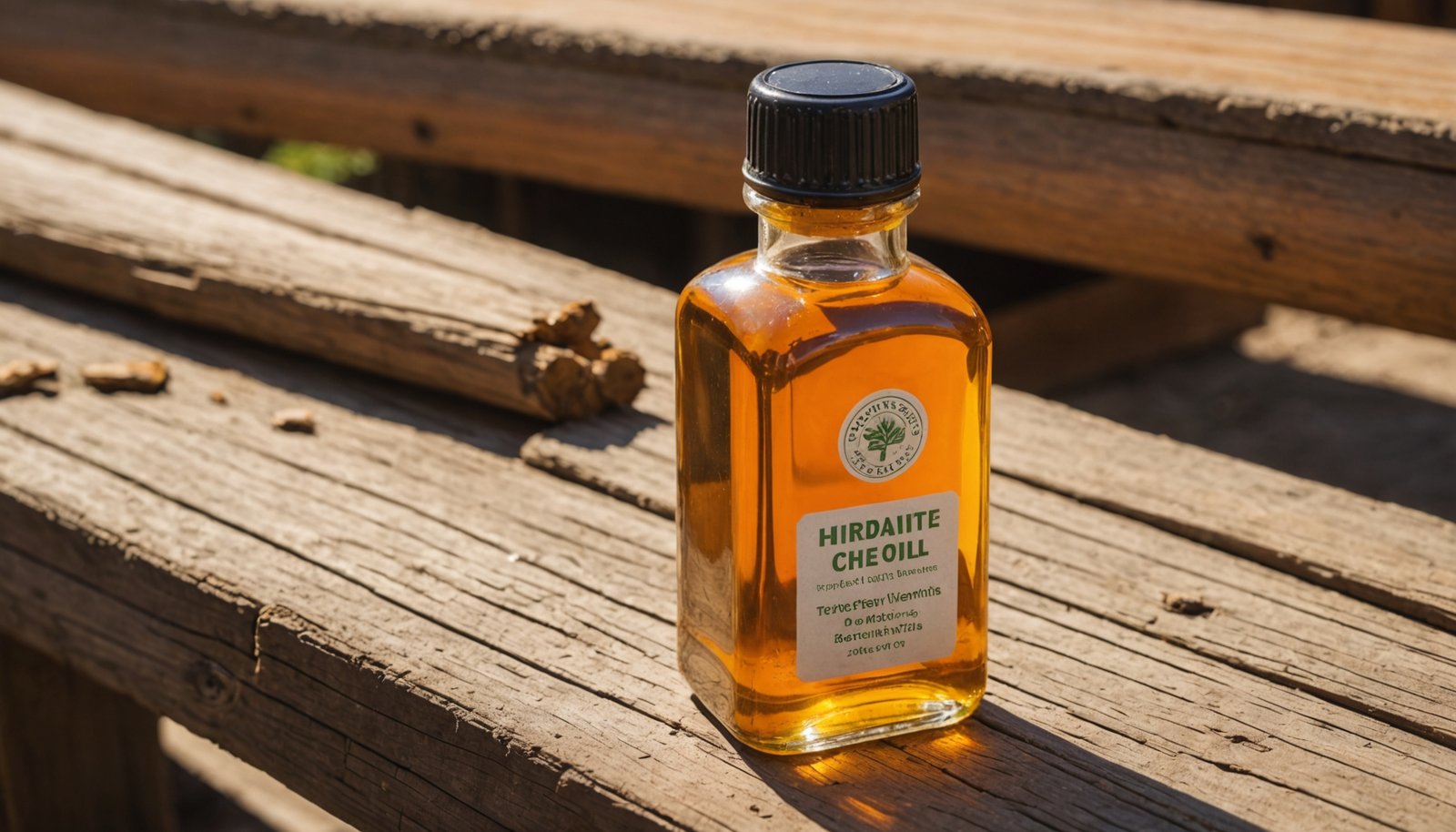
When you’re comparing termite control options, orange oil stands out for its ability to target localized infestations without treating your entire home. You can focus directly on the affected wood, limiting disruption and unnecessary exposure to chemicals. At the same time, you’re choosing a low-toxicity treatment that’s safer for your family, pets, and indoor environment than many traditional pesticides. Because orange oil is a localized treatment, it is generally best suited for smaller drywood termite infestations rather than whole-structure problems.
Localized Infestation Control
Although many termite treatments disrupt your entire household, orange oil stands out for its ability to control localized infestations with minimal impact on your daily life. You don’t have to tent the house, evacuate for days, or bag food and move plants. Technicians drill into the affected wood, inject orange oil, and target only the sections where drywood termites are active, letting you keep your normal routines. Because orange oil is a low toxicity treatment that doesn’t require removing plants or pets, it’s often preferable for homeowners concerned about chemical exposure inside living spaces.
You also avoid the heavy prep and cleanup that come with whole-house fumigation. Because the treatment’s confined to identifiable areas, it’s often more economical for small, contained problems and doesn’t create extra housing or storage costs.
| Benefit Type | What You Do | What You Avoid |
|---|---|---|
| Daily life impact | Stay home | Multi-day evacuation |
| Preparation | Clear small work areas | Tenting and structural sealing |
| Cost for small jobs | Pay for spot work | Whole-structure treatment expenses |
| Environmental load | Treat specific wood | Widespread chemical application |
Low-Toxicity Treatment Option
Because orange oil comes from citrus peels rather than a lab-made cocktail of harsh chemicals, it offers a genuinely low-toxicity way to tackle drywood termites without turning your home into a hazardous zone.
You’re using a plant-based, biodegradable product that’s sourced from orange industry byproducts, so you’re not adding persistent synthetic compounds to your living space.
You can stay home during treatment because there’s no need for tenting, evacuation, or extreme precautions.
Studies haven’t reported adverse effects on residents or pets, making it especially appealing if you’ve got children, elderly family members, or anyone with chemical sensitivities. Related posts on topics like “Is Orange Oil Safe?” and “Garden Pests in Southern California” can help you see how this fits into a broader, low-impact pest management strategy.
Orange oil doesn’t leave harmful residues, doesn’t persist in soil or air, and carries minimal risk of groundwater contamination, aligning with green, integrated pest management approaches.
Big Drawbacks and Limitations of Orange Oil Treatments
Despite the eco-friendly image and citrus scent, orange oil termite treatments come with serious drawbacks that limit their effectiveness against real-world infestations. Orange oil only kills termites it touches, so it doesn’t spread through the colony or reach hidden queens. Termites can simply avoid treated zones, leaving undetected pockets alive and active.
Because the oil penetrates poorly, you’re limited to surface galleries and accessible wood. Deep colonies inside walls or structural members often remain untouched unless you allow invasive drilling into many areas. Even then, you’re guessing where every gallery is.
Any protection you get is short-lived. Orange oil breaks down quickly, losing most of its strength within weeks, so it doesn’t create a lasting barrier or stop reinfestation.
On top of that, you’re dealing with a flammable product that can irritate skin, eyes, and lungs, leave sticky residue, attract dirt, and it won’t work on subterranean termites at all.
Effectiveness on Drywood Termites: What Studies Show
When you look at the research, orange oil shows strong lab kill rates on drywood termites but leaves a surprising number of survivors even under ideal test conditions.
Field studies in actual homes show even more variable results, with effectiveness ranging from partial control to near elimination depending on access to the galleries.
Understanding these lab and field patterns helps you see where orange oil works best: as a focused, localized treatment rather than a whole-structure solution.
Laboratory Results On Kill Rates
Although orange oil is often promoted as a “natural” solution, laboratory studies show its kill rates on drywood termites are driven by hard chemistry, not marketing claims. In controlled tests, d‑limonene dissolves termite exoskeletons on contact. Sand treated with just 0.2–0.4% orange oil killed all exposed termites within 72 hours, and galleries directly injected in the lab reached 100% mortality. However, even a 92% d‑limonene product (XT‑2000) achieved only about 50% eradication in some direct‑treatment trials.
| Lab Finding Type | Key Result | What It Means For You |
|---|---|---|
| Contact toxicity | 100% kill in galleries, sand tests | Direct hit is lethal |
| High‑strength product | ~50% survival in treated wood | Termites can remain inside wood |
| Fumigant action | Vapors kill in ≤5 days at high doses | Works as a short‑range fumigant |
| Antifeedant effects | Reduced feeding at lower doses | May slow damage, not always kill |
| Residual persistence | Potent only 3–8 days | Protection drops quickly after treatment |
Field Performance In Homes
In real homes rather than controlled labs, orange oil’s performance against drywood termites looks mixed and highly dependent on how and where it’s applied. Field tests show it can kill up to 81% of termites when technicians thoroughly saturate infested boards, yet hundreds of termites sometimes survive. Because a colony can rebound from as few as 20 workers, that surviving fraction matters.
Field studies report termite mortality ranging from about 48–100%, depending on wood size, species, and application thoroughness.
Acoustic monitoring one month after treatment found 22–90% reductions in termite activity across different materials.
Companies treating thousands of structures report 5–15% callback rates, similar to fumigation, but stress that you must locate and inject every active gallery, or hidden colonies remain.
Best Uses For Localized Infestations
Used as a carefully targeted, localized treatment, orange oil can work reasonably well against drywood termites you can actually find and reach, but studies show its impact is inherently limited.
In lab tests, even with maximum application and full access to infested wood, orange oil killed about 81% of termites, leaving hundreds alive. That’s important because colonies can rebound from just a few dozen survivors.
You’ll get the best use from orange oil when you have small, well‑defined infestations in exposed wood members you can drill into and saturate thoroughly.
It’s a practical spot treatment for accessible galleries, but it won’t reach termites hidden behind drywall, roofing, or insulation.
For widespread or uncertain infestations, you’ll need whole‑structure options like fumigation instead.
Subterranean Termites: Where Orange Oil Fails
Because subterranean termites live and breed deep in the soil instead of inside the wood itself, orange oil simply can’t reach the heart of their colonies.
Subterranean termites nest deep underground, so orange oil never reaches the core of their hidden colonies
You inject orange oil into wood, but these termites spend most of their lives underground, only surfacing through hidden mud tubes to feed. That means the contact-based ingredient, d-limonene, rarely touches the majority of the colony, including the queen and brood.
Orange oil also doesn’t last. Its killing power drops sharply after a few days, so it can’t create a protective barrier in soil the way dedicated subterranean treatments do.
Surviving termites in untreated ground easily reinfest.
You’ll run into major limitations:
- Colonies hide in soil, far beyond orange oil’s reach
- Only termites that touch treated wood die; others survive
- No residual protection, so underground colonies keep attacking
Spot Treatments vs Fumigation: Coverage, Cost and Disruption
Although both methods aim to wipe out drywood termites, spot treatments with orange oil and whole-structure fumigation tackle the problem in very different ways—and with very different trade-offs. With orange oil, you only treat visible or accessible galleries, injecting every 5 inches where you or the inspector find activity. That can work for small, localized infestations, but it can miss hidden colonies, which helps explain callback rates around 5–15%.
| Factor | Spot Treatments (Orange Oil) |
|---|---|
| Coverage | Localized; 48–100% kill in treated wood, but misses hidden areas |
| Cost | Lower upfront for small problems; repeat visits can add up |
| Disruption | No evacuation; some drilling and lingering citrus odor |
| Factor | Fumigation |
| Coverage | Whole-structure; reaches inaccessible voids and swarming sites |
| Cost | Higher upfront; often cheaper than large-scale spot work |
| Disruption | Full evacuation, tarping, and downtime for gas and aeration |
How Long Orange Oil Treatments Last (And Don’t Last)
When you’re weighing spot treatments against fumigation, it’s not just coverage that matters—it’s how long the treatment keeps working after you drill and inject.
With XT‑2000 Orange Oil Plus, most of the action happens fast. D‑limonene floods the galleries, dissolves termite exoskeletons, and kills exposed termites and eggs within hours. You’ll often see an immediate drop in activity.
D‑limonene rushes through termite galleries, dissolving exoskeletons and wiping out exposed colonies within hours
But the residual doesn’t last. The oil evaporates from wood pores within 4–5 hours, and lab data shows about a 93% breakdown within three weeks. In practice, you get only a few days of meaningful protection.
- Short residual: typically 3–8 days of activity in treated wood
- Local impact: temporary repellent effect in spots you actually drilled
- Ongoing work: repeated applications and monitoring to chase missed colonies
Because inaccessible termites and new swarms aren’t protected, you’re vulnerable to reinfestation unless you keep retreating.
What Orange Oil Treatments Really Cost and Cover (Safety, “Green” Claims, and When to Skip Them)
Before you sign up for an orange oil treatment, it helps to strip away the marketing and look at what you’re actually buying: a relatively low‑toxicity, localized service that can be cost‑effective for small, exposed infestations but offers limited coverage, short‑lived protection, and no true “green” certification.
You’ll typically pay $200–$600 for spot work and $1,000–$3,000 for barrier-style treatments; large projects can hit $2,500–$5,000+ and sometimes rival or exceed fumigation costs.
Because orange oil only kills termites in drilled, directly treated wood, any hidden or subterranean colonies keep going. That makes it a poor fit for widespread, hidden, or subterranean infestations, or when you need full eradication.
On the plus side, toxicity is relatively low, you can reoccupy right away, and environmental liability is reduced.
Still, orange oil isn’t Green‑Rated, and other products can be even safer, despite weaker eco-marketing.
Conclusion
Orange oil termite treatment can be a useful tool, but it’s not a cure‑all. It works best as a targeted spot treatment for small, accessible drywood infestations, not widespread or hidden colonies—or subterranean termites. If you’re weighing it against fumigation, think about coverage, disruption, long‑term protection, and real costs, not just “green” claims. Talk with a licensed pro, compare options, and choose the method that truly protects your home, not just the trendiest one.