What to Do When You Find Flying Termites Inside Your House
If you see flying termites inside, act quickly. First, confirm they’re termites (straight waist, equal wings) not ants. Don’t spray; instead, collect a few in a jar with rubbing alcohol and photograph where they appeared. Vacuum up the rest, then empty the vacuum into a sealed bag outside. Call a licensed termite pro right away, since swarmers mean a mature colony may be eating your home and there’s a lot more you can do next.
Key Takeaways
- Confirm they are termites, not flying ants, by checking for straight waists, equal-length wings, and straight bead-like antennae.
- Treat indoor swarmers as urgent: they signal a mature, hidden colony possibly damaging the structure.
- Preserve evidence by collecting several swarmers and wings in alcohol, taking timestamped photos, and noting exact locations of emergence.
- Avoid DIY sprays; vacuum visible swarmers, seal and discard the bag outside, then pause further cleanup until a professional inspection.
- Contact a licensed termite professional immediately for a full inspection and tailored treatment plan, then follow recommendations to reduce moisture and seal entry points.
Are They Flying Termites or Ants?
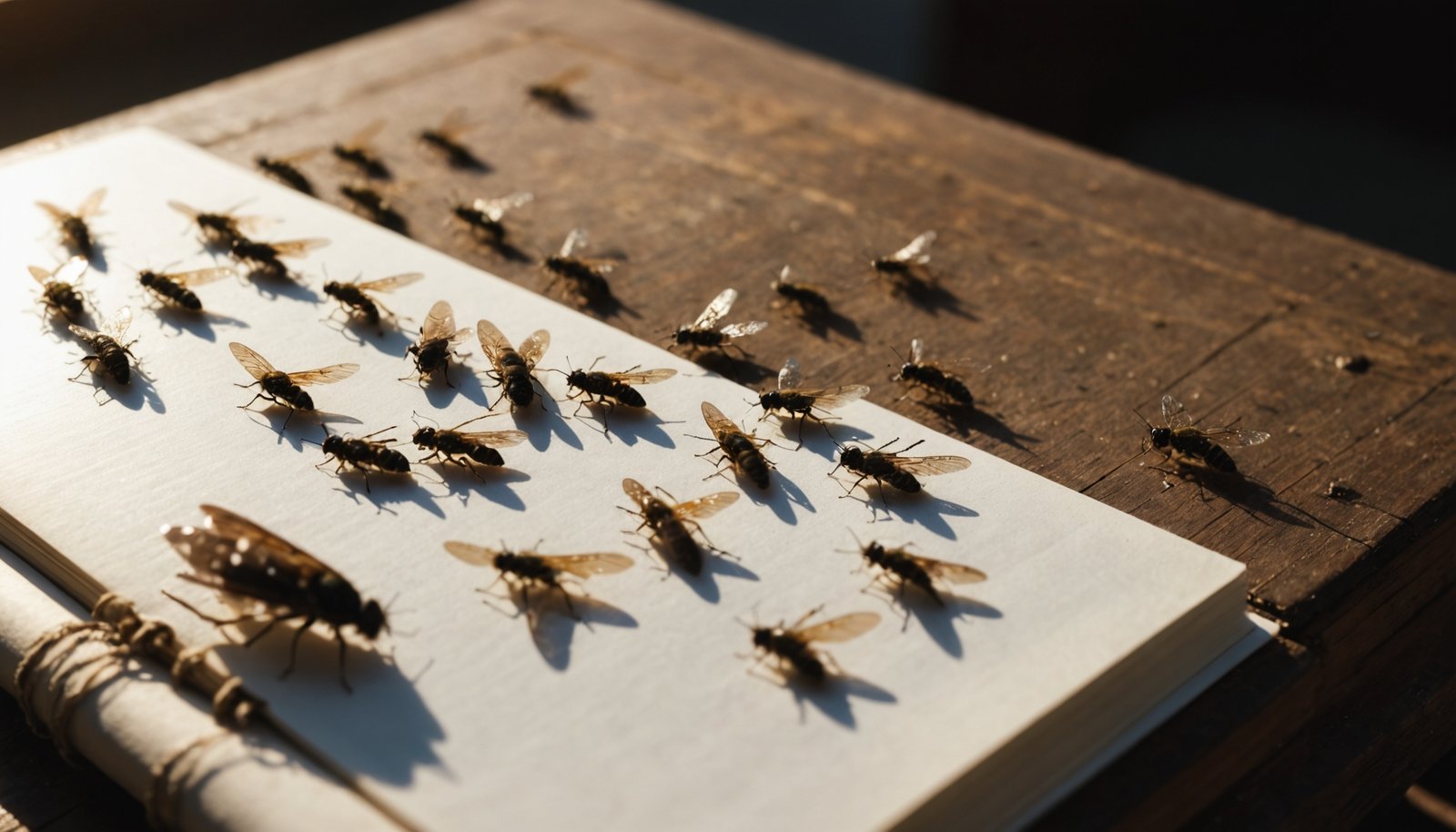
Before you grab the bug spray, you need to know whether you’re looking at flying termites or flying ants, because the treatment and the stakes are very different.
Start with the body. Termites have a straight, tube-like body with a thick, uniform waist and a soft look. Flying ants have a clearly pinched waist, creating three distinct segments, and a harder, more sculpted outline. Termite swarmers are also noticeably smaller than carpenter ant swarmers. Because termites actually eat wood while ants are omnivores, seeing termites indoors is a stronger warning sign of possible structural damage.
Next, check the antennae. Termite antennae are straight, short, and bead-like. Ant antennae bend at a sharp “elbow” and look longer and stick-like.
Then look at the wings. Termite wings are white, translucent, equal in size, and about twice the body length, lying flat and stacked over the body.
Flying ants have front wings longer than the back pair, shorter overall, slightly tinted, pointed at the tips, and they don’t stack neatly.
What Flying Termites in Your House Actually Mean
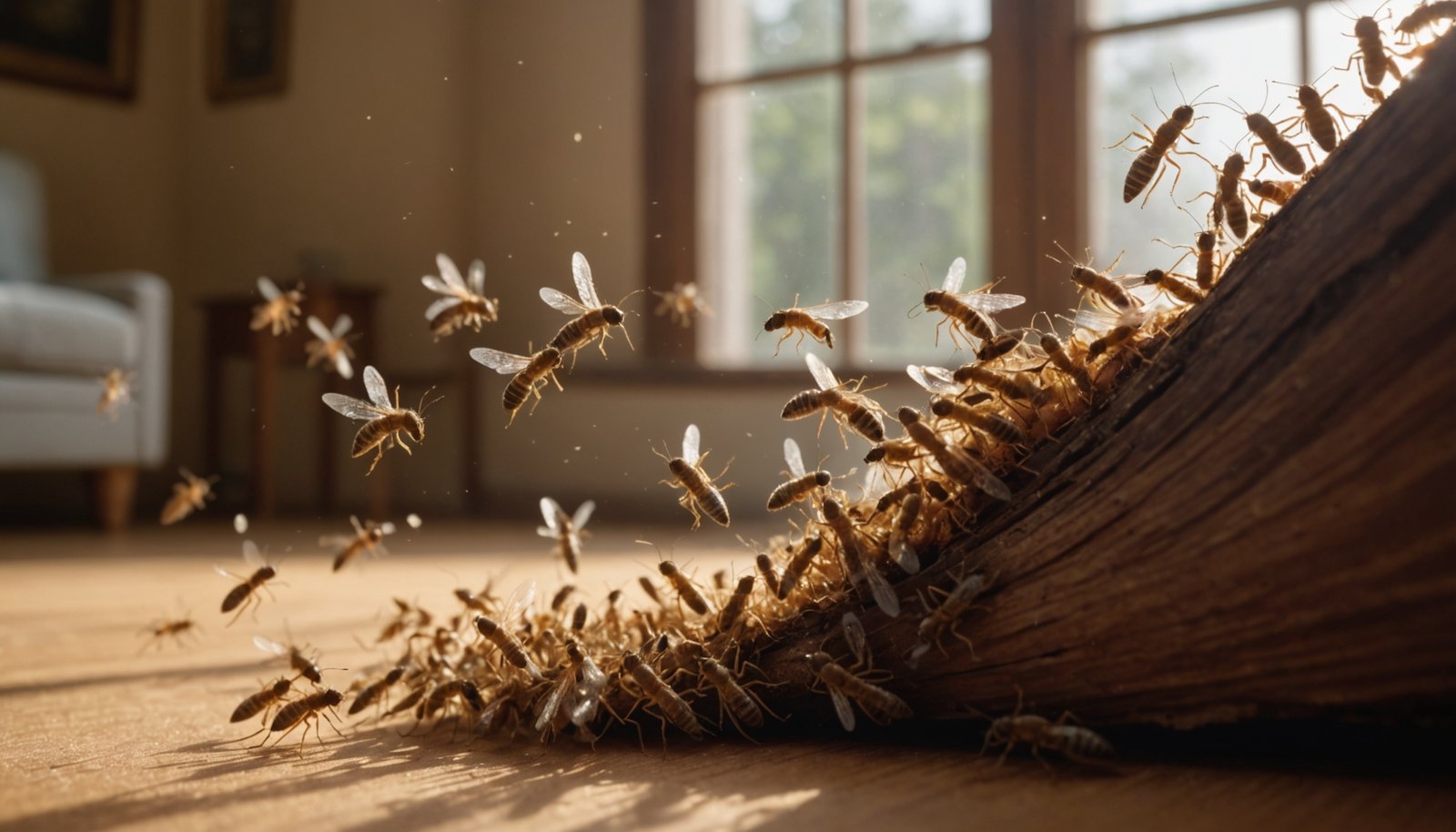
When you spot flying termites, or swarmers, in or around your home, they’re usually a warning that a hidden colony is reproducing nearby. In many cases, seeing these flying termites means there may already be an infestation in or near your home.
Your biggest job is to figure out whether those swarmers are just passing through from an outdoor nest or coming from an active infestation inside your structure.
Understanding that difference tells you how urgent your response needs to be and what kind of treatment makes sense.
Swarmers Signal Hidden Colonies
Although flying termites might look like a short‑lived nuisance, their appearance inside your home almost always signals a large, mature colony already feeding on your structure.
Termite colonies usually need at least five years before they produce swarmers, so seeing them indoors means the parent nest has been growing and chewing unseen for a long time. Pressing your ear against suspicious wood can sometimes reveal faint chewing noises from worker termites, offering another clue that an active colony is already established nearby.]
You’ll often notice swarmers pouring from wall cracks, crawl spaces, or gaps near the foundation, then clustering around lights, windows, and doors.
After they mate, they shed translucent, equal‑sized wings that collect on windowsills and under light fixtures.
Those piles of wings show swarmers successfully entered your home and started new nests nearby—an urgent warning that hidden colonies may already be tunneling through critical wooden supports.
Infestation vs Outdoor Activity
Seeing flying termites indoors can feel like an emergency, especially knowing swarmers often point to hidden colonies. However, their presence doesn’t always mean your home’s already under full‑scale attack. A few dozen termites fluttering around lights often come from outdoor colonies drawn to bulbs, porch lights, or downlights.
Formosan termites are especially attracted to bright lighting and may slip under doors or through gaps without nesting inside. Spring and summer are when you’re most likely to notice these swarmers, because termite activity and swarming increase in warmer months.
Use numbers and evidence to gauge risk. Dozens of swarmers and scattered wings near doors or windows usually suggest outdoor visitors.
Hundreds of swarmers, piles of wings, mud tubes on foundations, frass, hollow wood, or sagging floors point to an active infestation.
Any swarm or wing piles indoors still warrant quick, professional inspection.
Is It an Emergency? When to Call Fast?
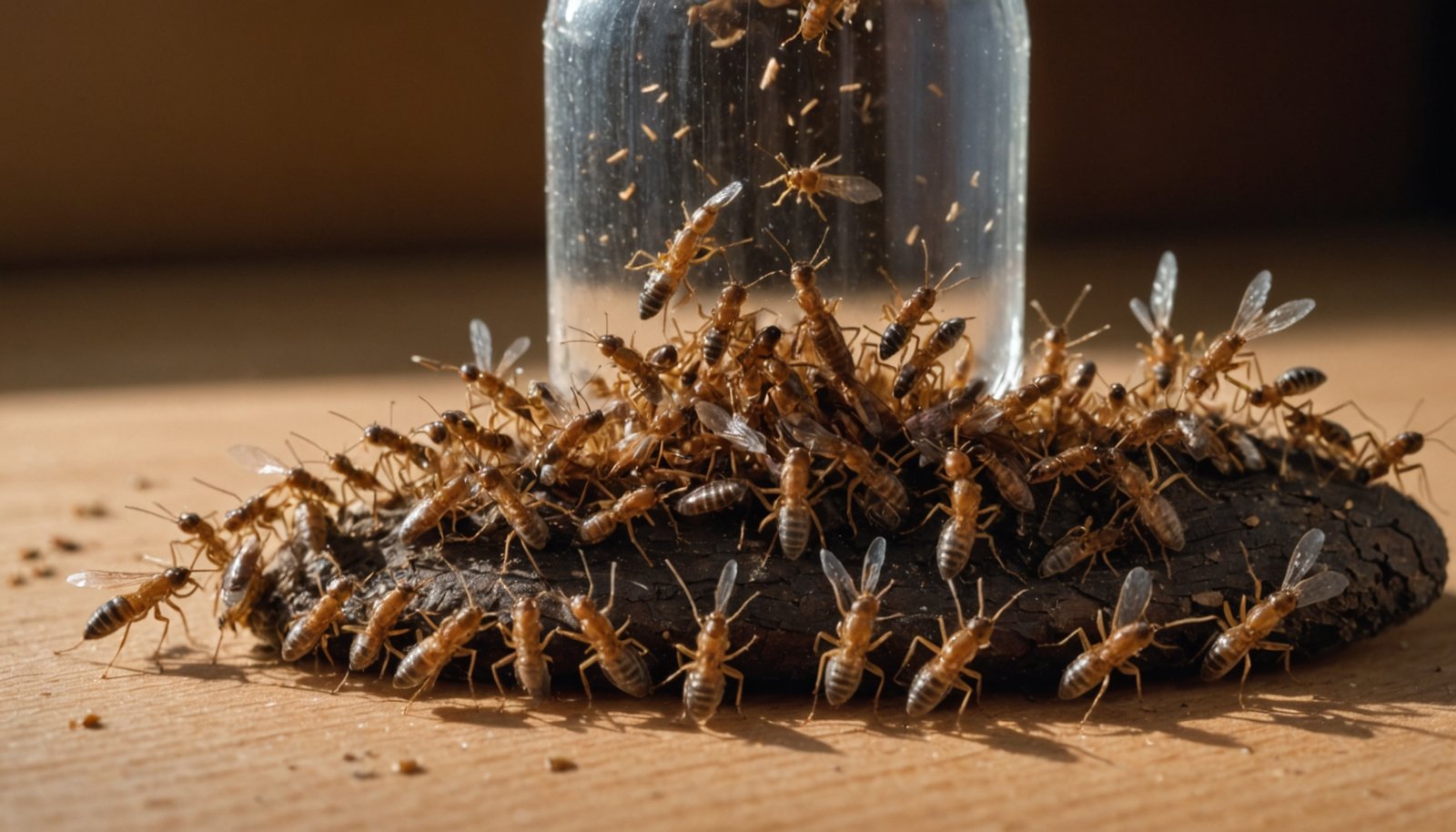
If flying termites suddenly appear inside your home, you’re dealing with an emergency, not a minor nuisance. Indoor swarmers mean a mature termite colony is already inside your structure, not just nearby in the yard. By the time you see them, termites have often spent years silently eating floors, walls, or even the foundation. Because swarms indicate a nearby original nest, finding flying termites indoors strongly suggests that nest is within or immediately adjacent to your home.
Indoor flying termites signal an active, mature colony already damaging your home’s structure—treat it as an emergency
You should call a professional immediately if you notice flying termites or piles of discarded wings indoors, especially near windows, doors, or light fixtures.
Mud tubes on foundations, walls, or pipes, hollow-sounding wood when you tap baseboards or frames, or bubbling and peeling paint without a moisture problem all demand fast action.
Termites don’t fly far, so indoor swarmers and wings usually pinpoint the colony’s location within the building. Don’t delay or rely on DIY sprays; they only hit what you see while the hidden colony keeps growing and causing expensive structural damage.
Immediate Steps When You See Flying Termites Indoors
Once you spot flying termites inside, treat the moment like a focused fact-finding mission, not just a cleanup chore.
First, preserve evidence. Gently collect 10–20 swarmers in a small jar with rubbing alcohol, then label it with your address and the date. Save a sample of discarded wings in a sealed plastic bag and hold off on sweeping or vacuuming until you’ve gathered what you need. Wing shape and size help a pro confirm they’re termites, not flying ants.
Next, document what you see so specialists can interpret it later:
- Take clear, timestamped photos of swarmers, wings, and any mud tubes.
- Note the exact time, rooms, and windows where you found them; mark emergence points with tape.
- Record every separate location.
Now you can clean. Vacuum visible swarmers, empty the bag or canister outside, and avoid sprays or DIY products that destroy evidence and drive termites deeper.
How to Inspect Your Home for Hidden Termite Activity
You’ve handled the immediate swarm; now you need to find out how far termites have gotten into your home. Start outside. Walk your foundation and look for pencil‑thin mud tubes, cracks, or gaps. Check siding, trim, decks, and spots where wood touches soil for hollowness, blistering, or discoloration. Note any wing piles near doors and windows.
Move indoors. Scan walls and trim for bubbling or peeling paint, tiny holes, or faint lines. Tap baseboards, door frames, and window sills; hollow or papery sounds are suspicious. Watch for frass that looks like fine sawdust or coffee grounds.
In crawl spaces and basements, inspect wooden supports and exposed joists. Probe them with a screwdriver to detect soft or hollow wood, and look again for mud tubes, moisture, and damaged areas around utility penetrations.
In the attic, check roof trusses, eaves, and exposed wood, using a moisture meter or infrared tools if available.
Short-Term Ways to Limit Termite Damage Before Pros Arrive
Two goals guide your actions before a termite pro shows up: limit new termites from getting in and reduce the damage the hidden colony can do.
Start by vacuuming every flying termite you see and immediately empty the vacuum into a sealed bag outside. Collect 10–20 swarmers and loose wings in a small jar with rubbing alcohol, label it with the date and room, then pause full cleanup so the pro can inspect.
Next, cut down what’s attracting swarmers:
- Turn off lights near windows and doors, use porch or motion-sensor lights instead, and crack windows safely to pull air—and insects—outward.
- Seal obvious gaps around windows, doors, vents, and foundation cracks to slow new entries; keep monitoring these areas.
- Fix active leaks, run dehumidifiers in damp rooms, redirect irrigation, and move mulch, dead wood, and branches away from the house, keeping wood at least six inches above soil.
Professional Termite Treatments: Options, Process, and Costs
Although your short‑term steps can slow damage, lasting protection from termites almost always requires professional treatment. A licensed pro starts with a detailed inspection of your interior, exterior, and foundation, checking for mud tubes, damaged wood, and frass.
They may use infrared cameras and moisture meters to spot hidden activity, then identify the termite species, map out hotspots in damp areas, and size up the infestation.
Based on that, they’ll recommend treatments. Common options include liquid termiticides trenched or injected into soil, bait systems that worker termites carry back to the colony, localized wood or dust injections, whole‑structure fumigation for severe drywood cases, or heat treatments that raise targeted areas to lethal temperatures.
You’ll need to clear access to crawlspaces, slab edges, and wall voids, trim vegetation back, secure pets, and protect food.
Costs depend on home size, structure type, severity, and method, with follow‑up inspections typically included.
How to Prevent Flying Termites Coming Back Indoors
Once you’ve stopped an active swarm, you’ll want to make sure flying termites can’t easily get back inside. You do this by cutting what attracts and sustains them: excess indoor moisture, wood that directly touches soil, and unsealed cracks or gaps.
Let’s look at how to reduce humidity, separate wood from the ground, and block the tiny openings termites use to enter.
Reduce Moisture Indoors
Cutting down excess moisture indoors makes your home far less inviting to flying termites looking for a place to settle.
Start by tracking down leaks under sinks, near washing machines, and behind walls, and repair dripping taps, toilets, and shower heads immediately.
Redirect air conditioner drip lines and hot water heater overflows so they don’t soak walls or floors, and keep gutters and downspouts clear and functional.
Use a focused plan:
- Improve drainage by extending downspouts, keeping gutters aligned, and sloping hard surfaces away from the building so water can’t pool near your foundation.
- Enhance ventilation in crawl spaces, basements, and damp rooms using vents or exhaust fans.
- Control humidity with dehumidifiers and vapor barriers to keep indoor air dry and unattractive to termites.
Eliminate Wood-To-Soil Contact
One of the most effective ways to keep flying termites from turning into a full-blown indoor infestation is to break their easiest bridge: direct wood-to-soil contact.
Keep all wood at least 6 inches above soil so you can inspect it and so termites can’t move in unnoticed. Maintain siding 8 inches from exposed earth, and be sure decks, porches, and cladding stay elevated with open ventilation space beneath.
Clear your yard of buried stumps, roots, old 2x4s, and lumber piles, and don’t stack firewood against the house.
Avoid soil-filled or mulched flower beds pressed against the foundation, and keep plants from touching wood or blocking vents.
Use pressure-treated or naturally durable wood outdoors and protect exposed pieces with sealant or metal flashing.
Seal Cracks And Gaps
Although flying termites usually come from outdoor colonies, they slip inside through the same tiny cracks and gaps that let in drafts and moisture. Your goal is to turn your home’s exterior into a tight, well-sealed shell that’s hard for swarmers to penetrate.
- Replace worn weatherstripping on doors and windows, add door sweeps, and choose durable, moisture‑resistant products. Check these seals at least once a year.
- Caulk gaps around frames, siding connections, sill plates, and utility penetrations with quality silicone or flexible caulk. Reinspect and recaulk seasonally, using expanding foam for larger voids.
- Screen attic, soffit, crawlspace, and chimney vents with fine, termite‑resistant mesh, fastening it securely so it can’t loosen while still allowing ventilation.
Conclusion
When you see flying termites inside, don’t panic—but don’t ignore them either. You’ve learned how to tell them from ants, what their presence really means, and what to do right away. Act quickly: document what you see, inspect key areas, and use short‑term controls while you arrange professional treatment. With the right follow‑through and prevention, you’ll protect your home now and make future termite swarms far less likely.