Formosan Termites: The Most Destructive Species in the US
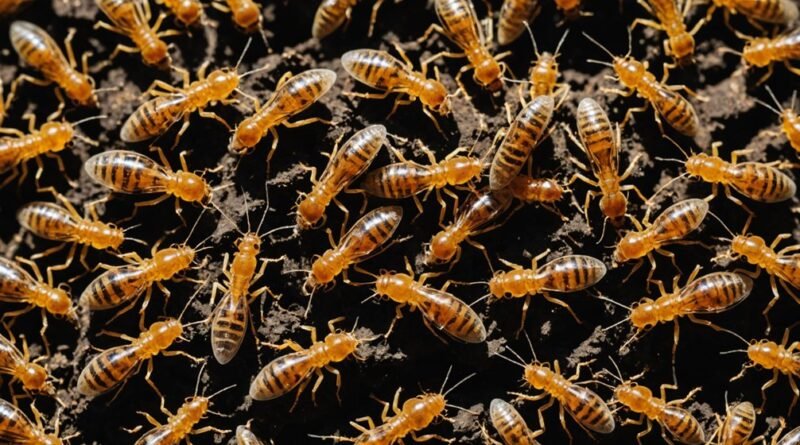
Formosan termites are the most destructive termites in the U.S. because they form giant underground and aerial colonies that can contain millions of workers. They attack homes from soil or upper walls and roofs, feeding aggressively on wood and other cellulose. You might see mud tubes, blistered paint, sagging walls, or what looks like unexplained water damage. Infestations spread fast and repairs are expensive, so it’s essential to know where they live, how to spot them, and what stops them.
Key Takeaways
- Formosan termites are an invasive subterranean species with massive colonies of up to 10 million, making them the most destructive termites in the U.S.
- They consume wood rapidly, causing severe structural damage in as little as 3–6 months and costly repairs that can exceed $25,000.
- Their foraging range extends up to 300 feet, and they form aerial colonies that infest high-rise buildings and upper stories of homes.
- Infestations are concentrated in warm, humid southern states, especially coastal Florida, and often mimic water damage without an obvious moisture source.
- Prevention focuses on moisture control, eliminating wood-to-soil contact, vegetation management, sealing entry points, and professional treatments like sulfuryl fluoride combined with soil termiticides.
What Are Formosan Termites and Why They Matter
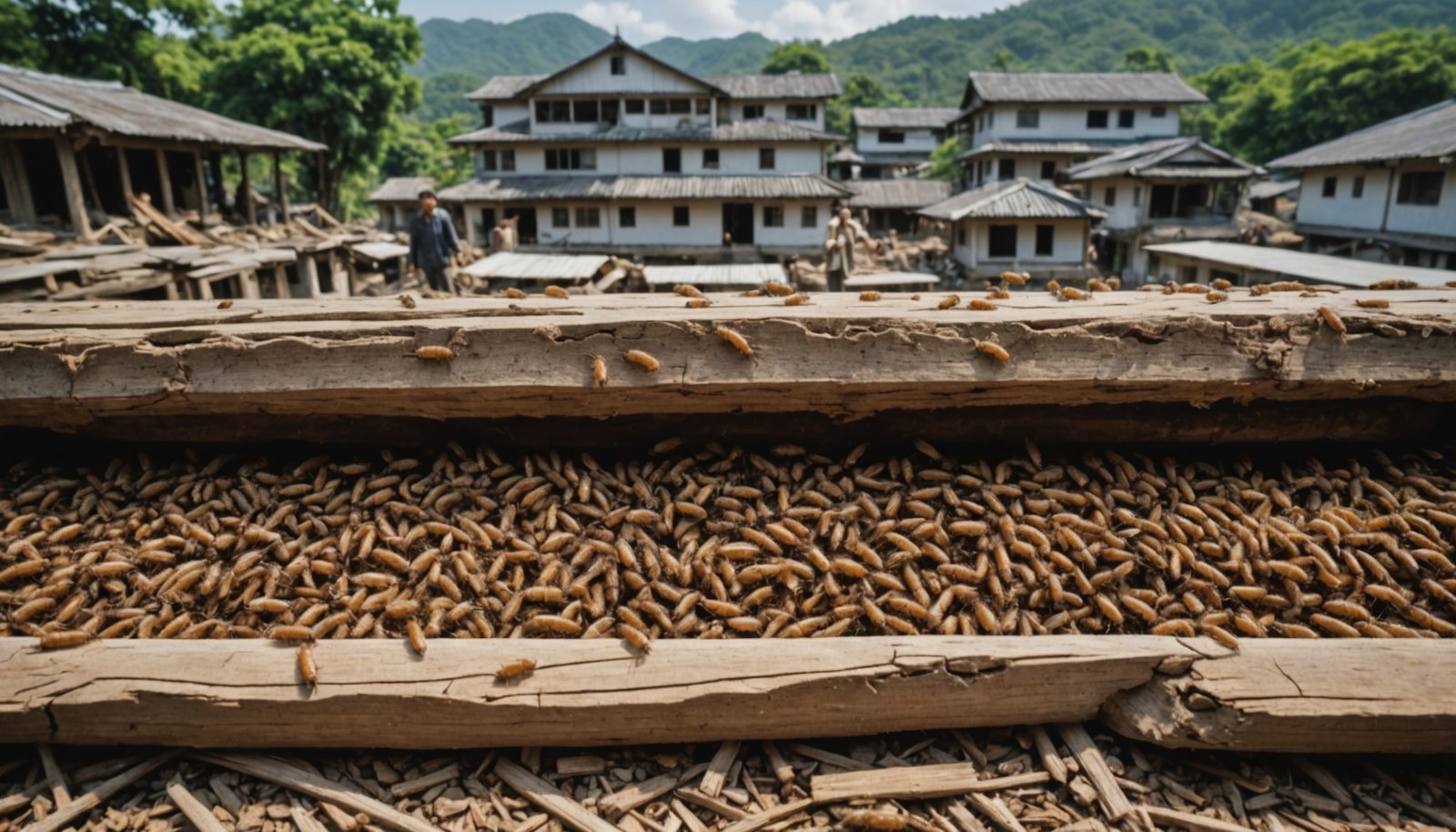
Formosan termites are an aggressive species of subterranean termite that form massive colonies, build extensive nests, and destroy wood far faster than most native termites, which is why they’re such a serious threat in the United States.
You’re dealing with insects whose colonies can reach 10 million individuals, often developing from a single queen in just 3–5 years. A single pair can explode into over 2 million workers, soldiers, and reproductives within 3 years. These termites are capable of forming aerial colonies that have no contact with the ground, allowing them to infest high-rise structures and upper floors by nesting entirely above ground.
You’ll typically find their nests made of “carton” material: soil and chewed wood glued together with saliva and excrement.
These above-ground nests hide in walls, attics, roofs, and hollow voids near food. They hold moisture, so termites don’t have to return to soil for water, letting them feed continuously.
Above-ground nests tucked in walls and attics trap moisture, letting Formosan termites feed nonstop without returning to soil
Because they consume cellulose in wood, paper, and cardboard at high rates, they can seriously damage an unprotected home in as little as two years.
How Formosan Termites Differ From Other Termites
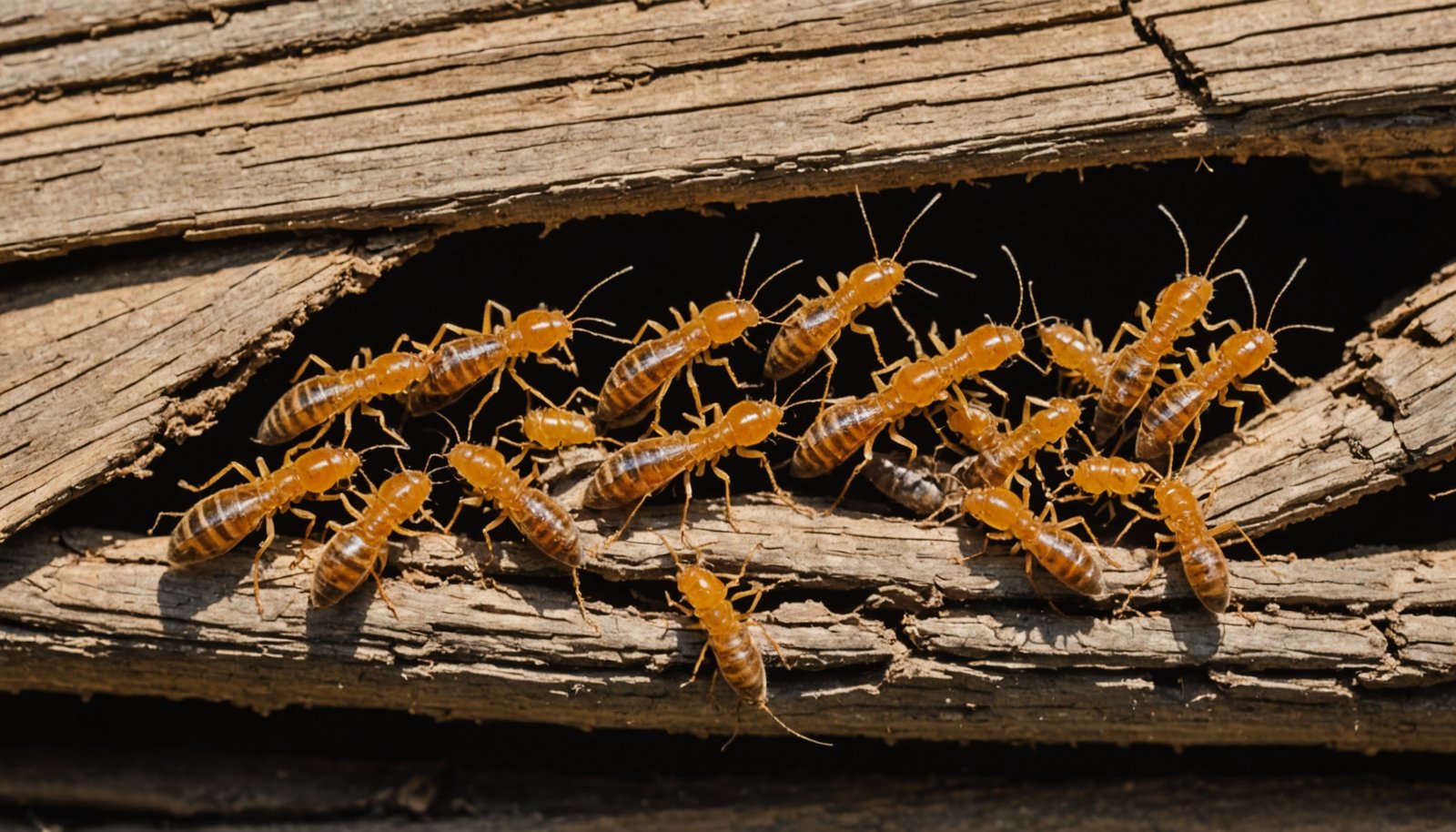
When you compare Formosan termites to native subterranean species, you’ll notice big differences in how large their colonies grow and how far their reach extends through a structure. Formosan colonies, which can contain millions of termites, are much larger than the smaller, slower-growing colonies of Eastern subterranean termites.]
You’ll also see distinct feeding and damage patterns, with Formosans attacking wood faster and in more parts of your property.
Finally, their nesting and structural behavior—especially their above-ground carton nests—changes where and how you need to look for infestations.
Colony Size And Reach
Although all termites live in social colonies, Formosan termites operate on an entirely different scale, building sprawling “super colonies” that dwarf most native species. You’re not dealing with a few tens of thousands of insects; laboratory colonies already reach 100,000–400,000 workers, and even “small” wild colonies hold about 250,000 termites. Average colonies climb to roughly 3 million members, while mature ones can top 10 million foraging workers, soldiers, and reproductives. Because these colonies are so large, Formosan termites can cause rapid structural damage compared with most native subterranean species.
These huge populations let a single colony range widely underground and above ground, establishing satellite nests in soil, trees, or moist structures.
| Aspect | Formosan Termites |
|---|---|
| Typical small colony | ~250,000 termites |
| Average colony size | ~3 million termites |
| Maximum mature size | Up to 10 million members |
| Native eastern average | ~60,000 termites |
| Foraging reach | Several thousand square feet; up to 20 meters out |
Feeding And Damage Patterns
Think of Formosan termites as highly focused demolition crews rather than random grazers, zeroing in on a few preferred pieces of wood and working them hard before moving on. Their ability to forage up to 300 feet from their nests allows them to locate and exploit multiple structures or trees within a wide radius.
You’ll see them strip both soft spring wood and denser late-season wood, unlike native subterranean termites that favor only the softer layers. They often choose wood already chewed by their own kind, then wood pre-damaged by other species, and only then untouched lumber.
Because they consume over twice the dry mass per piece as common subterranean termites, they expose more surface area and hollow wood faster.
They voraciously feed on cellulose in lumber, paper, and roots, attacking dozens of tree species. Their damage mimics drywood termites but lacks pellets and includes mud-like carton material.
Nesting And Structural Behavior
Their aggressive feeding is only half the story; Formosan termites also outclass most native species in how and where they build. You’re not just dealing with soil nests but elaborate aerial “carton” nests made of chewed wood, soil, saliva, and fecal material. These appear in walls, attics, roofs, even living trees, sometimes growing past basketball size and bulging drywall. Unlike many native species, their colonies can remain active year-round in warm climates, allowing continual foraging and nest expansion whenever temperatures stay favorable.
Most colonies still start in the soil and stay connected to ground moisture, invading through cracks, expansion joints, and utility conduits.
But once inside, they establish auxiliary nests in voids, conserve water, and bypass ground treatments. With queens laying thousands of eggs daily and colonies reaching millions, their interconnected foraging can silently link your house, yard, and even nearby structures.
Where Formosan Termites Are in the US Today
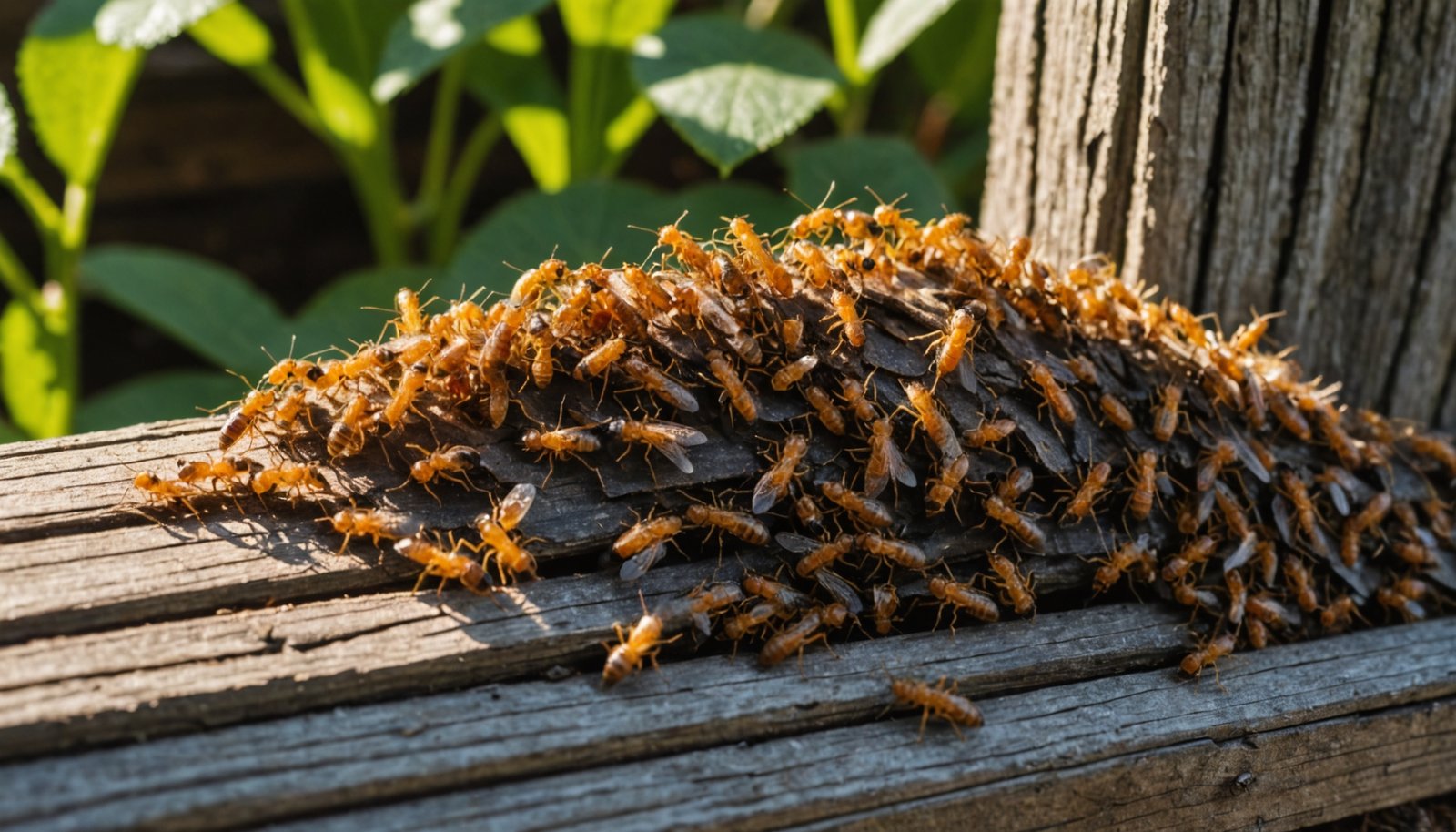
While they once seemed like a localized Gulf Coast problem, Formosan termites now occupy a broad and growing swath of the United States. You’ll see the heaviest activity in the warm, humid South, but detections now reach into the Southwest and Pacific Coast as well.
Today, they’re firmly established in at least 11 states, including Florida, Louisiana, Texas, Alabama, Georgia, Mississippi, Tennessee, Virginia, Hawaii, Arizona, and California. Recent surveys found new infestations in 13 additional southern counties, confirming steady spread rather than isolated flare‑ups.
Florida gives you a preview of where things are headed nationwide. Formosans already infest most coastal counties and major cities like Tampa, Orlando, and Melbourne, with models projecting risk in every Florida county by 2050.
To grasp your true exposure, focus on:
- How close you’re to the Gulf and Atlantic coasts
- Whether you live in a dense urban center
- How quickly your region is warming
How to Spot Formosan Termites in Your Home
When you’re checking your home for Formosan termites, you need to know the visible signs they leave behind and what their unusual soldiers and nests look like.
You’ll look for things like mud tubes, damaged wood, and subtle moisture issues that point to hidden activity.
You’ll also learn how to recognize their large, aggressive soldiers and carton nests that set them apart from other termite species.
Visible Signs Of Infestation
Even before you see a single insect, Formosan termites leave clear warning signs in and around your home. They build pencil-sized mud shelter tubes on foundations, walls, and piers to move safely between soil and wood.
Any unexplained mud veins or clumps on structural supports deserve immediate attention.
You’ll also notice wood problems. Infested boards sound hollow when tapped, feel soft underfoot, and may show ripples, blisters, or paper-thin surfaces left over intact.
Paint and wall changes often mimic water damage but without a leak. Blistered paint, bubbled wallpaper, or sagging walls and ceilings often trace back to termite galleries behind the surface.
- Strange “water damage” with no moisture source
- Mud tubes on masonry or wood
- Soft, hollow-sounding floors or trim
Distinctive Soldiers And Nests
Although Formosan termites share many traits with native subterranean species, their soldiers and nesting habits give you some of the clearest identification clues inside a home.
Look for soldiers with long, tear‑dropped or egg‑shaped heads instead of the usual rectangular shape. Their large mandibles and a dense spot (fontanelle) on the head release a sticky white defensive fluid when you disturb them. They’re also more aggressive, biting and clamping onto intruders.
Pay attention to numbers. Formosan colonies often have 5–20% soldiers, so you’ll see many as soon as you open a wall or damaged wood.
Also check for aerial nests above ground—in walls, attics, or trees—fed by mud tubes carrying moisture. Combined with yellowish‑brown swarmers, these signs strongly indicate Formosan termites.
How Fast Formosan Termites Can Damage a House
Few household threats move as quickly and quietly as Formosan termites, which can begin seriously damaging a home in just a few months under ideal conditions.
When a large colony is active in warm, moist conditions, it can severely weaken structural wood in as little as 3–6 months. If you don’t catch them, significant structural compromise can occur in about two years, especially in humid Southern states where they thrive.
Their speed comes from nonstop feeding and massive colony sizes. A single colony can eventually grow to millions of termites, all eating 24/7.
Formosan termites feed nonstop in massive colonies, with millions chewing through wood around the clock
Once a mature colony finds easy access to your home’s wood and moisture, damage accelerates dramatically.
You should understand how quickly things can escalate:
- Entire wall sections can be compromised within months.
- Repairs often range from $3,000 to $25,000.
- Formosan termites alone drive about $1 billion in U.S. repair costs every year.
Inside Formosan Termite Nests and Mud Tubes
When you understand how Formosan mud tubes form and how their carton nests are built, you can better recognize a serious infestation before it explodes in size.
You’re not just looking at random dirt tunnels and hollow spots in walls, but engineered passageways and massive concealed colonies.
In the next section, you’ll see what these structures are made of, how they grow, and where they typically hide in your home.
How Mud Tubes Form
Because Formosan termites can’t survive long outside damp soil, they build mud tubes as portable, climate‑controlled tunnels wherever they’ve to cross exposed or dry surfaces. You’ll see these tubes where soil meets your home’s foundation, piers, or walls.
Workers start at the soil, then advance toward wood or other cellulose, enclosing every risky gap in a protective hallway. They mix soil, wood particles, digested wood, saliva, and feces into a paste that dries into a fragile, dirt‑colored shell. This shell locks in humidity, letting termites move safely through hot, dry, or open areas.
- Exploratory tubes: thin, branching scouts.
- Working tubes: main highways from soil to food.
- Swarming “castle” and drop tubes: vertical pathways guiding swarmers and bridging obstacles.
Carton Nest Structure
Mud tubes act like highways, but the real “cities” of a Formosan termite colony sit inside carton nests built off those routes. You’ll find these nests in wall voids, attics, roofs, and upper-level floorboards, especially where tree branches touch structures. They often cause subtle bulges or moisture-damaged areas in walls.
Carton nests form from soil, chewed and unchewed wood, fecal matter, and saliva. As the wet mix dries, it hardens into a rigid, spongy mass that can reach several cubic feet and hold thousands of termites, including secondary reproductives.
These auxiliary nests let colonies survive without direct soil contact and push populations beyond a million insects. Clean, soil-free galleries, whitish spots, and nearby swarm castles help you confirm activity.
Why Formosan Termites Target Certain Woods and Trees
Although Formosan subterranean termites will tunnel through almost any cellulose they encounter, they don’t feed on all woods and trees equally. They’re desiccation‑prone, so you’ll see them concentrate on wood with very high moisture content, where free water fills the cell cavities.
On drier wood, they barely feed and die faster, especially in heat. That’s why soaked timbers, damp trunks, and water‑stressed structures become prime targets.
They also follow clear species preferences. Softwoods usually get hit harder than hardwoods, though some hardwoods—like birch, sugar maple, pecan, red oak, and red gum—can be just as attractive.
Southern yellow pine is so appealing it’s often used as a monitoring bait.
They don’t just seek “fresh” wood, either. Termite‑damaged pieces are even more attractive, especially if other Formosan colonies chewed them first, because the roughened, pre‑softened surfaces make feeding easier.
- Moisture level
- Wood species
- Prior termite damage
Home and Yard Conditions That Attract Formosan Termites
Three everyday conditions around a home do more to lure Formosan termites than anything else: excess moisture, easy wood access, and hidden entry points.
Termites need damp soil to survive; once moisture rises above about 5%, they can feed, and at 15–25% they forage aggressively. Leaky roofs, dripping outdoor faucets, wet basements, clogged gutters, poor drainage, and standing water in low spots keep soil and wood damp enough for colonies to thrive.
Even small leaks can raise moisture enough for termites to feed, thrive, and aggressively forage around your home
You also attract them whenever wood touches soil. Untreated fence posts, deck supports, siding, or steps in direct contact with the ground act like welcome mats.
Firewood stacks, lumber piles, and fallen tree stumps pressed against the foundation create bridges from soil to structure.
Finally, any crack or gap helps them in. Expansion joints, slab cracks, unsealed utility penetrations, foam insulation, overgrown shrubs, and low branches touching the roof all give termites protected pathways straight into your home.
How to Get Rid of a Formosan Termite Infestation
Knowing what attracts Formosan termites is only half the battle; you also need a clear plan to eliminate them once they’ve moved in.
Because these termites form huge colonies in soil and inside walls, you’ll almost always need a licensed termite professional rather than DIY products.
Here’s how control typically works:
1. Soil-applied termiticide barriers
Pros drill through slabs or trench around your foundation, then inject liquid termiticides (like fipronil or imidacloprid) to create a treated zone that kills termites crossing it and blocks new entry.
2. Foam termiticide in wall voids
Technicians inject expanding foam into wall and structural voids. As the foam breaks down, it leaves insecticide on inner surfaces, reaching hidden aerial colonies.
3. Baiting systems and tent fumigation when needed
Bait stations with insect growth regulators slowly wipe out colonies, especially after carton nests are removed.
For widespread structural infestations, tent fumigation with sulfuryl fluoride (e.g., Vikane) can be added, but only alongside soil treatment.
Long-Term Ways to Prevent Formosan Termites
Once you’ve eliminated an active Formosan termite infestation, long-term protection depends on making your home and yard as unfriendly to them as possible.
Start by controlling moisture: fix plumbing and roof leaks, ventilate crawl spaces, attics, and basements, and use gutters, downspouts, splash blocks, and correct grading to move water away from the foundation.
Keep soil below the top of the foundation to reduce damp crawl spaces.
Break wood-to-soil contact wherever you can. Maintain at least a one‑inch gap between soil and wood, use treated wood outdoors, and store firewood, cardboard, and yard waste at least 20 feet from your house.
Remove excess mulch, logs, and wood debris near the foundation.
Manage vegetation by trimming plants and tree branches away from siding and the roof.
Seal cracks in foundations, around utilities, and in doors, windows, and siding.
Finally, schedule annual professional inspections and maintain monitoring or bait stations.
Conclusion
Formosan termites are aggressive, fast, and incredibly destructive, but you’re not powerless against them. When you know what they look like, where they live, and what attracts them, you can spot problems early and act quickly. Combine professional treatments with smart prevention—like reducing moisture, sealing entry points, and protecting vulnerable wood—and you’ll greatly lower your risk. Stay alert, schedule regular inspections, and you’ll keep your home far safer from these costly pests.