Termite Mud Tubes Explained: What They Look Like and Why They Matter
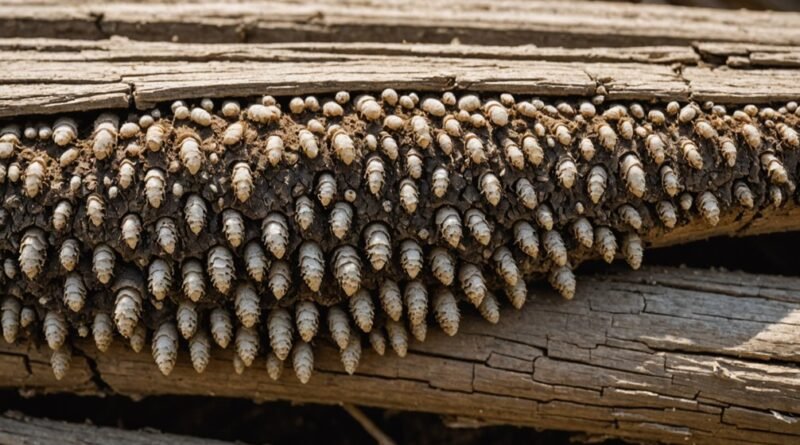
Termite mud tubes are narrow, pencil-width tunnels that subterranean termites build from soil, saliva, and wood fragments to travel safely between their nest and your home’s structure. They look like brown or tan dirt trails running along your foundation, walls, or beams. Fresh tubes appear dark and moist, while older ones turn dry and brittle. Finding one means termites may already be causing hidden damage, and there’s much more you need to know.
Key Takeaways
- Termite mud tubes are narrow, pencil-width tunnels made from soil, saliva, fecal matter, and wood fragments built by subterranean termites.
- They appear as brown or tan dirt-colored lines, with fresh tubes being dark and moist while older ones turn dry and brittle.
- Mud tubes serve as protected highways, shielding termites from predators, light, and temperature changes during travel between nests and food sources.
- Breaking a small middle section and reinspecting after 2–3 days confirms active termite presence if the section is rebuilt.
- Active mud tubes signal established termite colonies feeding nearby, putting load-bearing structures like support beams and flooring at serious risk.
What Are Termite Mud Tubes?
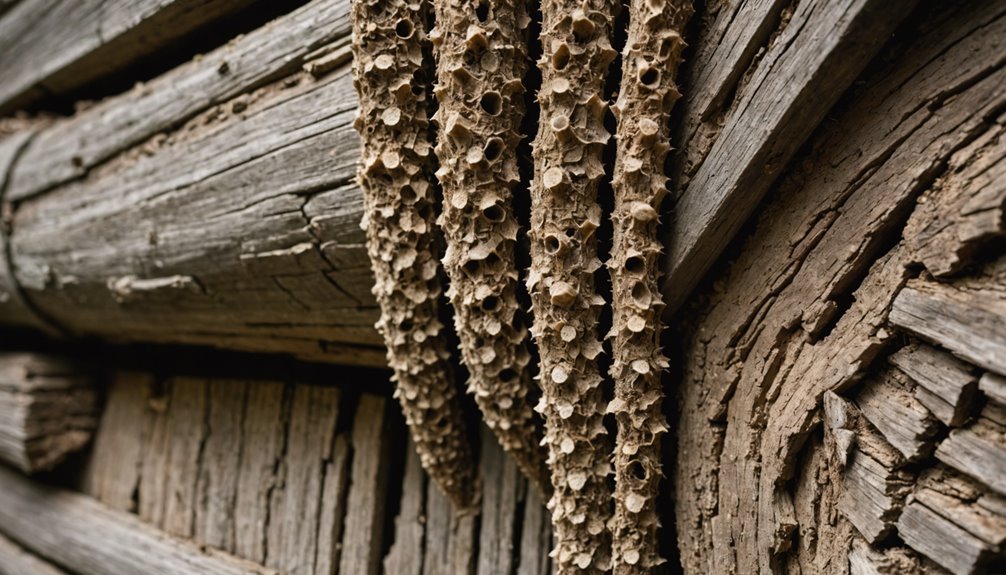
Termite mud tubes are narrow, protected tunnels that subterranean termites build to travel between their underground nest and a food source above ground. You’ll most often hear them called mud tunnels, mud tubes, or galleries — and they’re almost exclusively tied to subterranean termite species.
These structures aren’t random. Termites construct them deliberately to create a sheltered route that protects them while they move. Without these tubes, termites would be exposed to open air, predators, light, and temperature shifts — conditions they can’t tolerate for long.
Termite mud tubes aren’t accidental — they’re carefully engineered shelters built to protect termites from the outside world.
Think of mud tubes as the termites’ private highway system. They run from soil upward toward wood, often crossing surfaces like concrete or metal where termites can’t travel directly.
If you spot one on your foundation or walls, it’s a strong signal that termite activity is happening nearby and deserves immediate attention. These tubes are composed of soil, wood, saliva, and fecal matter, forming a compact structure that helps termites regulate the temperature and humidity along their path.
What Termite Mud Tubes Are Made Of
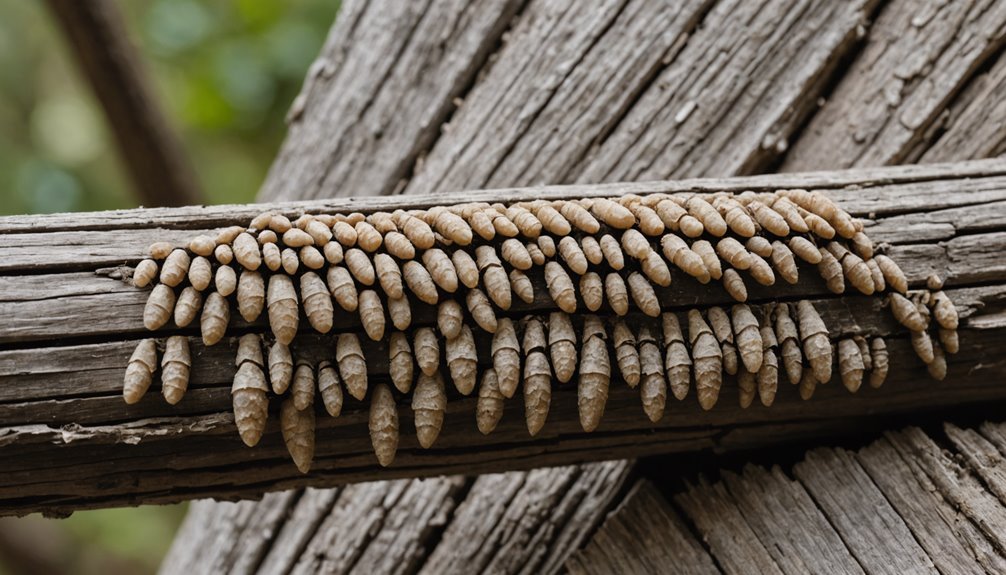
When you look at a mud tube, you’re seeing a blend of soil particles, termite saliva, fecal matter, and wood fragments all pressed into a single hardened structure.
Worker termites gather these materials and use their saliva as a binding agent, cementing loose grains into a durable, tunnel-like shell. The result is a cohesive passage that’s strong enough to withstand repeated termite traffic while blocking out drying air. Moisture regulation within the tube helps termites control humidity levels, keeping their environment stable as they travel.
Core Building Materials
Mud tubes aren’t just random clumps of dirt — they’re a carefully composed mixture of soil particles, termite saliva, and fecal matter that hardens into a durable, protective conduit.
Termites blend these materials into a clay-like mass that sticks to concrete, brick, and wood surfaces. You might also find wood particles or organic debris mixed in, depending on where they’re building.
These three core ingredients do the heavy lifting:
- Soil forms the structural base that gives the tube its shape and strength.
- Saliva binds the materials together during construction.
- Fecal matter reinforces and cements the finished structure.
What you’re looking at isn’t just mud — it’s a precisely engineered tunnel built to keep a colony alive and moving. These tubes are typically about the width of a pencil in diameter, making them easy to overlook during a casual inspection.
Worker Termite Construction
Worker termites do all the heavy lifting when it comes to tube construction. They gather small soil grains from the surrounding area, mix them with saliva to create a workable, sticky material, and pack it into narrow, enclosed passageways.
Soldiers may be present to defend the site, but workers handle all the actual building.
What makes their process effective is the layered packing and smoothing technique they use. Rather than simply piling material together, they compress it into compact walls that are far more stable than loose soil alone.
You can also expect rapid repairs if a tube gets damaged. As long as the colony remains active, workers will quickly rebuild any exposed sections, which is a reliable sign that termites are still using that route. These tubes also retain moisture, which is essential for termite survival throughout the construction and travel process.
What Termite Mud Tubes Actually Look Like
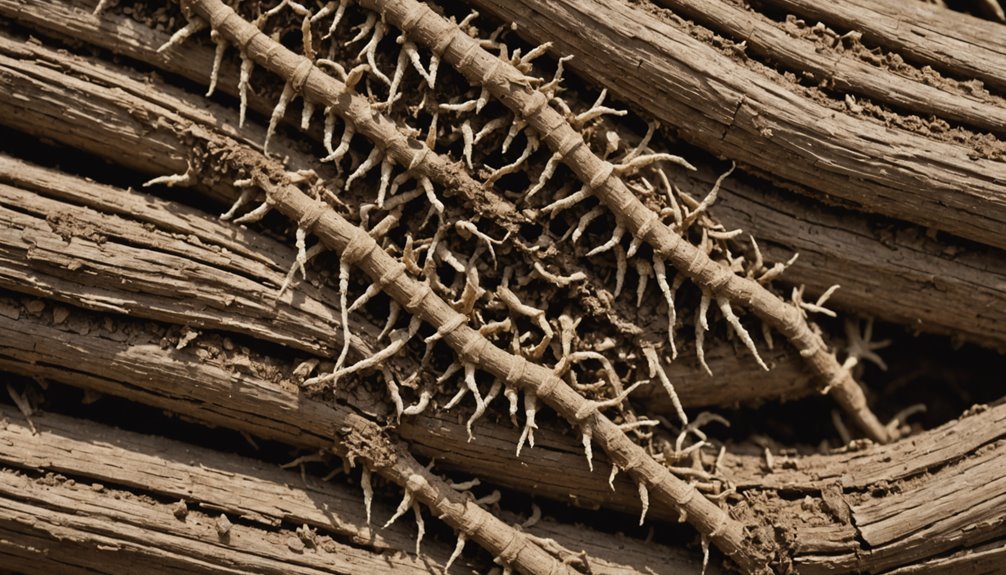
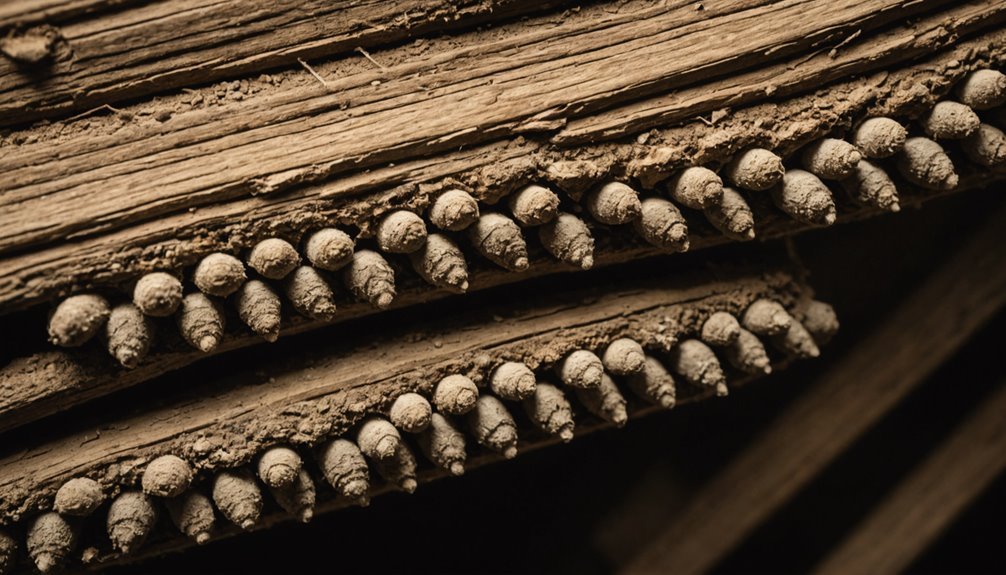
Termite mud tubes are narrow, dirt-colored tunnels that typically appear as brown or tan lines running along walls, foundations, baseboards, or ceilings.
They’re often pencil-width, though sizes range from barely visible traces to larger conduits. Fresh tubes look darker and moist, while older ones turn dry, brittle, and crumbly.
Fresh termite mud tubes appear dark and moist; with age, they become dry, brittle, and easy to crumble.
You might mistake them for dried mud or ordinary dirt — and that’s exactly what makes them dangerous. By the time you notice them, termites may have already caused serious damage.
Watch for these three warning signs:
- Raised dirt trails attached to surfaces rather than loose on the ground
- Branching or vein-like paths spreading across walls or foundations
- Gritty, crumbly texture made from soil, termite saliva, and fecal material
Unlike drywood termites, subterranean termites build these soil-based tubes — so spotting one means you’re dealing with a particularly destructive species. Their tubes can range from 1/4 to 1 inch in diameter, making some easy to spot along exterior concrete walls and foundations while others remain hidden inside walls or crawlspaces.
Where Termites Build Mud Tubes in Your Home
Subterranean termites don’t choose their tube locations randomly — they follow moisture, wood, and structural vulnerabilities wherever those conditions exist.
Outside, check foundation walls first, since tubes typically connect soil to structural entry points there. Porch supports, crawl space entrances, and utility penetrations are also high-priority zones. If mulch or soil sits within six inches of your siding, inspect that area carefully.
Inside, look behind baseboards, around plumbing, and along unfinished basement framing. Hollow concrete blocks and concealed foundation voids can hide tubes for years without detection.
Check window and door surrounds where wood framing meets moisture.
Don’t overlook elevated locations either. Roof leaks and poor airflow create damp conditions that support above-ground tube formation.
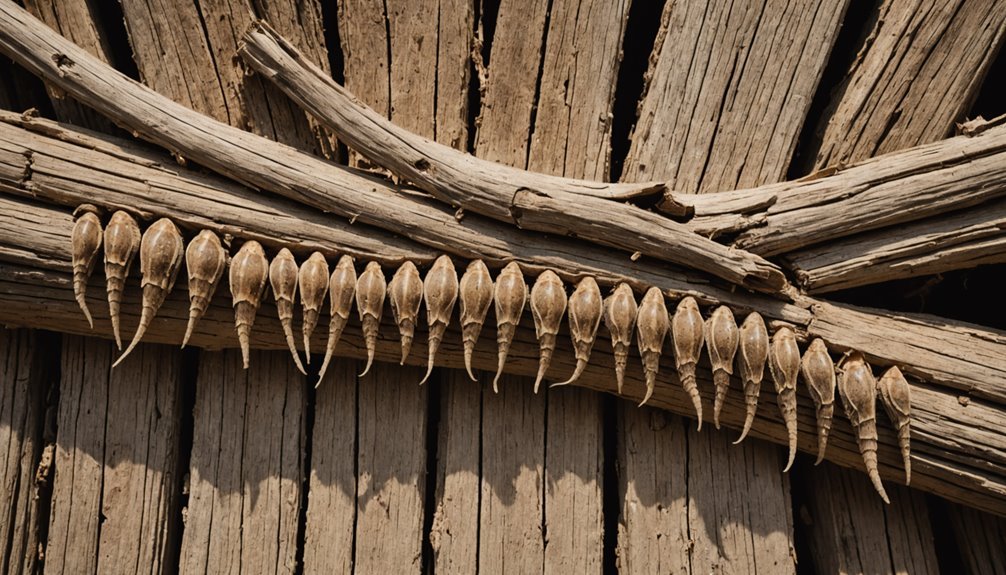
Drop tubes can hang from wood like stalactites when termites reach elevated wood sources. If you break a section and see repairs within days, the tube is actively in use.
What Termite Mud Tubes Tell You About Hidden Damage
When you spot a mud tube, you’re looking at more than a construction oddity — you’re seeing evidence that termites have already established a working route into your home’s structure.
Damage almost always begins structurally before it becomes visible, meaning your walls, beams, and subflooring could already be compromised while everything still looks fine from the outside.
Here’s what a mud tube is quietly telling you:
- Your load-bearing members are at risk. Termites target support beams, framing, and flooring — the components holding your home together.
- The damage may already be done. Termites can feed undetected for years before surface signs appear.
- Even old tubes aren’t reassuring. Abandoned tubes confirm prior activity and possible hidden wood loss that was never addressed.
Don’t treat a mud tube as a curiosity. Treat it as a structural warning that demands immediate inspection.
How to Test a Mud Tube for Live Termite Activity
Finding a mud tube confirms termites have been at work — but it doesn’t tell you whether they still are. To test for live activity, use a glove or small tool to break a small middle section of the tube, leaving both ends attached to the structure. Mark the spot, then reinspect after 2–3 days. If the section is rebuilt, you’re looking at evidence of active termite use. Some colonies repair damage within 24–48 hours.
Breaking a mud tube and checking for repairs after 2–3 days is the simplest way to confirm live termite activity.
An unrepaired break doesn’t mean the infestation is gone — termites may have shifted elsewhere in the structure.
Also check the tube’s condition. Moist, darker, or soft material suggests current activity, while dry, brittle tubes are more likely abandoned. If you open the tube and spot small, soft-bodied, white to light tan insects inside, that’s confirmation.
A rebuilt or occupied tube warrants a full professional inspection.
What to Do When You Find an Active Mud Tube
If you’ve found a mud tube and want to confirm it’s active, gently scrape away a small section and check for live termites or fresh repair within a day or two.
Once you’ve confirmed activity, contact a licensed termite professional right away, since an active tube signals an established colony that’s actively feeding on or near your structure.
Don’t wait to make that call, because the longer a colony feeds undisturbed, the greater the potential damage to your home’s framing and structural components.
Test for Tube Activity
A mud tube on your foundation wall doesn’t tell you much on its own — what matters is whether termites are still using it.
Break a small center section of the tube, leaving both ends intact. Return in 2–3 days and look closely.
Here’s what you might find:
- Rebuilt section — termites repaired it overnight, meaning the colony is active and working right now.
- Live termites emerging the moment you open the tube — the infestation is current and established.
- Nothing changes — the tube stays broken, feels dry and crumbly, and no insects appear, suggesting past rather than present activity.
A repaired tube is the most reliable field confirmation you’ll get — don’t ignore it.
Contact a Professional
Once you’ve confirmed active termite presence — repaired tube, live insects, or even just fresh mud — don’t waste time second-guessing it. Call a licensed termite professional immediately.
Even dry or old-looking tubes warrant a call, since experts can determine whether activity is ongoing or part of a larger infestation.
Until the technician arrives, leave the tube alone. Disturbing it can push termites into other areas and erase the travel route evidence inspectors rely on.
Expect a thorough inspection covering your foundation, crawlspace, framing, walls, and any areas near pipes or siding.
From there, your pest control provider will recommend a treatment plan based on colony location and activity level.
Don’t delay — termites feed continuously, and structural damage compounds fast.
How to Stop Termites From Building Mud Tubes Again
Stopping termites from rebuilding mud tubes starts with addressing the conditions that made your home a target in the first place. Subterranean termites need moisture and soil access to survive, so eliminating both cuts off their foundation.
- Fix every leak and drainage problem immediately. Moisture is what drives termites toward your home. Every drip you ignore is an open invitation.
- Remove all soil-to-wood contact around your foundation, porches, and siding. Direct contact gives termites a hidden highway straight into your structure.
- Keep mulch 6 inches from your foundation and store firewood away from the house. These seemingly harmless habits create sheltered corridors termites exploit without detection.
Once you’ve corrected these conditions, remove old tubes so they don’t mask new activity.
Schedule routine inspections and maintain ongoing moisture control. Reinfestation happens where favorable conditions return, so consistent prevention is what keeps termites from coming back.
Frequently Asked Questions
Can Termites Build Mud Tubes in Climates With Very Cold Winters?
Yes, termites can build mud tubes in cold-winter climates. They’ll burrow deeper into insulated soil to stay warm, and your home’s heating creates microclimates that keep them active and foraging even through freezing temperatures.
Do All Termite Species Build Mud Tubes, or Only Certain Types?
Not all termite species build mud tubes—you’ll find that only subterranean termites construct them. Drywood termites don’t rely on these tunnels since they live directly inside wood and don’t need soil moisture.
How Long Does It Take Termites to Build a Visible Mud Tube?
You can see a small mud tube appear overnight, with basic tubes forming within a few days. Larger tubes may take a week. Colony size, humidity, and food access all affect how fast they’re built.
Can Pets or Children Be Harmed by Touching Termite Mud Tubes?
Touching termite mud tubes won’t typically harm your pets or children. The tubes aren’t toxic, but they can cause mild skin irritation. Wash hands after contact and keep pets away until you’ve had the area professionally inspected.
Are Mud Tubes Ever Mistaken for Other Pest Activity or Mold?
Yes, you can mistake mud tubes for mold, moisture stains, or carpenter ant damage. They’re distinguished by their gritty, soil-based texture and raised tunnel structure, which mold and other pest activity don’t typically produce.
Conclusion
Finding a mud tube in your home means termites are already working against you. Don’t ignore what you’ve discovered — treat it as an urgent warning sign. Break the tube, call a licensed pest professional, and get a full inspection completed quickly. The faster you act, the less structural damage you’ll face. Mud tubes are small, but the destruction happening behind your walls doesn’t have to be.