How to Check for Termites in Walls Without a Professional
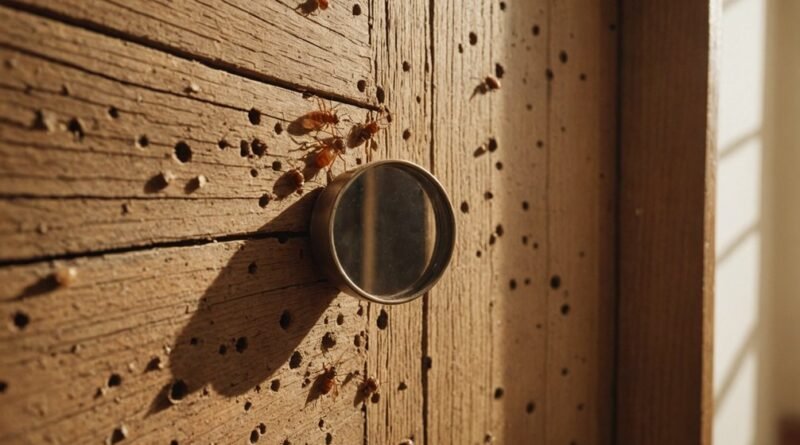
You can check for termites in walls by scanning for faint tunnel lines, tiny pinholes, blistering paint, or small piles of wood-colored pellets at the base. Inspect foundations and moist areas for mud tubes using a bright flashlight. Tap baseboards and walls to spot hollow sounds, and gently probe wood with a screwdriver for soft spots. A moisture meter or thermal camera helps find damp, suspicious areas, and you’ll soon see how to investigate each sign more confidently.
Key Takeaways
- Examine walls and baseboards for mud tubes, pinholes, faint tunnel lines, bubbling paint, or blistered areas indicating hidden moisture and termite activity.
- Check around wall bases and windows for dry, wood-colored pellets or dusty droppings (frass) that suggest active termites.
- Use a flashlight to closely inspect foundations, basements, and damp areas, focusing on cracks, gaps, and suspicious wall or wood surface changes.
- Tap along baseboards and trim with a screwdriver handle, listening for hollow sounds, then gently probe soft spots to find hidden galleries.
- In quiet conditions, listen at suspect walls for faint tapping or clicking sounds that can indicate termites inside.
Early Signs of Termites Inside Your Walls
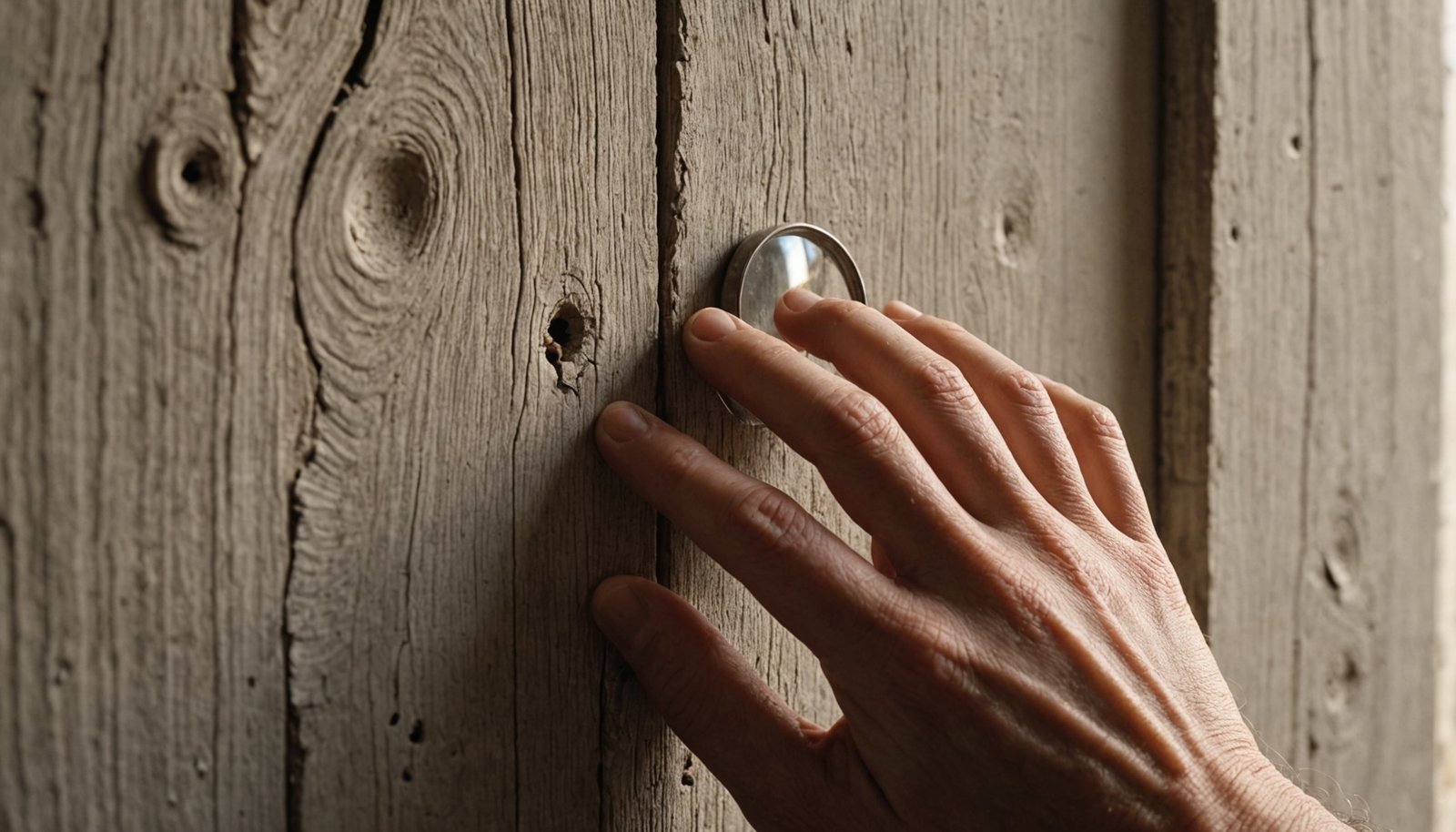
When termites first invade your walls, they leave subtle clues you can spot long before the structure weakens. You might notice faint, map-like lines where termites tunnel just under the drywall surface or paper facing. These lines sometimes accompany blistering or bubbling paint as moisture and hidden galleries build beneath the surface.
Watch for map-like wall lines and bubbling paint—early warnings of hidden termite tunnels beneath the surface
Tiny holes are another early red flag. You’ll see small round or oblong pinholes or BB-sized dried mud spots where termites have opened and then patched passages. Subterranean species often leave dirt-packed openings along wall surfaces. In some homes with fiberglass drywall, termites are less likely to create these surface tunnels because the material itself is not as easily penetrated.
Termite droppings, called frass, collect as dry, crumbly piles at the base of walls. This brown, non-sticky dust often falls from hidden galleries as termites burrow and feed.
You may also pick up unusual sounds. Faint clicking or tapping inside walls, or a hollow, papery tone when you tap an area, can point to fresh termite activity.
Visual Checks: How to Inspect Your Walls
Now that you know the early signs termites leave inside walls, you can start checking specific spots and surfaces more methodically.
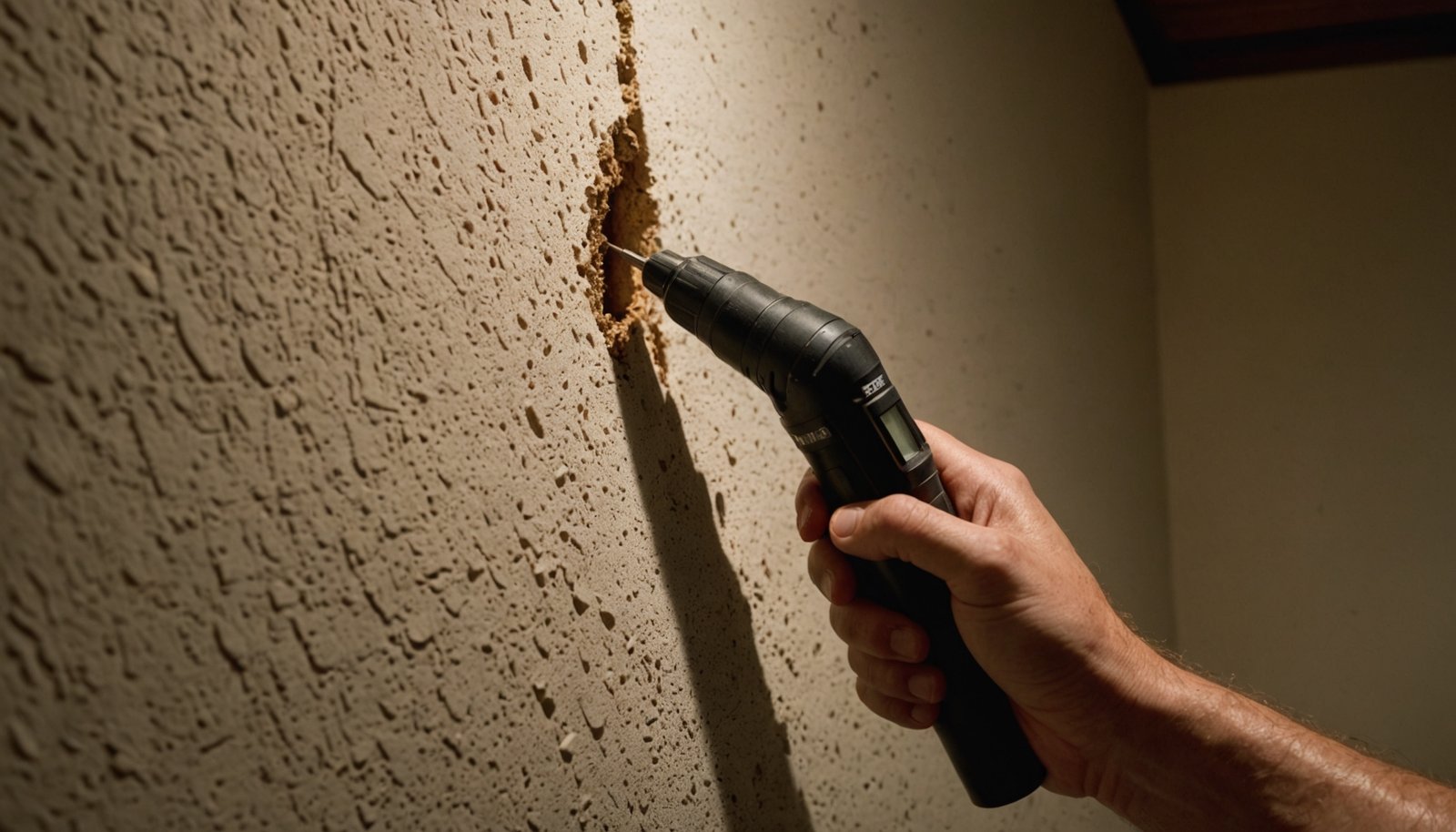
Begin at foundations, basements, and moist areas. Look for pencil-width mud tubes running up exterior or interior walls, even reaching ceilings or soffits. Don’t assume knocking them down fixes the problem; they come from nests in the ground. Pay extra attention to moisture-prone areas like bathrooms, kitchens, and crawl spaces, where termites are more likely to be active.
Next, scan wall surfaces and trim. Search for tiny pinholes in drywall or wallpaper, faint tunnel-like lines, and BB-sized dried mud spots you can gently scrape.
Watch for bubbling or peeling paint, or brownish, water-like stains that don’t match any leak you know about.
Step back and check for bigger changes: cracked or buckling walls, sagging ceilings or floors, crumbling baseboards, and doors or windows that suddenly stick.
Around wall bases, look for small wood-colored pellets, dusty mud-like droppings, discarded wings, and listen for faint clicking inside walls.
Simple Tools for Termite Wall Inspections
A few simple tools make termite wall inspections far more accurate and a lot less guesswork. Start with a moisture meter to map out damp zones in shower walls, around trays, and along skirting. Elevated readings often point to leaks and conditions termites love. It’s non-invasive, affordable, and helps you focus on wetter sections, not entire walls. Regularly checking these areas supports early detection so you can deal with termites before they cause serious structural damage.
Use a bright LED flashlight or torch to sweep slowly across surfaces. Strong side lighting exposes tiny cracks, blistered paint, and hairline gaps you’d miss under normal room light. Work methodically, section by section.
| Tool | What it Helps You See |
|---|---|
| Moisture meter | Hidden damp patches and possible entry points |
| Thermal imaging camera | Warmer, wetter wall sections and anomalies |
| Flashlight / torch | Cracks, voids, and subtle surface changes |
A basic thermal imaging camera can highlight temperature differences so you can zero in on suspicious areas for closer checking.
Sound and Probing Tests for Termites in Walls
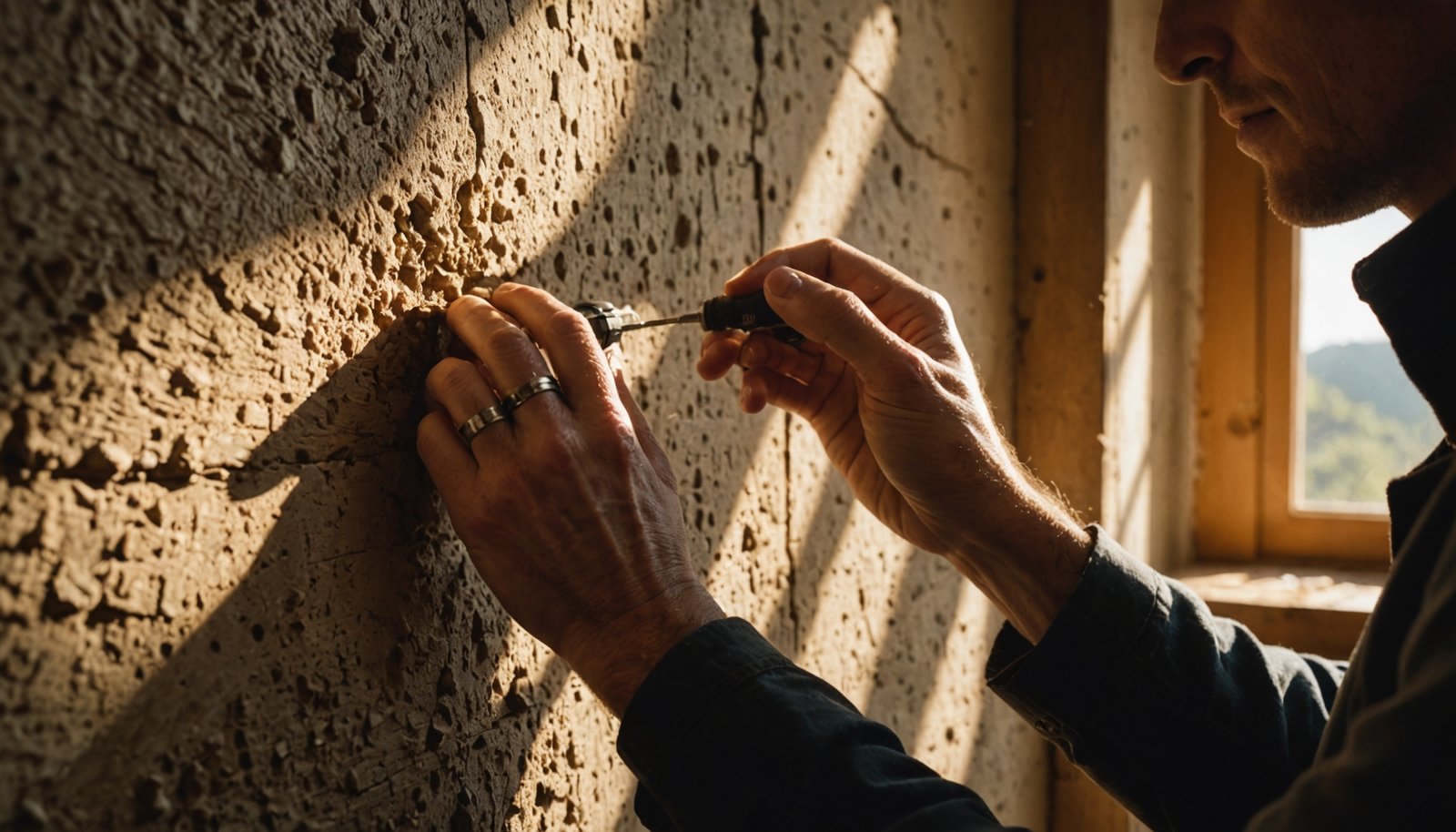
Although tools like moisture meters and cameras help you narrow down suspect areas, sound and probing tests tell you what’s really happening inside the wall. In a quiet room, press your ear to the surface or use a stethoscope to pick up soft, rhythmic tapping, clicking, or faint scratching. These sounds come from termites chewing and moving through wood, and they often stop quickly if you disturb them.
Use probing to confirm what you hear. A thin screwdriver lets you test studs, frames, and trim for hidden weakness.
- Press gently into suspect spots; hollow, crumbling, or mud-filled voids strongly suggest galleries.
- Tap along baseboards or window frames; note any sudden shift from solid to hollow tone.
- Break a small section of mud tube to look for live termites or fresh mud.
- Recheck noisy areas after probing; sound plus softness sharply increases suspicion.
When DIY Termite Checks Aren’t Enough and What to Do Next
Even with careful listening and probing, there’s a limit to what you can safely uncover on your own. Subterranean termites hide in mud tubes, wall voids, and deep internal tunnels you simply can’t see or reach. When you’re finding suspicious hollow spots, tiny pinholes, or possible frass but no clear source, it’s time to call a licensed inspector. In many cases, especially if you’re planning to use an FHA, VA, or USDA loan, a professional termite inspection and clear report are required before closing, regardless of what you find on your own.
A professional inspection covers your exterior, foundation, interior trim, attic, crawl space, and yard features that can act as termite highways. They’ll probe wood, document moisture issues, and confirm whether damage is active or old.
Use this quick guide to plan next steps:
| Situation | What You Should Do |
|---|---|
| DIY checks inconclusive | Schedule a licensed termite inspection |
| Buying or refinancing with FHA, VA, USDA | Get required WDO/termite report before closing |
| In a state with specific forms | Confirm inspector uses the mandated form |
| Report shows activity | Complete treatment and repairs, then get documentation |
Conclusion
By watching for early signs, using simple tools, and listening and probing carefully, you can catch termite activity in your walls before it gets worse. Stay alert to changes in paint, drywall, and wood, and repeat your checks regularly. If you spot suspicious damage or you’re unsure what you’re seeing, don’t wait. Call a licensed pest professional so you can protect your home and fix any hidden termite problems quickly.