Termite Baits Vs Liquid Barriers: Which Works Best?
Your choice between termite baits and liquid barriers depends on your specific needs. Liquid barriers work fast, killing termites within days, but require drilling and trenching around your foundation. Bait systems are less invasive and offer ongoing monitoring but take longer to eliminate colonies – up to three months. If you need immediate results, choose liquid barriers; for long-term prevention, consider baits. Understanding the key differences will help you make the best decision for your property.
Key Takeaways
- Liquid barriers provide immediate protection and eliminate termites within seven days, while bait systems take three months or longer.
- Bait systems are less invasive, requiring no drilling or trenching, making them ideal for properties with extensive landscaping.
- Liquid treatments need periodic reapplication, while bait stations require regular monitoring and bait replacement.
- Bait systems allow continuous monitoring of termite activity, helping detect future infestations early.
- Liquid barriers are best for severe infestations requiring immediate action, while baits work better for long-term prevention.
Understanding Liquid Termite Barriers: A Complete Guide

When it comes to protecting your home from termites, liquid barriers stand as one of the most effective defense systems available.
Liquid termite treatments create a protective zone around your foundation that kills termites on contact and prevents future infestations.
Liquid termiticide barriers form an impenetrable shield around homes, delivering lethal protection against both existing colonies and potential termite threats.
To guarantee proper treatment, pest control professionals dig a trench around the perimeter of your home or drill strategic holes for applying liquid termiticides.
These treatment methods deliver fast results, often eliminating an active infestation within seven days.
You’ll need a thorough inspection periodically, as the termite barrier’s effectiveness can decrease over time due to environmental factors and soil movement.
While the initial application provides immediate protection, maintaining the barrier’s integrity through regular maintenance guarantees your home stays protected for years to come.
How Termite Bait Systems Protect Your Home
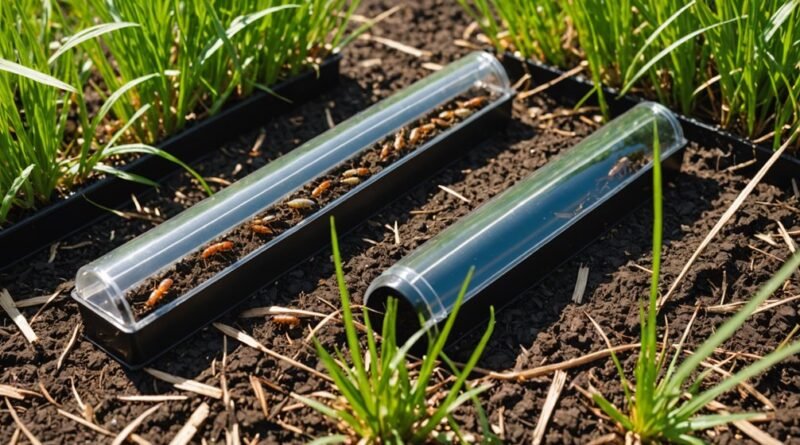
Unlike traditional liquid barriers, termite bait systems offer a strategic approach to protecting your home through a network of monitoring stations.
You’ll find these stations placed 2-4 feet from your foundation, creating an effective barrier around your property that targets foraging termites.
- The cellulose-based bait attracts termites, who carry it back to their colony, affecting the entire population.
- Unlike liquid treatments, this less invasive method doesn’t require extensive drilling or trenching.
- The system uses slow-acting insect growth regulators that gradually eliminate the termite colony over time.
- Regular maintenance and monitoring help detect termite activity early, preventing potential infestations.
- The bait stations work by leveraging termites’ natural foraging behavior, making them highly effective at protecting your home.
Key Differences Between Treatment Methods
Understanding the distinctions between liquid barriers and bait systems will help you choose the most effective termite treatment for your property.
Liquid treatments create an immediate protective barrier that kills termites on contact, while termite baiting systems work gradually by allowing termites to carry bait back to their colony elimination system.
You’ll find that liquid treatments offer faster results but require more invasive installation, with pest control companies needing to dig trenches and drill holes around your home.
In contrast, bait stations cause minimal structural damage and allow for ongoing monitoring of termite activity.
While liquid barriers provide years of protection, baiting systems may take three months or longer to eliminate a colony.
Your choice between these treatment methods should depend on your property’s specific needs and the urgency of your termite problem.
Making the Right Choice for Your Property
To select the most effective termite treatment for your property, you’ll need to evaluate several key factors specific to your situation.
Choosing the right termite control requires careful assessment of your unique property conditions and treatment requirements.
When consulting with pest control professionals, consider how each option aligns with your property needs and circumstances.
- If your home shows signs of serious damage requiring immediate action, liquid treatments provide fast-acting protection through a chemical barrier.
- For environmentally sensitive properties or homes where drilling might compromise structures, a termite bait system offers a less invasive solution.
- Consider your long-term termite prevention strategy – bait treatments excel at ongoing monitoring of termite colonies.
- Evaluate your property’s layout and landscaping, as liquid barrier installation may require significant ground disruption.
- Factor in your maintenance preferences, as bait treatments need regular monitoring while liquid treatments may require periodic reapplication.
Professional Evaluation and Treatment Options
Professional evaluation marks the starting point for effective termite control, building upon your initial assessment of property needs.
You’ll need experts to analyze your infestation severity and environmental conditions to determine the most suitable treatment approach.
If you’re facing severe termite problems, liquid barriers might be your best option, offering immediate protection around your foundation.
However, if you’re concerned about environmental impact or have extensive landscaping, termite baiting systems provide less invasive treatment with ongoing monitoring capabilities.
Whichever method you choose, regular inspections are essential for long-term effectiveness.
Consider that contract maintenance costs will vary between treatments – liquid barriers typically require periodic reapplication, while baiting systems need consistent monitoring and bait replacement.
Your professional evaluation will help balance these factors against your specific situation and budget.
Conclusion
When you’re choosing between termite baits and liquid barriers, there’s no universal “best” solution. Your home’s structure, location, termite species, and budget will determine the most effective treatment. While liquid barriers offer immediate protection, bait systems provide long-term colony elimination. Consider getting a professional inspection to evaluate your specific situation and recommend the most suitable approach for your property’s needs.