Termite Eggs: What They Look Like and Where Colonies Hide Them
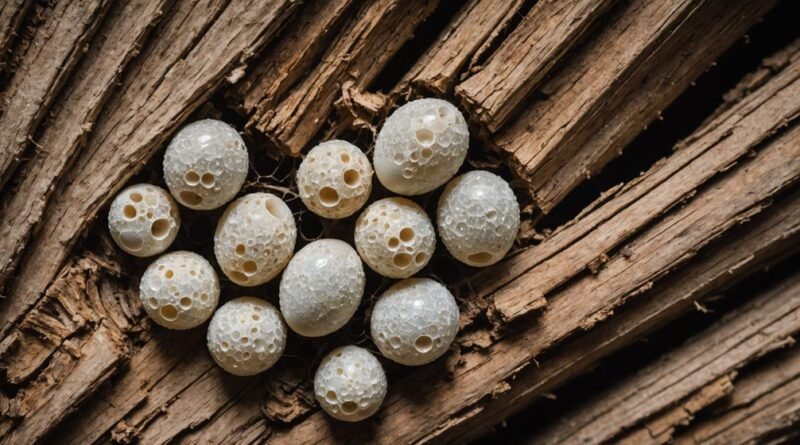
You’ll recognize termite eggs as tiny, smooth, rice‑like or pearl‑like clusters that look pale white and slightly jelly‑like, often mistaken for a dusting of whitish powder. They’re usually hidden deep inside wood, soil, or protected nest chambers near the queen, sometimes behind mud tubes or in tight cracks. Because colonies guard eggs in these concealed spots, you rarely see them until an infestation’s advanced—and that’s where the details you’re about to uncover become essential.
Key Takeaways
- Termite eggs are tiny, smooth, jelly-like ovals that resemble clusters of white rice or small pearls, often appearing as whitish powder from a distance.
- They are pale, translucent, and featureless, requiring close inspection or magnification for clear identification, with older eggs slightly larger than freshly laid ones.
- Most eggs are hidden deep inside soil nests, wooden galleries, or sealed royal chambers, not usually visible on exposed surfaces.
- Subterranean termites keep eggs 4–18 inches underground, often connected to structures by mud tubes; drywood termites hide eggs inside intricate wood tunnels.
- If you suspect termite eggs, avoid disturbing them, document with photos, and contact a licensed termite professional for accurate identification and treatment.
How to Recognize Termite Eggs at a Glance
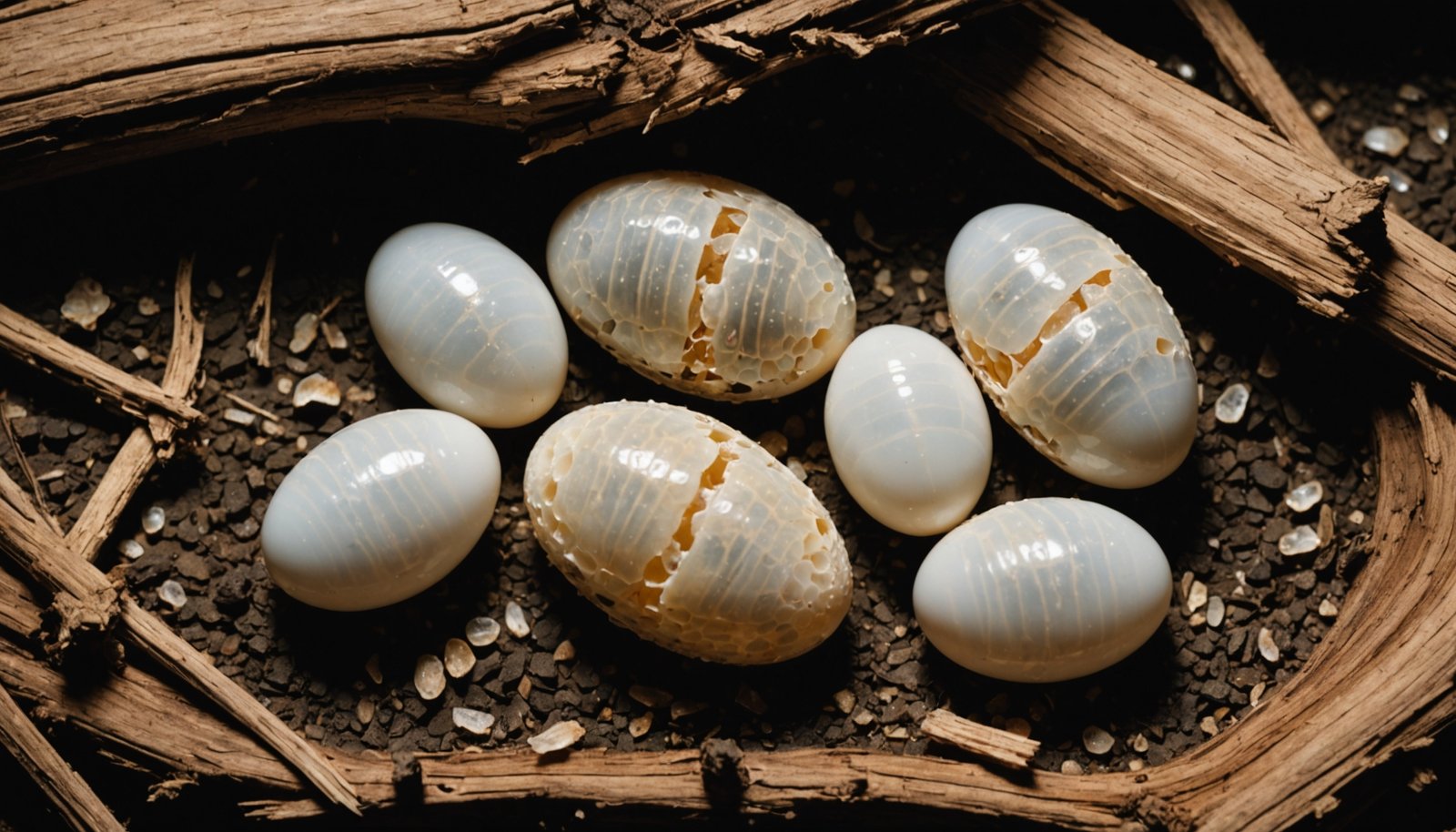
At a glance, termite eggs look like tiny, clustered grains of white rice or small pearls packed together in hidden, protected spaces. You’ll usually find them in bunched groups near the royal cell at the heart of the nest or tucked inside mud tubes, where workers rush to collect and guard them right after the queen lays them. The queen termite can lay thousands of eggs daily, allowing a colony to grow rapidly if left untreated.
Termite eggs resemble tiny white rice grains or pearls, clustered together in hidden, well‑protected nest spaces
You rarely see termite eggs out in the open. Their shiny, translucent surface blends into wood or soil, so they’re hard to spot without very close inspection or magnification. From a distance, you might mistake them for a dusting of whitish powder, like flour or sugar.
To recognize them quickly, look for signs that point to nearby clusters: active mud tubes, damp or decaying wood, small holes, and powdery material.
When you notice these together—especially with structural damage—you should suspect eggs and consider professional confirmation.
Termite Egg Appearance: Size, Color, and Texture
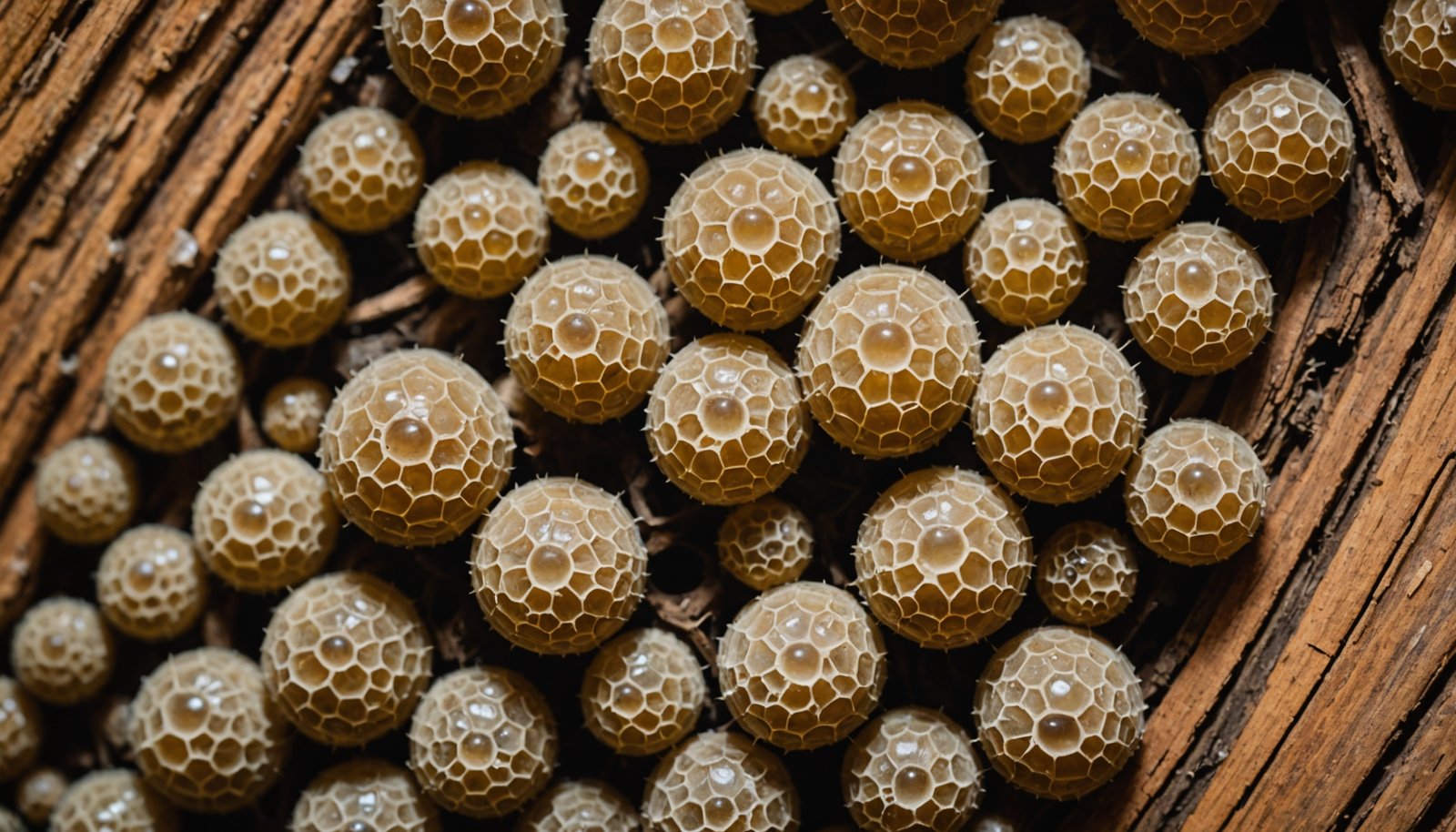
Termite eggs are so small and plain that you’ll almost always need magnification to study their true appearance. To your naked eye, they look like tiny, featureless grains, so you can’t reliably judge length or width without at least a magnifying glass. As these eggs eventually hatch into larvae that grow into worker termites, they represent the earliest and most fragile stage of a developing colony.]
Under magnification, researchers measure them as short ovals and even calculate volume, noting that an egg at the final stage can be about 2.5 times larger than a freshly laid one.
You won’t see dramatic color cues. Scientific studies on Reticulitermes and related species don’t even record egg color, which tells you it’s usually unremarkable—typically pale and uniform, without clear shifts as the embryo develops.
Texture’s just as understated. Because scientists routinely handle and batch‑weigh eggs in groups of 100 without mentioning irregularities, you can safely expect smooth, slightly moist, jelly‑like surfaces rather than rough or sticky shells.
Any “feel” differences between species remain minimal and undocumented.
Termite Eggs vs Droppings, Maggots, and Other Insects
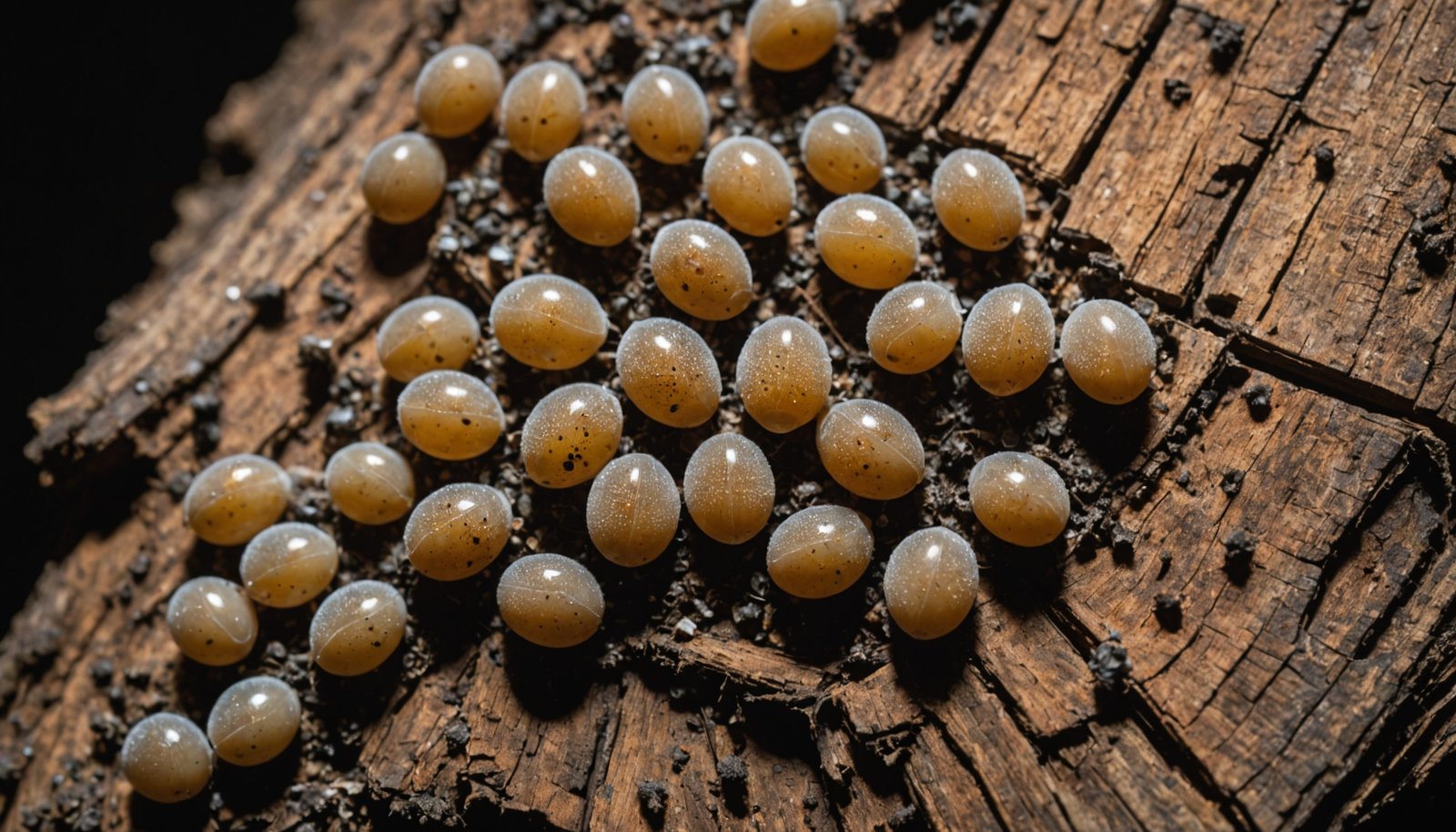
Confusion thrives when you’re staring at tiny specks and wriggling shapes, trying to decide if they’re termite eggs, droppings, maggots, or some other insect. To sort things out fast, focus on color, shape, and how they collect.
1. Termite eggs vs droppings
Termite eggs are black and smooth, shaped like tiny ovals. Droppings (frass) are about 1 mm long, hexagonal, and brown, ranging from shiny dark brown when fresh to dusty light brown when old. Fresh frass can look slightly moist or polished, while older droppings appear dry and crumbly.
2. Texture and behavior
Frass feels gritty, like sand, and doesn’t smear. It often piles up neatly like salt, pepper, or coffee grounds beneath small kick‑out holes.
3. Not maggots
Maggots are soft, creamy white, and move. Termite eggs and droppings don’t wriggle.
4. Not rodent droppings
Mouse and rat droppings are much larger, irregular, and pose health risks; termite pellets stay tiny, uniform, and harmless.
Where Termites Keep Their Eggs: and Why You Rarely See Them
Most of the time, you never see termite eggs because colonies hide them deep where you’d rarely look—inside soil, wood, and sealed nest chambers. Subterranean termites keep eggs 4–18 inches underground in the nest core, tucked into small rooms and tunnels close to buried wood. These underground networks usually don’t form obvious surface mounds, so you won’t notice anything from above. A queen can lay roughly 1,000 eggs per day, allowing the hidden colony to grow rapidly even though you never see the egg chambers.
Termite eggs stay hidden in deep soil and wood tunnels, buried 4–18 inches below the surface
Drywood termites do something similar inside your home’s structure. They stash eggs inside wooden galleries, clustering them in intricate tunnels and core chambers with the queen.
You typically encounter them only when wood crumbles during repair or inspection.
Both types rely on a secluded queen chamber at the colony’s heart. Workers and soldiers guard this area, constantly tending eggs and newly hatched nymphs.
Even mud tubes in basements and crawl spaces simply connect hidden nests to food, keeping egg sites protected and out of sight.
What to Do If You Find Possible Termite Eggs
Because colonies usually keep their eggs hidden, spotting anything that looks like a tiny clutch of white or pale beads near wood or soil should immediately put you on alert. Treat it as a sign of an active, serious infestation, not a minor nuisance.
1. Assess without touching
Look closely for tiny, oval, translucent clusters—like powdered sugar or caviar—often under 1 mm. Note color, location, and any mud tubes or nearby foundation wood, but don’t disturb them. Termite eggs are laid by the queen in protected areas, so anything visible on exposed surfaces may indicate the colony has expanded into vulnerable structural spaces.
2. Avoid DIY removal
Don’t crush, spray, or dig into the area. You can trigger pheromones, scatter larvae, or drive the colony deeper into your structure.
3. Document what you see
Take clear, close photos with a size reference. Record exact locations, depth, moisture, wood contact, and any workers, soldiers, wings, or swarmers.
4. Call a professional promptly
Share your notes and photos with a licensed termite specialist and request a treatment plan targeting the queen, eggs, and entire colony.
Conclusion
When you know what termite eggs look like and where colonies hide them, you’re far less likely to miss early warning signs. Use size, color, and texture to tell eggs from droppings or other insects, and remember that most eggs stay hidden deep in galleries or mud tubes. If you spot anything suspicious, don’t disturb it. Document what you see, then call a licensed termite professional to confirm and protect your home.