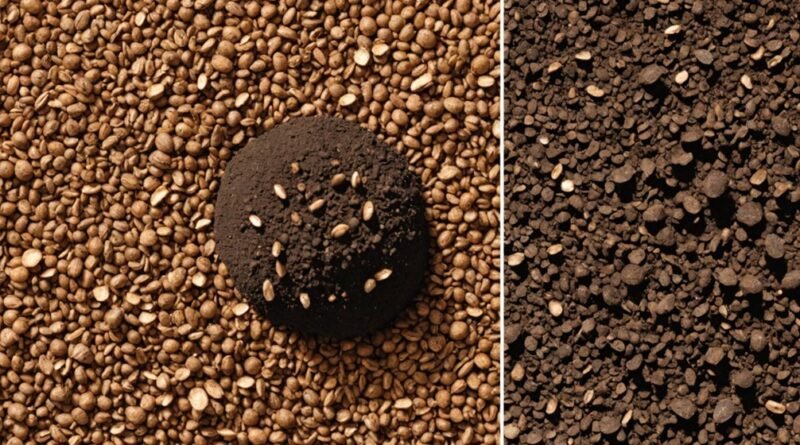
Termite Frass vs Ant Frass: How to Tell the Difference
You can tell termite frass from ant frass by the shape, texture, and mess. Termite frass looks like tiny, hard, uniform pellets (about 1mm) in neat piles, usually tan to dark brown. Ant frass looks like loose, messy wood shavings mixed with debris, more like coarse sawdust. Termite pellets feel hard and gritty, while ant frass feels soft and crumbly. If you’re unsure, comparing color, location, and nearby wood damage will quickly clarify what you’re dealing with next.
Key Takeaways
- Termite frass forms tiny, hard, uniform pellets (about 1mm) in neat piles; ant frass looks like messy, irregular wood shavings or coarse sawdust.
- Termite frass is pure digested wood, often tan to dark brown; ant frass mixes wood pieces with insect parts and other debris.
- Termite frass feels hard, dry, and gritty, holding its shape; ant frass feels soft, dusty, and crumbles easily.
- Termite frass usually appears near small kick-out holes or hidden in mud tubes; ant frass accumulates in messy heaps below nest openings.
- Termite frass typically signals more serious, hidden structural damage; ant frass usually indicates localized carpenter ant nesting with less extensive damage.
Termite Frass vs Ant Frass at a Glance
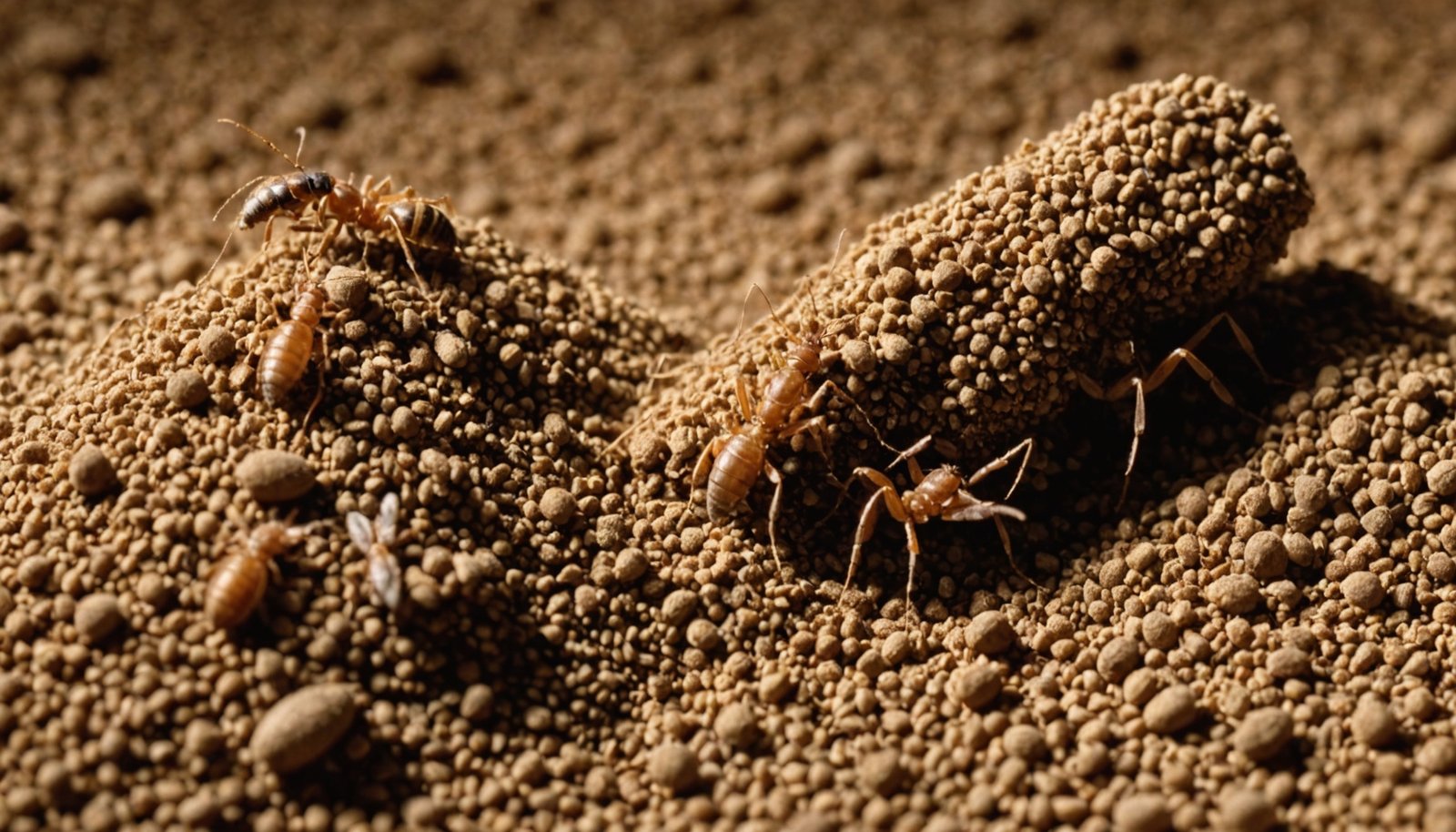
Termite frass and ant frass may both look like piles of “sawdust,” but their appearance, texture, composition, and location tell very different stories about what’s happening inside your wood. When Brisbane or Gold Coast homeowners find debris, learning to spot key differences helps avoid confusing harmless ant activity with serious termite damage.
When you look closely, termite droppings form tiny, hard, uniform pellets, about 1mm long, in neat pepper‑ or sand‑like heaps. Colors range from tan to dark brown or black.
Ant frass, by contrast, looks like loose, irregular shavings. It’s usually lighter, more like coarse wood chips than grains, and the pieces vary in size.
Touch tells you more. Termite frass feels hard, dry, and gritty and holds its shape when you pinch it. Ant frass feels soft, dusty, and crumbly, with rough, uneven bits.
Termite frass is pure, digested wood pushed through small kick‑out holes near damaged areas.
Ant frass mixes wood fragments with insect parts, soil, gravel, and plant debris below nest openings or cracks.
Quick Checklist: Do You Have Termites or Ants?
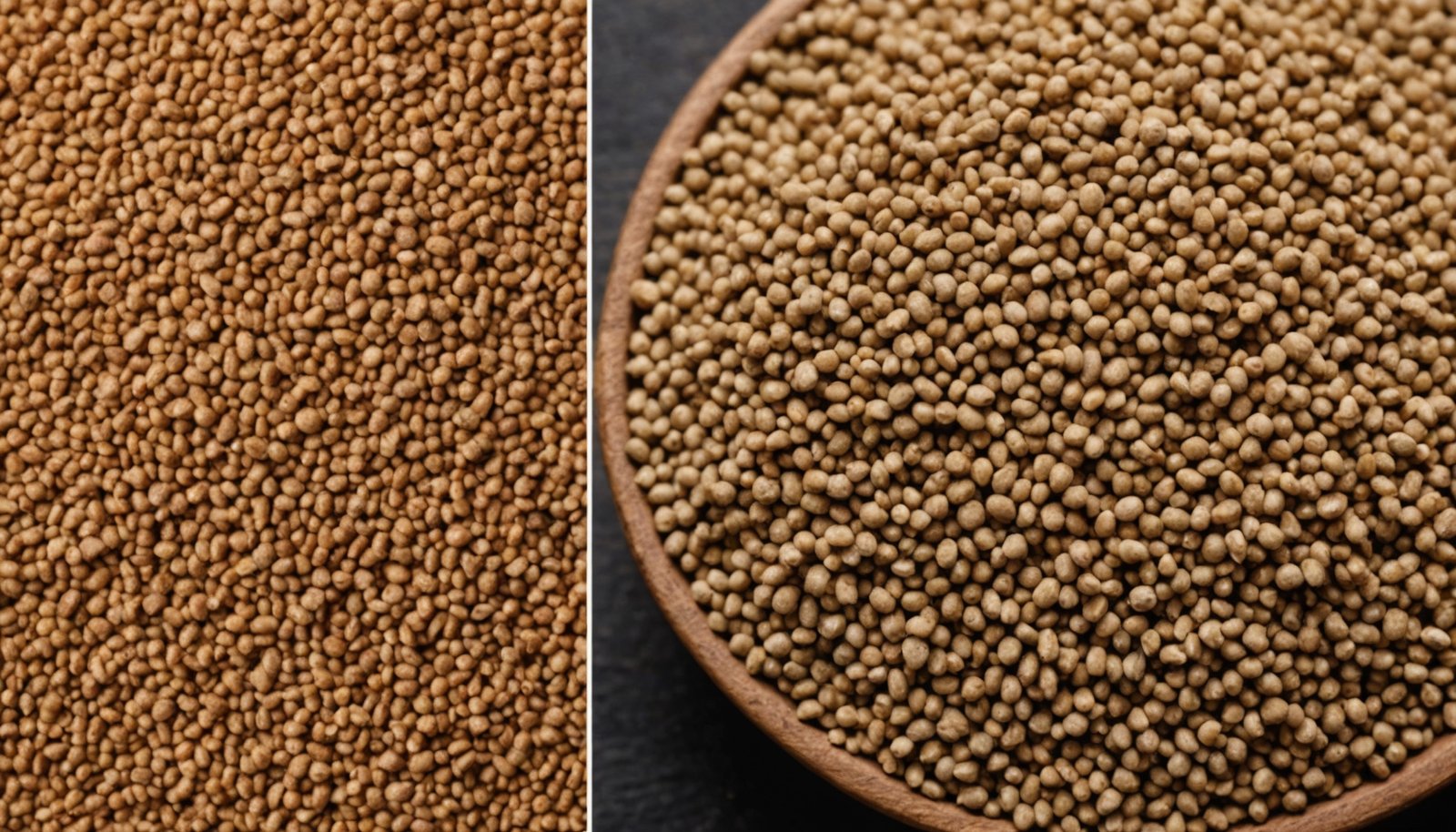
You can quickly narrow down whether you’re dealing with termites or ants by checking what the frass looks like, how it feels, and where it collects. Termite droppings, also called frass, can indicate drywood activity when you see small piles of pellets pushed out of tiny kick-out holes.
Start by using a visual frass checklist, then pay attention to texture and color cues that separate hard, uniform pellets from messy, mixed debris.
Finally, look at frass location and surrounding damage signals to confirm which pest is inside your wood.
Visual Frass Checklist
Wondering whether that mysterious pile of dust is from termites or ants? Start with shape. Termite frass usually looks like tiny, uniform pellets—often oval or six‑sided, like miniature rice grains. Recognizing these droppings early can help you act quickly before serious wood damage occurs.
Carpenter ant frass looks more like uneven shavings, with pieces of different sizes.
Next, check where it sits. Drywood termite frass often forms small, tidy mounds directly under tiny kick‑out or exit holes in damaged wood.
Subterranean termites typically don’t leave visible frass; they pack it into hidden mud tunnels, so you won’t see loose piles.
Carpenter ant frass tends to spill from nest openings, cracks, or slits and collects just outside their galleries, creating noticeably messy heaps.
When unsure, collect a sample and have a professional inspect it.
Texture And Color Cues
Texture and color give you fast clues about whether frass comes from termites or ants.
Termite frass feels hard, dry, and sand-like. When you pinch it, pellets stay intact—tiny, elongated ovals about 1 mm long, with a uniform, granular texture. Under close look, they’re compact, neatly formed, and all about the same size and shade. Because it’s made from digested wood fibers, termite frass tends to look very uniform from pellet to pellet.
Ant frass feels soft, loose, and crumbly, more like sawdust than sand. Pellets are irregular, bulkier, and often clump with fibrous bits.
Color helps too: termite pellets run from light beige to dark brown, but each pile looks consistently shaded. Ant frass usually matches the wood’s natural or painted color and often shows mixed hues from wood fragments and trapped debris.
Location And Damage Signals
Once you know where to look, the location of frass and the type of damage around it quickly point to either termites or carpenter ants. Carpenter ant frass usually piles beneath wall voids, window or door frames, and roof lines. Their galleries look clean and smooth, almost sanded, with small ejection holes and faint rustling sounds in quiet rooms. Because carpenter ants excavate wood rather than eat it, they push debris out of their nests instead of consuming it like termites do.
Termite frass tends to sit beneath damaged wood or scatter near tiny kick‑out holes. Subterranean species often hide frass inside mud tubes and soil‑lined tunnels, leaving wood hollow, maze‑like, and structurally weak.
| Signal Type | Carpenter Ants | Termites |
|---|---|---|
| Frass placement | Piles below nest openings | Scattered, in wood, or inside mud tubes |
| Nearby wood look | Smooth, polished galleries | Honeycombed, layered, hollowed |
| Nest clues | Moist areas (bath, basement, sinks) | Mud tubes, soil‑bonded tunnels |
| Frass contents | Insect parts visible | Uniform pellet droppings |
| Risk level | Localized structural impact | Often extensive, costly internal destruction |
Texture: Hard Termite Pellets vs Soft Ant Frass
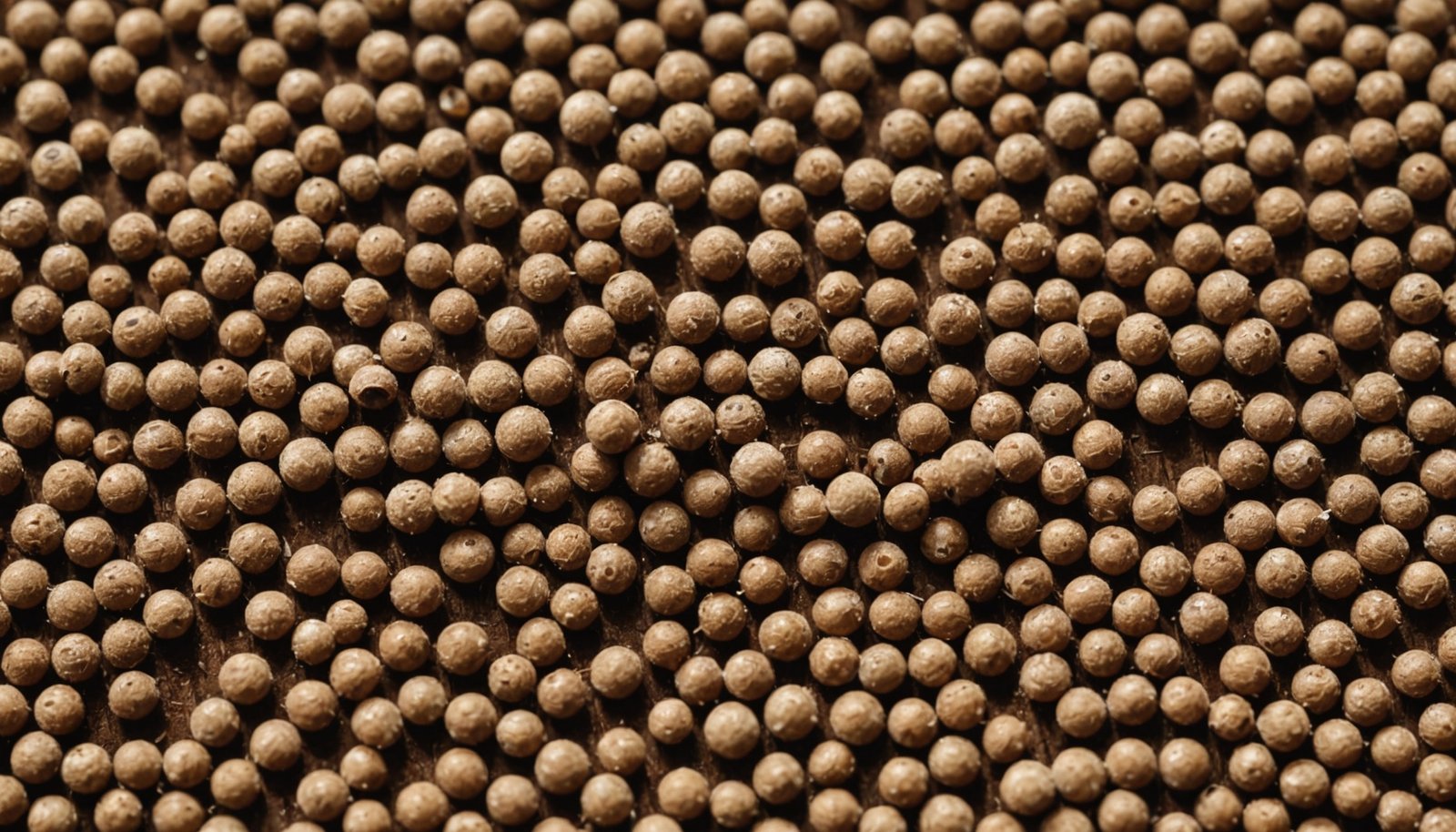
When you compare the texture, termite frass feels like compact, hard pellets, while ant frass looks and feels more like loose, sawdust-like debris.
You can often roll termite pellets between your fingers like tiny grains, but ant frass crumbles apart easily.
If you’re unsure which pest you’re dealing with, this hard-vs-soft texture test is one of the quickest checks you can use.
Compact, Pellet-Like Droppings
A quick touch often reveals the biggest difference between termite frass and ant frass.
Termite droppings feel like tiny, compact pellets, not soft crumbs. When you roll them between your fingers, they stay hard, dry, and distinctly shaped—more like gritty coffee grounds than dust. Each pellet is elongated, about 1 mm long, with six subtle ridges and slightly rounded ends.
Ant frass doesn’t form these neat, solid pellets. Instead, it’s loose, irregular, and full of mixed debris. When you pinch it, it crumbles and scatters rather than holding together.
You can quickly compare:
- Termite frass: uniform, pellet-like droppings.
- Ant frass: irregular, non-pellet material.
- Termite pellets: hard heaps vs. ants’ messy accumulations.
Loose, Sawdust-Like Debris
Ant frass, by contrast, looks and feels like soft, crumbly sawdust. It’s coarser, with irregular wood splinters, leaf bits, soil, and even insect parts mixed in.
When you touch it, it disintegrates immediately, with no cohesion. If you spot shiny wood slivers and mixed debris in a loose pile, you’re likely dealing with ants, not termites.
Shape and Size: Termite Pellets vs Ant Sawdust
Shape and size provide some of the clearest clues for telling termite frass from ant frass. When you look closely, termite droppings appear as tiny, hard pellets about 1 millimeter long. They’re oval capsules with six subtle concave sides and rounded ends, like miniature grains of rice or coarse salt.
You’ll usually see them in tight, tidy mounds beneath small kick-out holes in wood.
Ant frass, by contrast, looks like someone emptied a pencil sharpener. It’s irregular, fibrous, and made of shredded wood pieces, flakes, and splinters. Instead of neat pellets, you’ll notice loose, messy piles that resemble workshop sawdust scattered near nest openings.
Use this quick comparison when you inspect debris:
- Termites: Uniform, pellet-like grains, all the same tiny size.
- Ants: Mixed, larger shavings with no consistent shape.
- Overall look: Termites = compact pellets; ants = fluffy, stringy debris.
Color Clues in Termite Frass vs Ant Frass
Color offers another quick way to separate termite frass from ant frass at a glance. Drywood termite pellets usually fall in a tan to dark brown range, but pellets from the same colony stay strikingly uniform. If you see a pile of tiny six-sided pellets that all share the same shade, you’re likely looking at termite frass. The exact color reflects the wood they’ve digested—lighter tans for pale woods, deeper browns for darker species.
Carpenter ant frass, by contrast, looks like loose, light-colored sawdust. Its color closely matches the wood around the nest opening, often appearing light brown to yellowish.
Because ants shred rather than digest wood, their piles typically show mixed shades, sometimes with soil or other debris creating a speckled look. In real-world inspections, uniform brown pellets point to termites, while pale, uneven, sawdust-like piles strongly suggest carpenter ants, especially under good lighting.
What’s Inside Termite vs Ant Frass (and Why It Matters)
When you look closely at termite frass, you’re really seeing compacted wood-based pellets.
In contrast, ant frass is a loose mix of chewed wood, insect parts, and other debris.
Understanding what’s actually inside each type of droppings helps you tell whether you’re dealing with insects that eat the wood itself or pests that mostly excavate it.
That difference directly changes how urgently you need to respond and what kind of damage you should expect behind the scenes.
Termite Frass Components
Inside those tiny piles of “sawdust,” there’s actually a big difference between what termites and ants leave behind, and that difference matters if you’re trying to identify an infestation.
Termite frass is biologically processed wood: dry, hard, and remarkably uniform. Each pellet is a tiny engineering project, not random dust.
You’ll notice termite frass:
- Forms six-sided, barrel‑shaped pellets with lengthwise ridges, all about the same size, flowing like coarse sand and packing tightly into neat mounds.
- Feels solid when you roll it between your fingers; it doesn’t smear or crumble into flour, unlike softer insect powder.
- Contains fragmented cellulose with elevated calcium and magnesium, high organic nitrogen, and soluble phosphorus, but almost no heavy metals, making it chemically distinct from raw wood.
Ant Frass Debris Mix
Unlike those clean, uniform termite pellets, ant frass looks messy because ants don’t eat the wood—they excavate it and push everything out.
You’ll see coarse, irregular wood fibers and shavings that look like pencil sharpener waste, often matching the color of the infested wood. The pieces are ragged and uneven, not tiny pellets.
Mixed into this “sawdust” you’ll often spot soil granules, insulation fragments, and even dead insect parts—legs, wings, cocoons, and discarded ant bodies.
Feces and body fluids give the pile a dirty, sometimes slightly damp or oily look. Because ants simply carve galleries and eject everything, their frass is a mixed debris dump, not pure processed wood.
That contrast is a key clue you’re dealing with ants, not termites.
Damage Risks And Urgency
Although termite frass and ant frass can look similar at a glance, what’s actually in those piles tells you how worried you should be.
Termite frass is compact, uniform pellets made of digested wood. When you see these coffee-ground droppings near tiny pinholes, termites are actively eating the structure, hollowing beams from the inside. That calls for fast, professional inspection.
Ant frass is looser and mixed: wood shavings, soil, gravel, and often insect legs, wings, and carcasses. Carpenter ants are mainly carving space, not eating the wood, so damage develops more slowly.
- Termite pellets = immediate structural risk.
- Ant debris with insect parts = lower, but real, risk.
- Frass near load‑bearing areas always raises urgency.
Where Termite Frass vs Ant Frass Usually Shows Up
When you’re trying to tell termite frass from ant frass, where it shows up around your home often gives you the first clear clue.
Drywood termite droppings usually appear in neat little heaps directly beneath damaged wood or furniture. Termites push their pellet-like frass through tiny “kick-out” slits in their tunnels, so you’ll see piles forming below baseboards, window frames, beams, or other wooden elements.
Neat little piles of drywood termite droppings collect beneath damaged wood, baseboards, window frames, and other wooden fixtures
Subterranean termites are different. You typically won’t see loose droppings at all. Instead, their waste gets mixed into the mud tubes they build along foundations, walls, or other surfaces, so frass stays hidden inside those wormlike tunnels.
Carpenter ant frass tends to collect right at nest openings and gallery entrances. You’ll notice messy, irregular piles under or beside chewed wood, often containing coarse, sawdust-like debris and bits of insect parts, rather than clean, uniform pellets.
Other Signs of Termites vs Ants in Your Home
Beyond those telltale piles of frass, several other clues help you decide whether termites or ants are chewing through your home. Termites leave hidden, moisture‑dependent evidence, while ants tend to stay visible and drier.
1. Mud tubes, wood texture, and hollow sounds****
Subterranean termites build pencil‑thin mud tubes on foundations, walls, or in crawl spaces; ants never do.
Termite galleries feel rough, packed with soil, and may cause blistered wood or peeling paint. When you tap suspect boards, termite‑damaged wood often sounds hollow because they eat from the inside out, leaving a thin outer shell. Ant‑worked wood usually feels more solid.
2. Discarded wings and swarm signs****
Termite swarmers shed piles of equal‑length, translucent wings, often near windows and lights.
Ant wings are uneven in size and less clustered.
3. Activity and insect appearance
Termites hide from light; ants trail openly by day.
Termite workers look pale, with no pinched “waist.”
Termite Damage Risk vs Ant Nests: When to Call Pest Control
Even if termite and ant frass can look similar at first glance, the kind of damage happening behind the scenes is very different—and so is how urgently you should react. Termites eat wood 24/7, literally turning framing into food. Subterranean species build mud tubes and hollow out softer spring wood, while drywood termites leave riddled lumber packed with pellets, mud, and body parts. Repairs often climb past $3,000, and swarmers usually mean a 3–4‑year‑old colony already stressing your structure.
Carpenter ants, in contrast, excavate smooth, clean galleries for nesting. You’ll see tiny sawdust piles and crisp exit holes near moist areas like bathrooms, basements, or fascia boards, often tied to satellite colonies.
| Situation you see | How fast to call pros |
|---|---|
| Mud tubes on foundation or joists | Immediately – termite emergency |
| Swarmers with equal wings, straight antennae | Same week – termite inspection |
| Hollow, debris-filled wood | Immediately |
| Large black ants with sawdust piles | Soon – schedule ant treatment |
| Swarmers from moist trim or window frames | Soon – likely carpenter ants |
Safely Cleaning Up Termite and Ant Frass (and Preventing More)
Although termite and ant frass can look like simple dust or debris, you should treat it as a health and structural warning, not just a housekeeping issue. Before you clean, put on gloves, a mask, and eye protection. Then locate any kick-out holes, mud tubes, or nest openings so you don’t scatter active frass.
1. Clean up termite frass safely
For drywood termite pellets, use a HEPA-filter vacuum, avoiding direct contact. Seal the vacuum bag in a trash bag, discard it outdoors, then wipe nearby surfaces with disinfectant. Don’t soak areas that might indicate an active infestation.
2. Clean up ant frass safely
Vacuum loose carpenter ant frass—often mixed with insect parts and wood bits—then seal and discard the bag. Wash surfaces with soap and water or a mild bleach solution.
3. Prevent future frass
Reduce moisture, seal cracks, trim vegetation, manage firewood, and schedule regular professional inspections and treatments.
Conclusion
Now that you can spot the differences between termite frass and ant frass, don’t ignore what you’re seeing. Use the checklists, compare texture, shape, and color, and look for other signs around the droppings. If anything suggests termites—or you’re just not sure—call a pro fast. In the meantime, clean up safely, fix moisture issues, and seal cracks. You’ll protect your home and catch problems long before they become disasters.