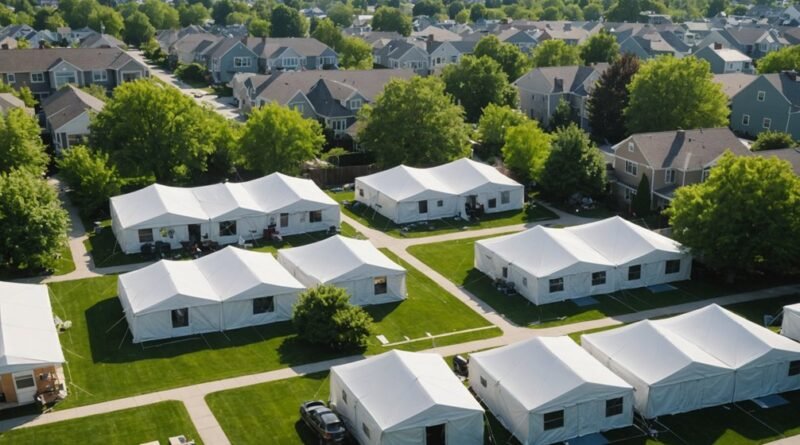
Termite Fumigation Cost: Tenting Prices by Home Size
You can expect termite fumigation with tenting to cost about $1,000–$1,500 for a small home under 1,500 sq. ft., $2,000–$5,000 for a 1,500–2,500 sq. ft. home, and $4,000–$12,000+ for houses over 2,500 sq. ft. Most jobs run $1–$4 per square foot, depending on height and infestation severity. You’ll also want to factor in possible repair and hotel costs, which become much clearer once you see all the price factors explained.
Key Takeaways
- Termite fumigation typically costs $1,000–$1,500 for small homes under 1,500 sq. ft., excluding repairs or temporary lodging.
- Medium homes (1,500–2,500 sq. ft.) usually range from $2,000–$5,000 for whole-house tenting, depending on severity and structure complexity.
- Large homes over 2,500 sq. ft. can cost $4,000–$12,000+, with 3,000–4,000 sq. ft. houses reaching $3,000–$16,000.
- Whole-house tent fumigation is generally priced at $1–$4 per square foot, with higher rates for complex roofs or multi-story designs.
- Hidden costs—hotel stays, pet boarding, and structural repairs—can add thousands beyond the quoted fumigation price.
Average Termite Fumigation Costs and Price Ranges
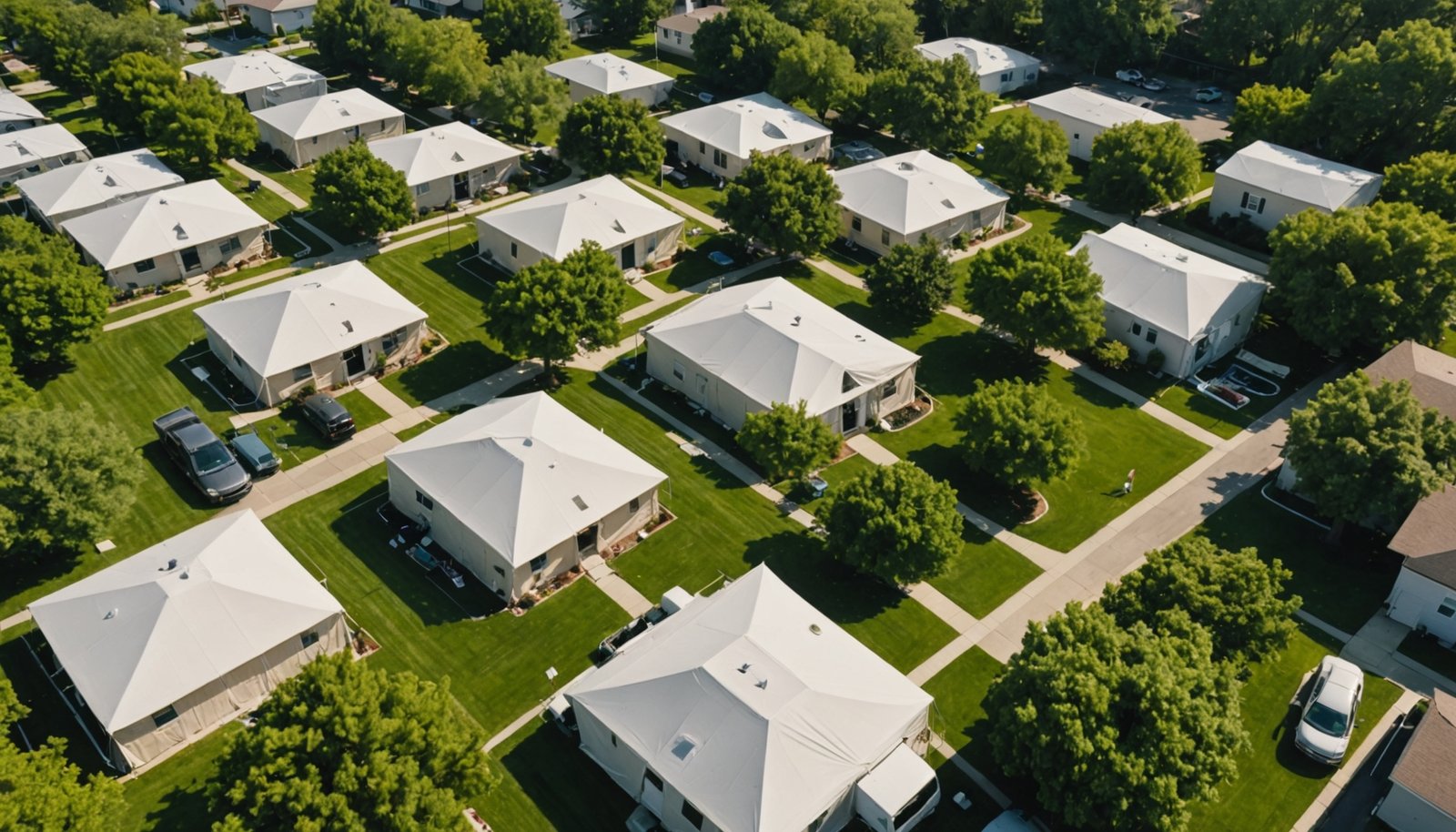
When you’re budgeting for termite fumigation, you can expect national costs to average around $1,500, with most treatments falling between $450 and $2,000—or roughly $1 to $4 per square foot for full fumigation. That baseline helps you judge whether a quote seems reasonable for your situation and location.
Expect national termite fumigation costs to average $1,500, or about $1–$4 per square foot
You’ll also want to weigh potential damage costs. A typical repair bill after termites runs about $1,800, but if you delay treatment, you could easily face $5,000 to $10,000 in structural repairs. In other words, acting early often costs less than fixing what termites destroy.
Regional price swings are real. In Florida, whole‑home tenting often lands between $1,000 and $3,000, while in Phoenix, treatment for a 2,500‑square‑foot home might range from a few hundred dollars for basic chemical work to several thousand for more intensive methods. For instance, Florida homeowners typically pay about $1 to $2 per square foot for tenting, with smaller homes sometimes coming in under $1,000.
Infestation severity also pushes costs higher as gas usage and labor hours increase.
Termite Fumigation Costs per Square and Linear Foot

Although termite fumigation prices can feel confusing at first, they actually follow some clear per‑unit patterns. Most whole‑house fumigation runs about $1 to $4 per square foot, with Florida often closer to $1 to $2. Inspection costs before fumigation typically range from $150 to $350, though some companies offer free inspections or credit the fee if you hire them.
Gas fumigation usually falls in that same $1 to $4 band, while heat treatment typically costs $1 to $3 per square foot. If you’re dealing with a severe infestation, expect quotes to land toward $3 to $4 per square foot because labor and gas use go up.
You’ll also see square‑foot pricing when you compare alternatives. Spot or “micro” treatments often cost $6 to $8 per square foot, as do electro‑gun or microwave options, while freeze runs about $3 to $6 and steam about $2 to $7.50 per square foot.
Other methods use linear‑foot pricing instead: chemical soil barriers at $3 to $20, bait stations at $7 to $12, and some no‑tent or perimeter treatments at $4 to $16.
Termite Tenting Costs for Small, Medium, and Large Homes
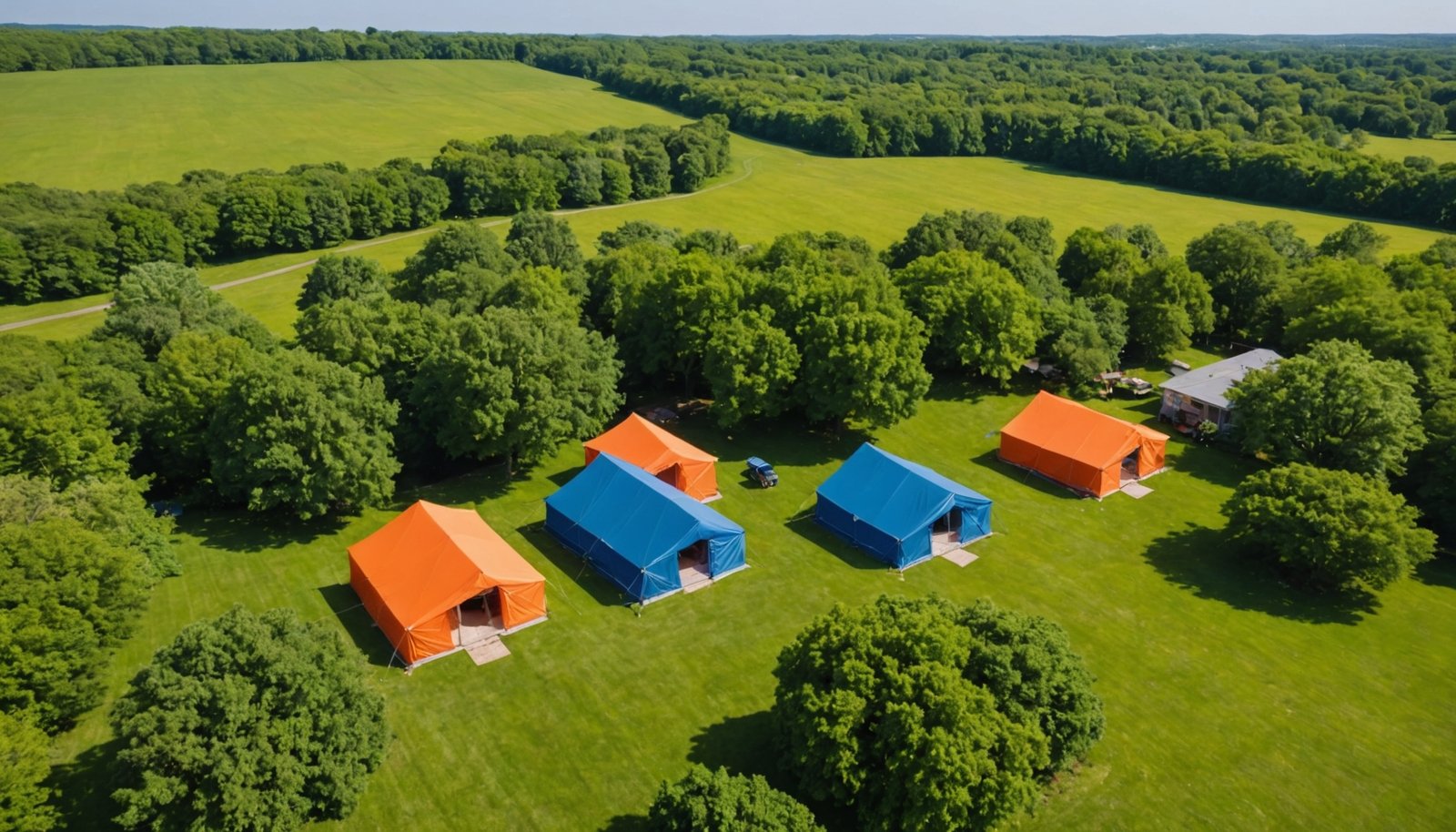
Understanding the per‑square‑foot ranges makes it easier to see how termite tenting costs break out by home size. For small homes under 1,500 square feet, you’ll usually pay $1,000 to $1,500. At $1 to $2 per square foot, a 1,300‑square‑foot home often falls between about $895 and $1,500, so budgeting is fairly straightforward.
Medium homes from 1,500 to 2,500 square feet typically cost $2,000 to $3,000, though prices can climb with added complexity. A 2,000‑square‑foot home commonly lands between $2,000 and $5,000, and national data shows some treatments reaching $8,000. A 2,500‑square‑foot home averages around $6,250. Many homeowners also choose to add an annual termite bond, which can run from $500 to $2,000 per year to protect their investment after fumigation.
Large homes over 2,500 square feet see the steepest totals. You might spend $4,000 to $8,000 or more, with 3,000‑square‑foot homes ranging from $3,000 to $12,000 and 4,000‑square‑foot homes reaching $4,000 to $16,000, even when per‑square‑foot pricing stays within typical national ranges.
How Infestation Severity Changes Termite Tenting Costs
As a termite problem grows from mild to severe, fumigation and repair costs rise sharply because colonies spread deeper into your home’s structure.
With a mild infestation, you might spend under $2,000 on localized treatment plus a $100–$300 inspection and around $3,000 for minor repairs. Bait systems or spot treatments usually handle these early cases, and you avoid structural work. Because damage is costly to repair and often not covered by insurance, catching termites at this early stage can significantly reduce your long‑term financial risk.
Once an infestation becomes moderate, costs jump. Larger colonies force pros to use expanded soil treatments or multiple bait stations, and damage often reaches subfloors and framing.
Repairs can run $2,500–$7,500, with an extra $500–$2,000 for drywall and insulation.
In severe infestations, tenting or whole‑structure fumigation is typically unavoidable.
Multiple treatment rounds, structural beam or joist replacement of $2,500–$10,000+, and flooring repairs of $2,000–$5,000 per area can push your total above $15,000, especially when wall and subfloor sections need extensive work.
How Home Size, Height, and Foundation Affect Fumigation Price
When you price termite fumigation, pros don’t just look at bugs—they look at your square footage, roof height, and foundation. You’ll pay by the foot in two ways: cost per square foot of living space and cost per linear foot of the foundation. Taller homes, complex rooflines, and basements or crawlspaces usually push your fumigation price toward the higher end of the range. A thorough on-site inspection helps ensure accurate pricing with a clear, itemized estimate based on your home’s specific conditions.
Cost By Square Foot
Because termite fumigation pricing is largely based on size, the cost per square foot is the clearest way to estimate what you’ll pay.
Most whole‑home fumigation falls between $1 and $2 per square foot, though gas treatments can run $1 to $4, especially with severe infestations.
Heat treatments typically cost $1 to $3 per square foot.
You’ll usually see totals of $1,000 to $1,500 for homes under 1,500 square feet, $2,000 to $3,000 for 1,500 to 2,500 square feet, and $4,000 to $8,000 or more for larger homes.
Many pros calculate using interior square footage, but some price by linear foot of perimeter, typically $10 to $20 per linear foot for fumigation, which still reflects overall home size.
Impact Of Home Height
Square footage explains a lot of your fumigation price, but the height and shape of your home can push costs up just as quickly.
Fumigators price jobs by cubic volume, so a multi‑story house almost always costs more than a single‑story with the same footprint. A 1,200 sq ft single‑story home might tent for about $1,200–$1,800, while a 3,000+ sq ft two‑story can run $2,800–$4,000 or more.
Rooflines and overall design matter too. Steep, cut‑up roofs, dormers, and multiple levels require more tenting material and labor.
Detached garages, guest houses, and ADUs add surfaces to cover and seal, increasing price.
Duplexes and townhomes often cost more because shared or adjacent walls complicate tent placement and gas containment.
Foundation Type And Pricing
Another major driver of termite fumigation cost is what your house actually sits on: the foundation. Pest pros price most treatments by the linear foot of your foundation perimeter, usually $3–$16 for liquid termiticide, $7–$12 for bait systems, and $5–$20 for tenting. As perimeter length grows, your total bill climbs in lockstep.
Slab-on-grade foundations are typically cheapest. They’re simpler to prep, and even though pros must drill concrete, a 200‑foot perimeter often runs $1,000–$3,200. Crawl spaces and basements cost more because technicians trench soil, drill floors, and work in tight areas.
| Foundation Type | Typical Challenge Level | Relative Cost Impact |
|---|---|---|
| Slab | Low | $ |
| Crawl Space | Medium–High | $$–$$$ |
| Basement | High | $$$ |
Hidden Termite Fumigation Costs Homeowners Forget
When you budget for fumigation, you probably focus on the treatment price and forget what it costs to live somewhere else for a few days.
Hotel stays, boarding pets, and eating out can quickly add hundreds to your total bill.
You’ll also face cleaning and restoration expenses afterward, from laundering textiles to replacing contaminated food and restoring any items that need special treatment.
Temporary Living Expenses
Although most people focus on the fumigation quote itself, the real financial surprise often comes from the temporary living expenses you face while your home is tented and uninhabitable for 2–3 days.
You’ll need full lodging coverage for the entire 72‑hour period—California projects commonly require three nights out. With average hotel rates around $159 per night, costs add up quickly, especially for families.
You might trim the bill by using an Airbnb, splitting a place with relatives, or staying with friends.
Still, you’ll pay for gas, rideshares, or taxis as you shuttle between the property, lodging, and work.
Tenants may get prorated rent—often calculated as 1/30 of monthly rent per displaced day—but reimbursements rarely cover your full out‑of‑pocket relocation costs.
Cleaning And Restoration
Even after the tent comes down and the gas clears, the real work often starts with cleaning and restoration that no one included in your fumigation quote.
You’ll pay for tarp removal, aeration, vacuuming, and wiping surfaces to remove residues and pest remnants.
Then you’ll likely uncover the real hit: repairing what termites already destroyed.
- Structural repairs can run $3,000–$8,000 on average, but foundation damage alone can reach $25,000, and major beam, floor, and wall work often costs thousands more.
- Cosmetic fixes—like drywall patches, trim, repainting, and floor refinishing—add hundreds to several thousand dollars.
- Long term, you may face a 3–5% drop in resale value, higher utility bills from damaged insulation, and possible mold and insurance issues.
How to Reduce Termite Tenting Costs Safely
Instead of treating termite fumigation as a one‑off emergency expense, you can cut tenting costs safely by combining smart prevention, early intervention, and carefully chosen treatment options.
Start with maintenance: keep timber off soil, fix leaks quickly, ventilate subfloors, remove dead trees and stumps, and store firewood away from foundations. These steps make your home less attractive to termites and reduce the odds you’ll ever need full tenting.
Next, invest in early intervention. Pre‑ or mid‑construction barriers and borate treatments cost less than post‑construction fumigation and can cut activity by up to 90%.
Regular inspections and baiting systems help catch colonies early and reduce populations before structural damage occurs.
When treatment is necessary, compare options. Heat, baiting, and spot liquid or foam treatments can handle localized problems for less than whole‑home tenting.
Always get at least three licensed quotes, compare warranties, and weigh reputation alongside price.
Conclusion
When you’re budgeting for termite fumigation, you now know tenting costs depend on home size, layout, and how bad the infestation is—plus a few hidden fees. Get multiple quotes, ask what’s included, and compare guarantees, not just prices. You can often lower costs by preparing your home yourself and scheduling early. When you act quickly and choose a reputable pro, you protect your home, avoid repeat treatments, and keep long‑term repair bills down.