Termite Fumigation: What to Expect Before, During and After
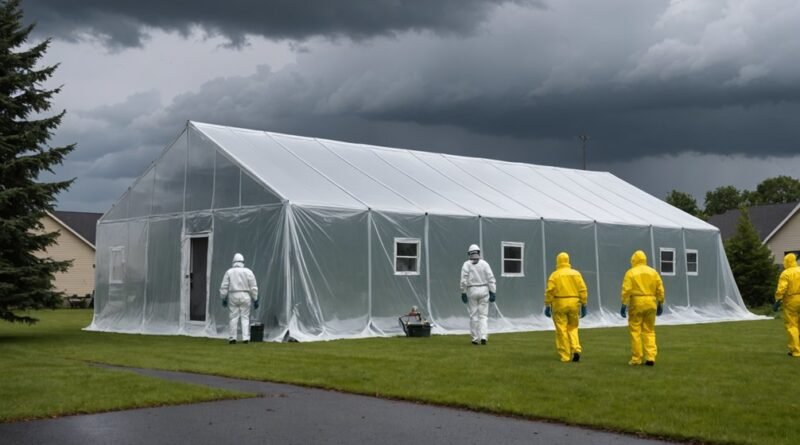
Before termite fumigation, you’ll trim landscaping, remove or double‑bag food and meds, strip beds, open cabinets, and leave the home with pets. On day one, professionals tarp the house, shut gas off, soak surrounding soil, and release fumigant that circulates for about 24–48 hours. Next, they aerate, test every area with analyzers, and post clearance tags. When you return, you’ll restore utilities, unpack, clean surfaces, and spot signs the treatment worked, which you can now explore in more detail.
Key Takeaways
- Before fumigation, you must vacate the home, remove or double-bag food and medications, and ensure landscaping and interior access are properly prepared.
- During fumigation, licensed professionals tarp and seal the structure, shut off gas, introduce fumigant, and monitor gas levels while the building remains unoccupied.
- The fumigant penetrates walls, voids, and furnishings over several days to eliminate active termite colonies, including hidden or widespread infestations.
- During aeration, tarps are removed, the home is ventilated, and specialized analyzers verify gas levels are safe before utilities are restored and re-entry allowed.
- After fumigation, you’ll re-enter, unpack sealed items, restart systems, clean accessible surfaces, and schedule follow-up inspections to confirm long-term termite control.
What Termite Fumigation Involves
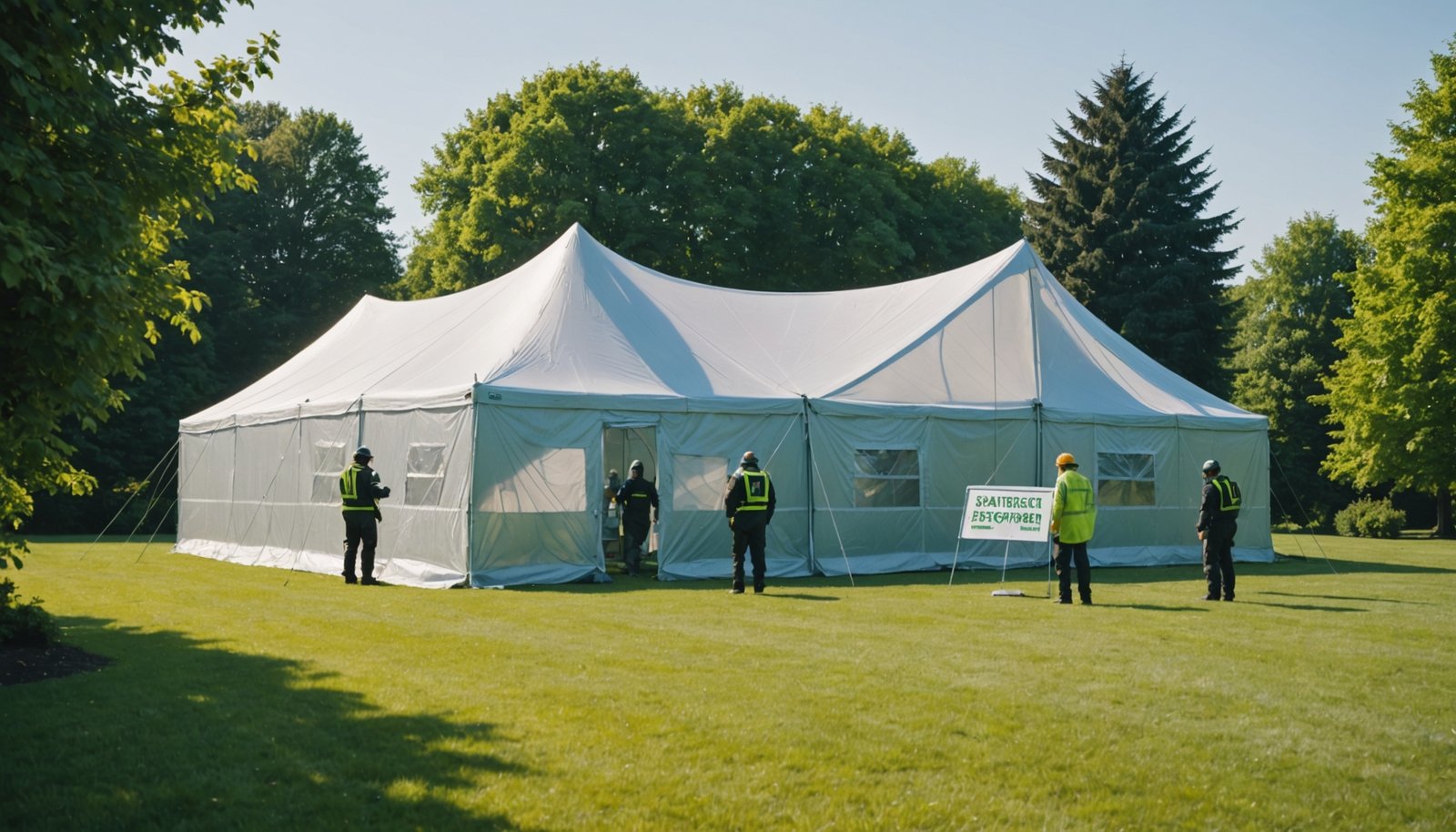
Termite fumigation is a tightly controlled process that seals your entire structure in tarps, fills it with fumigant gas to reach hidden colonies, and then safely vents the building before you return.
Before crews arrive, you’ll remove people, pets, fish, and interior or attached plants, open drawers, cabinets, interior doors, and some windows, and bag unsealed food, medicines, and toiletries in special double bags. Regular inspections are recommended after fumigation to ensure that termites and other pests have not returned.
You’ll also trim back landscaping, clear an 18-inch zone at the foundation, and water soil around the perimeter.
The gas company shuts off the gas line, then licensed fumigators tarp and seal the building, lock doors, and post warning signs.
They release a warning agent, then introduce fumigant that penetrates voids and furnishings, killing termites throughout the structure over several days.
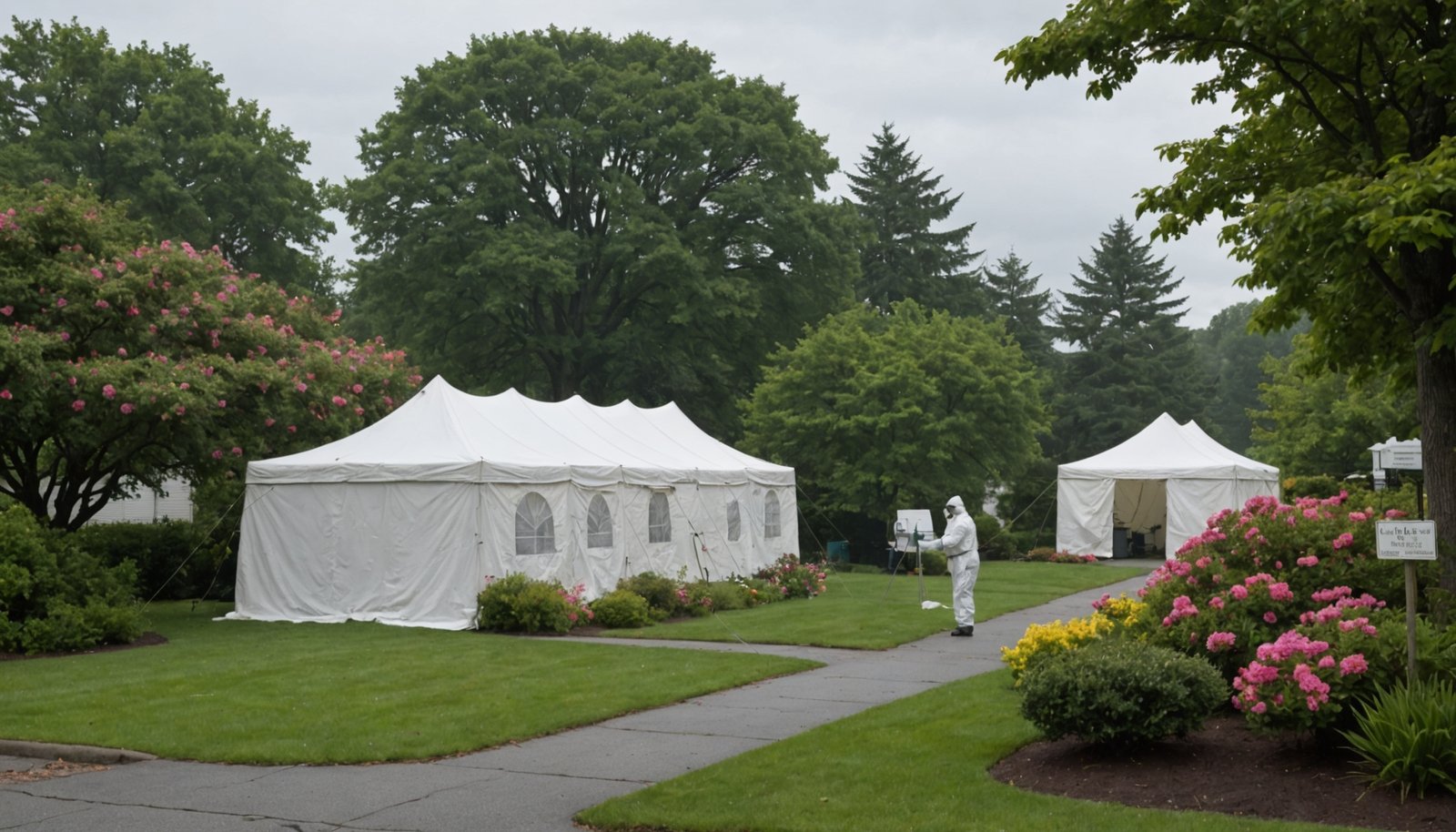
Next, they open vents, mechanically and naturally aerate, test air with instruments, and only clear re-entry when levels are proven safe.
Do You Really Need Termite Fumigation?
When you’re deciding if you really need fumigation, you’ll first look for signs of a severe infestation that suggest termites are spread well beyond a few problem spots.
You’ll also need to ask whether local treatments have failed or can’t realistically reach all the active galleries. The success rate of fumigation is generally high, often exceeding 95% success, when it’s properly executed and environmental conditions are suitable.]
If you wait too long to escalate to fumigation, you risk structural damage getting worse and treatment costs climbing quickly.
Signs Of Severe Infestation
Spotting a few suspicious signs doesn’t always mean you need full-scale termite fumigation, but certain red flags point to a severe, active infestation that shouldn’t wait.
Indoors, winged swarmers around lights or windows—plus piles of translucent shed wings near sills or doors—signal an established colony. Swarmers are often one of the first visible signs of a potential termite problem.
Outside or in a crawl space, pencil-width mud tubes on the foundation or slab, especially ones that rebuild after you break them, indicate an active subterranean termite network.
Inside, look for drywood termite frass: tiny, pellet-like droppings collecting like coffee grounds near baseboards, window frames, or furniture.
Pay attention to hollow-sounding or blistered wood, sagging floors or ceilings, stuck doors or windows, loose tiles, bubbling paint, and faint clicking in walls—these suggest advanced structural damage.
When Local Treatments Fail
Once you’ve confirmed those red flags point to a serious infestation, the next question is whether spot or local treatments can realistically solve the problem—or if whole-structure fumigation’s the only option that makes sense.
Local options can work, but they’re fragile: liquid barriers fail if the soil’s disturbed or the termiticide was under-applied, and baits often act too slowly for heavy, established colonies. In California, though, properly installed bait systems have shown they can keep homes termite‑free even under significant termite pressure.
You usually know local treatments are falling short when:
- You still find fresh pellets or damage in areas that were “treated.”
- Bait stations show activity for months, but you’re not seeing a clear decline.
- New infestation pockets appear far from original treatment zones.
At that point, fumigation’s near-100% success rate for active drywood colonies often becomes the most reliable choice.
Risks Of Delaying Treatment
Even if your house doesn’t look like it’s “falling apart,” putting off serious termite treatment—especially fumigation for drywood termites—lets a quiet, ongoing problem turn into an expensive structural one.
Termites feed every day, gradually weakening beams, subfloors, and framing until repairs jump from a few patches to major reconstruction. Regular annual inspections after fumigation help catch any new termite activity before it turns into major structural damage.
Delays also cost you real money. Homeowners commonly spend around $3,000 once damage shows, but costs climb fast as colonies spread through walls, attics, and hidden voids.
Localized treatments can miss these pockets, letting termites keep eating while you think they’re gone.
In high‑activity regions, or in older homes without documented fumigation, waiting often means you’ll eventually need full‑house fumigation anyway—plus far more extensive, and expensive, structural repairs.
Termite Fumigation Safety and How the Gas Works

When your home is fumigated, a specialized gas moves through the structure and into the wood to shut down termites’ nervous systems and energy production.
Because this gas is colorless and odorless, professionals use strict safety protocols, warning agents, and continuous monitoring to control exposure.
You’ll only be allowed back inside once the structure is thoroughly aerated and certified to be below strict re-entry limits.
How Fumigation Gas Works
Although termite fumigation can look intimidating from the outside, the gas used—sulfuryl fluoride—is designed to move quickly and predictably through your home to eliminate pests. It’s a colorless, odorless inorganic gas (SO₂F₂) that’s stored as a liquid under pressure and released as a gas once your home is tented.
Here’s what it does once inside:
- It diffuses rapidly through the entire enclosed structure, reaching wall voids, attics, and deep inside wood where drywood termites live.
- Termites breathe it in; in their tissues, it breaks down and releases fluoride, disrupting their nervous system and leading to death.
- After exposure, the original gas doesn’t remain in insect tissues; it’s metabolized and converted to fluoride and sulfate.
Safety Protocols And Monitoring
Understanding how sulfuryl fluoride moves through your home is only half the story; the other half is how professionals keep you safe before, during, and after fumigation.
You’ll cut back shrubs 18 inches from walls, remove plastic covers that could trap gas, and double‑bag or remove food, meds, and vitamins. Everyone—people, pets, and indoor plants—must leave for the entire 24–72 hour process.
Certified crews follow EPA guidelines and add chloropicrin, a strong warning agent that irritates eyes and lungs if anyone nears the tented structure.
After fumigation, they ventilate the home, then monitor sulfuryl fluoride with devices like Interscan, Spectros ExplorIR, or Miran SapphIRe.
Ask for documentation of measurement locations, understand wall voids aren’t directly tested, and note the gas meter clearance tag needed for utility restoration.
When It’s Safe Indoors
Because termite fumigation relies on a powerful gas rather than a surface spray, knowing exactly how that gas behaves indoors is key to knowing when it’s safe to go back inside. The fumigant, sulfuryl fluoride, turns to gas and spreads quickly through wood, walls, and even soil, reaching hidden termites.
It doesn’t leave residue, but it must fully dissipate before reentry.
Here’s what determines when it’s safe indoors:
- Gas behavior – During treatment, levels can reach 1,400–3,800 ppm; after aeration, they drop rapidly as doors and windows stay open.
- Clearance testing – Professionals must verify sulfuryl fluoride is at or below 1 ppm throughout the structure.
- Hidden spaces – Technicians check wall voids and crawl spaces to prevent trapped gas from rebounding.
Preparing Your Home for Termite Fumigation
Before the tent goes up, you’ll need to prepare your home so the fumigant can work effectively and your belongings stay safe.
Start with food and consumables: remove or double‑bag perishables in the fridge and freezer using special fumigation bags. Do the same for cardboard or plastic‑packaged items like cereal, rice, and pet food, plus spices, vitamins, and medications. You can leave factory‑sealed airtight containers meant for human consumption.
Next, strip all bedding, and remove or unzip plastic mattress covers, including on cribs and bassinets. Take all high‑density foam mattresses off‑site, and open or remove plastic covers on furniture and pillows. Pack any medications you’ll need while you’re away.
Unplug TVs, computers, toasters, coffee makers, and heating elements, and turn off your AC. Open all closets, cabinets, and drawers at least four inches.
Outside, trim and water around the house, pull back mulch, remove potted plants, and lower awnings.
What Happens on Termite Fumigation Day 1
Day 1 of termite fumigation starts with your fumigation team arriving and securing full access to the entire structure.
Because you’ve already provided keys, they can immediately lock exterior doors, apply secondary locks, and post clear warning signs at every entry. If you have security concerns, you’ll contact the pest control office for options before work begins.
Inside, they confirm your final prep:
- All interior doors, cabinets, and drawers stay open at least four inches, with blinds up and curtains open, and no interior locks engaged.
- Outside, decorative bark, gravel, and rock are raked back 18 inches, and foliage is trimmed so tarps fit tightly.
- The soil around the foundation is soaked to prevent leaks and protect plants.
The team encloses the structure with tarps, seals exits, and introduces fumigant gas (often sulfuryl fluoride).
They monitor gas concentration with specialized instruments until termites receive a lethal dose.
Aeration and Gas Clearance After Termite Fumigation
Once your home has stayed sealed with fumigant long enough to kill termites, the focus shifts to safely clearing the gas so people and pets can return.
On the second day, licensed fumigators open the pre‑installed inlet and outlet ventilation system and use fans and blowers to move air through the structure. After 16–30 hours of exposure, sulfuryl fluoride (Vikane) begins diffusing out of wood, wall voids, and contents, helped by its high vapor pressure and low boiling point.
They open windows, doors, cupboards, drawers, trunks, and vaults, and may run bathroom exhaust fans and utility room vents to push gas out, especially from lower areas where the heavier‑than‑air fumigant can linger.
Next, they test every breathing zone with specialized analyzers to confirm levels are at or below 1 ppm, as required.
Only after the entire structure clears do they post a formal clearance notice.
Life After Termite Fumigation: Re-Entry and Cleanup
Although the fumigation crew has cleared your home for re-entry, the way you move back in and clean up plays a big role in both safety and long-term results.
Start with a slow, systematic walkthrough, beginning in main living areas, then bedrooms, bathrooms, and storage. Open doors and windows to boost ventilation, and note any unusual odors, residues, or missed materials with photos. Expect dead insects for several days as the treatment finishes working.
Move slowly through each room, airing out spaces and documenting odors, residues, and lingering pests with photos
1. Initial safety and inspection
Watch how you feel during the first 24–48 hours; if symptoms appear, leave and call your provider. Schedule a follow-up inspection to confirm success and discuss prevention.
2. Restoring household systems
Unpack sealed foods and medicines, plug appliances back in, restart AC, and coordinate gas reconnection.
3. Cleaning and soft surfaces
Toss any exposed food, vacuum pests and mattresses, launder sheets and curtains, wipe surfaces with vinegar solution, and mop floors with soapy water.
Conclusion
Once you understand how termite fumigation works, it feels far less intimidating. You’ll prep your home, leave for a short time, and return to a space that’s been thoroughly treated and cleared for safety. Follow your pest pro’s instructions, re-enter only after clearance, and clean up as directed. By staying informed and proactive, you protect your home, avoid future infestations, and get real peace of mind that termites aren’t silently causing damage.