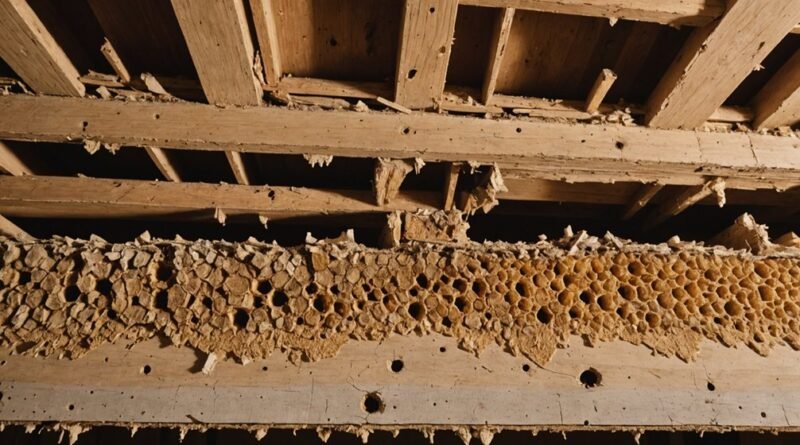
What Does Termite Damage Look Like in Wood, Floors and Drywall?
You’ll spot termite damage in wood as hollow-sounding, blistered, or papery areas that may look normal on the surface but crumble when pressed. Floors can feel spongy, sag, or buckle, and may squeak more than usual. In drywall, look for tiny pinholes, bubbling or peeling paint, faint maze-like lines, and hollow sounds when tapped. If you’re noticing any of these subtle changes, you’re about to see how to confirm and handle them.
Key Takeaways
- Termite-damaged wood often sounds hollow when tapped and may show blistered surfaces, dark sunken spots, or internal tunnels following the wood grain.
- Floors with termite damage can feel soft, spongy, or unusually springy, with warping, buckling, squeaks, or loose tiles from weakened subflooring.
- Drywall damage appears as bubbling or peeling paint, small pinholes, faint maze-like lines, and hollow or papery sounds when you tap the wall.
- Termite activity often leaves frass (pellet-like droppings or sawdust-like dust) near damaged wood, baseboards, or at the base of walls.
- Unlike water damage, termite damage typically lacks uniform staining and shows irregular galleries, mud tubes, or dirt-filled tunnels within wood or behind walls.
General Signs of Termite Damage in Your Home
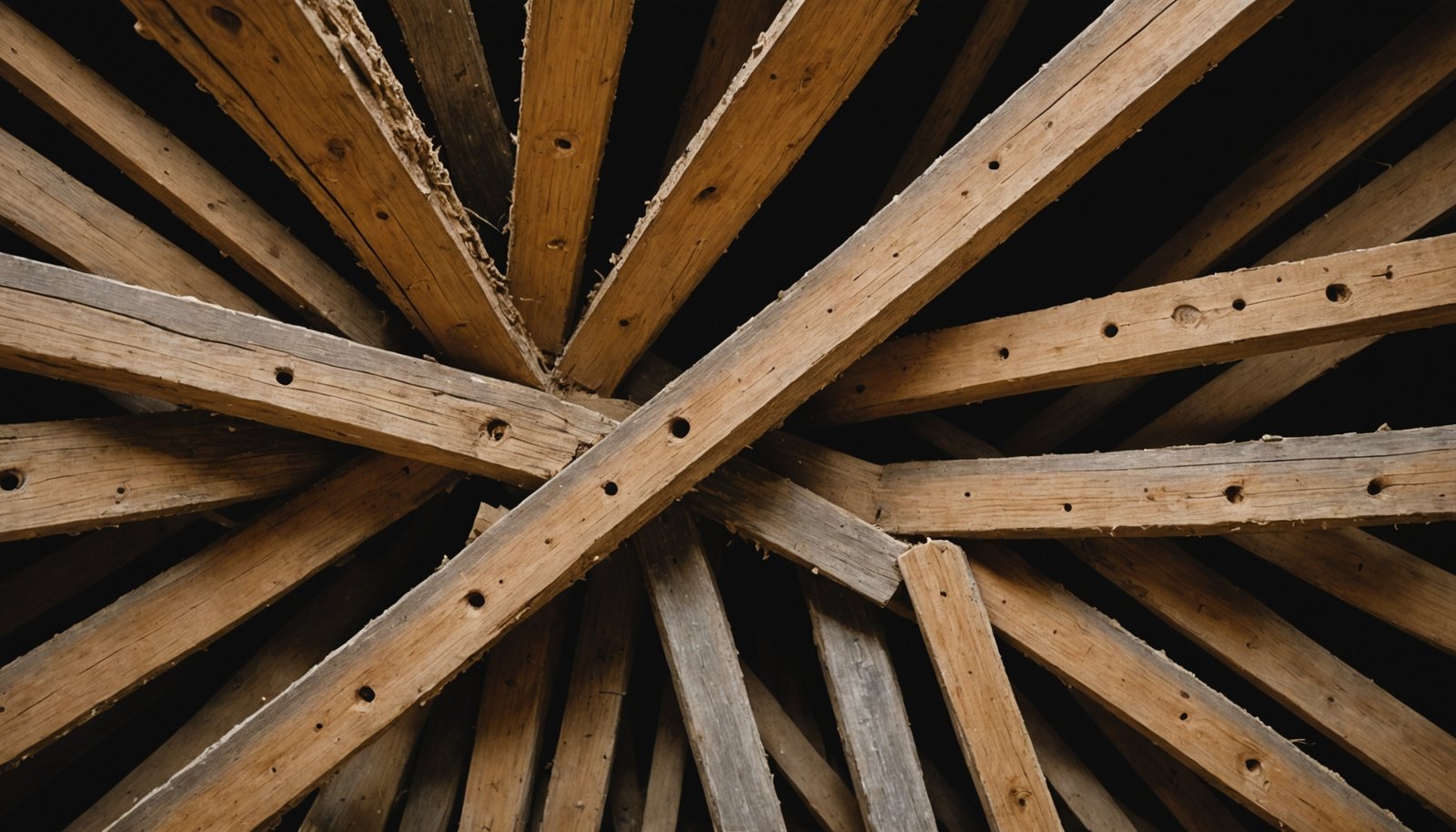
Three types of clues usually reveal termite damage early: what you see on surfaces, how floors and walls feel underfoot, and small changes in nearby wood.
Around your foundation, you might notice pencil-sized mud tubes climbing walls, support piers, or plumbing lines. These brown, gritty veins can also appear as branching cracks in drywall or concrete; wider tubes often mean a major colony is close.
Indoors, pay attention to how your floors behave. Unexplained buckling, sagging, or blistering that doesn’t match any water leak suggests termites may be weakening the structure beneath. When heavy furniture or appliances make floors squeak or flex more than usual, it can indicate damaged subfloor supports caused by termites.
Loose or wobbly tiles can point to eaten subflooring and excess moisture.
Walls and trim also reveal trouble. You may hear hollow sounds when you tap them, or see small pinholes, dried mud specks, or odd carved lines on wood.
Soft, damp, or rotted window and door frames, especially with dirt-filled galleries, signal ongoing termite activity.
Early Termite Damage in Wood: What to Look For
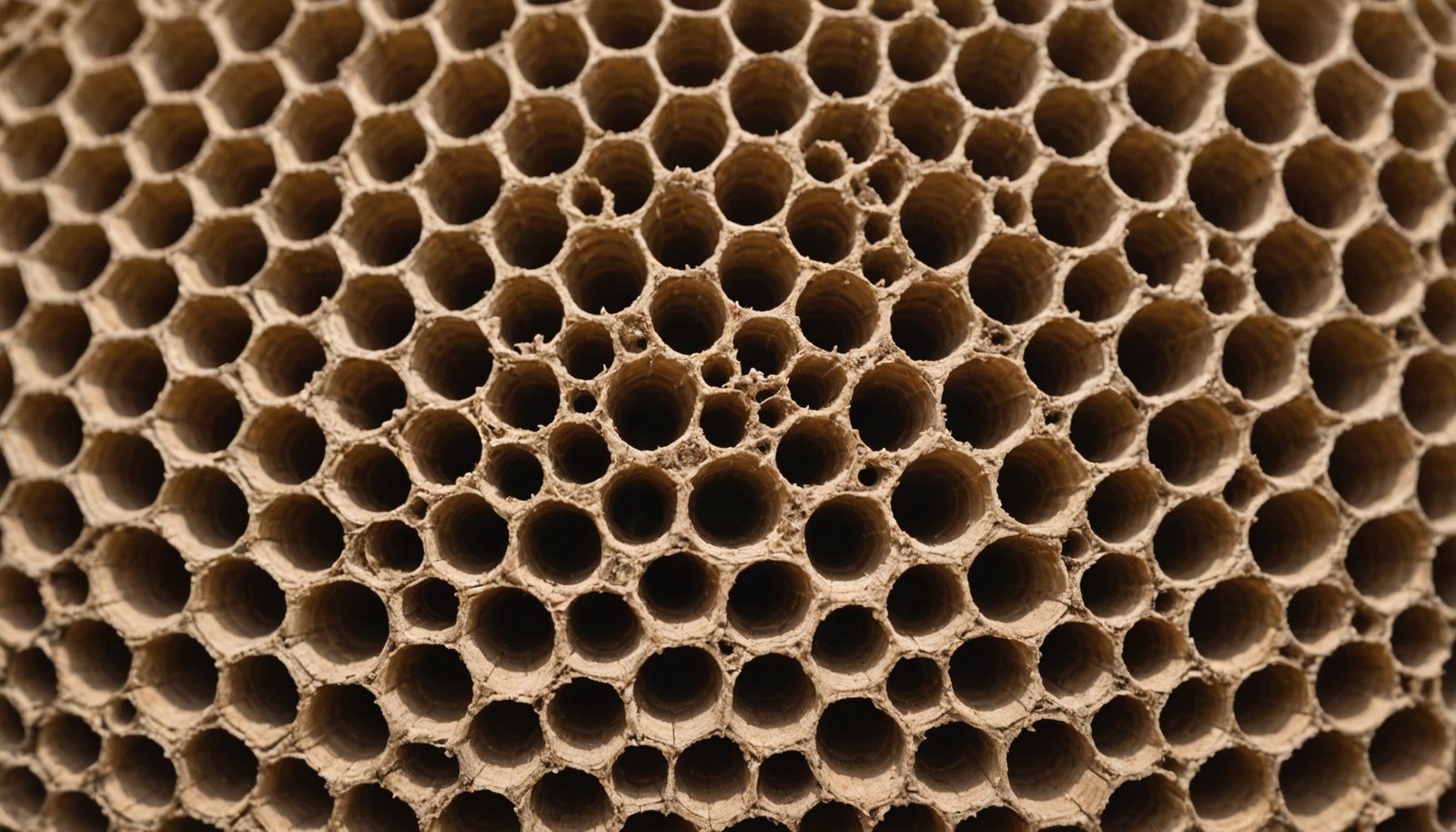
When termites first start attacking wood, you’ll often notice subtle changes long before you see obvious holes or crumbling boards. You might hear or feel hollow or papery spots, spot early tunnels and frass that look like fine sawdust, or see slight warping and buckling in floors, trim, or furniture. In many cases, these early signs mean it’s time to schedule a professional termite inspection to catch the infestation before it causes serious structural damage.
Hollow or Papery Wood
Hollow or papery‑sounding wood is one of the clearest warning signs that termites have been feeding out of sight. When you tap baseboards, floors, beams, or furniture and hear an empty, papery resonance, it often means termites have eaten the interior and left only a thin outer shell of wood or paint. Regular inspections of these vulnerable areas can catch hollow-sounding wood before the damage becomes severe and widespread.
Visually, the surface may still look intact, but it can appear slightly blistered, darkened, or sunken, especially with subterranean termites. The area often feels dry, not damp, and follows the wood grain, which helps you distinguish it from water damage.
To test suspicious spots, knock along walls, sills, or deck boards, and press or probe with a screwdriver. If the surface breaks easily or crumbles inside, you’re likely dealing with significant termite damage.
Early Tunnels and Frass
Long before wood sounds hollow, termites often leave subtle surface clues in the form of early tunnels and frass. When you peel back a paint layer, veneer, or splintered edge, you may see dry, winding grooves that follow the wood grain. These tunnels look brittle, not soft or stained like water damage. Hollow wood often means termites have been active long enough that what started as these subtle surface clues has progressed to more serious internal damage.
Drywood termites can eat right up to the surface, leaving a thin, rippled skin of wood over maze‑like galleries.
Watch for frass as well. Drywood termite droppings look like tiny, wood‑colored pellets or coarse sawdust piled below moldings, furniture, or wall joints. The uniform color and pellet shape distinguish frass from ant sawdust and signal active feeding inside the wood, not just old, inactive damage.
Subtle Warping and Buckling
Even before wood sounds distinctly hollow, termites can cause subtle warping and buckling that’s easy to dismiss as normal wear or minor water damage. You might notice floors that dip slightly, boards that don’t sit flush, or a faint ripple across a beam or baseboard. Regular inspections by a professional can catch this early damage before it spreads and becomes far more expensive to repair.
As termites hollow out joists and subflooring, the surface above loses support and begins to sag, even if the finish still looks intact.
Pay close attention to small blisters, bulges, or wavy areas in painted wood, trim, or drywall near floors and soil-contact points.
Termite moisture and tunneling can make paint pucker or form narrow sunken lines that follow the wood grain. If these areas also feel dry, brittle, or oddly soft, you’re likely seeing early structural damage.
How Termite Damage Shows Up in Floors and Subfloors
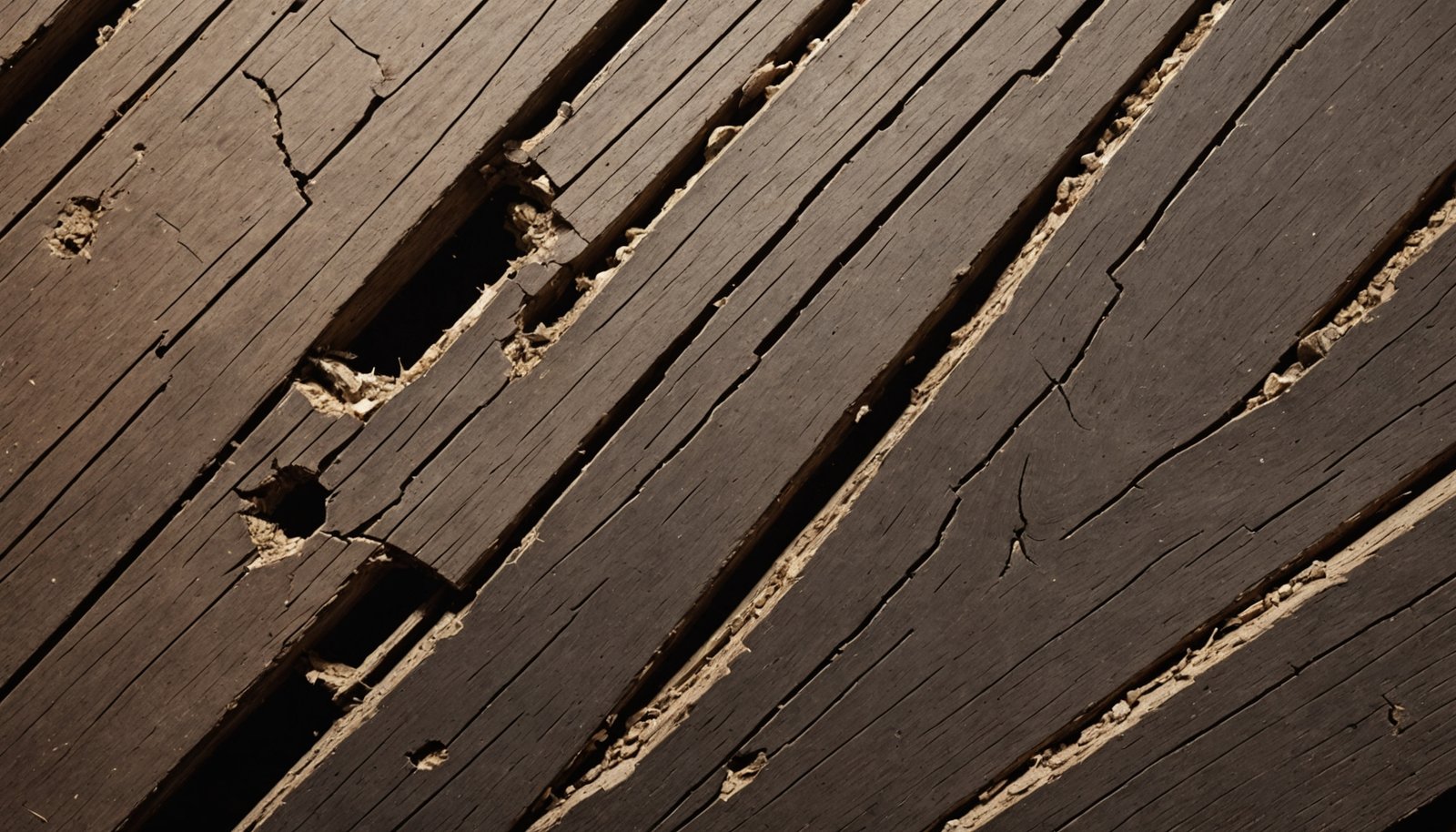
When termites move into your floors or subfloors, the damage often shows up as subtle changes in how the surface looks, sounds, and feels underfoot. You might notice that when you tap certain spots, the wood sounds hollow or weak because termites have eaten out the subfloor, leaving only a thin surface layer.
Stepping on these areas can create a peculiar, hollow echo.
As damage advances, sections of the floor may feel soft, spongy, or unusually springy. Pressing with a screwdriver or similar tool can cause the surface to give way slightly, and boards may sink a bit when you walk over them.
You can also hear more squeaks as loosened boards rub against each other or nails.
Warping, buckling, or sagging sections that look like moisture damage often trace back to termites. In some cases, you’ll see tiny piles of drywood termite frass that resemble sawdust or coffee grounds.
Termite Damage in Drywall and Interior Walls
As termites move from floors into walls, their activity often shows up first on drywall and painted surfaces. You might notice bubbling or peeling paint, small pinholes, or faint maze-like lines where galleries run just beneath the surface.
Areas can feel rippled or loose, as if the paper facing’s detached, and you may see yellowing, warping, or recurring paint bubbles near seams, corners, and baseboards.
Tap suspicious spots and listen. Termite-damaged drywall often sounds hollow or papery instead of solid. During active feeding, you might hear faint chewing, soft rustling, or clicking from soldier termites.
Watch for debris at the base of walls. Frass or termite dust can look like sawdust or coffee grounds, and drywood termites may push fine pellets from tiny holes.
Discarded swarmer wings near walls or floors signal a colony nearby, and mud tubes at baseboards indicate hidden galleries in studs and framing behind the drywall.
Termite vs Water Damage and Wood Rot
Although termites, water, and wood-decay fungi can all leave wood soft, stained, or crumbling, they damage it in very different ways—and you can usually tell them apart if you know what to look for.
Water damage and wood rot typically create square or cube-like cells that resemble alligator skin or a giraffe-print pattern. Staining looks fairly uniform, and the surface may bubble or peel with visible mold or fungus.
Termites, by contrast, follow the grain, hollowing wood from the inside. In cross-section, you’ll see wavy galleries, tunnels, or a honeycomb look. The surface appears chewed, with erratic streaks, pin-sized holes, and often mud tubes or gritty frass instead of mold.
Tap the area: termite-damaged wood usually sounds hollow and breaks into long, thin strips, while water-damaged or rotted wood feels spongy, then dries out crumbly.
Fixing leaks addresses rot; termite damage requires professional extermination.
Drywood vs Subterranean Termite Damage: How to Tell
Ever wonder if the termites chewing your home are drywood or subterranean? You can usually tell by where they live and what their damage looks like. Drywood termites nest completely inside dry, solid wood—rafters, furniture, trim, even hardwood floors—without needing soil or high moisture. Subterranean termites live in the ground, then travel up through mud tubes along foundations, plumbing, or cracks to reach your home.
Here’s a quick comparison:
| Feature | Drywood Termites | Subterranean Termites |
|---|---|---|
| Habitat | Inside dry, undecayed wood only | Underground colonies; need soil contact and humidity |
| Visible Signs | Pellets (frass) like coffee grounds; tiny kickout holes | Mud tubes on walls; mud-lined galleries in wood |
| Damage Pattern | Clean, hollowed interiors; thin, papery surface | Soft, muddy wood near soil or moisture |
Drywood termites work slowly but quietly hollow wood from the inside. Subterranean termites, especially Formosan, attack faster and can compromise structural framing much sooner.
Subtle Early Termite Damage Signs You Might Miss
You can often spot early termite activity in the way your home sounds and feels long before you see obvious damage. When you tap wood and hear a hollow thud, notice subtle bubbles or hairline cracks in paint, or struggle with doors that suddenly stick and floors that feel slightly uneven, termites may already be at work.
Hollow-Sounding Surfaces
When a solid-looking wall, floor, or door frame suddenly sounds hollow or papery when tapped, that subtle change can signal termites quietly eating from the inside out.
Termites consume wood from the inside, leaving only a thin outer shell, so baseboards, window and door frames, or beams may look fine but echo with a light, empty resonance instead of a solid thud.
Use a screwdriver handle or your knuckles to tap along wood and compare suspect spots to known solid areas.
On floors, hollow sounds often pair with slight sagging, bending, or loose tiles as termites hollow out the subfloor.
In drywall, a hollow tone can mean damaged studs and active galleries, sometimes accompanied by faint clicking or rustling behind the surface.
Subtle Paint Irregularities
Although paint flaws often get blamed on humidity, age, or a sloppy roller job, subtle bubbles, hairline cracks, or faintly sunken trails on a wall can actually mark early termite activity just beneath the surface.
As termites tunnel through drywall or sheetrock, they bring in moisture that makes paint blister, peel, or warp, often looking like ordinary water damage.
You might notice paint separating from the wall without any nearby plumbing leaks. Peeling patches can expose damp paper backing or faint termite galleries.
Narrow, sunken, winding lines in paint or wallpaper may trace the hidden tunnels following wood grain. Distorted or uneven textures—small dips, ripples, or blistered spots—also point to activity.
Any unexplained paint irregularities deserve a professional termite inspection.
Misaligned Doors And Floors
Paint that blisters or ripples without a clear moisture source is one early clue; doors and floors that suddenly stop behaving normally are another.
When termites tunnel through door panels, they hollow out the interior, so the door sags or feels oddly heavy in spots. It may scrape the floor or frame even though you don’t see rot or swelling.
You might also notice doors becoming stiff or stuck as termites distort the surrounding frame. The wood subtly shifts, creating tight spots and uneven gaps.
Floors can show similar problems: isolated buckling, soft or loose areas, or boards and tiles that creak and sound hollow under normal use.
Those changes, especially without a humidity or plumbing explanation, deserve a professional termite inspection.
When Termite Damage Becomes Unsafe: and What to Do Next
Even a few subtle warning signs—like sagging floors, hollow-sounding wood, or BB-sized holes in drywall—can mean termite damage has moved from cosmetic to structurally unsafe.
When joists weaken, floors can turn spongy, ceilings may bow, and doors or windows can jam as framing shifts. Crumbling baseboards, cracked plaster, or warped paint often mean the problem reaches deeper than the surface.
You should treat obvious mud tubes, frass piles, or buckling floors as red flags that call for immediate action, not DIY patching.
Here’s what to do next:
- Stop using suspect areas – Avoid heavy furniture and foot traffic on sagging or soft floors until they’re evaluated.
- Call professionals immediately – Schedule a termite inspection and a structural assessment, especially for load-bearing beams, rafters, or subfloors.
- Plan repairs plus prevention – Address active colonies, then repair or reinforce damaged wood and set up ongoing monitoring and seasonal inspections.
Conclusion
When you know what termite damage looks like in wood, floors, and drywall, you’re far less likely to get caught off guard. Use these signs to guide your regular checks, especially in hidden or damp areas. If anything looks suspicious, don’t wait—call a licensed termite professional and get a thorough inspection. Acting early can save your home’s structure, protect your wallet, and give you real peace of mind.