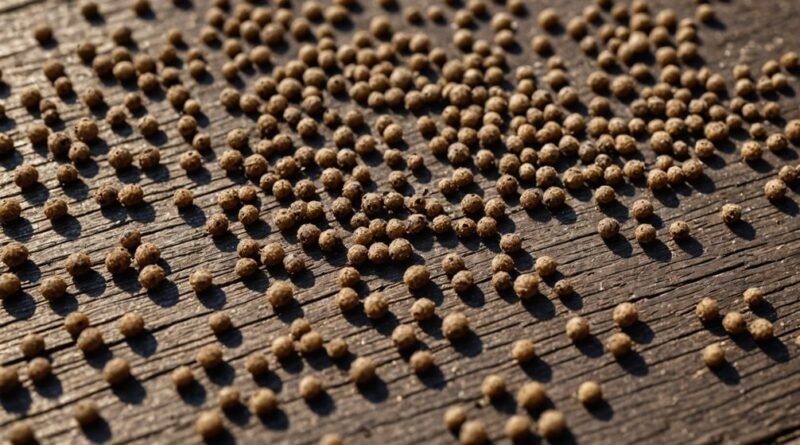
Termite Droppings But No Termites: What Does It Actually Mean?
{
“@context”: “https://schema.org”,
“@type”: “FAQPage”,
“mainEntity”: [
{
“@type”: “Question”,
“name”: “What do termite droppings look like?”,
“acceptedAnswer”: {
“@type”: “Answer”,
“text”: “Termite droppings, called frass, look like tiny oval pellets roughly 1 millimeter long with six concave sides, one pointed end, and one rounded end. They are hard, compact, and uniform in color, ranging from tan and beige to dark brown or nearly black depending on the wood the termites consumed. Many homeowners compare them to grains of salt, pepper, or coffee grounds.”
}
},
{
“@type”: “Question”,
“name”: “Does finding termite droppings but no termites mean the infestation is over?”,
“acceptedAnswer”: {
“@type”: “Answer”,
“text”: “Not necessarily. Finding termite droppings without visible termites usually means the colony is hidden inside wood, feeding out of sight. Drywood termites live entirely within wood and push frass out through tiny kick-out holes, so you see the pellets long before you ever spot the insects. Fresh, crisp, growing piles signal active feeding; old, dusty, scattered frass may point to past activity.”
}
},
{
“@type”: “Question”,
“name”: “Are termite droppings harmful to humans?”,
“acceptedAnswer”: {
“@type”: “Answer”,
“text”: “Termite frass is not directly toxic, but it can irritate airways if inhaled and may trigger allergies in sensitive individuals. The bigger health concern is the structural damage termites cause to your home over time. Always wear a mask when handling or cleaning frass, and consult a professional for proper removal and inspection.”
}
},
{
“@type”: “Question”,
“name”: “How do I tell termite droppings apart from sawdust or carpenter ant frass?”,
“acceptedAnswer”: {
“@type”: “Answer”,
“text”: “Termite frass pellets are uniform, hard, and oval-shaped with six concave sides. Sawdust looks like tiny, irregular slivers and curls in varied sizes with a smooth texture. Carpenter ant debris is a messy mixture of wood bits, insect parts, and soil rather than neat, consistent pellets. If you are unsure, collect a sample in a sealed container and have a licensed pest control professional identify it.”
}
},
{
“@type”: “Question”,
“name”: “Where are termite droppings most commonly found in a house?”,
“acceptedAnswer”: {
“@type”: “Answer”,
“text”: “Termite droppings most often appear on windowsills, baseboards, floors beneath wooden furniture, and below ceiling or wall joints. In older homes, attics and crawl spaces are common discovery spots. Because drywood termites push frass out through kick-out holes, look for small pellet piles directly beneath any tiny holes in wood surfaces.”
}
},
{
“@type”: “Question”,
“name”: “Should I clean up termite droppings right away?”,
“acceptedAnswer”: {
“@type”: “Answer”,
“text”: “No. Do not sweep, vacuum, or spray the area until you have documented the droppings. Photograph the piles from multiple angles and collect a small sample in a sealed container. The undisturbed frass helps a licensed pest control professional pinpoint exactly where the colony is feeding, which makes treatment far more targeted and effective.”
}
},
{
“@type”: “Question”,
“name”: “How can I tell if termite droppings are fresh or old?”,
“acceptedAnswer”: {
“@type”: “Answer”,
“text”: “Fresh frass tends to be crisp, hard, and uniformly colored, often appearing in a growing pile directly beneath an active kick-out hole. Old frass is usually dusty, scattered, and faded. If the pile is growing over days or weeks, termites are most likely still actively feeding. If the pile stays the same size and looks weathered, the infestation may be inactive or already treated.”
}
}
]
}
Finding termite droppings but no termites is one of the most common and confusing signs homeowners encounter. You spot a small pile of what looks like coffee grounds or tiny pellets, but there is not a single insect in sight. This does not mean the problem is gone. In most cases, it means the colony is hidden, active, and quietly causing structural damage you cannot yet see.
This guide walks you through exactly what those droppings tell you, how to tell termite frass apart from look-alike debris, where to search your house for additional signs, and the steps to take before calling a pest control professional.
Key Takeaways
- Termite droppings without visible termites usually point to a hidden drywood termite colony feeding inside wood.
- Drywood termites push frass through tiny kick-out holes, so pellet piles appear well before you ever see live insects.
- Fresh, growing piles signal active infestation; dusty, scattered frass may indicate past activity that has already been treated.
- Subterranean termites rarely leave loose pellets and instead build grayish-brown mud tubes along foundations and walls.
- Do not clean the droppings. Document them, collect a sample, inspect the surrounding wood, and call a licensed exterminator.
What Termite Droppings Without Termites Mean
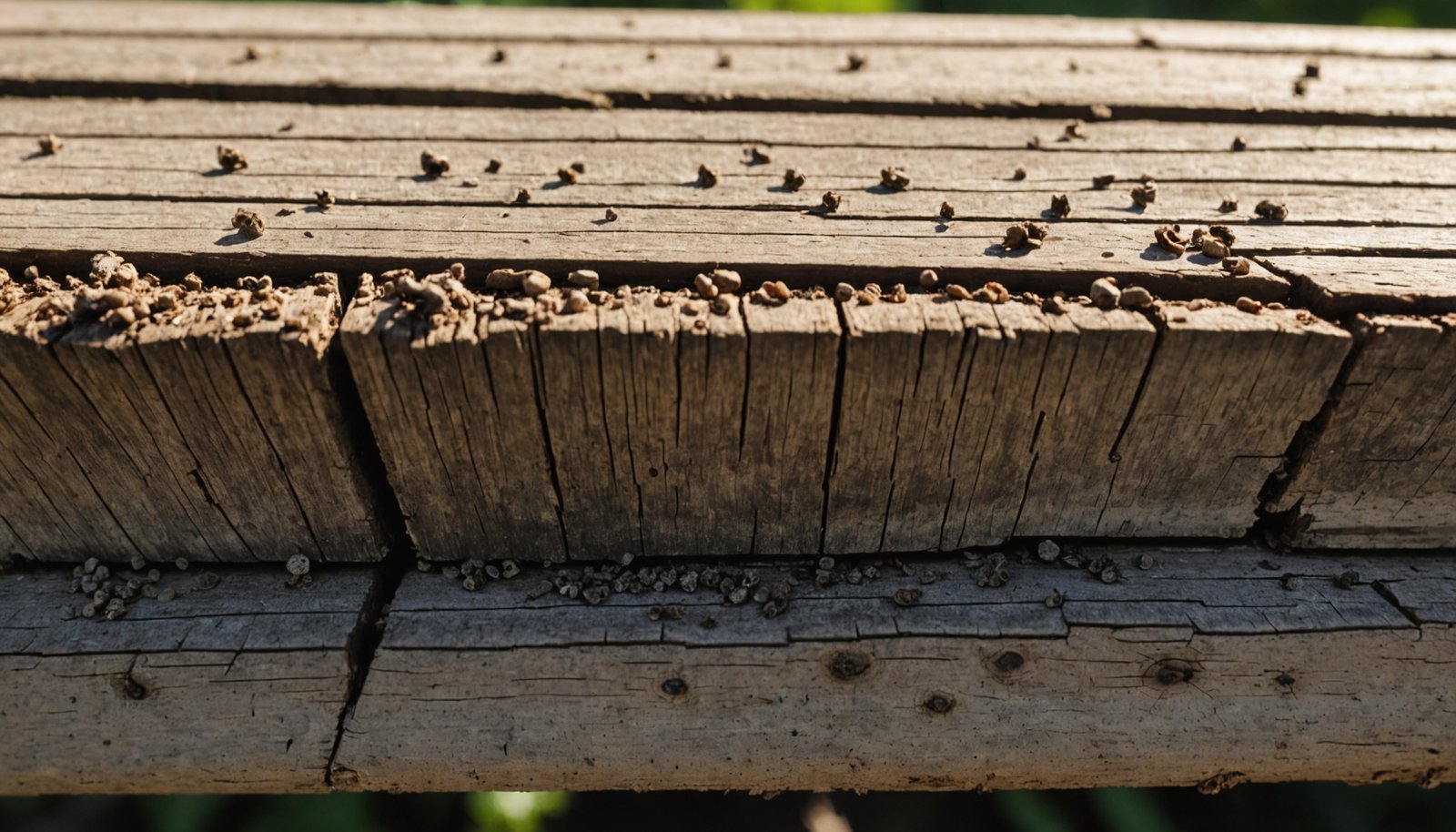
When you find termite droppings but no termites, you are almost certainly dealing with a drywood termite infestation that is hidden inside the wood of your home. Drywood termites do not need contact with soil. They live entirely within the wood they consume, seal their galleries, and push fecal pellets out through tiny kick-out holes in the surface. The result is a visible pile of frass on a windowsill, baseboard, or floor below a wooden beam while the colony remains completely out of sight.
This feeding behavior is what makes drywood termites so destructive for homeowners. By the time you notice the droppings, the colony may have been active for months. According to industry estimates, over 65% of homeowners notice termite frass before any visible wood damage occurs, which means early action on droppings can prevent far more serious structural problems.
How to Tell Active Droppings from Old Ones
Not every pile of frass signals a current infestation. Droppings can linger in crawl spaces, voids, and along baseboards long after a colony has been eliminated. Here is how to tell the difference:
- Fresh frass: Pellets are hard, crisp, and uniformly colored. The pile is growing. You may notice new material appearing over days or weeks below the same kick-out hole.
- Old frass: Pellets look dusty, faded, and scattered. The pile size stays consistent and the material crumbles easily between your fingers.
- Context clues: If you recently had a termite treatment and the pile is not growing, it may be residual frass. If you have never treated your home and the pile keeps expanding, assume an active infestation until a professional confirms otherwise.
Other Signs to Look for Alongside Droppings
Droppings rarely appear alone. Scan the area carefully for these additional signs of termite infestation:
- Hollow-sounding or honeycombed wood when you tap or probe with a screwdriver
- Pin-sized kick-out holes in wooden surfaces near the frass pile
- Discarded wings near windowsills or light fixtures, left behind by swarmers
- Mud tubes running along the foundation, walls, or structural beams
- Warped or bubbled paint on walls, which can indicate moisture from tunnels inside
Together, these signs help you determine whether you are facing an active termite infestation or residue from one that has already been eliminated.
What Does Termite Frass Look Like
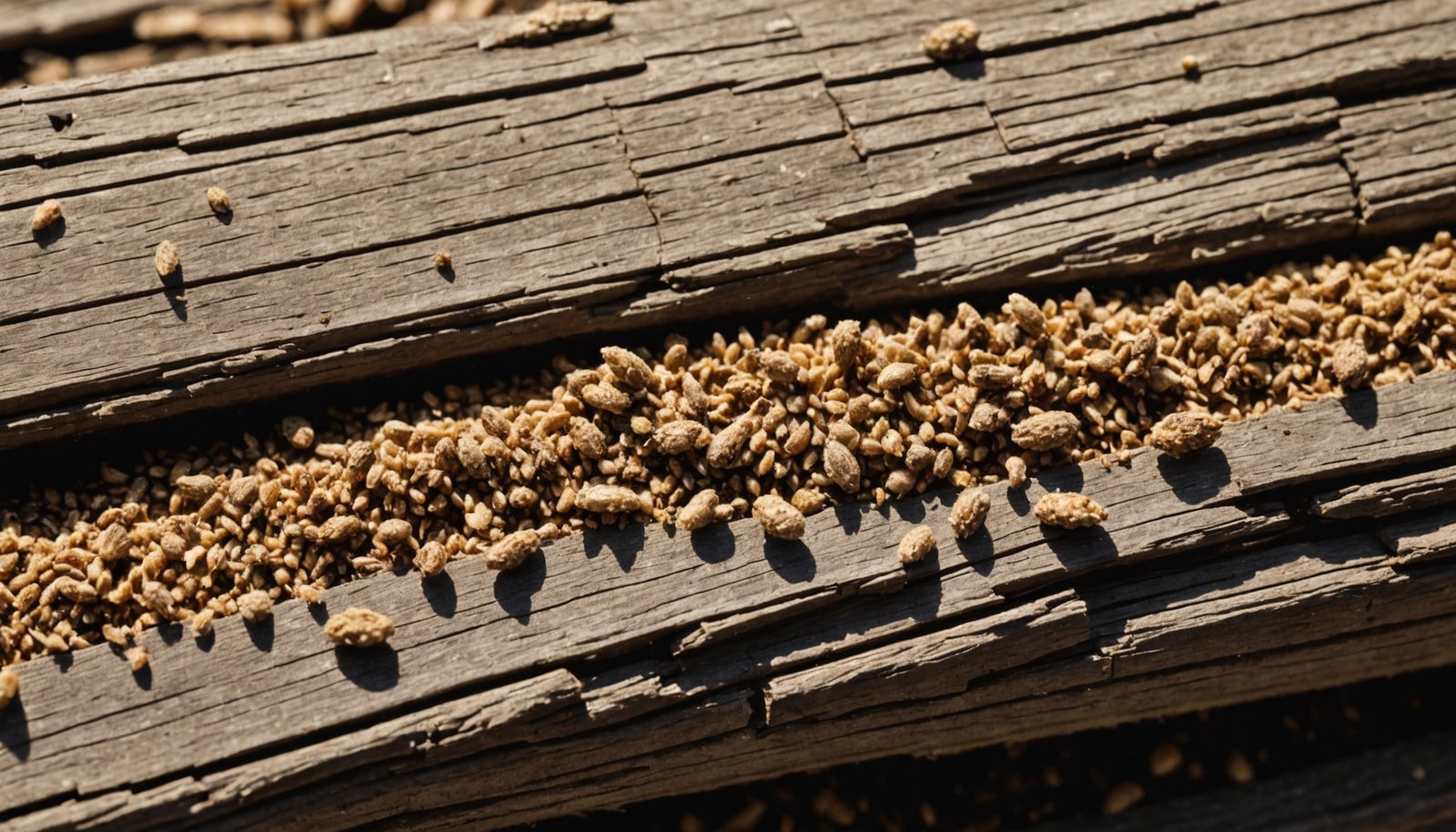
Understanding exactly what termite droppings look like is the first step toward correctly identifying your problem. Termite frass pellets are small, hard, and oval-shaped, measuring roughly 1 millimeter in length. Each pellet has six subtle concave sides, one pointed end, and one rounded end. They are compact and dry, not feathery or powdery like sawdust.
Color and Texture
Color is one of the most useful identification clues. Termite droppings range from light tan and beige to medium brown, dark brown, and even nearly black. Each individual pile tends to stay a uniform color because the shade reflects the type of wood the termites have been consuming. Termites feeding on pine produce lighter pellets; those consuming darker hardwoods leave darker frass.
Texture-wise, the pellets feel hard and gritty rather than soft. Many homeowners describe fresh piles as looking like grains of salt, coarse pepper, or coffee grounds. The shape is the distinguishing feature. If the material crumbles, smears, or looks irregular under a magnifying glass, it is likely not termite frass.
Pile Location and Pattern
Drywood termite frass falls directly below the kick-out holes through which the colony expels it. This means piles form in predictable locations: beneath window frames, below wooden furniture legs, on floors under wooden beams, along baseboards, and in attics beneath structural wood. Finding multiple small piles in a line or pattern often points to a colony that has spread through a large section of wood and opened several kick-out holes.
Drywood vs Subterranean Termite Droppings
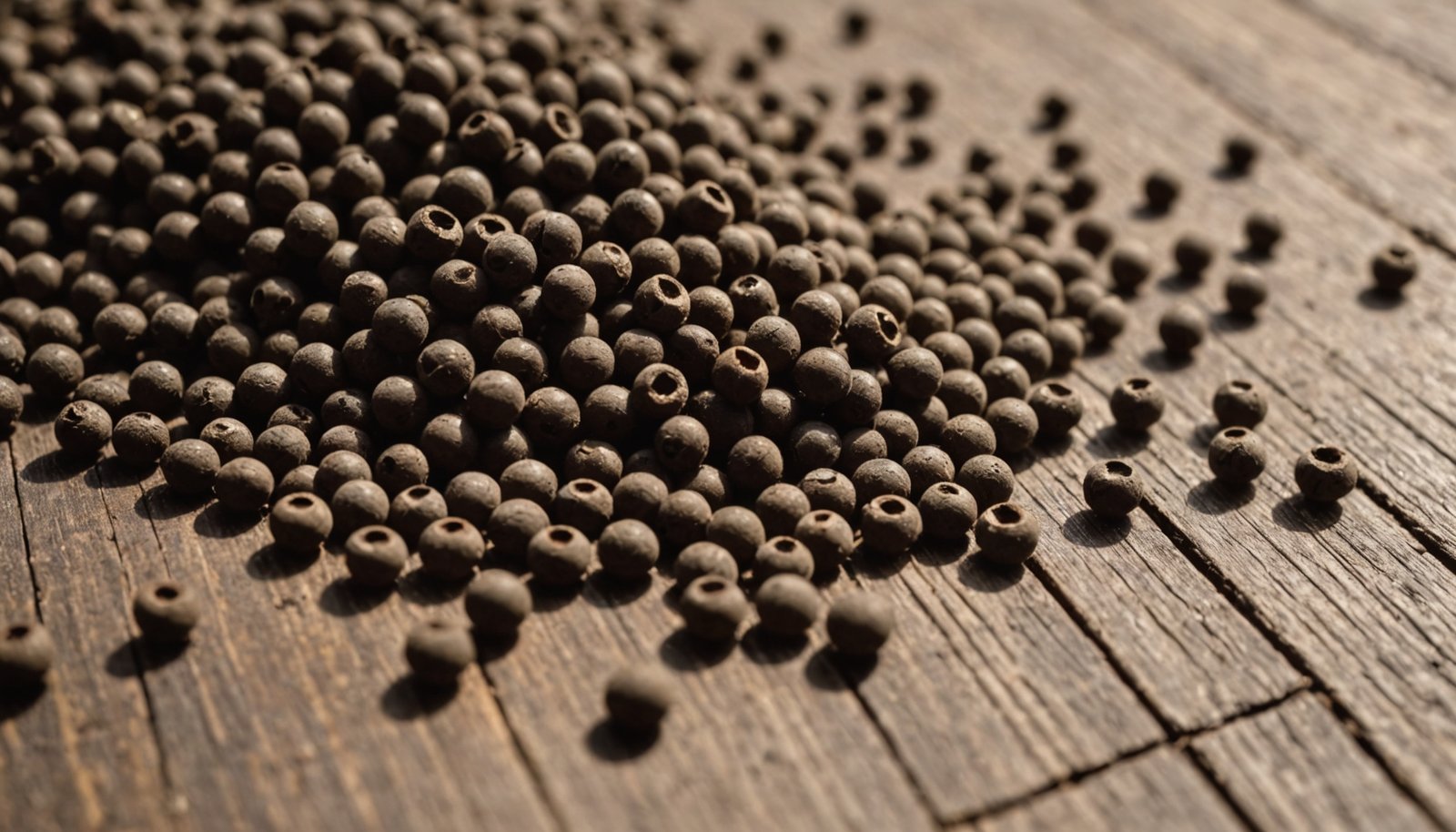
Both drywood and subterranean termites can cause serious structural damage to your home, but the evidence they leave behind looks completely different. Knowing which type you are dealing with changes your treatment approach significantly.
Drywood Termite Droppings
Drywood termite frass consists of dry, oval pellets about 1 millimeter long. Each pellet has six concave sides that are visible under magnification. The color varies with the wood species being consumed but stays uniform within a single pile. Because drywood termite colonies live entirely inside wood and never touch soil, loose frass piles beneath kick-out holes are the primary visible evidence of their presence.
These termites are most common in coastal states and areas with warm, dry climates. Their colonies grow slowly but can cause significant cellulose decay inside structural wood, furniture, and even hardwood floors over time. Because they need no soil contact, they can infest homes from the attic down, making them harder to detect than subterranean species.
Subterranean Termite Signs
Subterranean termites rarely leave loose pellets at all. Instead, they mix their feces with soil and saliva to construct grayish-brown mud tubes. These tubes run along foundations, crawl space walls, support beams, and any surface that connects their underground nests to the wood they feed on. The tubes serve as both shelter and moisture control, allowing the termites to travel without exposure.
If you see dry pellet-like mounds, you are likely dealing with drywood termites inside the wood. If you see muddy tubes on your foundation or walls, subterranean termites are the more likely culprit. In some houses, both species can be active at the same time, which is why a full professional inspection matters before choosing a treatment option.
How to Tell Termite Frass from Look-Alike Droppings
Several common pests leave waste that can easily be mistaken for termite frass. Getting the identification right matters because each pest requires a different pest control strategy.
Carpenter Ant Frass
Carpenter ant debris is the most frequent lookalike. From a distance, carpenter ant frass can look similar to termite frass because both appear near wood. Look closer and the difference becomes clear. Carpenter ant frass is a messy mixture of wood shavings, insect body parts, soil, and other debris. It is irregular rather than uniformly pellet-shaped. Carpenter ants excavate wood to build nests but do not eat cellulose, so their frass contains identifiable insect fragments that termite frass does not.
Powderpost Beetle Frass
Powderpost beetle frass causes frequent confusion because beetles also emerge from tiny round holes in wood. True powderpost beetle frass is extremely fine, silky, and flour-like, with a texture that termite pellets never achieve. False powderpost beetles leave slightly coarser, gritty material that can clump. In both cases the material sifts loosely from exit holes rather than forming the distinct, pellet-style piles that termite frass creates.
Other Pest Droppings
Fly droppings appear as tiny dark spots on surfaces and wipe away easily. Mouse droppings are much larger, cylindrical, and taper at both ends. They smear when fresh and crumble when dry. Wood-boring beetle larvae leave meal-like dust inside galleries rather than distinct exterior pellets. If any of the material you found matches these descriptions more closely, a pest control inspection can confirm the species and rule out a termite infestation.
Common Locations for Termite Droppings in Your House
Knowing where to look helps you catch a termite infestation earlier. Drywood termites tend to colonize specific areas of a house because they seek dry wood with low moisture content and reliable cellulose content.
Interior Locations
- Windowsills and door frames: The most common discovery spot. Frass falls onto the sill directly from kick-out holes in the frame above.
- Baseboards: Pellets accumulate along the base of walls where frass falls from infested wall studs or skirting boards.
- Beneath wooden furniture: Antique or solid wood furniture can harbor drywood termite colonies, leaving piles on floors beneath chairs, tables, and shelving.
- Attics: Roof framing and attic decking are prime targets. Attic frass is often discovered during insulation work or inspections.
- Crawl spaces: Subterranean species build mud tubes in crawl spaces, while drywood termites may colonize wooden floor joists from above.
Exterior Locations
- Wooden decking and fences: Exterior wood exposed to sunlight but not ground contact can be colonized by drywood termites.
- Eaves and fascia boards: Roof overhangs are frequently infested, with frass dropping onto porches or patios below.
- Foundation perimeter: Mud tubes from subterranean termite nests often run up from the soil line along the outside of the foundation wall.
Health Risks Associated with Termite Droppings
Termite frass is not directly toxic. However, termite droppings do carry some health risks worth understanding, especially for people with allergies or respiratory conditions.
When frass accumulates in enclosed spaces like attics or wall voids and becomes disturbed, the fine particulate matter can become airborne and irritate the respiratory tract. People with dust allergies or asthma may experience worsened symptoms. Some research also suggests that termite frass contains proteins capable of triggering allergic responses in sensitive individuals, similar to other insect-derived particles.
The more significant concern, however, is the structural damage an active infestation causes. Termites consume cellulose from the inside out, and by the time you can see decay on the surface of wood, the internal damage is often already severe. Understanding the full range of health risks associated with termites can help you take the right precautions when dealing with an infestation.
Always wear a dust mask and gloves when collecting frass samples or cleaning up after treatment, and avoid stirring up large accumulations without proper respiratory protection.
What to Do Next If You Find Termite Droppings
Once you spot what looks like termite droppings, treat the area like a crime scene. Resist the urge to sweep, vacuum, or spray anything immediately. Undisturbed frass gives a licensed exterminator the best chance of pinpointing exactly where the colony is feeding, which makes treatment far more precise and effective.
Step-by-Step Action Plan
- Photograph the piles. Take clear photos from multiple angles showing the size, color, shape, and exact location of the droppings. Include something for scale, like a coin.
- Collect a sample. Use a small sealed container or plastic bag to collect a portion of the frass for professional examination. Label it with the location where it was found.
- Note the exact location. Record whether the droppings were on a windowsill, baseboard, floor, or ceiling, and which room or area of the house.
- Inspect surrounding wood. Look for tiny kick-out holes in nearby wood surfaces, probe boards with a screwdriver for soft spots, and tap for hollow-sounding areas that indicate tunnels inside.
- Check for additional signs. Scan floors, walls, and ceilings for warping or bubbled paint, and look for discarded wings or mud tubes near the foundation and support beams.
- Reduce moisture where possible. Fix any leaking pipes or poor drainage near wooden structures, since moisture accelerates termite activity and speeds structural decay.
- Call a licensed pest control professional. Describe the droppings, share your photos and sample, explain the locations, and request a full structural inspection. Ask the exterminator about treatment options and ongoing monitoring to protect your home against future infestations.
Prevention and Long-Term Maintenance
Once an active infestation has been treated, the goal is to make your home as resistant as possible to future colonies. Keep firewood, mulch, and wooden debris away from the foundation. Seal cracks in exterior wood with paint or caulk to eliminate entry points. Schedule annual termite inspections, especially in warmer climates where termite season runs nearly year-round. Keeping attics and crawl spaces well-ventilated reduces the moisture levels that encourage new nests from forming.
Comaparison Chart
A comparison chart can help readers quickly understand differences between termite droppings, other pest droppings, and signs of active termite infestation.
| Feature / Sign | Termite Droppings (Frass) | Other Insect Droppings | Active Termites Present |
|---|---|---|---|
| Appearance | Tiny, wood-colored pellets, often ridged | Black/brown specks, powdery or irregular | Creamy-white, soft-bodied insects |
| Location | Near wooden structures, furniture, or beams | Random around kitchen, pantry, or pet areas | Within wood, soil, or tunnels |
| Texture | Hard, dry, pellet-like | Soft, crumbly, or powdery | N/A (live insects) |
| Quantity | Accumulates in small piles | Scattered randomly | Swarms or clusters visible |
| Movement | Static, no movement | Static | Termites actively moving, tunneling, or swarming |
| Associated Damage | Usually indicates past infestation; wood may have small holes | Rarely causes structural damage | Active wood damage, hollow sounds in wood |
Frequently Asked Questions
What do termite droppings look like?
Termite droppings, called frass, look like tiny oval pellets roughly 1 millimeter long with six concave sides, one pointed end, and one rounded end. They are hard, compact, and uniform in color, ranging from tan and beige to dark brown or nearly black depending on the wood the termites consumed. Many homeowners compare them to grains of salt, pepper, or coffee grounds.
Does finding termite droppings but no termites mean the infestation is over?
Not necessarily. Finding termite droppings without visible termites usually means the colony is hidden inside wood, feeding out of sight. Drywood termites live entirely within wood and push frass out through tiny kick-out holes, so you see the pellets long before you ever spot the insects. Fresh, crisp, growing piles signal active feeding; old, dusty, scattered frass may point to past activity.
Are termite droppings harmful to humans?
Termite frass is not directly toxic, but it can irritate airways if inhaled and may trigger allergies in sensitive individuals. The bigger health concern is the structural damage termites cause to your home over time. Always wear a mask when handling or cleaning frass, and consult a professional for proper removal and inspection.
How do I tell termite droppings apart from sawdust or carpenter ant frass?
Termite frass pellets are uniform, hard, and oval-shaped with six concave sides. Sawdust looks like tiny, irregular slivers and curls in varied sizes with a smooth texture. Carpenter ant debris is a messy mixture of wood bits, insect parts, and soil rather than neat, consistent pellets. If you are unsure, collect a sample in a sealed container and have a licensed pest control professional identify it.
Where are termite droppings most commonly found in a house?
Termite droppings most often appear on windowsills, baseboards, floors beneath wooden furniture, and below ceiling or wall joints. In older homes, attics and crawl spaces are common discovery spots. Because drywood termites push frass out through kick-out holes, look for small pellet piles directly beneath any tiny holes in wood surfaces.
Should I clean up termite droppings right away?
No. Do not sweep, vacuum, or spray the area until you have documented the droppings. Photograph the piles from multiple angles and collect a small sample in a sealed container. The undisturbed frass helps a licensed pest control professional pinpoint exactly where the colony is feeding, which makes treatment far more targeted and effective.
How can I tell if termite droppings are fresh or old?
Fresh frass tends to be crisp, hard, and uniformly colored, often appearing in a growing pile directly beneath an active kick-out hole. Old frass is usually dusty, scattered, and faded. If the pile is growing over days or weeks, termites are most likely still actively feeding. If the pile stays the same size and looks weathered, the infestation may be inactive or already treated.
Conclusion
Finding termite droppings but no termites is not a reason to breathe easy. Frass is often the earliest and only visible sign of a hidden colony causing real structural damage inside your walls, attic, or floors. The type of droppings, their color, texture, shape, and location all tell you something useful about the species you are dealing with and how active the infestation may be.
Use what you have learned here to compare the droppings against look-alike debris from carpenter ants, beetles, and other pests. Check for supporting signs like kick-out holes, mud tubes, hollow wood, and discarded wings. Then act quickly: document the evidence, preserve a sample, and contact a licensed exterminator for a full inspection. Early treatment protects both your home and your health.