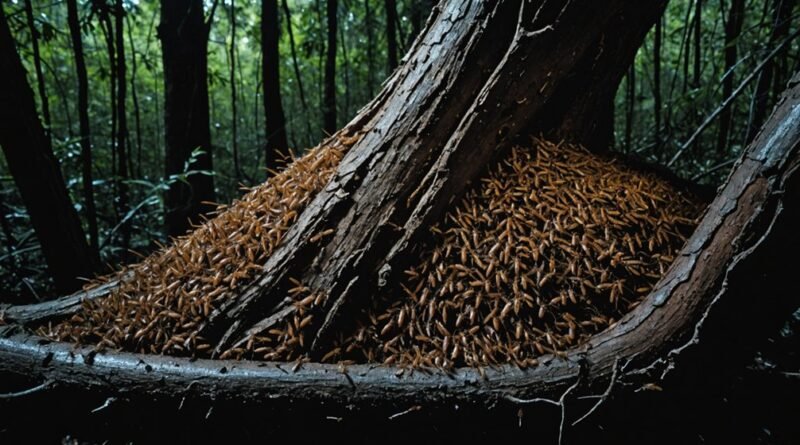
Are Termites Nocturnal? When They’re Most Active
Termites aren’t truly nocturnal—they’re active 24/7, quietly eating and tunneling inside wood, soil, and walls. You’ll notice them most from spring through early fall when warm, humid weather triggers swarms, often at dusk or night near lights. Some species forage more after dark, while others follow temperature and moisture, not the clock. If you spot discarded wings, mud tubes, or tapping sounds in quiet nighttime hours, you’re catching peak activity and can uncover what to watch for next.
Key Takeaways
- Termites are not truly nocturnal; they can be active 24/7, mostly hidden inside wood, soil, and structural voids.
- Activity peaks in warm, moist conditions, especially from spring through summer, with extended activity in mild or warm climates year-round.
- Some subterranean species forage more at night, but feeding and tunneling continue both day and night inside protected galleries.
- Swarming events often occur at dusk or after dark, especially following rainfall and warm, calm weather.
- Early evening, late night, and early morning are the best times to inspect for visible signs like swarmers, wings, and mud tubes.
When Termites Are Most Active (Short Answer)
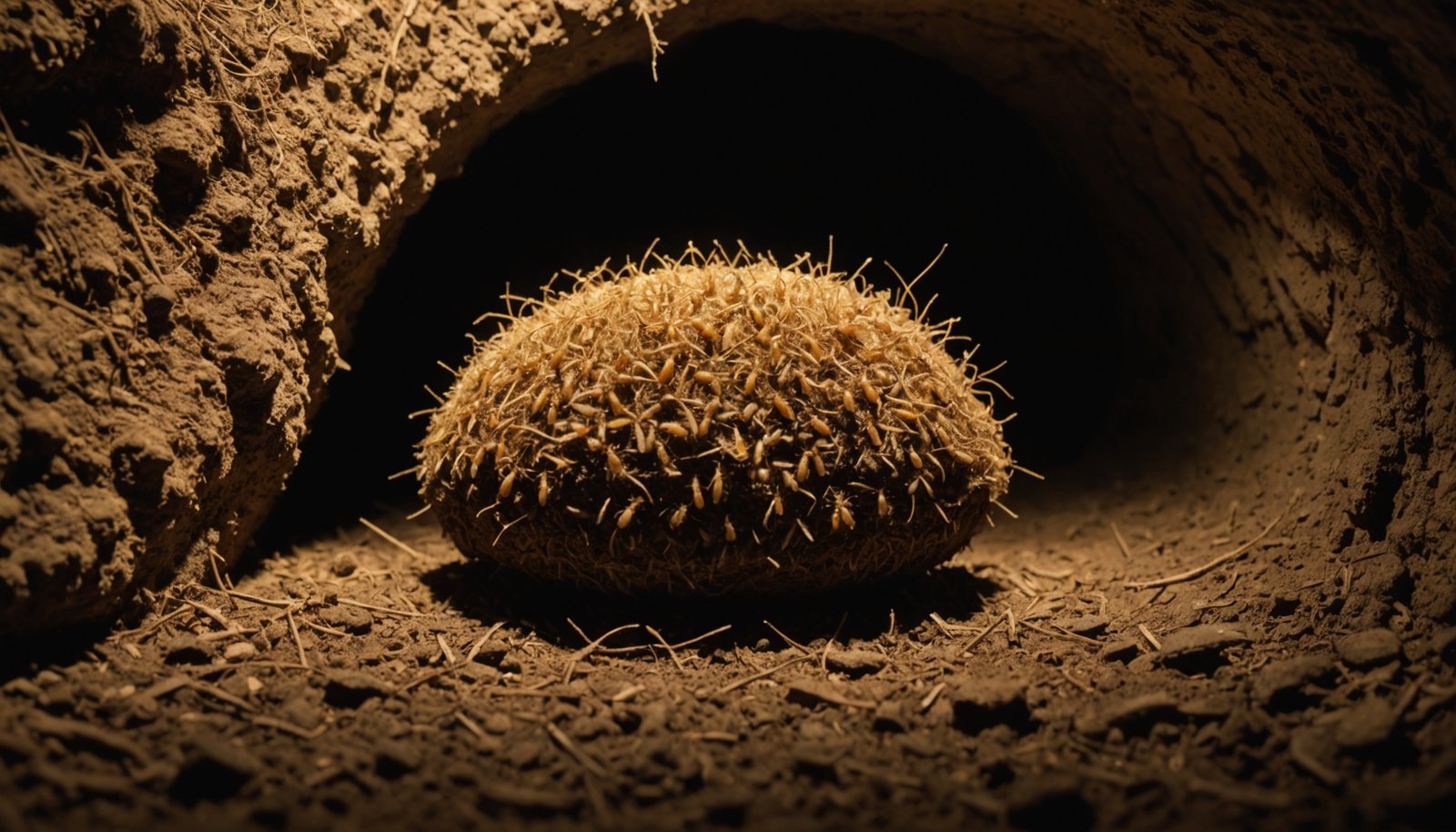
Termites are most active when the weather’s warm, especially in spring and summer, but the exact pattern depends on your local climate and species. As temperatures rise, colonies ramp up feeding, foraging, and expansion.
Warm, rising temperatures supercharge termite feeding, foraging, and colony growth, especially through spring and summer
In many areas, March through June is the main “termite season,” when you’re most likely to notice them. Some species, particularly drywood termites and certain subterranean termites (like R. hageni), may swarm from late summer into fall when conditions are still warm and humid.
You’ll usually see the most obvious activity during swarming events. These often happen in spring, especially after rainfall followed by calm, warm conditions.
Subterranean termites commonly swarm in spring, while some species can extend visible activity into fall if your weather stays mild. In warm climates, high activity can continue nearly all year.
Rain, warmth, and humidity don’t just wake termites up; they trigger noticeable spikes in movement and reproduction.
That’s why spring inspections matter: you’re more likely to catch swarmers, shed wings, or other signs before colonies grow larger and cause serious damage.
Termites: Nocturnal or Active 24/7?
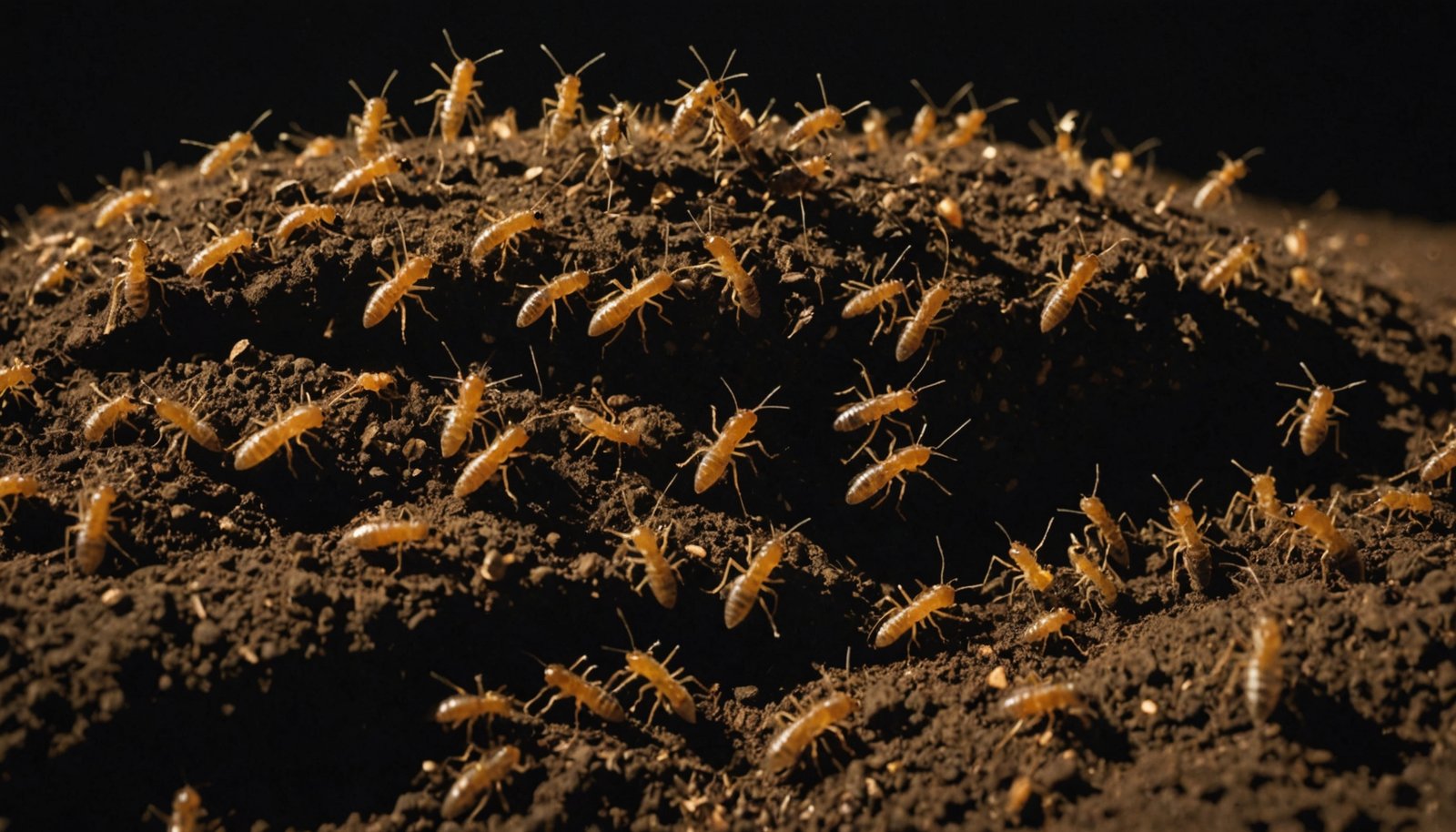
Although many people assume termites only come out at night, they’re not strictly nocturnal and don’t follow a simple “sleep by day, feed by night” schedule. Instead, you’re dealing with insects that can stay active 24/7, especially the workers that feed, tunnel, and maintain the colony nonstop. Worker termites are constantly busy inside wood, mud tubes, or soil, where stable temperature and humidity let them keep going around the clock.
Because many termites are blind or nearly blind, light and dark don’t control most of their routine behavior.
You’ll see more variation when you look at species and conditions. Some subterranean termites prefer cooler, darker hours and forage more at night, while others show mixed day-and-night or nearly continuous foraging.
Drywood termites, protected inside wood, can feed at many times without worrying about sunlight.
Temperature, season, and moisture also shift when termites become more visible. In some regions they concentrate surface foraging at night in dry, hot periods, then expand into daytime activity when conditions are cooler or wetter.
What Termites Do at Night (and What You’ll See)

Once night settles in, most termite colonies keep working as if nothing changed, with workers foraging, tunneling, and feeding inside wood and soil around the clock. You won’t see much of this, because they stay hidden in mud tubes, galleries, and wall voids, quietly expanding damage while you sleep. Many workers are blind, so they don’t rely on light; they follow chemical cues and colony needs instead of a day–night rhythm. Because this hidden activity can cause silent damage for months or years, nighttime inspections can be critical for catching infestations before they become severe.
What you’re most likely to notice at night are swarmers. Winged termites often take flight at dusk or after dark, especially near buildings. You may see them circling porch lights, streetlights, or windows, then shedding wings on sills and floors.
If you inspect with a flashlight, you might spot pencil-width mud tubes on foundations, hollow or blistered wood, soft spots in floors or trim, and—if you’re lucky—small pale termites moving in exposed wood or soil.
Seasonal and Weather-Driven Termite Activity
As seasons and weather shift, termite colonies quietly adjust their pace, moving and feeding more aggressively when warmth and moisture line up in their favor. You’ll notice activity ramping up from spring through fall, with many species hitting peak foraging in summer when temperatures sit roughly between 75°F and 95°F. Once shallow soil passes about 50°F, termites typically expand their search for food. In cold regions, winter doesn’t usually kill colonies; it just pushes them deeper into soil or inside heated structures, so surface signs drop while hidden feeding continues. In warm climates, you may see activity nearly year-round, with “season” showing most clearly in swarming patterns. Termite activity typically peaks from spring through fall, especially in spring when many colonies are entering their most active growth and feeding phase. Rain and humidity play huge roles. Moist, recently warmed soil encourages movement, and swarms often appear one to three days after rain, especially on calm, warm days. Drought, on the other hand, can drive termites toward buildings in search of water.
Best Times to Check Your Home Based on Termite Activity
Even though termites stay busy around the clock, some times of day make their presence much easier to catch. For your own checks, focus on early evening, late night, and early morning. At dusk, walk the exterior and main entry points as activity starts to rise. [Spring is also a smart season to step up these checks because termites are generally most active then, making inspections more likely to catch early infestations.]
From about 10 PM to 2 AM, turn off HVAC and TVs so you can listen for faint clicking or rustling along baseboards, window trim, and door frames.
At first light, recheck quiet rooms, window sills, and door frames for fresh wings, frass, or disturbed dust that appeared overnight. After any swarm—day or night—inspect immediately for wings near lights, vents, and cracks that could be entry points.
Use this quick schedule to structure your routine:
- Early evening: exterior and entries
- Late night: listening checks indoors
- Early morning: undisturbed areas
- Right after a swarm: wings and gaps
- Monthly: full DIY plus pro inspection
Conclusion
You don’t need to stay up all night watching for termites, but you do need to stay consistent. Now that you know they’re active 24/7 and ramp up with warmth, moisture, and swarm season, use that to your advantage. Check your home regularly, focus on high‑risk times and spots, and act fast if you spot warning signs. A little vigilance now can save you from major termite damage later.