How to Identify Termite Wings Vs Ant Wings: Key Differences Homeowners Miss
You can spot termite wings by checking key differences from ant wings. Termite wings appear translucent with an iridescent sheen and measure twice their body length, while ant wings have a darker, smoky tint and shorter proportions. Look for uniform sizing in termite wing pairs versus ants’ larger front wings. The location matters too – you’ll find termite wings in clusters near entry points, while ant wings scatter more randomly. These telltale indicators are just the beginning of what sets these pests apart.
Key Takeaways
- Termite wings are equal in size and twice their body length, while ant wings have larger front wings than hind wings.
- Termite wings appear translucent with an iridescent sheen, whereas ant wings typically have a darker, smoky-brown coloration.
- Termites lack the distinct pinched waist segment that flying ants have, making body shape a reliable identification feature.
- Termite wings show minimal visible veins and appear more delicate, while ant wings display prominent vein patterns.
- Termite wings are typically found in dense clusters near entry points, while ant wings appear more scattered across various locations.
Wing Size and Shape Distinctions Every Homeowner Should Know
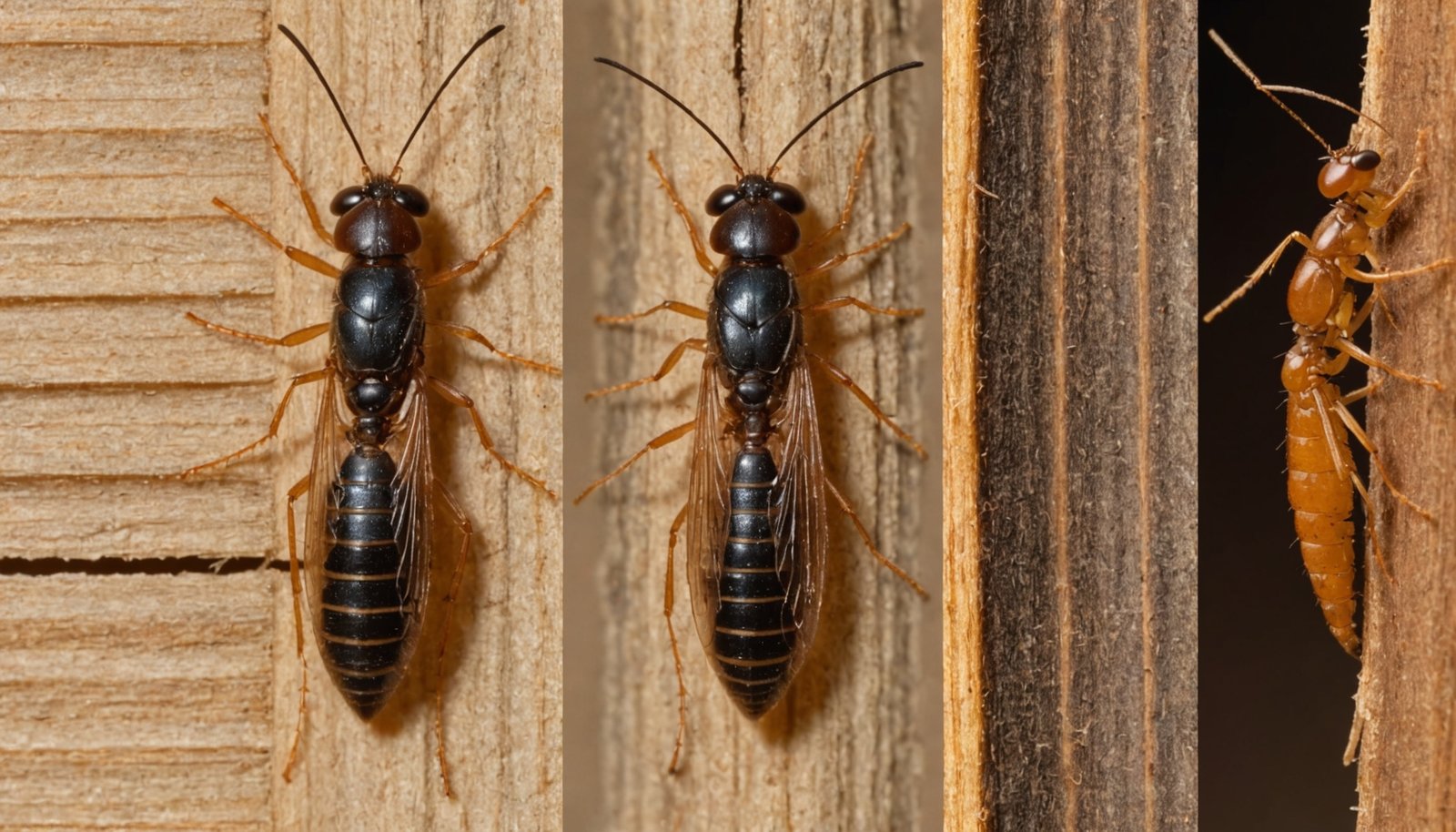
Many homeowners face the challenge of distinguishing between termite and ant wings during swarm seasons.
You’ll notice that termite wings are about twice the length of their body, while ant wings are shorter and more proportionate. When examining these insects, you’ll find termites have uniform-sized front and back wings, creating a balanced appearance. Termites lack the pinched waist segment that characterizes flying ants.
In contrast, ant wings are unequal, with larger front wings than hind wings.
Look for the shape and translucency of the wings. Termite wings appear clear and pale with an intricate, lace-like vein pattern covering the entire surface.
They’re also rounded at the ends. Ant wings, however, have a brownish or smoky tint, fewer veins, and more tapered, angular tips.
The Tell-Tale Signs in Wing Color and Texture

You’ll notice clear differences between termite and ant wings through their distinct color properties – termite wings appear translucent or whitish with an iridescent sheen, while ant wings showcase a darker, smoky-brown tint.
The surface textures also set them apart, with termite wings featuring a more intricate, lacy vein pattern compared to the smoother, less detailed texture of ant wings.
These visual markers, along with variations among different species, provide reliable clues for correctly identifying which pest you’re dealing with in your home. Both insects typically emerge for nuptial flights after rainfall during spring and early summer months.
Wing Translucency Reveals Identity
A clear difference in wing appearance provides one of the most reliable ways to distinguish between termites and ants.
When you examine discarded wings, you’ll notice termites have glass-like, transparent wings that allow light to pass through easily, while ant wings show a distinctive brownish or smoky tint that makes them less see-through.
- Termite wings appear smooth and glossy with few prominent veins, creating a delicate, uniform look.
- Ant wings display a dense network of visible veins that form a mesh-like pattern, giving them a more textured appearance.
- The translucency difference is most noticeable when you hold the wings up to light – termite wings are almost crystal clear, while ant wings maintain their smoky coloration.
Termites produce these specialized flyers called alates during specific warm and humid conditions, making wing sightings a crucial seasonal indicator of potential infestations.
Color Variations Between Species
Wing coloration serves as a critical identifier when distinguishing between termite and ant species.
You’ll notice termites have clear, white, or pale wings that contrast with their dark brown or black bodies. This distinct color difference is a telltale sign you’re dealing with termites.
Ants, however, display a more uniform appearance. Their wings typically match their body color, showing brown to reddish-brown tints with visible vein patterns.
You’ll find carpenter ants and other flying ant species maintain this darker coloration throughout their bodies and wings, often with a glossy finish. Since they are active year-round, you may spot these winged ants during any season.
When checking shed wings, look for white or translucent piles near windowsills – that’s a termite indicator.
Ant wings, being darker, are less noticeable and often consumed by queens after mating.
Surface Texture Differences Matter
Texture provides one of the most reliable ways to distinguish between termite and ant wings. When examining wings up close, you’ll notice termites have a distinctly smooth, transparent appearance with minimal visible veins. The tinted brown coloration of ant wings also helps differentiate them from termite wings.
In contrast, ant wings display a more complex network of veins that create a textured surface you can easily spot.
- Termite wings feature smooth edges and equal lengths between front and back pairs, creating a uniform appearance.
- Ant wings show irregular edges with front wings noticeably larger than hind wings.
- Wing transparency differs markedly – termite wings appear more see-through while ant wings are typically more opaque due to their prominent vein patterns.
These textural differences, combined with size and shape variations, help you make a confident identification when inspecting suspicious wings in your home.
Where and When You’ll Find Discarded Wings
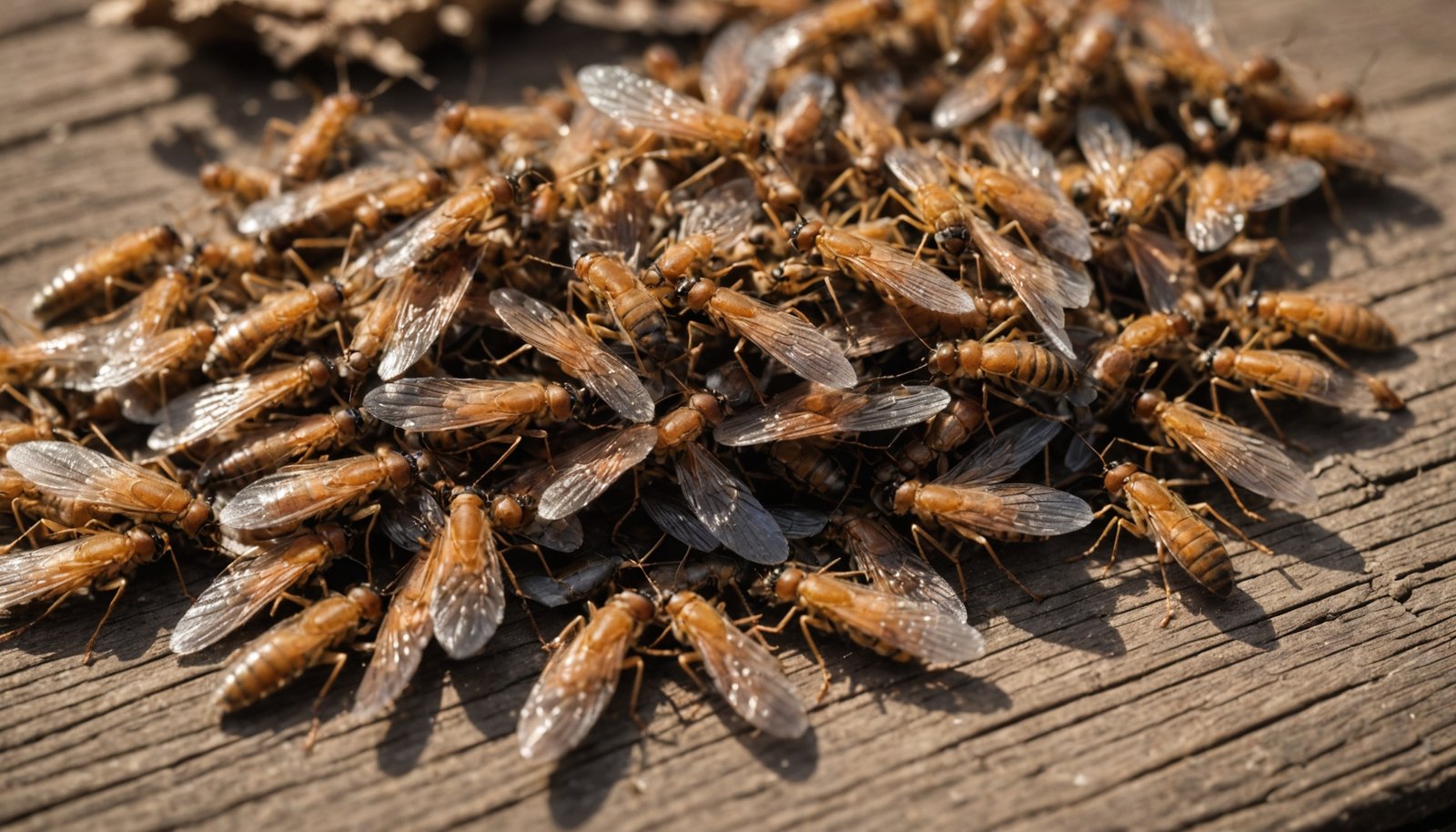
You’ll most commonly find discarded termite wings near entry points like windowsills and door frames, while ant wings typically appear outdoors near soil mounds and wooden structures.
Both species tend to swarm and shed their wings during spring or early summer when warm temperatures and humidity create ideal conditions for reproduction.
Termites usually discard their wings in larger clusters immediately after landing, whereas flying ants may retain their wings longer, resulting in more scattered deposits.
Common Finding Locations
During routine home inspections, discarded termite and ant wings often reveal themselves in predictable locations both inside and outside your property.
You’ll commonly spot them near windowsills and doorframes where swarmers enter your home seeking light. In basements and crawl spaces, wings accumulate where moisture and decayed wood create ideal conditions for infestation.
Outdoors, you’re likely to discover wings in these key areas:
- Around tree stumps and rotting logs that serve as primary food sources
- Near porch lights and outdoor lamps that attract swarmers at dusk
- Within mulch beds and landscaped areas that retain moisture
After rainstorms or during humid conditions above 70°F, swarmers become more active, making wing deposits more visible.
Check these locations in early spring or fall when swarm seasons typically peak.
Seasonal Swarming Patterns
Understanding seasonal swarming patterns helps pinpoint when and where you’ll discover discarded wings from termite or ant colonies.
You’ll typically spot termite swarmers in spring and early summer, especially between March and June in temperate regions. They emerge on warm, humid days, often after rainfall.
Look for wing clusters near light fixtures, windowsills, and foundations during mid-morning to early afternoon. In southern and coastal areas, you might notice multiple swarms throughout warmer months, particularly from drywood termites. Urban environments with irrigation can trigger swarms outside typical seasons.
Unlike ants, termite wings drop simultaneously in dense piles near colony exit points. You’ll find these translucent wings clustered together, while ant wings appear more scattered and often show signs of chewing damage.
Common Wing Shedding Patterns to Watch For
When homeowners spot discarded wings around their property, distinct shedding patterns can reveal whether they’re dealing with termites or ants.
Termites typically shed their wings immediately after swarming, leaving behind concentrated piles near light sources and entry points. In contrast, ants retain their wings longer and scatter them during colony establishment, rarely creating noticeable accumulations indoors.
- Termite wings appear in large clusters near windowsills, floors, or walls, often during early spring or when indoor heating triggers swarms.
- Ant wing shedding is more dispersed and usually occurs outdoors after queens have found suitable nesting sites.
- Termite wings snap off cleanly at their break lines, while ant wings remain intact longer and don’t form the distinctive piles that signal infestation.
Simple Steps to Examine Found Wings
Close examination of found wings can quickly reveal whether you’re dealing with termites or ants in your home.
Start by checking the wing lengths – if all four wings are equal in size and translucent, you’re likely looking at termite wings. Ant wings will show obvious size differences between front and back pairs, with a brownish tint.
Next, look for any wings still attached to insects and observe their antennae. Termites have straight antennae, while ants display distinctive elbow-like bends.
You can also identify the insect by its body shape – termites have uniform, straight bodies, while ants show a distinct pinched waist.
Finally, examine the wing texture – termite wings are delicate and glass-like, while ant wings appear tougher with visible veins.
When Wing Discovery Requires Professional Help
Despite your best efforts to identify winged insects in your home, certain situations demand professional expertise for accurate pest identification and proper treatment.
You’ll want to contact a pest control specialist immediately if you find large numbers of discarded wings near windows or doors, as this often indicates a serious termite infestation that requires swift action.
- If you’re finding mud tubes along foundation walls or baseboards alongside wing evidence, you’re likely dealing with subterranean termites.
- When you discover wood damage in conjunction with wings, you’ll need specialized treatment strategies that only professionals can provide.
- If you’re spotting swarmers regularly inside your home, you probably have an established colony requiring thorough intervention.
Don’t risk misidentifying the pest species, as this can lead to ineffective DIY treatments and potentially worse damage to your home.
Conclusion
If you’ve found discarded wings around your home, don’t ignore them. You can identify termite wings by their equal size, milky color, and straight edges, while ant wings are unequal in size and have darker, more textured surfaces. Document where you find them and take clear photos. If you’re still unsure, contact a pest professional – it’s better to catch an infestation early.