Do Termites Bite? What Happens If One Does
Termites rarely bite people because they stay hidden in wood or soil and don’t see you as food. If one does bite, you’ll usually feel a quick pinch and notice a tiny red spot with mild itching or tenderness. Most bites fade fast and don’t cause serious problems. Still, watch for spreading redness, pus, or trouble breathing, which need medical care. You’ll understand how to handle bites and prevent issues by continuing on.
Key Takeaways
- Termites rarely bite humans; they mainly eat wood and usually stay hidden in walls, floors, or soil, avoiding direct contact.
- Soldier termites can bite defensively if handled or their nest is disturbed, but they do not seek humans as food.
- A termite bite feels like a small pinch, causing a tiny red spot with mild, short-lived itching, tenderness, or swelling.
- Clean the area with soap and water, apply a cold compress, and use over-the-counter anti-itch or pain medications as needed.
- Seek medical help if redness, pain, or swelling worsens, signs of infection appear, or you develop hives, breathing problems, or facial/throat swelling.
Do Termites Ever Bite Humans?
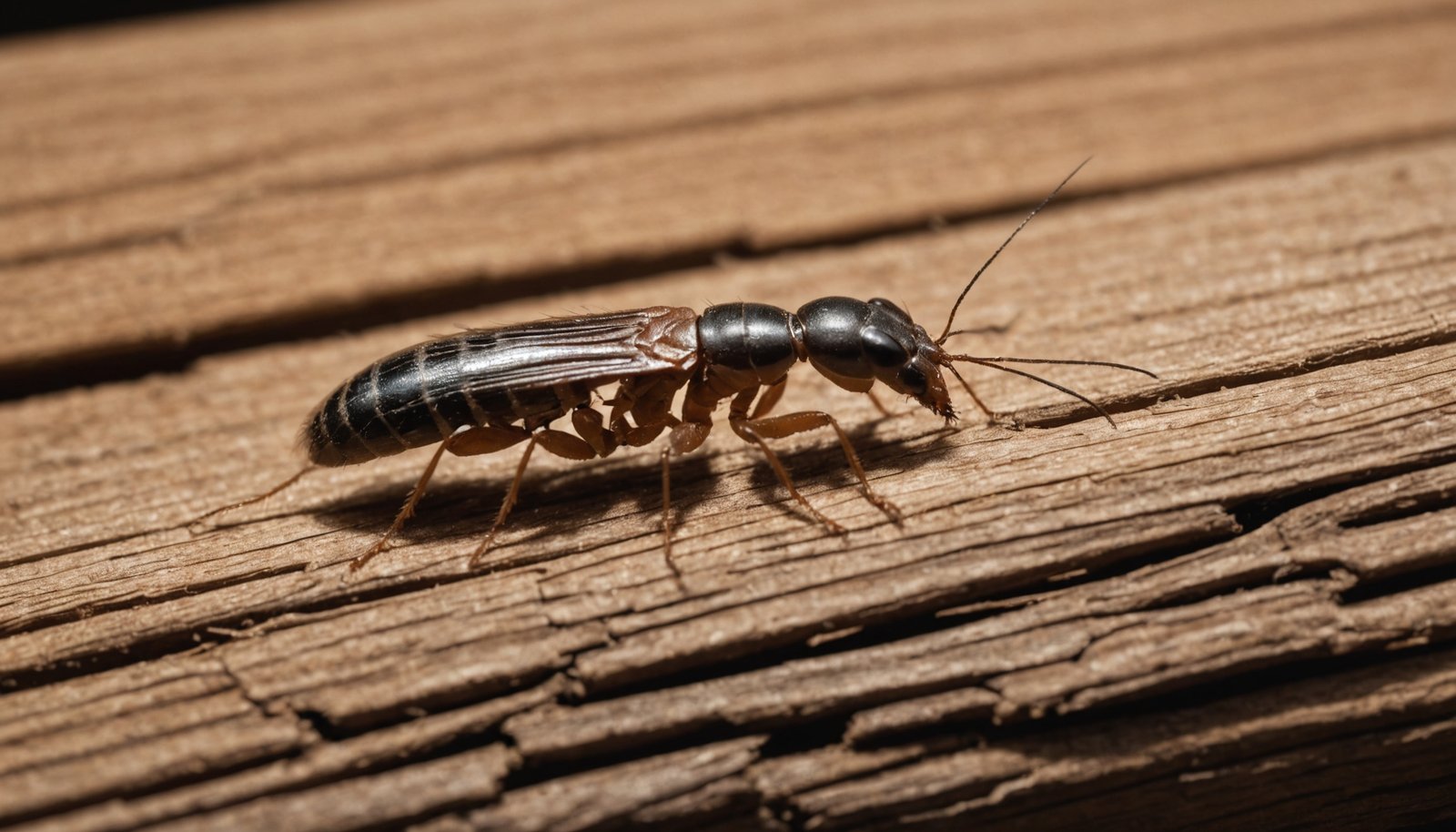
Do Termites Ever Bite Humans?
Surprisingly, termites almost never bite humans, and they don’t see you as food. You’re simply not on their menu. Termites feed on wood and other cellulose materials, so they spend most of their time hidden inside walls, floors, or soil, far from direct contact with you.
In normal indoor situations, you can live around an infestation for a long time and never feel a single nip. Termites primarily consume wood and plant-based materials, so the real concern with an infestation is structural damage to your home rather than any threat to your health.
Bites become possible only when you directly interfere with them. If you pick termites up, crush their galleries during a project, or tear into an active colony, soldier termites may react defensively.
These soldiers have stronger mandibles than workers, designed to fight ants and rival termites, not to pierce human skin. Even then, pest professionals and medical sources describe human bites as rare, usually minor, and not linked to venom, serious injury, or disease transmission.
When Termite Bites Actually Happen (And How Rare They Are)
You’ll only run into the possibility of a termite bite when you’re in close contact with them, such as handling infested wood or accidentally trapping soldier termites against your skin. Even in these rare cases, termites are far more of a threat to your home’s structure than to your health.]
Even then, bites are rare because termites stay hidden inside wood and don’t view you as food or a normal target.
Let’s look at how these uncommon bites actually happen and why most people will never experience one.
How Termite Bites Occur
Even in homes with active infestations, actual termite bites on people are extremely rare and almost always tied to very specific situations.
You’ll almost always need direct, close contact with live termites, especially soldiers, before any bite happens. Worker termites focus on wood, not skin, so they’re rarely involved. Termite bites do not spread diseases to people, so health risks are generally limited to minor skin irritation.
Bites usually feel like a brief pinch and may leave only a tiny red spot or small bump. Most marks fade quickly and may go unnoticed unless you have sensitive skin.
Common ways bites occur include:
- Handling or crushing termites with bare hands
- Pressing skin against infested wood or galleries
- Disturbing nests during demolition or repairs
- Exposing hidden colonies to sudden light or vibration
- Working around severe infestations without gloves
Why Bites Are Rare
Because those situations are so specific and limited, termite bites on people stay extremely rare in everyday life. Termites spend nearly all their time hidden in wood, soil, or deep inside nests, so they rarely touch your skin. They’re after cellulose, not blood or flesh, and they usually avoid open air and direct contact. While the primary concern with termites is structural damage to buildings, their direct health risks to humans remain minimal.
Most actual bites happen defensively, not aggressively. If you grab termites, dig into infested wood, or disturb a nest, soldier termites may pinch when they feel trapped or threatened. Even then, it’s uncommon.
Many “termite bites” turn out to be ants, fleas, mosquitoes, or spiders instead.
| Why You Rarely Get Bitten | When Risk Increases |
|---|---|
| Termites stay concealed | You handle termites directly |
| They don’t seek skin | You break open nests/wood |
| They avoid open air | You work in active infestations |
What a Termite Bite Looks and Feels Like
Although termite bites are uncommon and usually mild, it helps to know what they look and feel like so you don’t confuse them with other insect bites. If a termite does nip you, you’ll usually see a tiny red bump or spot, similar to a small mosquito or ant bite. Because termite bites don’t transmit diseases, you’re typically dealing with a minor skin irritation rather than a serious health concern.
Swelling, if it appears at all, tends to be slight, and the surrounding skin may look a bit irritated or inflamed.
Most people describe the sensation as a quick, light pinch. You might feel a brief sharp discomfort at the moment of contact, followed by mild itching or tenderness that fades quickly. Many bites cause so little reaction that you barely notice them.
Typical features include:
- Small, localized red spot
- Minimal or no swelling
- Quick, pinching sensation
- Mild, short-lived itching or soreness
- Mark fading within hours to a few days
Should You Worry About Termite Bites?
You’ve seen what a termite bite looks and feels like, but you might still wonder how often they actually bite people and whether it’s something you should worry about.
In this section, you’ll see how rare termite bites are, what the real health risks look like, and when a reaction deserves medical attention.
Understanding these points helps you focus on what truly matters for your health and home.
How Common Are Bites
So how often do termites actually bite people? In normal day‑to‑day life, you’re very unlikely to be bitten. Termites spend almost all their time hidden inside wood, focused on eating cellulose, not seeking out skin or blood.
Pest-control professionals routinely describe verified bites as extremely rare, even over many years of field work. You’re most at risk only when you directly handle live termites—especially soldiers—or accidentally trap one against your skin. Even then, bites aren’t guaranteed.
To put it in perspective:
- Termite bites are technically possible but exceptionally uncommon
- Typical indoor infestations don’t create a meaningful bite risk
- Most “termite bites” people suspect come from other insects or irritations
- Termites are structural pests, not human-focused biters
- For most households, bites shouldn’t be a major concern
Actual Health Risks
Termite bites sound alarming, but the actual health risks for most people stay low. Termites don’t see you as a host, and their jaws usually can’t do more than pinch the very top layer of skin. Most bites cause only a tiny red spot with mild, short-lived itching, tenderness, or slight swelling.
Some people with sensitive skin or allergies may react more strongly to termite saliva or body proteins. You might notice more noticeable redness, hives, or a rash-like area, but it’s still usually localized.
The main medical concern isn’t the bite itself, but secondary infection if you scratch and introduce bacteria.
Unlike ticks or mosquitoes, termites aren’t known to carry diseases or inject venom, and serious illness from a bite is extremely rare.
When To See Doctor
While most bites stay minor and clear up on their own, it still helps to know when they’re more than just a nuisance. You should see a doctor if the area gets redder, more swollen, or more painful after basic home care, or if it hasn’t started to improve within a day or two.
Also, remember that many “termite bites” are actually from other insects, so it’s smart to get any confusing reaction checked.
Watch for:
- Fever, spreading warmth, or red streaks from the bite
- Pus, drainage, or an open sore that isn’t healing
- Shortness of breath, wheezing, or chest tightness
- Hives, dizziness, or swelling of your lips, mouth, or throat
- Severe swelling, multiple worsening spots, or symptoms in a child
What to Do Right After a Termite Bite
Although a termite bite is usually minor, you should treat it right away to prevent irritation and infection. First, wash the spot gently with mild soap and lukewarm water, or at least rinse it well if soap isn’t available. Pat it dry with a clean towel—don’t rub or scrub.
Next, control swelling and discomfort. Place a cold compress or ice pack wrapped in a thin cloth on the bite for 10–20 minutes. You can repeat this several times a day and elevate the limb if the bite’s on an arm or leg.
Use over‑the‑counter calamine lotion or 0.5%–1% hydrocortisone cream for itching, and consider oral antihistamines or pain relievers like acetaminophen or ibuprofen as directed.
| Feeling | What You Can Do |
|---|---|
| Worried | Keep the area clean and cool |
| Frustrated by itch | Avoid scratching; trim nails |
| Protective | Cover lightly if irritated |
Keep watching the bite for early changes.
When to See a Doctor for a Termite Bite
So when should you go beyond basic home care and see a doctor for a termite bite? You’ll usually heal with simple first aid, but some changes mean you need medical help. If redness, pain, or swelling worsens after the first day or two, or doesn’t start improving within a few days, arrange an evaluation.
Always take bites near the eyes, mouth, or throat more seriously, especially in children.
Watch for infection and allergic reaction warning signs:
- Spreading redness, warmth, increasing tenderness, or pus, drainage, or blisters around the bite
- Fever, chills, swollen glands, or red streaks moving away from the bite
- Hives, widespread itching, or rapid swelling of your lips, face, tongue, or throat
- Trouble breathing, wheezing, dizziness, faintness, or a racing heartbeat
- Blackened skin, rapidly worsening skin changes, or multiple bites with escalating symptoms
For any breathing problems or severe swelling, call emergency services immediately.
Conclusion
You’ll almost never have to worry about termites biting you, and even when they do, it’s usually minor and short‑lived. Still, it pays to know what a bite looks like, how it feels, and how to treat it quickly at home. If anything seems unusual—strong pain, spreading redness, or allergic symptoms—don’t wait to get medical help. Most importantly, focus on eliminating the infestation so you’re not sharing your home with termites at all.