Early Signs of a Termite Infestation Every Homeowner Should Know
{
“@context”: “https://schema.org”,
“@type”: “FAQPage”,
“mainEntity”: [
{
“@type”: “Question”,
“name”: “What are the earliest signs of a termite infestation?”,
“acceptedAnswer”: {
“@type”: “Answer”,
“text”: “The earliest signs of a termite infestation include termite swarmers near windows and lights, small piles of shed wings around doors and basement thresholds, pencil-thin mud tubes along foundation walls, tiny piles of frass (termite droppings) beneath exit holes in wood, hollow-sounding wood when tapped, tight-fitting doors or windows caused by structural swelling, and bubbling or peeling paint with no plumbing leak nearby.”
}
},
{
“@type”: “Question”,
“name”: “What do termite mud tubes look like?”,
“acceptedAnswer”: {
“@type”: “Answer”,
“text”: “Termite mud tubes look like thin, dirt-colored pencil-width tunnels roughly 1/4 to 1 inch wide. They are built from soil, wood particles, saliva, and feces and run along foundation walls, crawl space beams, sill plates, and door and window frames. Breaking one open may reveal live worker termites moving inside.”
}
},
{
“@type”: “Question”,
“name”: “Can I hear termites inside my walls?”,
“acceptedAnswer”: {
“@type”: “Answer”,
“text”: “Yes. Soldier termites produce a quiet but audible dry clicking or tapping sound when they bang their heads against tunnel walls to signal danger to the colony. Worker termites also generate a soft rustling noise as they chew through wood. In a quiet room, pressing your ear close to a suspected wall may reveal these faint sounds, which is a strong indicator of active feeding.”
}
},
{
“@type”: “Question”,
“name”: “How do I tell termites apart from flying ants?”,
“acceptedAnswer”: {
“@type”: “Answer”,
“text”: “Termite swarmers have straight antennae, a thick waist, and two pairs of wings that are equal in length and extend well past the body. Flying ants have bent (elbowed) antennae, a narrowed pinched waist, and front wings that are noticeably larger than their hind wings. Finding equal-length wings in a pile is a reliable sign of termites rather than ants.”
}
},
{
“@type”: “Question”,
“name”: “Why do my doors and windows suddenly stick?”,
“acceptedAnswer”: {
“@type”: “Answer”,
“text”: “Doors and windows that stick or become hard to open without a change in weather can be an early sign of termite infestation. Termites feeding inside door frames and window frames create galleries that trap moisture and cause the wood to swell. The structural weakening also causes frames to shift slightly out of alignment. If sticking appears alongside other warning signs like frass or hollow wood, arrange a professional termite inspection.”
}
},
{
“@type”: “Question”,
“name”: “How fast do termites spread through a home?”,
“acceptedAnswer”: {
“@type”: “Answer”,
“text”: “Termite colonies grow slowly at first but accelerate as worker numbers increase. A subterranean termite colony can contain hundreds of thousands of workers and consume roughly a pound of wood every few days once mature. Drywood termite colonies are smaller but still cause significant structural damage over months and years. Because over 70% of infestations go unnoticed until measurable structural damage has already occurred, early detection through regular inspections is the most effective protection.”
}
},
{
“@type”: “Question”,
“name”: “When should I call a pest control professional for termites?”,
“acceptedAnswer”: {
“@type”: “Answer”,
“text”: “Call a licensed pest control professional as soon as you spot any combination of warning signs: swarmers or shed wings near entry points, mud tubes on your foundation, hollow-sounding wood, frass piles, unexplained paint bubbling, sticking doors, or clicking noises inside walls. You do not need to find live termites to justify an inspection. Early professional treatment prevents minor activity from becoming major structural damage requiring expensive repairs.”
}
}
]
}
Termites cause more than five billion dollars in property damage across the United States every year, and the majority of that damage happens before homeowners ever realize there is a problem. Because termites feed from the inside out and rarely show themselves in the open, recognizing the early warning signs is the single most valuable thing you can do to protect the structural integrity of your home.
This guide covers every major early sign of a termite infestation, from swarmers and shed wings to sounds inside walls, tight-fitting doors, and environmental risk factors that attract termites to your property in the first place. Knowing how to spot termite infestations early can mean the difference between a targeted treatment and a full structural repair.
Key Takeaways
- Swarmers near windows or lights at dusk, and piles of equal-sized discarded wings, indicate termites emerged from within the home.
- Pencil-width mud tubes along foundations, thresholds, or crawl spaces signal subterranean termite travel routes.
- Wood that sounds hollow when tapped, or crumbles easily, suggests internal galleries from active feeding on cellulose inside the structure.
- Tiny pinholes, maze-like tunneling, or frass pellets on surfaces indicate drywood termite activity.
- Bubbling, peeling, or discolored paint and drywall without plumbing leaks may reflect moisture from hidden termite galleries.
- Sticking doors and windows, unexplained clicking noises in walls, and sagging ceilings or floors can all be early indicators of termite damage.
Termite Swarmers Near Windows and Lights
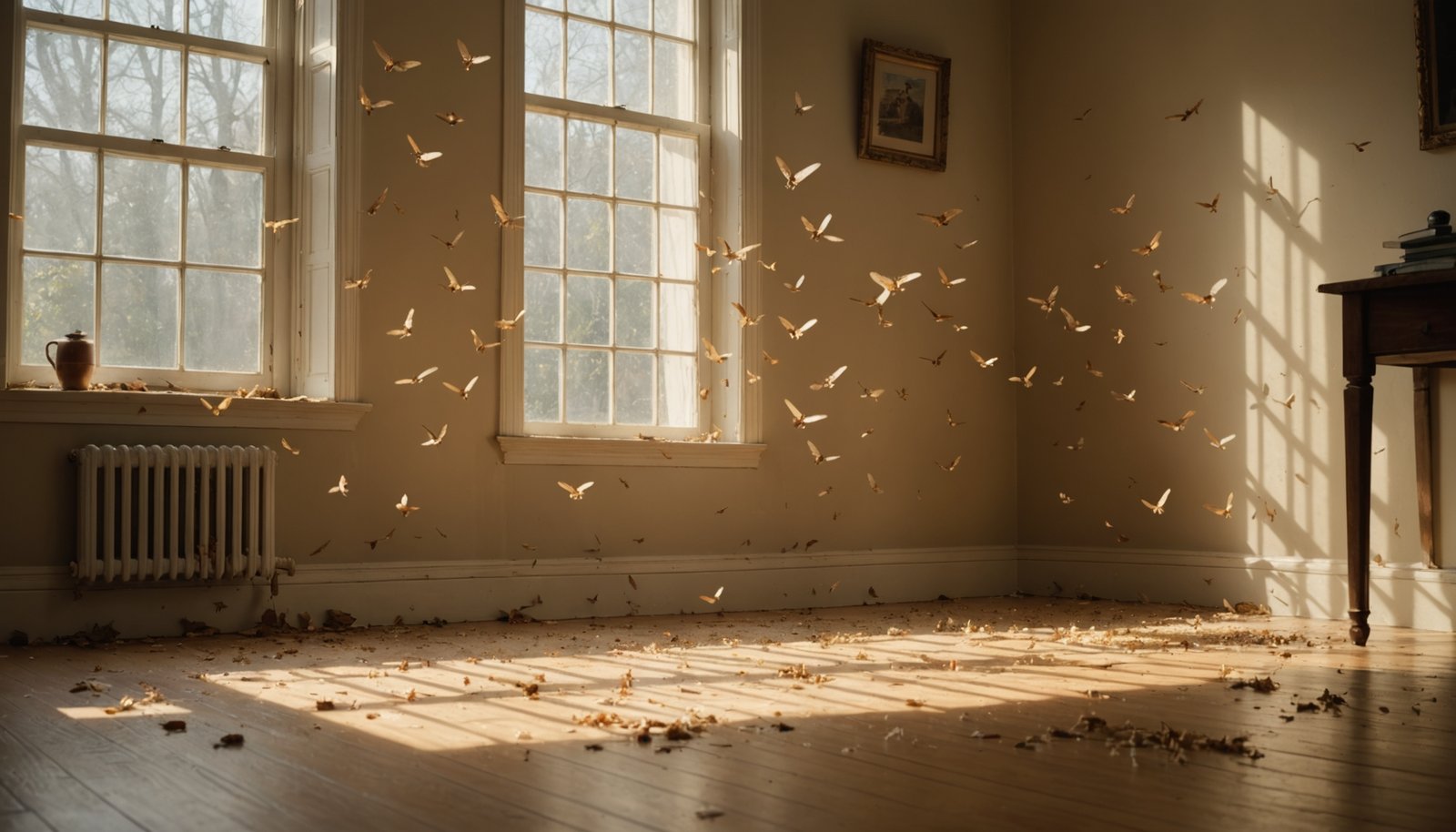
Seeing winged insects clustering at your windows or circling porch lights after dusk is one of the most visible early warning signs of a termite infestation. These are termite swarmers, also called alates, and they are the reproductive members of a mature colony sent out to start new nests. Swarmers are drawn to bright white light, including porch lamps, motion lights, and light spilling through windows, which is why homeowners so often spot them pressing against glass doors and window panes at night.
When swarmers appear indoors, the situation is more serious. Indoor swarmers almost always emerged from within your structure and flew toward the nearest light source as they searched for an exit. This strongly suggests a mature, established colony is already feeding on the wood inside your home.
Swarmers themselves do not damage wood. Their presence is a signal, not the threat itself. Worker termites are already consuming cellulose inside your walls, floors, or structural beams while the swarmers draw your attention at the window. Killing the swarmers at the glass solves nothing. The correct response is a prompt professional inspection and targeted treatment of the underlying colony.
Termite Swarmers vs. Flying Ants
Many homeowners confuse termite swarmers with flying ants. The difference matters because each pest requires a completely different treatment approach. Termite swarmers have straight antennae, a thick uniform waist, and two pairs of wings that are equal in length and extend noticeably past the body. Flying ants have bent or elbowed antennae, a pinched narrow waist, and front wings that are clearly larger than their rear wings.
If you are unsure which insect you are looking at, collect one or two specimens in a sealed bag and have a pest control professional identify them before committing to a treatment plan.
Discarded Wings Around Doors and Basements
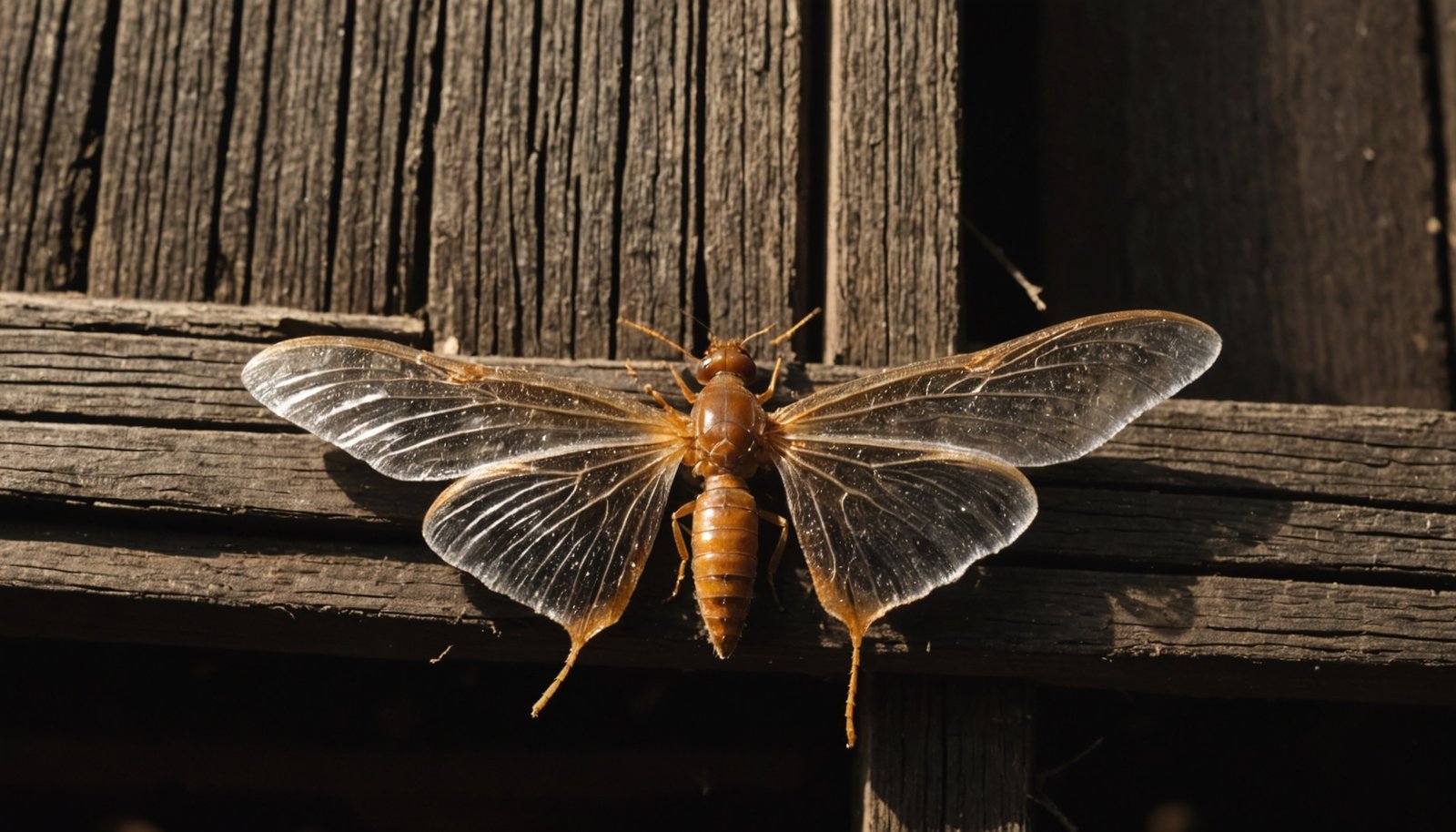
Small piles of translucent, equal-sized wings near door sills, window tracks, or basement steps are a classic early sign of termite activity. After termite swarmers mate, they shed their wings almost immediately because they no longer need them. The wings are all the same length, thin, veined, and slightly shiny, and they tend to collect in neat piles at the locations where swarmers land or squeeze through gaps.
Finding discarded wings suggests a mature colony is present nearby and capable of expansion. Around 48% of affected homes report finding shed wings near windows or doors as one of their first visible signs of a termite problem.
What Discarded Wings Mean
Because shedding happens in synchrony during warm, humid periods in spring or fall, a fresh pile of wings indicates recent swarming activity and a nearby nest. Wings that look dusty, faded, or mixed with debris may indicate older activity, though this does not rule out an active infestation still present in the structure.
Do not wait to find live termites before calling for an inspection. Discarded wings alone are sufficient justification. A licensed professional can confirm activity by checking for mud tubes, hollow wood, frass, and other evidence that points to the colony location.
Common Spots to Check
| Area | What to Look For | Why It Matters |
|---|---|---|
| Windowsills and door frames | Wing piles, mud tubes, sticking frames | Light draws swarmers; common entry points |
| Basements and crawl spaces | Mud tubes, damaged timbers, worker termites | Moisture and warmth sustain colonies |
| Foundation perimeter | Soil-touching wood, shelter tubes | Direct soil-to-wood contact accelerates infestation |
| Attic framing | Frass piles, kick-out holes, hollow rafters | Drywood termites target roof structures |
Mud Tubes Along Foundations and Crawl Spaces
Mud tubes are the most reliable physical sign of a subterranean termite infestation. They appear as thin, dirt-colored lines running along foundation walls, crawl space beams, sill plates, and sometimes up door frames or under porch steps. These pencil-width tunnels, typically between 1/4 and 1 inch wide, are constructed from soil, wood particles, saliva, and feces. They serve as enclosed highways that keep subterranean termites humid and protected while they commute between their underground nests and the wood they feed on.
Types of Mud Tubes
Not all mud tubes are the same. Thin, branching exploratory tubes are often abandoned and may indicate past rather than current activity. Thicker, regularly used working tubes handle heavy termite traffic and are a sign of an active colony. Swarmers sometimes also build drop tubes that hang down from wood surfaces toward the soil.
To test whether a tube is active, break off a small section and check back in a few days. If worker termites have repaired it, the colony is active. Fresh or recently repaired tubes always warrant a professional inspection. Removing old tubes after treatment helps prevent confusion during future monitoring.
Where to Inspect for Mud Tubes
- Along the entire perimeter of your foundation, both inside and outside
- Crawl space beams, floor joists, and posts set in concrete or soil
- Behind baseboards and at the base of interior walls
- Under porches, decks, and wooden steps that contact the ground
- Around plumbing penetrations and utility entry points through the foundation
Piles of Termite Droppings (Frass)
Small granular piles on a windowsill or floor are not always ordinary dust. Termite droppings, known as frass, look like tiny oval pellets about 1 millimeter long with six concave sides and rounded ends. They are hard and uniform, not flaky or feathery like sawdust, and they range in color from light beige to dark brown or nearly black depending on the wood species the termites have been consuming.
Because drywood termites push waste out through small kick-out holes in the wood, frass accumulates in piles directly beneath those holes. Check windowsills, door frames, baseboards, floors below wooden furniture, and attic rafters. If frass piles are growing over days or weeks, termites are actively feeding and maintaining hidden nests nearby. Subterranean termites rarely leave loose pellets, so visible frass piles almost always point to drywood termite activity.
| What to Look For | Why It Matters |
|---|---|
| Uniform, six-sided oval pellets | Distinguishes frass from sawdust or beetle dust |
| Piles beneath tiny holes in wood | Indicates active drywood termite kick-out holes |
| Colors matching nearby wood tones | Reflects the cellulose source being consumed |
| New pellets reappearing after cleaning | Confirms ongoing, active infestation |
Hollow-Sounding or Crumbling Wood
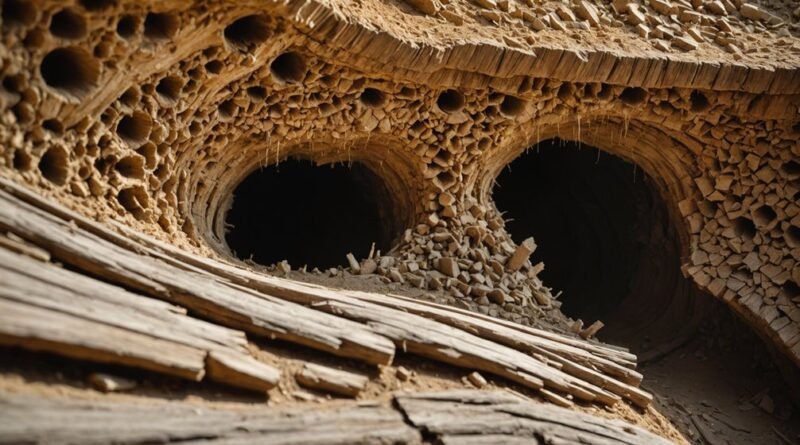
A hollow thud from a baseboard, doorframe, or structural beam is a classic early sign of a termite infestation. Termites consume wood from the inside out, hollowing out the cellulose core while leaving a paper-thin outer shell intact. Surfaces can look completely normal while the interior structure has been largely destroyed.
Tap suspicious trim, studs, and floorboards with your knuckle or the handle of a screwdriver. Healthy wood produces a solid, dense knock. Termite-damaged wood produces a dull, hollow sound. Press gently on the surface; if it gives way or crumbles under light pressure, internal galleries have significantly weakened the wood. This type of weakness throughout a structure can compromise load-bearing capacity if left untreated.
Differentiate termite damage from ordinary wood rot by texture. Rot feels moist, spongy, or shows discoloration from fungal growth. Termite-damaged wood is typically dry on the outside, with internal galleries running parallel to the grain for subterranean species or in erratic patterns for drywood species. Because hollow-sounding wood indicates an established infestation, schedule a professional inspection as soon as you find it. Check signs of termites in walls, floors, and ceilings to understand the full scope of damage these pests can cause inside a structure.
Small Exit Holes and Maze-Like Wood Damage
Tiny round pinholes on otherwise intact wood surfaces are a strong indicator of drywood termite activity. These openings are usually under 1/8 inch in diameter, just large enough for a termite to push frass through. They are often plugged with a brown, cement-like material and may look like ordinary nail holes at a glance.
Pinholes in Wood
Look for pepper-like piles of hexagonal pellets directly beneath these holes. The wood around exit points may appear slightly raised or discolored from the pressure of waste being expelled. Tap the area; a hollow sound beneath an otherwise undamaged surface confirms that internal galleries have formed. Blistered or bubbled patches near pinholes can also signal cavities just below the wood surface.
Telltale Tunneling Patterns
Even when wood looks sound from the outside, termites can be carving extensive maze-like galleries within. Subterranean species typically hollow out the softer springwood while leaving the harder summerwood in place, creating long parallel channels that run with the grain. Drywood termites carve more erratic, enclosed galleries across and through the grain and create chambers for their nests entirely within the wood without any soil contact.
Scan wood surfaces for exit holes scattered randomly across the grain, which differ from the methodical bore holes left by wood-boring beetles. Subterranean termites rarely make exit holes at all; their presence is betrayed instead by thin mud tubes and hollow wood rather than surface holes.
Tight-Fitting Doors and Windows
Doors or windows that suddenly become difficult to open or close without any change in weather or humidity can be an early sign of termite damage. When termites feed inside door frames, window frames, and the structural wood surrounding them, they create galleries that trap moisture and cause the wood to swell. This swelling pushes frames slightly out of alignment, making operation noticeably stiffer.
This symptom is easy to dismiss as seasonal wood expansion, which is why many homeowners overlook it. The key distinction is context. If doors or windows start sticking in dry conditions or in a season when wood normally shrinks, or if the sticking coincides with other warning signs like frass, hollow wood, or mud tubes, termites are a serious possibility. Probe the wood around the affected frame with a screwdriver for soft spots and listen for hollow sounds when you tap.
Clicking and Rustling Noises Inside Walls
Homeowners with active termite infestations sometimes describe hearing faint clicking, tapping, or dry rustling sounds coming from inside walls, especially at night when the house is quiet. These noises are produced by two types of termite behavior.
Soldier termites bang their heads against the walls of tunnels to send vibration-based alarm signals to the colony when they detect a threat. This produces a quiet but distinct clicking sound. Worker termites produce softer rustling or chewing sounds as they consume wood. In a serious infestation, pressing your ear against the wall near suspected activity may reveal these sounds without any tools.
Clicking noises inside walls should always be investigated alongside other warning signs. Noises alone do not confirm termites, since pipes, settling wood, and other pests can produce similar sounds, but combined with frass, hollow wood, or mud tubes, wall noises are a strong signal to call in a professional.
Sounds That May Indicate Termite Activity
- Dry, rhythmic clicking or tapping, especially in short bursts
- Soft rustling or papery chewing sounds, most audible at night
- Faint scratching from inside wall voids near wooden structural members
Discolored, Bubbling, or Peeling Paint and Drywall
Paint that bubbles, peels, or develops brownish stains without a plumbing leak nearby can be an early indicator of termites working behind drywall. The visual effect comes from moisture and voids created by feeding colonies. As subterranean termites move through the paper-backed drywall layer, they introduce humidity that lifts paint finishes and discolors surfaces from behind.
- Look for brown or yellowish stains along baseboards and wall joints; these often precede structural softening.
- Note bubbling or peeling paint without any obvious plumbing source; termite galleries trap humidity that separates finishes from the substrate.
- Scan for tiny pinholes (sometimes mud-sealed), faint maze-like lines, or hollow-sounding drywall when tapped, which are signs of internal tunneling.
- Watch for sagging, cracking, or buckling panels in ceilings and walls, which signal advanced damage requiring prompt attention.
Corroborate these signs with other evidence such as discarded wings near the affected wall or frass piles on the floor below, then schedule a professional inspection to confirm and plan the extent of infestation damage before choosing a treatment path.
Environmental Risk Factors That Attract Termites
Certain conditions around a home actively invite termite infestations by providing the moisture, food sources, and access routes that colonies need to establish and grow. Understanding these risk factors helps homeowners in the United States take preventive steps before signs of termites ever appear.
Moisture and Drainage Issues
Moisture is the single biggest environmental magnet for termites. Leaks in plumbing or roofing, poor drainage around the foundation, condensation in crawl spaces, and high indoor humidity all keep wood damp and easier to consume. After heavy rain, saturated soil allows subterranean termites to extend mud tubes rapidly and reach new wood sources. Water-damaged lumber is a prime target because its cellulose structure has already begun to break down.
Fix leaking pipes and gutters, direct downspouts well away from the foundation, and ensure AC drip lines do not pool near structural wood. Poor drainage around the property perimeter is one of the most preventable risk factors for a termite problem.
Soil and Landscaping Risks
Warm, moist soil in direct contact with wooden structural members gives subterranean termites immediate access to their food source. Wood stumps, buried lumber, mulch beds, raised garden beds, and tree roots near the foundation all create pathways for termites to travel undetected. Even treated soil barriers can be breached by digging, tilling, or root disruption that disturbs the chemical zone.
Maintain at least a 6-inch gap between soil and any wooden element of the structure. Keep mulch pulled back from the foundation wall, remove old stumps from the property, and inspect any landscaping changes that disturb soil near the house for signs of new termite tunnels.
Structural and Ventilation Factors
Poorly ventilated crawl spaces and basements hold humidity that accelerates termite activity. Roof or wall leaks that dampen structural framing create localized food sources. Firewood stacked against the house is a documented entry point for termites into the structure. Untreated wood additions attached to the main home and neglected bait stations or inspection reports also increase the risk of an undetected infestation expanding.
When to Call a Pest Control Professional
You do not need to find live termites to justify calling a licensed pest control professional. Any single confirmed warning sign, such as mud tubes, frass piles, hollow wood, or shed wings, is enough to warrant a full structural inspection. In practice, infestations that are caught when only one or two signs are present respond to treatment far better and at much lower cost than those discovered only after visible structural damage.
Call a professional immediately if you find any combination of the following: swarmers or wing piles near entry points, mud tubes on your foundation or crawl space, hollow-sounding structural wood, frass beneath wooden surfaces, unexplained paint bubbling without a plumbing source, sticking doors or windows in dry conditions, or clicking noises in walls at night. Describe all observations clearly, note exact locations, and request a full inspection that covers the foundation, crawl space, attic framing, and interior structural wood.
Ask about treatment options, including liquid barrier treatments, bait stations, and fumigation for advanced drywood infestations, as well as ongoing monitoring programs that provide inspections on a regular schedule. Treatments and regular inspections together offer homeowners the strongest long-term protection against recurring termite problems.
Conclusion
Staying alert to these early signs helps you catch termites before they cause costly structural damage. Swarmers at your windows, shed wings near doors, mud tubes along the foundation, frass piles below wooden surfaces, hollow-sounding wood, sticking doors, clicking noises in walls, and bubbling paint are all signals that termites may already be at work inside your home.
Each sign on its own justifies a closer look. Multiple signs together mean it is time to act. Reduce your risk by fixing leaks, improving drainage, eliminating soil-to-wood contact, removing stumps and debris, and scheduling regular termite inspections. Act quickly when warning signs appear, and you protect your investment from what is one of the most destructive and silent pest problems homeowners in the United States face.
Frequently Asked Questions
What are the earliest signs of a termite infestation?
The earliest signs of a termite infestation include termite swarmers near windows and lights, small piles of shed wings around doors and basement thresholds, pencil-thin mud tubes along foundation walls, tiny piles of frass beneath exit holes in wood, hollow-sounding wood when tapped, tight-fitting doors or windows from structural swelling, and bubbling or peeling paint with no plumbing leak nearby.
What do termite mud tubes look like?
Termite mud tubes look like thin, dirt-colored pencil-width tunnels roughly 1/4 to 1 inch wide. They are built from soil, wood particles, saliva, and feces and run along foundation walls, crawl space beams, sill plates, and door and window frames. Breaking one open may reveal live worker termites moving inside.
Can I hear termites inside my walls?
Yes. Soldier termites produce a quiet but audible dry clicking or tapping sound when they bang their heads against tunnel walls to signal danger to the colony. Worker termites also generate a soft rustling noise as they chew through wood. In a quiet room, pressing your ear close to a suspected wall may reveal these faint sounds, which is a strong indicator of active feeding.
How do I tell termites apart from flying ants?
Termite swarmers have straight antennae, a thick waist, and two pairs of wings that are equal in length and extend well past the body. Flying ants have bent (elbowed) antennae, a narrowed pinched waist, and front wings that are noticeably larger than their hind wings. Finding equal-length wings in a pile is a reliable sign of termites rather than ants.
Why do my doors and windows suddenly stick?
Doors and windows that stick or become hard to open without a change in weather can be an early sign of termite infestation. Termites feeding inside door frames and window frames create galleries that trap moisture and cause the wood to swell. The structural weakening also causes frames to shift slightly out of alignment. If sticking appears alongside other warning signs like frass or hollow wood, arrange a professional termite inspection.
How fast do termites spread through a home?
Termite colonies grow slowly at first but accelerate as worker numbers increase. A subterranean termite colony can contain hundreds of thousands of workers and consume roughly a pound of wood every few days once mature. Because over 70% of infestations go unnoticed until measurable structural damage has already occurred, early detection through regular inspections is the most effective protection.
When should I call a pest control professional for termites?
Call a licensed pest control professional as soon as you spot any combination of warning signs: swarmers or shed wings near entry points, mud tubes on your foundation, hollow-sounding wood, frass piles, unexplained paint bubbling, sticking doors, or clicking noises inside walls. You do not need to find live termites to justify an inspection. Early professional treatment prevents minor activity from becoming major structural damage requiring expensive repairs.