What Color Are Termites? (And What Color Changes Can Tell You)
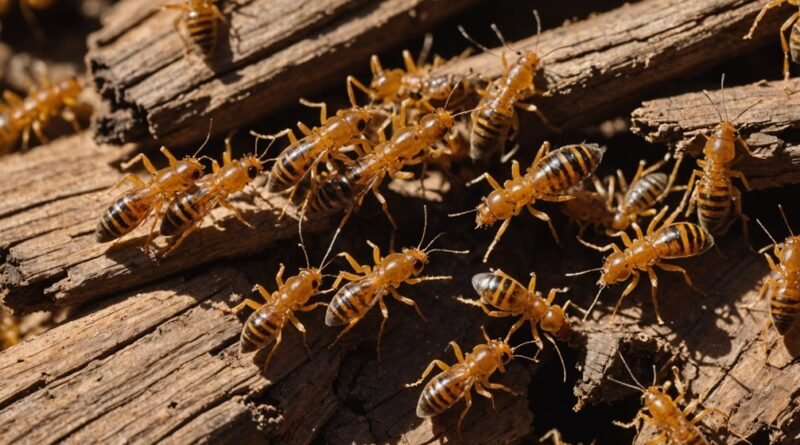
You’ll usually see termites as pale, almost translucent insects, but their color ranges by caste. Worker termites look creamy white and soft, soldiers have light bodies with amber to dark brown heads, and swarmers are the darkest, often brown to nearly black with wings. Color can hint at what’s happening—hidden feeding, active defense, or mating flights—but it won’t reveal colony size or exact location, which is where the next details start to matter.
Key Takeaways
- Worker termites are usually creamy white to translucent, soft‑bodied, and hidden in wood, soil, or mud tubes where they cause most structural damage.
- Soldier termites have pale bodies with darker, amber-to-brown or nearly black heads, using large mandibles to defend the colony.
- Swarmer termites are the darkest caste, typically brown to almost black with equal-length wings, often seen during mating flights and mistaken for flying ants.
- Color alone cannot identify species or colony size; it only hints at termite caste and activity, so structural clues and damage signs must also be assessed.
- Color changes combined with evidence like discarded wings, mud tubes, frass, or blistering wood more reliably indicate active infestation and where termites are operating.
Termite Colors at a Glance (What’s Normal Indoors)
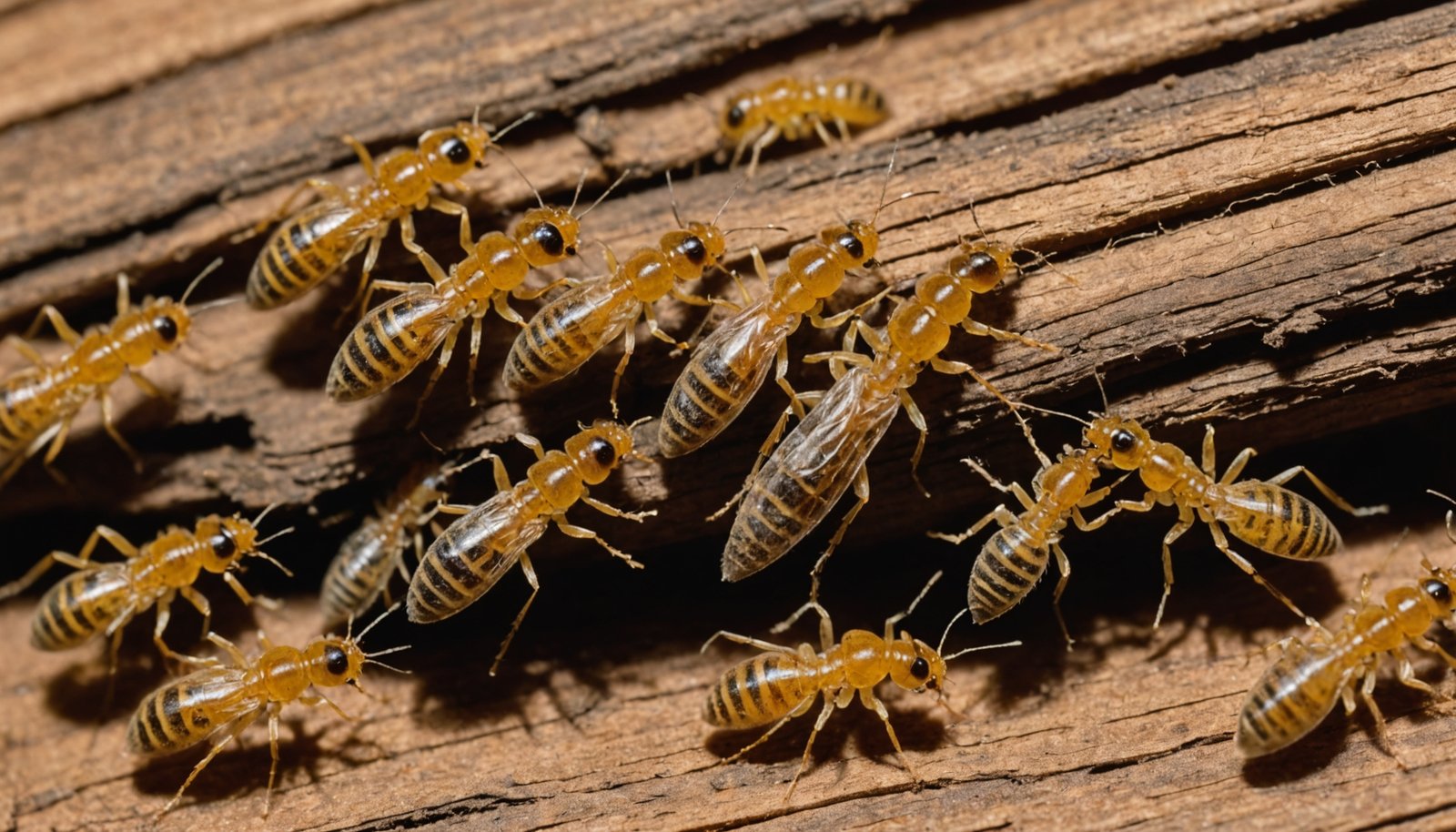
When you spot termites indoors, their color usually tells you which caste you’re looking at: workers tend to be creamy white or translucent, soldiers have pale bodies with darker heads, and swarmers are the darkest—often brown to almost black with wings.
Indoor termite color reveals caste: creamy workers, pale soldiers with dark heads, and dark, winged swarmers
You’ll most often uncover workers when you open infested wood, scrape mud tubes, or cut into damaged drywall. They’re soft, wingless, and look like tiny white larvae hiding behind walls or in damp, secluded areas. Because subterranean termites thrive in moist, hidden environments, they’re especially likely to appear in basements, crawl spaces, or near plumbing leaks.
If you disturb galleries and see pale bodies with amber or brown heads and big jaws, you’re looking at soldiers. They’re fewer in number and usually mixed in with workers.
Dark, winged termites near windows, doors, or lights are typically swarmers. Many are dark brown to black, though some appear tan or reddish-brown with clear or smoky-gray wings.
Indoors, all these colors fall within a normal termite appearance.
What Termite Color Can: and Can’t: Tell You
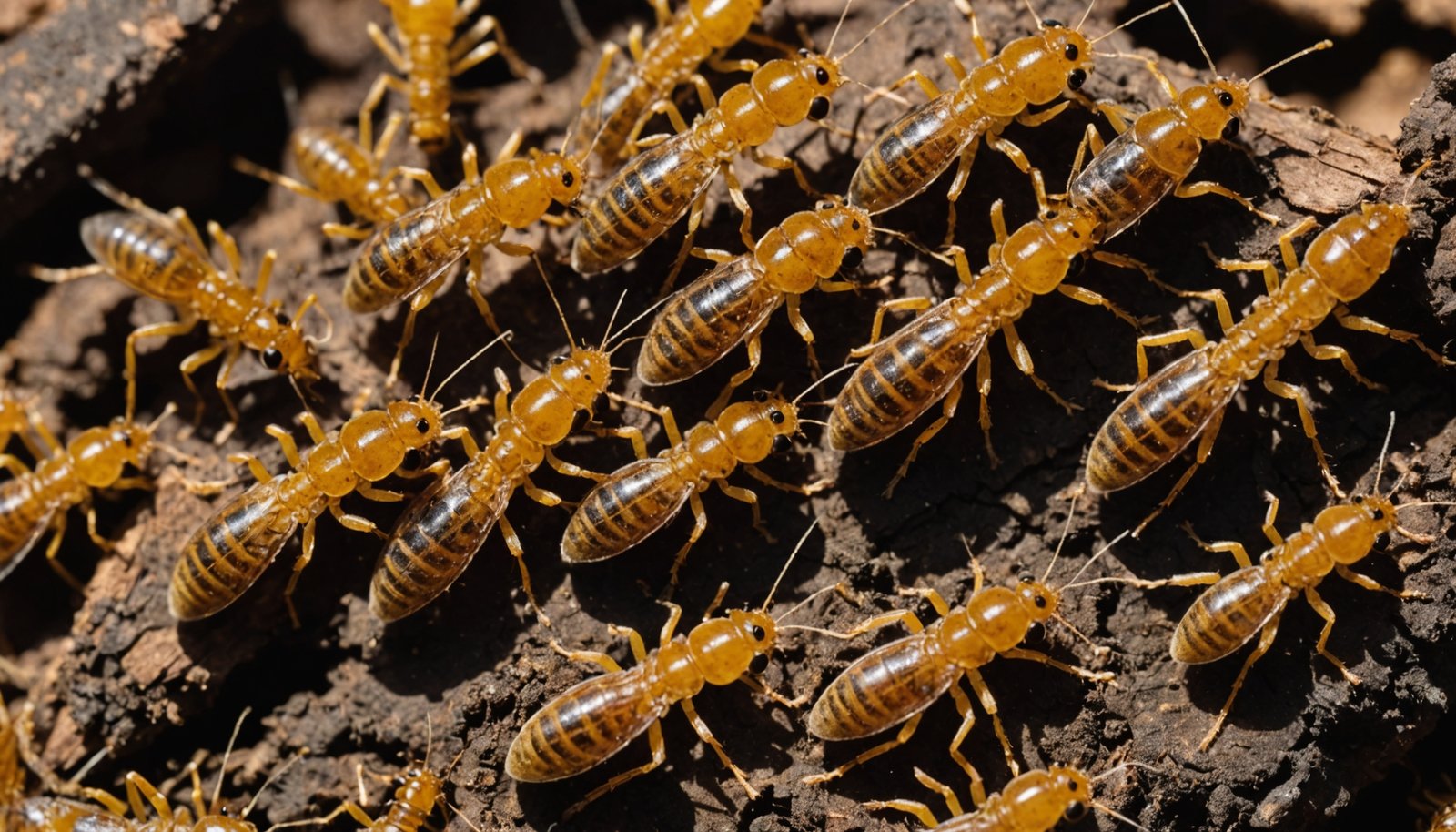
Although termite color catches your eye first, it only tells you so much—and never the whole story. You can often use it to spot which caste you’re seeing. Dark brown to coal‑black insects with wings usually mean swarmers from a mature colony. Pale, soft, wingless termites tend to be hidden feeders. Soldiers often show amber or reddish‑brown heads on lighter bodies.
Color also hints at activity, not impact. Dark swarmers near windows or lights, especially with discarded wings, point to nearby reproductive activity and a colony that’s reached swarming stage. Because accurate identification is difficult and complex, pest management professionals are often needed to confirm species and recommend treatment.
But color can’t tell you colony size, exact location, or how much wood they’ve eaten.
Species add more confusion: different termites can share similar browns, tans, or yellow‑browns. One dark swarmer indoors may signal a serious problem—or a minor one. Use color as a screening tool only; real identification and risk assessment need wings, body structure, and clear damage signs.
Worker Termite Color: Why Most Termites Look White
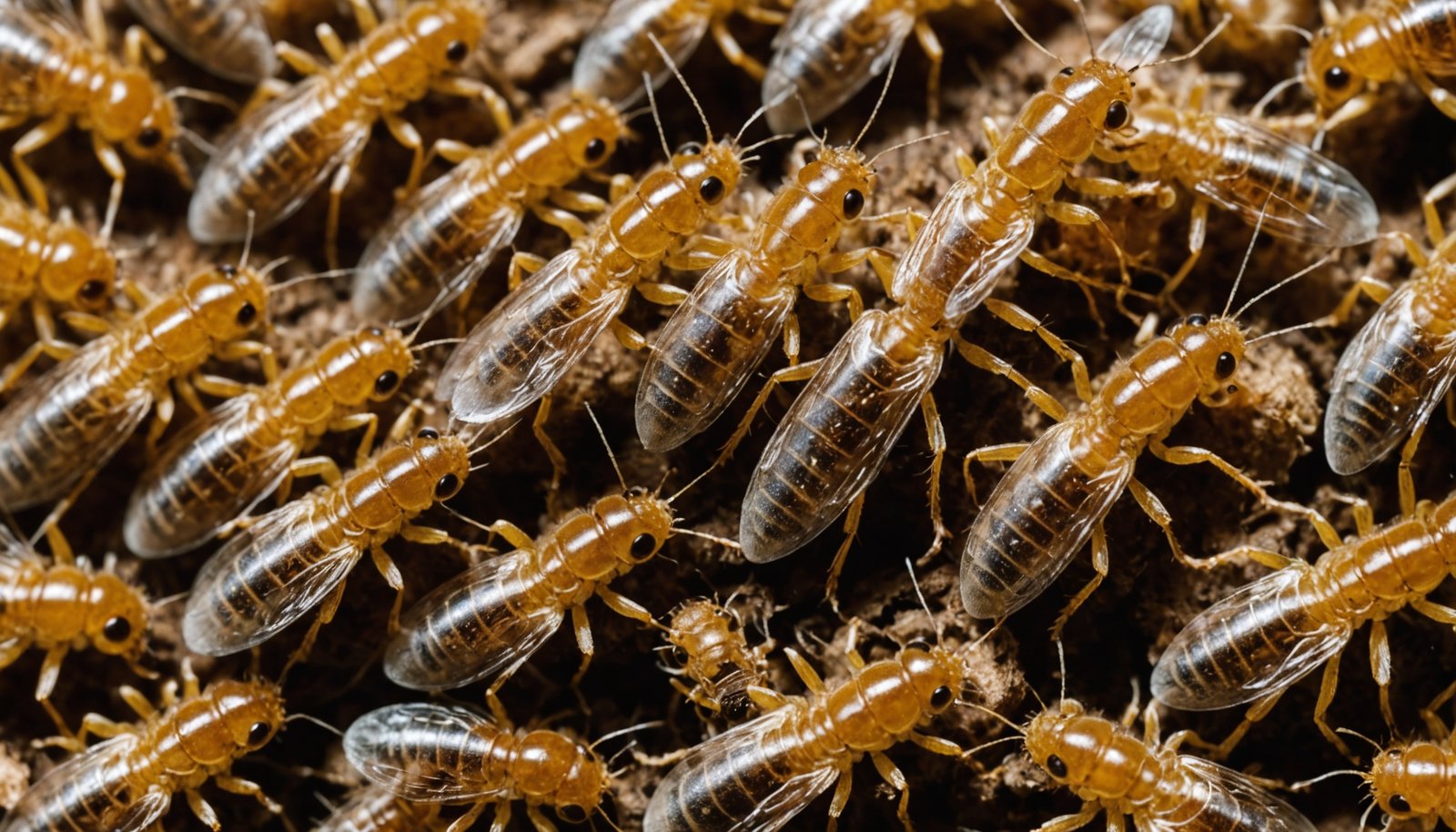
When you spot termites and they look milky white or almost translucent, you’re usually looking at worker termites. Their pale color comes from a soft, thin outer body that doesn’t need dark protective pigments because they live hidden inside wood, soil, or mud tubes. These pale workers are the ones feeding continuously on wood, which is why they’re responsible for nearly all the structural damage in a termite colony.
To understand what you’re seeing during an inspection, you’ll want to connect that white appearance to how workers live and feed out of sight.
Why Workers Look White
Spotting pale, almost ghostly “white ants” usually means you’re actually looking at worker termites, the hidden labor force of the colony. They look creamy white, milky, or translucent because their soft bodies lack pigment. Since they’re built to live in protected spaces, they don’t need darker, sun-blocking coloration. In invasive species like the Formosan subterranean termite, these workers can belong to colonies that reach millions of individuals and spread over thousands of square feet.
You’ll rarely see workers out in the open. They spend their lives tunneling, feeding on wood, and moving through tight, sealed passages. Their bodies fit that job: soft, pale, and specialized for constant contact with soil and wood rather than light.
When you crack open a mud tube or damaged wood and notice clusters of white, wingless insects, you’re usually seeing workers actively feeding and maintaining an established, and potentially serious, infestation.
Pale Colors Inside Wood
Inside damaged wood, those “white termites” you notice are usually worker termites whose naturally pale bodies contrast sharply with the darker interior. You’ll see them as creamy white, pale tan, or almost translucent because their soft, unpigmented bodies stand out against stained or decayed wood fibers. Mud tubes built by subterranean termites may connect these hidden galleries to the soil, helping workers travel safely between their nest and wood food sources.
Inside hidden galleries, workers stay shielded from sunlight, so they don’t develop dark coloring or patterns. Subterranean workers often look creamy white to pale tan, while drywood and dampwood workers can appear cream, pale yellow, or pale brown.
Soldiers are still light-bodied but usually show darker amber or brown heads, and swarmers are the darkest, often brown to black. Those pale, ant‑like insects inside hollow‑sounding lumber usually signal active feeding, not old damage.
Soldier Termite Color: Pale Bodies, Dark Heads
Among the termites you’re likely to uncover, soldiers are easy to pick out thanks to their pale, soft bodies paired with noticeably darker, hardened heads. Their bodies stay cream, white, or beige like workers, but the head looks thicker, more armored, and often a different shade entirely. You’ll see light brown, orange-brown, amber, tan, reddish-brown, or even nearly black heads, depending on species.
That darker head isn’t cosmetic—it’s tied to a heavily sclerotized (hardened) head capsule and powerful mandibles built for defense. Subterranean soldiers often have orange-brown or tan heads, Formosan soldiers show amber to brown heads, while drywood and conehead soldiers can have very dark brown to almost black heads over pale bodies.
A pale body with a darker head is normal for soldiers, not a sign of disease. When you spot that bold head–body contrast, you’re almost certainly looking at the colony’s defenders.
Swarmer Termite Color vs. Flying Ants
Out by the porch light or along a sunny window, those winged insects can look so similar that color alone won’t tell you if you’re seeing termite swarmers or flying ants.
Termite swarmers (alates) are often dark brown to black, but some species look tan, yellowish, or even reddish-brown. Flying ants commonly appear black, brown, or reddish, and some are bicolored, with clear contrast between body segments. With so much overlap, that dark insect by the glass doesn’t automatically mean termites.
Use color only as a first clue, then check body shape and wings.
Termite swarmers have a thick, straight-sided body with no pinched waist, straight bead-like antennae, and two pairs of equal-length wings that look pale or smoky.
Flying ants show a narrow “wasp-like” waist, elbowed antennae, and front wings that are longer than the back pair, often on a darker, shinier body.
Termite Color and Other Infestation Signs
When you’re checking for termites, color helps, but you can’t rely on it without looking at other clues.
You’ll want to connect what you see—mud tubes, frass piles, or discarded wings—with any visible damage such as hollow-sounding wood or blistered paint.
Pay attention to subtle indoor warning signs too, like tight windows, warped floors, or sagging areas that suggest termites are active behind the surfaces.
Color Versus Other Clues
Although termite color can grab your attention first, it’s only one small piece of the identification puzzle and rarely enough to confirm an infestation on its own. Workers, soldiers, and swarmers all look different, and shades shift with species and age, so you shouldn’t rely on color alone.
You’ll get stronger clues from what termites leave behind. Piles of equal-length discarded wings indoors, especially around windows and lights, strongly suggest swarmers have emerged and shed their wings nearby.
Dry, sand-like frass points toward drywood termites actively feeding, while soil-like mud tubes along foundations or crawl spaces indicate subterranean termite travel routes.
When you view color together with wings, frass, and mud tubes, you can separate harmless insects from a likely termite problem much more confidently.
Visible Damage Indicators
Wood often tells on termites long before you see the insects themselves, and color changes are just one part of that story.
You’ll often notice wood that looks water‑damaged: blistered, buckled, or swollen boards, or surfaces that sag, crack, or splinter when you press them. Tap questionable areas; a hollow sound suggests termites have eaten the interior, leaving only a thin shell and maze‑like galleries.
Look beyond wood color alone and scan connected structures:
- Floors and ceilings: Sagging, squeaky, warped, or blistered flooring, plus drooping ceiling sections.
- Walls and paint: Bubbling, peeling, or distorted paint; wavy drywall; tiny pinholes or sunken lines.
- Exterior clues: Mud tubes on foundations, pencil‑wide shelter tunnels, fresh wood openings, piles of wings or wood‑colored frass.
Subtle Indoor Warning Signs
Ever notice a few pale “ants,” scattered wings on the floor, or tiny piles of what looks like sawdust and wondered if termites are inside your home?
Indoors, those “ants” might actually soft, wingless worker termites—milky white, pale cream, or light beige. You may also spot light-colored soldiers with darker brown heads if tunnels or infested wood get disturbed.
Dark, winged swarmers are another warning. Subterranean swarmers are often black with clear, veined wings, while drywood and Formosan swarmers range from yellowish-brown to reddish-brown. Their discarded translucent wings often collect near windows, doors, or lights.
Also watch for tan or wood-colored pellets (frass), mud tubes, musty odors, faint clicking in walls, tight doors, and bubbling or peeling paint.
Conclusion
Now that you know what termite colors mean, you can spot trouble early. If you see pale “white ants,” dark-headed soldiers, or dark-bodied swarmers with wings, you’re likely dealing with termites—not ants. Don’t rely on color alone; pair it with other signs like mud tubes, hollow wood, or discarded wings. When in doubt, snap photos, collect a sample, and call a licensed pro so you can protect your home before damage spreads.