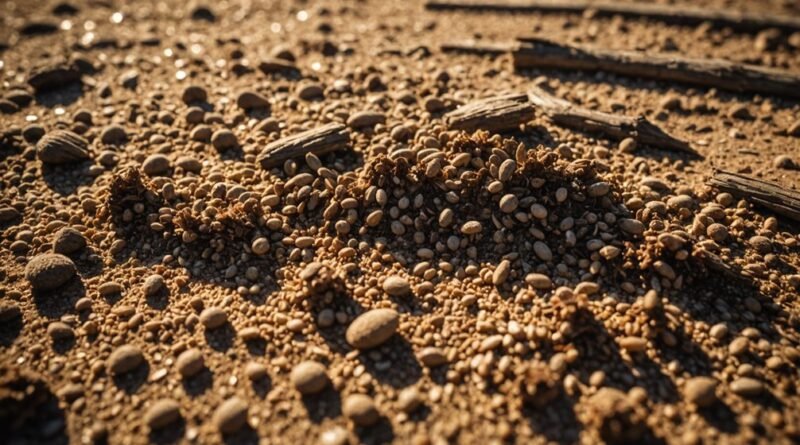
Are Termite Droppings Toxic? What Science Really Says
While termite droppings aren’t directly toxic, you shouldn’t ignore them. These pellets contain proteins and particles that can trigger serious respiratory issues, allergic reactions, and skin irritations when they become airborne. The real danger comes from their ability to promote harmful mold growth in damp conditions and release contaminated dust into your indoor air. Understanding the full scope of health risks from termite droppings will help you protect your family more effectively — and know when to call a pest control company for professional inspection and management.
Key Takeaways
- Termite droppings contain proteins and particles that can trigger allergic reactions and respiratory issues when inhaled as dust.
- While not directly toxic, exposure to termite frass can cause skin irritation and asthma attacks in sensitive individuals.
- The main health concern stems from moisture-related mold growth associated with termite activity rather than direct toxicity.
- Chemical analysis shows elevated minerals and nutrients in termite droppings, but these components aren’t inherently harmful to humans.
- Scientific evidence indicates termite droppings pose primarily environmental and respiratory risks rather than toxic or poisonous effects.
- Knowing the signs of termite droppings — and how to distinguish frass from sawdust, coffee grounds, and other debris — is the first step in identification and protecting your home.
Are Termite Droppings Toxic? The Direct Answer
Termite droppings are not directly toxic to humans, homeowners, or people in the conventional sense — they don’t contain venom, poisons, or compounds that cause acute toxicity on contact. However, calling them “safe” would be misleading. The health hazard from termite frass is real: it’s indirect, respiratory, and cumulative. In houses with active termite infestations, piles of frass accumulate near kick-out holes, on floors, windows, and baseboards — and when disturbed during cleanup, the dust becomes airborne and enters your lungs.
The key distinction: termite droppings are a hazard because of what they do to indoor air quality and respiratory health, not because they contain poison. People with allergies, asthma, or compromised immunity are at greatest risk. And unlike carpenter ants or bed bugs — which pose direct physical risks — the danger from termite droppings is subtle, building up over time in infested structures.
What Makes Up Termite Droppings?
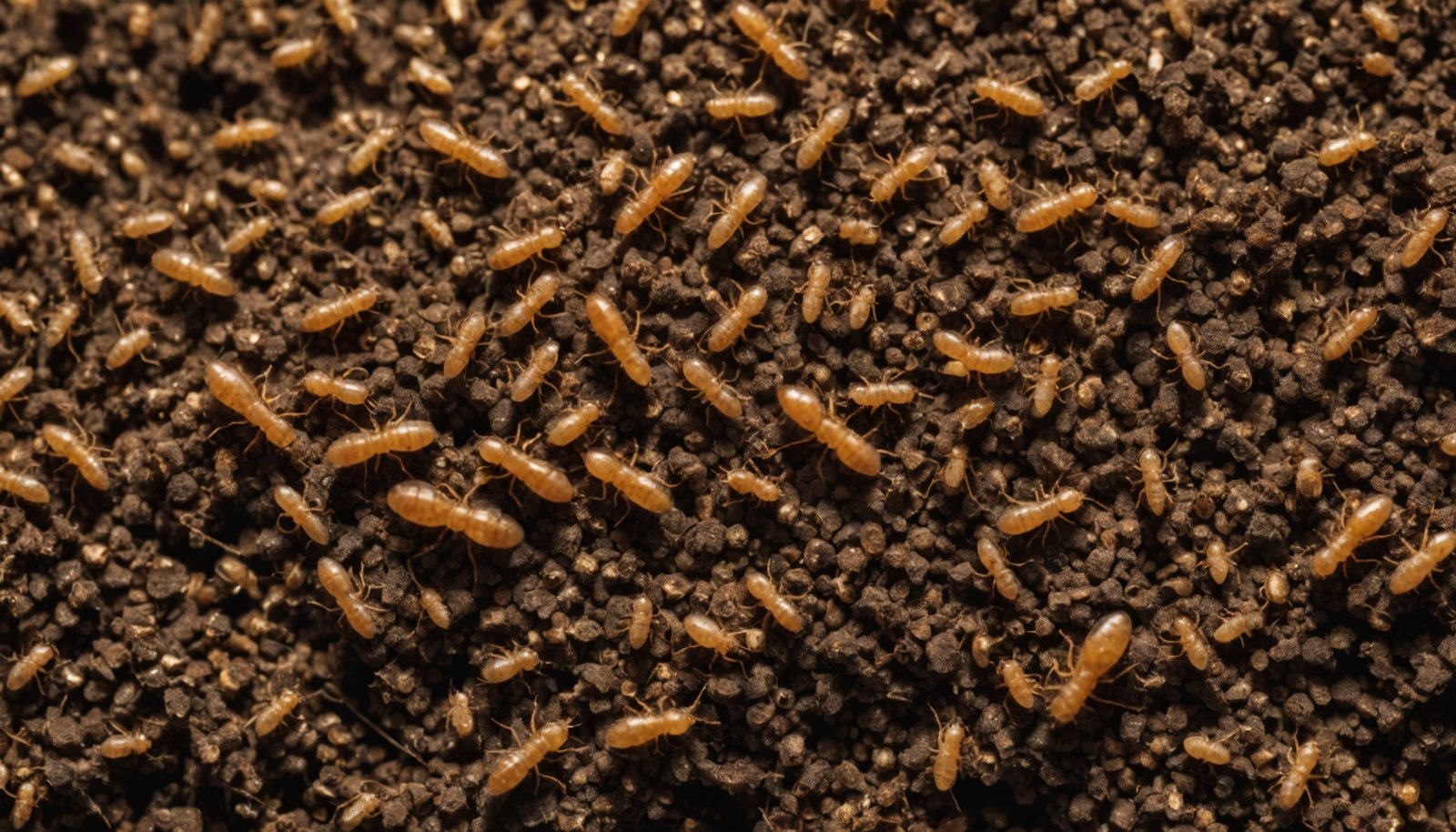
While termite droppings might look like simple wood particles, they’re actually complex structures composed of several key components. The primary ingredients are lignin and cellulose, with lignin often being more abundant depending on what the termites have eaten.
Termite droppings are more than just wood bits — they’re intricate structures rich in lignin and cellulose, with a distinctive shape and color determined by wood source.
You’ll find various hydrocarbons in these droppings, including n-alkanes and dimethylalkanes, along with uric acid and soluble proteins from the termites‘ digestive processes. These pellets are distinctive with their six concave sides, formed as waste products during the termites‘ wood digestion. The size is consistently about 1mm in length — a key feature for identification and distinguishing termite frass from sawdust or coffee grounds.
The pellets also contain mineral elements like magnesium, iron, and extractable chloride. Their color can range from cream to nearly black — sometimes resembling brown coffee grounds or pepper — reflecting the type of wood the termites have consumed rather than the age of the droppings. The composition varies considerably based on the termites‘ diet, with the pellets absorbing pigments and compounds from different wood sources. This color and shape variability is why proper identification requires looking at the full size, shape, and location — not just color alone.
Termite Droppings vs. Sawdust, Coffee Grounds, and Ant Frass
One of the most common questions homeowners have is how to tell termite droppings apart from other similar-looking debris. Accurate identification matters — because calling a pest control company for carpenter ants when you actually have drywood termites wastes time and lets real termite damage progress.
- Termite frass vs. sawdust: Sawdust is irregular in size and shape with no consistent geometry. Termite droppings are uniform oval pellets with six concave sides — this regularity is the clearest sign of drywood termites.
- Termite frass vs. coffee grounds: Coffee grounds are dark, rounded, and irregular. Termite frass can be similarly dark in color when termites have been eating dark wood — but the six-sided pellet shape distinguishes it. Coffee grounds also won’t appear in piles near kick-out holes in wood structures.
- Termite frass vs. carpenter ant frass: Carpenter ants push debris out of their galleries too, but it includes mixed materials — wood shavings, dead insects, and other organic debris — rather than the uniform pellets of termite frass.
- Termite frass vs. bed bug debris: Bed bugs leave dark liquid stains on bedding and surfaces — not dry pellets. Finding dry, wood-colored piles near wood structures, windows, or baseboards points to drywood termites, not bed bugs.
The Science Behind Termite Frass Composition
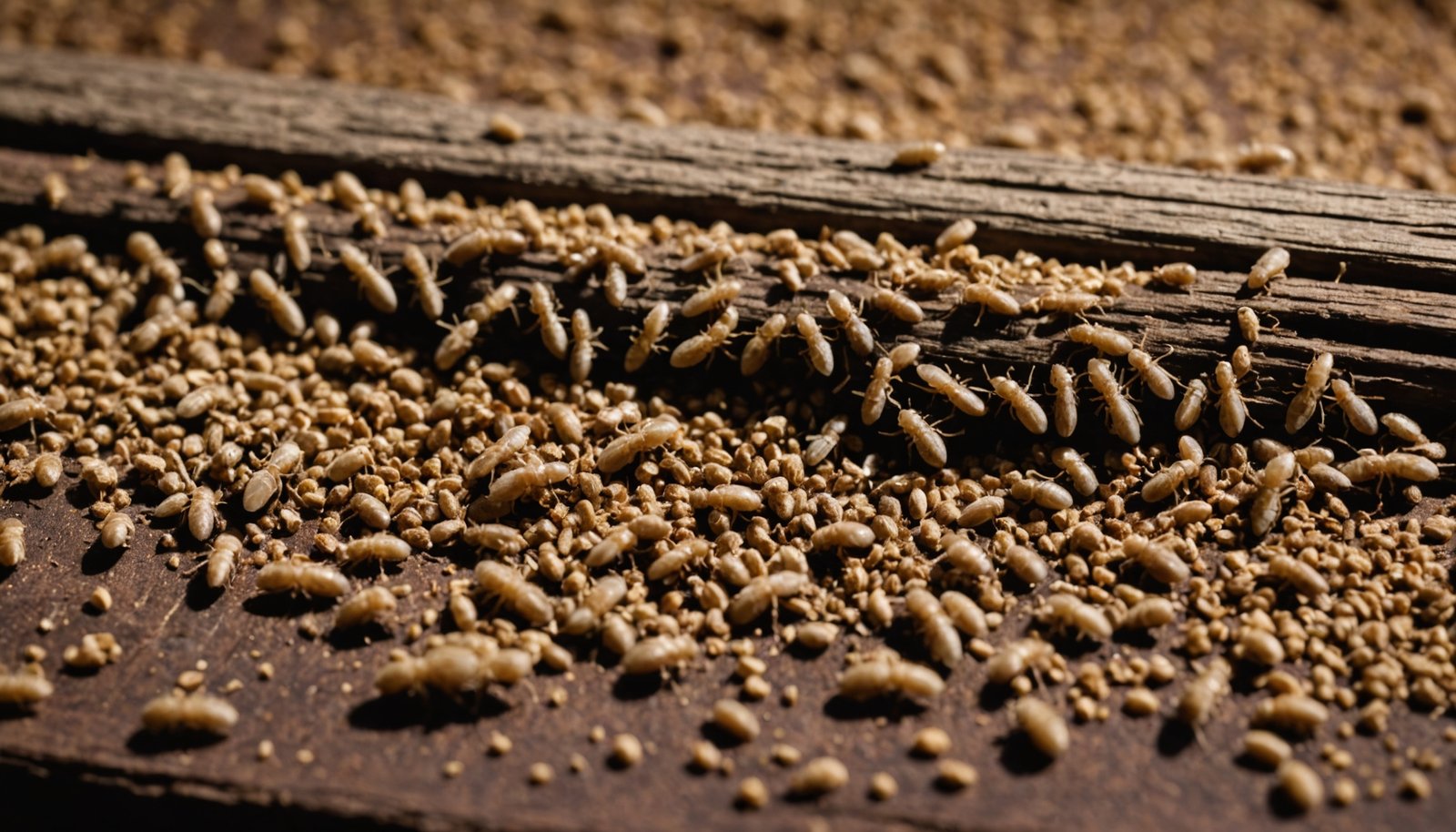
Although termite frass may appear simple, its chemical composition reveals a complex mixture of elements and compounds. The chemical analysis shows enriched levels of essential nutrients and unique hydrocarbon profiles that change over time. The nitrogen content in termite frass is approximately double that found in pinewood.
- It contains higher concentrations of calcium, magnesium, potassium, and phosphorus compared to wood, along with elevated levels of micronutrients like boron and zinc.
- The hydrocarbon makeup consists primarily of dimethylalkanes (25-36%) and n-alkanes (23-38%), closely mirroring the termite‘s body composition.
- Its chemical signature evolves with age, showing distinct profiles between fresh frass (0-196 days), medium (197-381 days), and old frass (382-690 days) — making laboratory identification of termite droppings possible even months after deposition.
Health Risks and Safety Concerns
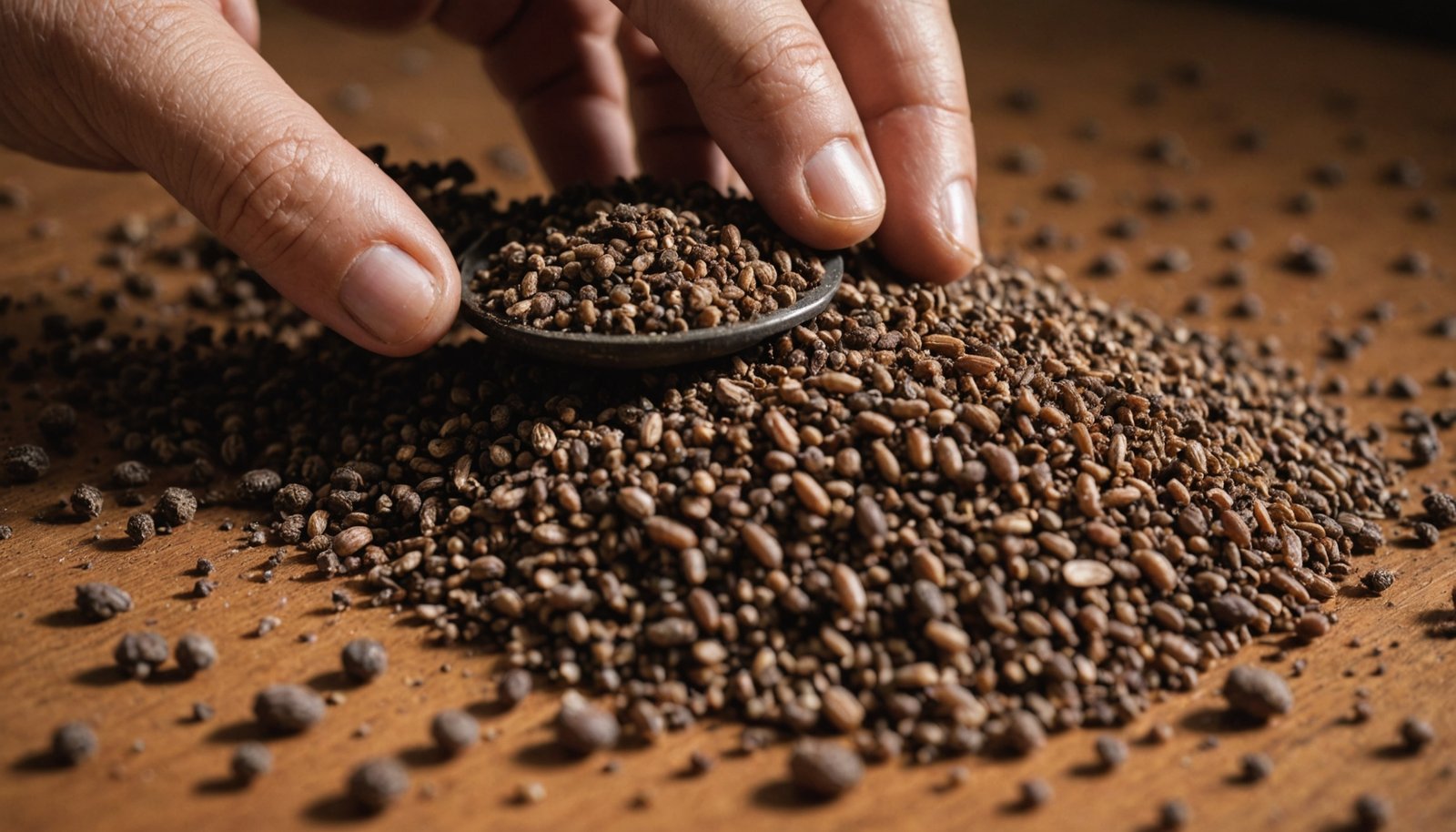
The presence of termite frass in your home extends beyond its chemical composition to pose notable health risks. You’ll face potential respiratory issues if you’re regularly exposed to termite droppings dust, which can trigger asthma attacks and inflammation, especially if you have pre-existing conditions. Direct contact with termite frass may cause skin irritation and allergic reactions, particularly if you’re sensitive to the proteins found in termite saliva or droppings.
The situation can worsen as termite damage creates damp conditions that promote mold growth, leading to additional health concerns like headaches and fatigue. The contamination of indoor air by frass particles, mold spores, and wood dust creates a compounding respiratory hazard — especially in areas like attics, crawl spaces, and floors where drywood termites concentrate their activity. If you discover termite activity, you’ll need to address both the infestation and any resulting structural damage promptly. Research shows that exposure to termite allergens can increase asthma risk in children, making early intervention crucial.
Indoor Air Quality Impact
Once termite droppings become airborne in your home, they’ll greatly degrade your indoor air quality through multiple pathways. The presence of termite frass creates a cascading effect of air quality issues that can impact your health and comfort — particularly for people who spend extended time in infested structures.
1. Termite droppings release proteins that trigger allergic reactions and respiratory problems, especially in sensitive individuals, children, and the elderly. These contaminants can accumulate in areas with poor ventilation. You’ll notice symptoms like sneezing, coughing, and itchy eyes.
2. The moisture from termite activity promotes mold growth, releasing harmful spores into your air. These can cause allergic reactions and, in severe cases, neurological symptoms. Contamination of indoor air with mold spores is one of the most serious secondary effects of a termite infestation in your house.
3. Your indoor air becomes contaminated with particulate matter from frass and wood debris, which can aggravate existing conditions like asthma and COPD, particularly when disturbed during cleanup. Homeowners who attempt DIY cleanup without proper respiratory protection often stir up piles of frass in attics, crawl spaces, and behind walls — dramatically increasing their exposure to airborne termite dust.
Understanding Environmental Effects
Despite their destructive reputation in homes, termite droppings play complex roles in natural ecosystems, creating both beneficial and challenging environmental effects. You’ll find that termites‘ droppings enrich soil with nitrogen and phosphorus, promoting vegetation growth and biodiversity. However, their digestive processes also produce methane, a potent greenhouse gas. Soil porousness increases due to termites‘ extensive tunneling activities.
| Environmental Aspect | Positive Impact | Negative Impact |
|---|---|---|
| Soil Quality | Improves fertility | None reported |
| Plant Growth | Increases density | None reported |
| Carbon Storage | Enhanced through lignin | None reported |
| Biodiversity | Supports more species | None reported |
| Atmosphere | None reported | Methane emissions |
The lignin-rich composition of termite droppings offers long-term benefits for soil stability and carbon storage, while their feces foster beneficial bacteria that protect colonies from harmful fungi — a feature that’s made them particularly resistant to biological pest control methods. Inside homes and structures, however, this same biological richness contributes to the contamination and respiratory hazard that makes termite frass a legitimate health concern for homeowners and people living in affected houses.
Where to Find Termite Droppings: Key Locations and Signs
Knowing where to look for termite droppings is as important as knowing what they look like. Drywood termites push frass out of small kick-out holes in wood, creating tiny piles that accumulate over time. Key locations to inspect include:
- Windows and door frames — particularly wood frames where drywood termites commonly establish colonies
- Baseboards and floors — piles of frass on floors near wood structures are among the most visible signs of drywood termites
- Attics and crawl spaces — where termite activity often goes undetected longest
- Beneath wood structures and decking — check for mud tubes (subterranean termites) and frass piles (drywood termites)
- Near cracks and entry holes in wood — the kick-out holes drywood termites use to expel waste are a reliable sign of active infestation
If you find termite droppings in multiple locations throughout your home — particularly near windows, floors, and structural wood — it’s a strong indicator of an established colony. Contact a pest control company for professional inspection before attempting any cleanup, as disturbing frass piles without respiratory protection is itself a health risk.
Prevention and Professional Treatment Options
Professional prevention and treatment of termite infestations require a multi-faceted approach that combines expert inspection with targeted control methods and ongoing management.
Effective termite control demands comprehensive management strategies — blending skilled inspection and precise identification with targeted treatment to ensure lasting protection for your home and health.
You’ll need certified professionals to conduct thorough inspections using advanced detection tools like infrared and fiber optic devices to accurately identify termite species and assess infestation severity. Drywood termites require different treatment approaches than subterranean species — and your pest control company should confirm which type of termite is present before recommending a plan.
- Opt for bait systems that use low-toxicity ingredients to target termites while minimizing environmental impact — they’re effective and safer than widespread chemical treatments.
- Consider physical barriers like metal mesh and mechanical prevention through proper moisture control and regular maintenance to reduce the conditions that attract pests.
- If chemical treatments are necessary, professionals can determine the most appropriate solution based on your specific termite species and infestation level — including whether fumigation is needed for drywood termites that have spread through multiple structures in your house.
Conclusion
While termite droppings aren’t directly toxic, you’ll want to address them quickly to protect your health and home. They can trigger allergic reactions and respiratory issues in sensitive individuals, act as a contamination source for indoor air, and signal active termite damage to your property. Don’t try to clean large amounts yourself — call a pest control company who can safely remove the frass and address the underlying infestation. Remember, where there’s frass, there’s likely active termite damage in your structures that needs attention from professionals experienced in drywood termites, subterranean species, and the full range of termite management options available to homeowners.