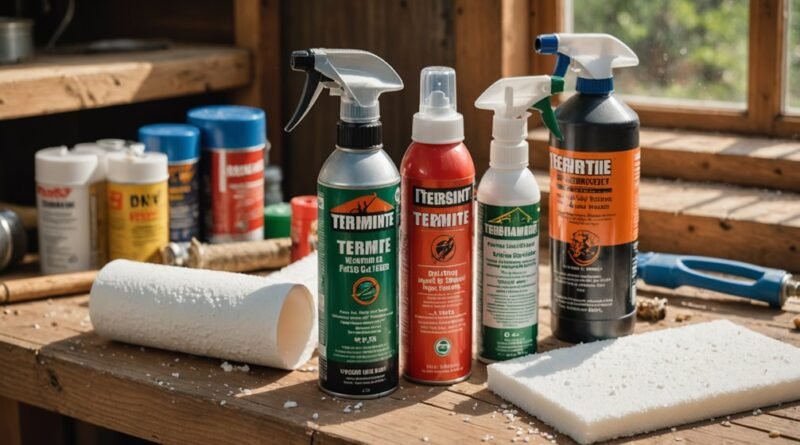
Best Termite Sprays and Foams for Spot Treatments (With Pro Tips)
For spot treatments, you’ll want fipronil-based sprays like Termidor SC or Taurus SC for exposed wood, cracks, and exterior surfaces. Use expandable foam formulas for wall voids and enclosed galleries where liquid can’t penetrate. Non-repellent formulas are your best option because termites can’t detect them, allowing workers to carry the chemical back to the colony. Match the right product to the right location, and you’ll get far better resultskeep going to find out exactly how.
Key Takeaways
- Fipronil-based sprays like Termidor SC and Taurus SC are top choices for perimeter and localized spot treatments against termites.
- Non-repellent formulas allow termites to unknowingly carry chemicals back to the colony, amplifying treatment effectiveness beyond the initial zone.
- Foam products expand up to 30 times their size, making them ideal for wall voids and enclosed, irregular spaces.
- Before treating, break open mud tubes to confirm live activity, identifying creamy-white workers as proof of an active colony.
- For soil treatments, trench 6 inches wide and deep, applying 4 gallons of termiticide per 10 linear feet.
Best Termite Sprays and Foams for Spot Treatments
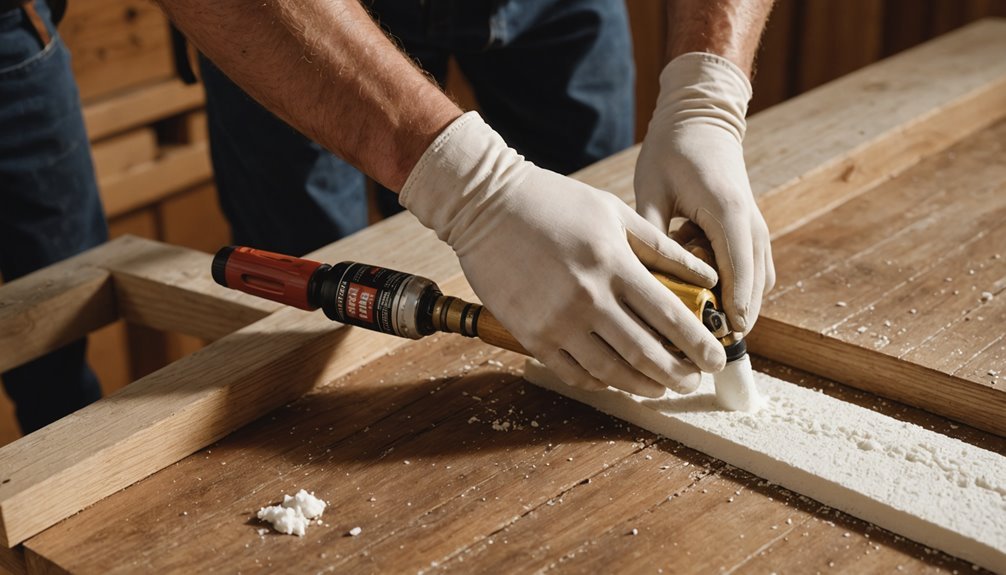
When termites are already visible along baseboards, inside wall voids, or trailing mud tubes near your foundation spot treatments let you hit the problem directly without treating your entire property.
Spot treatments target termites directly at baseboards, inside wall voids, or wherever mud tubes appear near your foundation.
You’ve got two main formats to work with: liquid sprays and injectable foams.
Liquid sprays like Termidor SC, Taurus SC, and Bifen XTS work well for perimeter soil applications and localized zones near active mud tubes. They’re concentrated, so you’ll need to dilute them accurately before applying.
Foams like Termidor Foam are better suited for interior work injecting into wall voids, cracks, and crevices where sprays can’t reach. The foam expands to fill hidden spaces where termites shelter. Termidor Foam uses Fipronil as its active ingredient, delivering both immediate contact kill and long-lasting residual effects in hard-to-reach areas.
Choose based on where the activity is. Use foam indoors for confined voids and liquid spray outdoors for soil and entry points.
If the infestation’s severe, call a professional instead of relying solely on DIY spot treatments.
Why Fipronil and Non-Repellent Formulas Outperform Standard Sprays
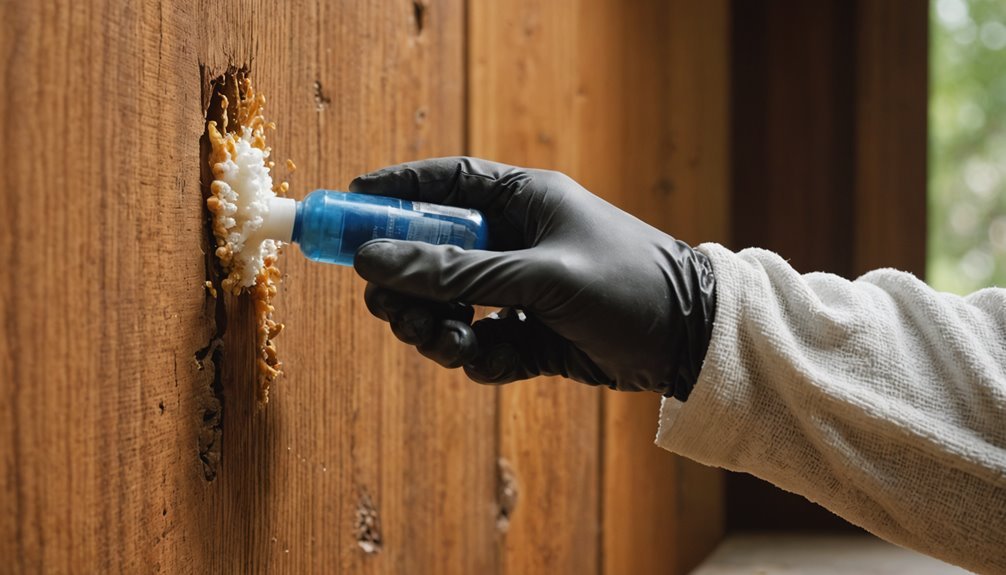
Choosing between a spray and a foam matters, but the chemistry behind the product matters just as much. Standard repellent sprays kill termites on contact, but they also trigger avoidance behavior. Once termites detect the treated zone, they reroute and bypass it entirely, leaving your structure exposed.
Fipronil works differently. It targets GABA-gated chloride channels, disrupting the termite’s nervous system after contact or ingestion. Because termites can’t detect non-repellent formulas, they keep moving through treated areas, picking up a lethal dose without realizing it. That repeated exposure is what makes the treatment effective beyond the spray line.
In foam tests, fipronil outperformed imidacloprid and achieved 100% mortality in transfer tests, meaning treated termites passed the active ingredient to untreated nestmates. In contrast, imidacloprid foam showed over 90% repellency after just 24 hours, causing termites to avoid treated surfaces entirely and reducing the likelihood of effective colony-wide exposure.
You’re not just killing what you see you’re eliminating the colony behind the wall.
How Non-Repellent Termiticides Kill the Whole Colony, Not Just Visible Termites
Non-repellent termiticides don’t work by producing a visible kill at the surface they work by staying hidden. Termites can’t distinguish treated soil from untreated soil, so foragers move through the chemical, pick it up, and carry it back to nestmates through contact and grooming.
That’s the transfer effect and it sounds like a colony killer. But the reality is more complicated. Research shows liquid non-repellent treatments may affect as little as 1.5% of a colony’s population.
Transfer tends to stay effective within roughly a 5-meter range. Beyond that, colonies often adapt quickly. Within about a week, termites can block off treated zones entirely.
Dead termites also release chemical death cues compounds like 3-octanol and 3-octanone that signal danger and drive avoidance behavior. Once the colony stops entering treated soil, transfer drops sharply. This avoidance behavior creates a death zone that can spread up to 2.56 meters from the treatment area.
You get structural protection, but full colony elimination is rarely guaranteed.
Where to Use Foam vs. Spray for the Best Results
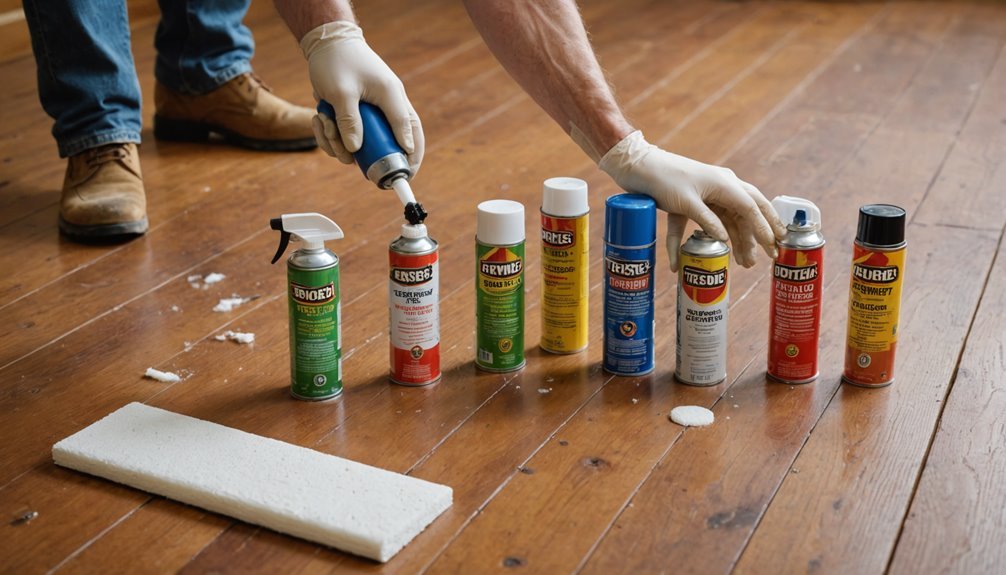
Foam and spray termiticides aren’t interchangeable each one has a specific job, and using the wrong one costs you coverage.
Use foam when the infestation is inside wall voids, drywood termite galleries, or any enclosed space where liquid can’t spread evenly. Foam expands up to 30 times its size, filling irregular cavities that spray simply can’t saturate. Apply it through kick holes, drilled access points, or wall openings to reach concealed activity.
Foam expands up to 30 times its size the only reliable way to fill wall voids spray can’t reach.
Switch to spray when you’re treating exposed wood, accessible cracks, or exterior contact surfaces. Liquid termiticides work best where termites can contact treated surfaces directly think visible entry points, surface activity, and perimeter applications.
Non-repellent formulas give you an edge because termites won’t detect the treatment before walking through it. Products like Termidor use fipronil as the active ingredient, which achieves 90% termite mortality within just 8 hours of contact.
Match the product to the access point, not your preference, and you’ll get considerably better results.
How to Apply Termite Spot Treatments Without Missing the Colony
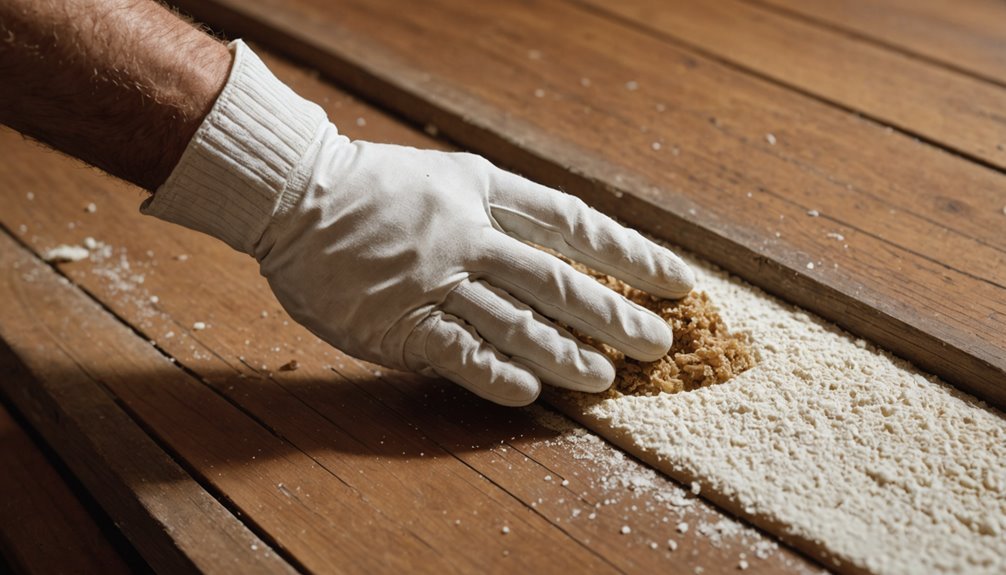
Placing the right product in the right spot only works if you’ve actually found the colony and that’s where most spot treatments fall apart.
Break open every mud tube you find. If small, creamy-white workers spill out, you’ve confirmed live activity. Then expose the full travel route don’t just treat the visible damage.
| What You See | What It Means |
|---|---|
| Mud tubes on foundation walls | Active subterranean movement |
| Workers inside broken tubes | Live colony confirmed |
| Hollow-sounding wood nearby | Hidden galleries extend beyond damage |
| New wings or fresh damage after treatment | Colony wasn’t fully reached |
| Mud tubes returning post-treatment | Untreated sections still active |
For soil, trench 6 inches wide by 6 inches deep, then apply 4 gallons per 10 linear feet. Treat backfill too untreated gaps let termites reroute. If concrete blocks access, drill through it. Skipping that step means missing the colony entirely.
Termites feed and groom each other, which means a well-placed treatment can spread through the colony when workers carry it back to nestmates they come into contact with.
Frequently Asked Questions
Can Spot Treatments Be Used Safely Around Pets and Children Indoors?
Yes, you can use spot treatments safely around pets and children indoors, but you’ll need to follow the label exactly, keep them out during application, and wait until treated areas have fully dried.
How Long Should I Wait Before Re-Entering a Treated Room?
Wait 2–4 hours before you re-enter a treated room, but make sure all surfaces are fully dry first. If you still notice a strong odor or visible residue, wait a bit longer.
Will Spot Treatments Void My Home Warranty or Homeowner’s Insurance?
Spot treatments *might* void your home warranty if your policy requires licensed professionals or excludes unauthorized repairs. Your homeowner’s insurance typically won’t cover termite damage regardless, since insurers classify it as maintenance neglect.
How Do I Know if My Termite Problem Is Too Large for Spot Treatment?
Your infestation’s likely too large for spot treatment if you’re seeing swarmers, mud tubes, damage in multiple rooms, hollow-sounding wood, or sagging floors. When DIY treatments keep failing, it’s time to call a professional.
Are Termite Sprays and Foams Legal to Use in All U.S. States?
Termite sprays and foams aren’t legal in every state by default. You’ll need to confirm your product’s EPA registration, check your state’s specific rules, and always follow the label’s directions exactly.
Conclusion
When you’re dealing with termites, choosing the right product and application method makes all the difference. You’ve learned why non-repellent formulas like fipronil outperform standard sprays, how foam reaches hidden galleries, and where each treatment works best. Don’t waste time on repellent products that scatter colonies deeper into your walls. Apply these spot treatments correctly, and you’ll eliminate the whole colony before they cause serious structural damage.