Does Bleach Kill Termites? What It Can (and Can’t) Do
Bleach does kill termites, but only the ones you can directly hit with it — the same is true against most soft-bodied household pests. It works by breaking down their exoskeleton and blocking their ability to breathe, causing dehydration and death. The problem is that most termites are hidden deep inside walls, wood, and underground colonies where bleach can’t reach. Killing a few visible workers won’t stop the queen or the thousands behind her. Keep going to find out what actually will.
Key Takeaways
- Bleach kills termites on direct contact by damaging their exoskeleton and disrupting their respiratory system through sodium hypochlorite.
- Bleach only affects visible termites, leaving hidden colonies inside walls, furniture, and soil completely untouched.
- Killing worker termites with bleach does not impact the queen, allowing the colony to continue reproducing.
- Bleach offers no residual protection once dried, making it unreliable for long-term termite control.
- Professional treatments are more effective, targeting entire colonies through inspections, soil termiticides, bait systems, and fumigation.
Does Bleach Actually Kill Termites?
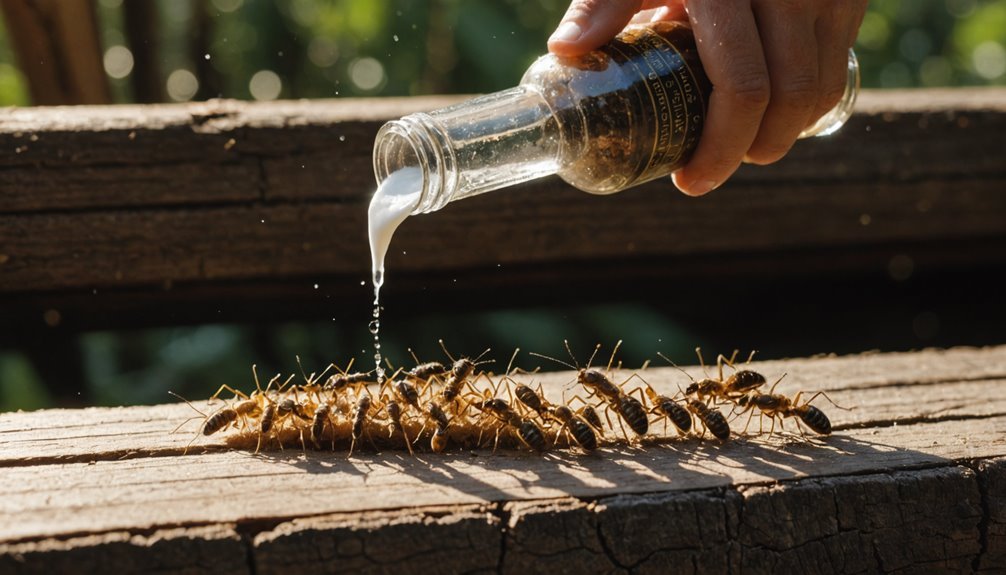
Bleach can kill termites, but only the ones it directly touches. If you spray it on visible termites, some will die. That’s where its effectiveness ends.
Bleach works as a contact-only solution, meaning it can’t reach termites hiding inside walls, floors, or foundations. Those hidden insects keep feeding and spreading damage regardless of what you apply to the surface. The colony itself remains untouched.
Bleach can’t reach termites hiding inside walls and foundations the colony keeps feeding, completely untouched.
Pest-control sources consistently describe bleach as unreliable for full termite eradication. You might eliminate a few exposed insects, but you won’t eliminate the infestation. The broader colony continues operating out of sight, making any visible results misleading.
Treating termites with bleach isn’t a solution it’s a temporary, limited response that doesn’t address the real problem beneath the surface. Beyond its ineffectiveness, bleach can damage wood structure, compromising the very material you’re trying to protect. It’s also worth remembering that bleach is a household disinfectant, not a labeled insecticide, so it was never formulated or tested for structural pest control in the first place.
How Bleach Kills Termites on Direct Contact
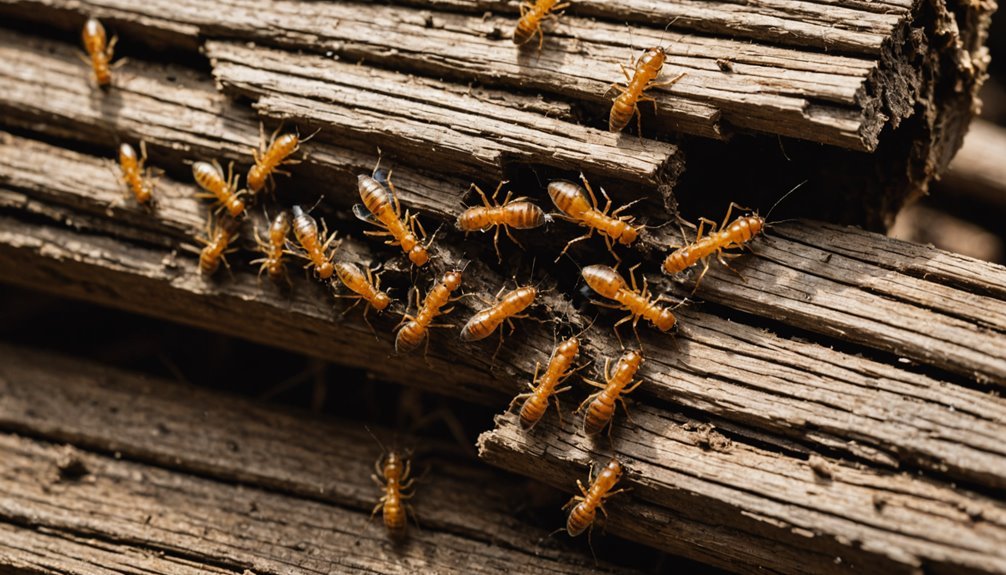
When bleach touches a termite directly, it kills through two rapid mechanisms: exoskeleton damage and respiratory disruption. Sodium hypochlorite, bleach’s active ingredient, absorbs through the insect’s body surface, breaking down the exoskeleton’s protective layer. That damage alone can cause rapid death.
At the same time, termites breathe through small openings in their exoskeletons called spiracles. Once bleach contacts those openings, it disrupts the termite’s ability to respire. Some sources also describe dehydration as a contributing factor before death occurs.
The critical point is that the effect only happens where the liquid physically reaches the insect. If bleach doesn’t touch a termite directly, it does nothing to it. That limitation defines exactly how useful and how limited this method truly is. For broader infestations, professional termite control is recommended as a more comprehensive and reliable solution.
Why Bleach Won’t Eliminate a Termite Colony
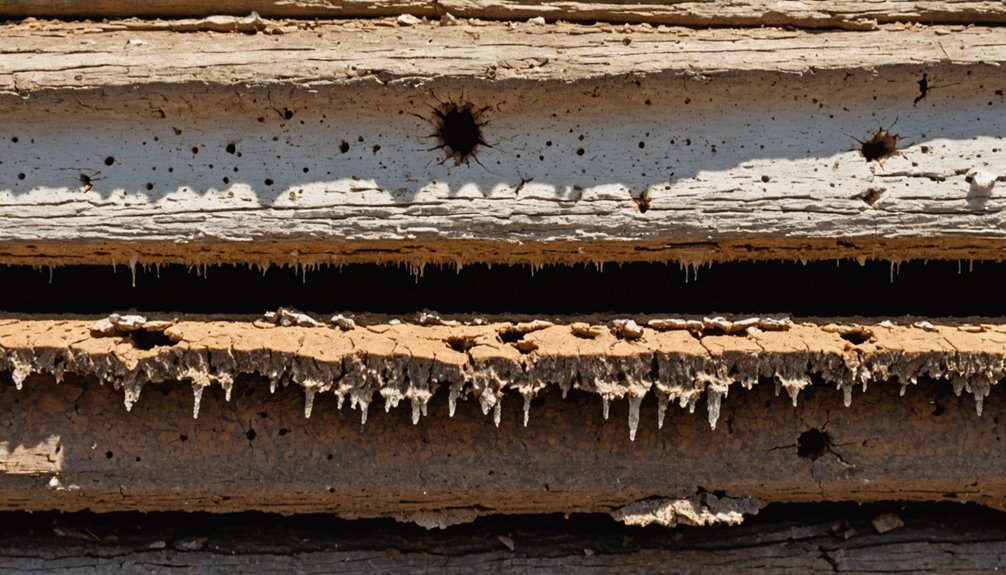
Even when bleach kills termites on contact, it can’t touch the colony. Subterranean colonies can live hundreds of feet from the damaged structure, far beyond any surface treatment you apply.
Drywood termites stay buried inside framing, walls, and furniture where bleach never reaches.
Killing a few visible workers doesn’t stop the colony from feeding and reproducing. Those termites are often just the outer edge of a much larger nest system.
Meanwhile, termites in connected galleries keep causing damage unaffected.
Bleach also has no residual effect, so treated surfaces don’t keep killing termites that pass through later.
What you’re left with is a false sense of progress while the infestation continues hidden inside your structure’s walls, floors, and support framing. Bleach cannot reach the queen termite, meaning the colony’s reproductive source remains completely protected and continues expanding the infestation.
What Kind of Termite Problem Can Bleach Actually Handle?
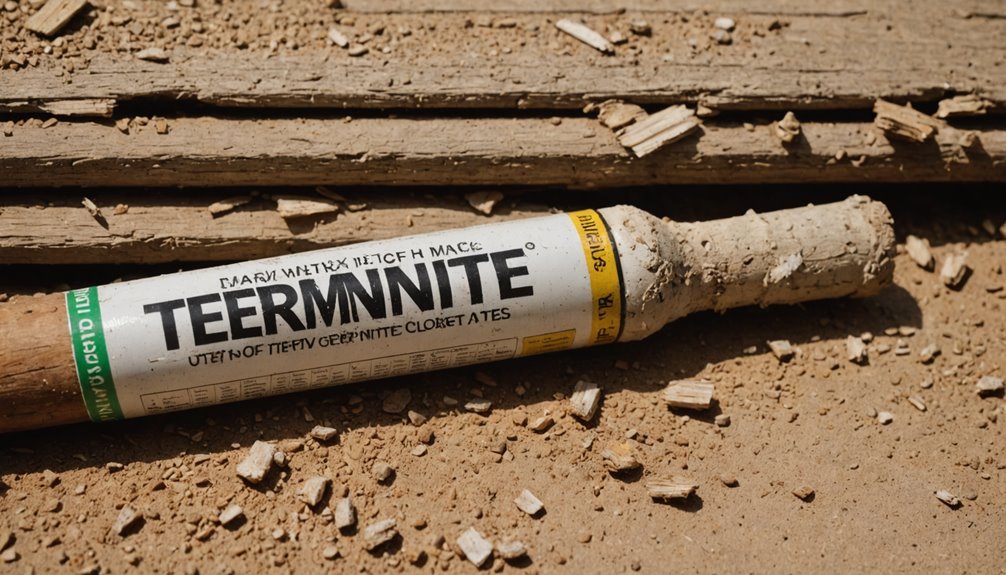
Given that bleach can’t reach hidden colonies or leave any lasting protection, you might wonder if it has any practical use against termites at all. It does, but only in very specific situations.
Bleach works when you can see the termites and spray them directly in an accessible spot. Think of it as a quick cleanup tool, not a treatment.
| Situation | Can Bleach Help? |
|---|---|
| A few termites on exposed wood | Yes, direct contact kills them |
| Termites in mulch or open surfaces | Yes, if you spray them directly |
| Termites inside walls or deep in wood | No, bleach can’t reach them |
Beyond these narrow cases, bleach won’t solve anything structural or colony-level. For any infestation that goes deeper than what you can see, professional pest control is the recommended course of action.
How to Apply Bleach to Termites Safely
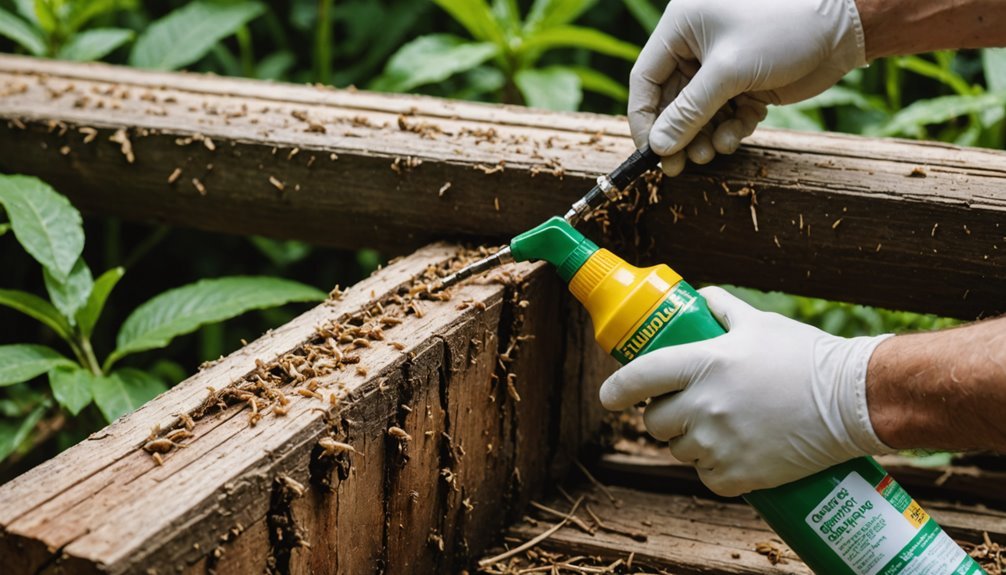
If you’ve decided to use bleach on visible termites, doing it safely comes down to three steps: preparing your gear, mixing the solution correctly, and applying it with precision.
Skipping any one of these safety measures raises the risk of surface damage, personal exposure, or wasted effort.
You’ll get the best results by treating bleach as the caustic chemical it’s rather than a simple cleaning product. Bleach works by disrupting proteins and cell membranes in termites, killing them on contact when applied directly.
Prepare Your Safety Gear
Before applying bleach to any termites you can see, you’ll want to gear up properly. Bleach is corrosive, so skipping protection risks skin irritation, eye injury, or chemical exposure.
| Gear | Purpose |
|---|---|
| Gloves | Prevent skin irritation from direct contact |
| Eye protection | Block splashes during application |
| Long sleeves and pants | Reduce skin exposure near treated areas |
| Closed-toe shoes | Protect feet from spills |
| Ventilation | Reduces chemical buildup indoors |
Put everything on before you open the bleach container. If you’re working indoors, open windows and doors first. Don’t rush the setup proper gear keeps you safe while you focus on targeting only the termites you can actually see.
Mix and Dilute Properly
Once you’re geared up, mixing bleach correctly keeps the process both safe and effective. Start with unscented household bleach containing 5%–9% sodium hypochlorite and check the label first.
If no directions are listed, use the CDC’s ratio: 5 tablespoons per gallon of room-temperature water, or 4 teaspoons per quart.
Always use room-temperature water, never hot, since heat can break down the solution. Mix only the amount you need immediately diluted bleach loses effectiveness after 24 hours, so don’t store leftovers for later use.
Avoid overconcentrating the mixture, as excess bleach increases staining risks and handling hazards without improving results.
Prepare your solution in a clean container, keep it away from unintended surfaces, and apply it while it’s still fresh.
Apply With Precision
Bleach kills only the termites it directly contacts, so pinpoint your application to insects you can actually see. Spray carefully onto fully exposed termites on wood, mulch, or accessible surfaces. Keep the treatment small-scale and avoid broad spraying that wastes bleach and risks damaging nearby materials.
| Target Surface | Application Approach |
|---|---|
| Wood surface termites | Spray directly onto visible insects |
| Mulch or soil surface | Apply only where termites are exposed |
| Indoor infested areas | Use minimal amounts with ventilation |
| Finished or fabric surfaces | Avoid entirely, bleach causes damage |
Protect your skin and eyes during application. Bleach won’t reach termites hiding inside walls, galleries, or foundations, so don’t treat areas where insects aren’t visible. It’s a spot fix, not a structural solution.
What Bleach Can Damage When Used Indoors
While bleach can kill termites on contact, it carries serious risks when used indoors because it can damage a wide range of materials throughout your home.
Materials Bleach Can Damage
Paint, Wood, and Finishes
It erodes water-based paint, leaving visible fading and discoloration that may require repainting. On wood, it weakens the finish and breaks down the material over time.
Metal Fixtures and Stone Surfaces
Metal fixtures like faucets, sinks, and handles can corrode or pit if bleach isn’t rinsed off promptly. Stone surfaces, including marble and travertine, and grout lines are also vulnerable to dulling and uneven wear.
Fabrics and Fumes
Fabrics like wool, silk, and leather can weaken or lose color. Beyond surface damage, bleach releases fumes that irritate your eyes, throat, and lungs, and mixing it with other cleaners can produce toxic gas.
How Bleach Compares to Professional Termite Treatments
Although bleach can kill termites on contact, it only eliminates the ones it directly reaches leaving hidden colony members untouched and the infestation intact.
| Factor | Bleach |
|---|---|
| Kill method | Contact only |
| Residual protection | None |
| Colony reach | Surface-level |
| Nest penetration | Minimal |
| Long-term control | Unreliable |
Professional treatments target the entire colony through baiting systems and trench-and-treat applications that reach termites inside walls, soil, and hidden voids. Expert inspections also identify the species, nest location, and infestation extent steps bleach simply can’t replicate. Without residual activity, bleach leaves your structure vulnerable the moment it dries. If you’re dealing with an active infestation, professional treatment isn’t just the better option it’s the only one built to actually solve the problem.
When Bleach and Home Remedies Stop Being Enough
Contact kills have limits once bleach dries, any termites hidden inside walls, soil, or structural voids keep feeding undisturbed.
If you’re seeing mud tubes, hollow-sounding wood, or repeated termite activity after spraying, the infestation runs deeper than surface treatments can reach.
Home remedies work best against small, visible, localized activity.
Home remedies are only reliable when termite activity is small, visible, and contained to one spot.
Bleach, vinegar, diatomaceous earth, boric acid, and essential oil blends won’t eliminate an established colony spread across multiple hiding spots inside your structure — none of them are a real alternative to a purpose-built insecticide when the infestation has already spread. You might kill exposed termites while the nest continues operating untouched.
When accessible termites keep returning, that’s your signal to escalate.
Get a professional inspection, address moisture issues, and reduce wood-to-ground contact around your home as part of an ongoing termite prevention plan, not just a one-time reaction.
Waiting only gives termites more time to damage structural wood you can’t see.
What Actually Works When Bleach Isn’t Enough
When bleach fails, you need an alternative that reaches the colony itself, not just the termites you can see.
Professional soil treatments like bifenthrin, applied through trench-and-treat methods, target subterranean termites at their access routes and provide long-lasting residual protection around your entire structure.
Bait systems add another layer by reducing colony activity over time, giving you the kind of colony-level control that no contact-only remedy can match.
Professional Treatment Options
If bleach can’t eliminate a termite infestation, professional chemical treatments offer far more reliable results. Licensed pest control companies use proven extermination methods that target termites where they live, breed, and feed.
Here’s what professionals typically deploy:
- Liquid soil termiticides – Applied around your foundation using active ingredients like imidacloprid or fipronil to create a chemical barrier.
- Foam and dust treatments – Reach voids and inaccessible spaces that liquids can’t penetrate.
- Bait systems – In-ground stations that monitor and eliminate colonies over time.
- Fumigation – A whole-structure treatment using sulfuryl fluoride for severe drywood infestations.
After treatment, don’t skip follow-up inspections. In high-risk areas, professionals recommend reinspecting every three to six months to prevent reinfestation.
Colony-Level Control Methods
Eliminating a termite colony takes more than surface-level treatment it requires methods that reach termites where they actually live. Subterranean termites nest in soil, so professional treatment targets that environment directly.
Liquid termiticides are the most common approach in in the Southeast and other warm, humid regions, creating a continuous soil barrier around your foundation through trenching, rodding, and drilling at slabs.
Bait systems work differently termites carry active ingredients back to nestmates, gradually reducing colony activity. They’re not instant solutions, but they’re effective at the colony level when you maintain monitoring and keep stations active.
Neither method works in isolation if gaps exist. A continuous treated zone matters. Missing spots let termites bypass treatment entirely, keeping the colony alive and your structure at risk.
Long-Lasting Termite Solutions
Bleach can kill termites it directly contacts, but it won’t protect your home once the bottle is empty. For lasting control, you need solutions that keep working after application and reach hidden colonies.
Here’s what actually works:
- Bifenthrin soil treatments applied in trenches around your foundation, providing long-lasting contact protection.
- Fipronil-based products penetrate colony activity and target the queen directly.
- Professional termiticides reach wall voids, galleries, and underground nesting zones bleach never touches.
- Termite baiting systems deliver ongoing colony suppression rather than one-time spot killing.
Mud tubes and repeated sightings after spraying tell you the source remains untreated.
Professional-grade solutions address the whole infestation, not just the termites you can see.
Frequently Asked Questions
Can Bleach Prevent Termites From Returning After Treatment?
No, bleach can’t prevent termites from returning after treatment. Once it dries, it leaves no lasting barrier. You’ll need approved termiticides or bait systems to protect your home long-term.
Does Bleach Work Differently on Drywood Versus Subterranean Termites?
Yes, bleach works slightly differently on each type. You’ll find it’s marginally more accessible against drywood termites you can see, but it’s even less effective against subterranean termites hidden underground in soil and mud tubes.
How Long Does Bleach Remain Effective After Being Applied?
Once bleach dries, it’s no longer effective. You’re only getting immediate contact-killing action during application. After it evaporates, it leaves no residual protection, so it won’t continue killing or preventing termites.
Can Mixing Bleach With Other Products Make It More Effective?
No, mixing bleach with other products won’t make it more effective against termites. You’ll actually create dangerous chemical reactions. Bleach mixed with ammonia or acids can release toxic gases that harm your eyes, throat, and lungs.
Is Bleach Effective Against Termite Eggs or Larvae?
Bleach isn’t reliably effective against termite eggs or larvae. Even if you spray it directly, it won’t reach hidden nests, galleries, or soil where eggs and larvae typically develop and shelter.
Conclusion
Bleach can kill termites on contact, but it won’t solve your actual problem. If you’re comparing DIY methods before calling in a professional: a bleach solution might offer a quick fix for a visible handful of termites. But if there’s a colony hiding in your walls or foundation, you’ll need professional treatment. Don’t let a temporary solution delay real action the longer you wait, the more damage termites do to your home.
{
“@context”: “https://schema.org”,
“@graph”: [
{
“@type”: “Article”,
“headline”: “Does Bleach Kill Termites? What It Can (and Can’t) Do”,
“description”: “Bleach kills termites on contact, but it can’t reach hidden colonies. Learn how it actually works, when it helps, and what treatments solve the real problem.”,
“image”: “https://termitecontrolcare.com/wp-content/uploads/2026/06/bleach_ineffective_against_termites_4rhbl.jpg”,
“author”: {
“@type”: “Organization”,
“name”: “Termite Control Care”
},
“publisher”: {
“@type”: “Organization”,
“name”: “Termite Control Care”,
“logo”: {
“@type”: “ImageObject”,
“url”: “https://termitecontrolcare.com/wp-content/uploads/termitecontrolcare-logo.png”
}
},
“datePublished”: “REPLACE-WITH-ACTUAL-ORIGINAL-PUBLISH-DATE”,
“dateModified”: “2026-08-25”
},
{
“@type”: “BreadcrumbList”,
“itemListElement”: [
{
“@type”: “ListItem”,
“position”: 1,
“name”: “Home”,
“item”: “https://termitecontrolcare.com/”
},
{
“@type”: “ListItem”,
“position”: 2,
“name”: “Does Bleach Kill Termites?”,
“item”: “https://termitecontrolcare.com/does-bleach-kill-termites/”
}
]
},
{
“@type”: “FAQPage”,
“mainEntity”: [
{
“@type”: “Question”,
“name”: “Can Bleach Prevent Termites From Returning After Treatment?”,
“acceptedAnswer”: {
“@type”: “Answer”,
“text”: “No, bleach can’t prevent termites from returning after treatment. Once it dries, it leaves no lasting barrier. You’ll need approved termiticides or bait systems to protect your home long-term.”
}
},
{
“@type”: “Question”,
“name”: “Does Bleach Work Differently on Drywood Versus Subterranean Termites?”,
“acceptedAnswer”: {
“@type”: “Answer”,
“text”: “Yes, bleach works slightly differently on each type. It’s marginally more accessible against drywood termites you can see, but it’s even less effective against subterranean termites hidden underground in soil and mud tubes.”
}
},
{
“@type”: “Question”,
“name”: “How Long Does Bleach Remain Effective After Being Applied?”,
“acceptedAnswer”: {
“@type”: “Answer”,
“text”: “Once bleach dries, it’s no longer effective. You’re only getting immediate contact-killing action during application. After it evaporates, it leaves no residual protection, so it won’t continue killing or preventing termites.”
}
},
{
“@type”: “Question”,
“name”: “Can Mixing Bleach With Other Products Make It More Effective?”,
“acceptedAnswer”: {
“@type”: “Answer”,
“text”: “No, mixing bleach with other products won’t make it more effective against termites. It can actually create dangerous chemical reactions — bleach mixed with ammonia or acids can release toxic gases that harm your eyes, throat, and lungs.”
}
},
{
“@type”: “Question”,
“name”: “Is Bleach Effective Against Termite Eggs or Larvae?”,
“acceptedAnswer”: {
“@type”: “Answer”,
“text”: “Bleach isn’t reliably effective against termite eggs or larvae. Even if you spray it directly, it won’t reach hidden nests, galleries, or soil where eggs and larvae typically develop and shelter.”
}
}
]
}
]
}