Termite Mud Tubes Explained: What They Look Like and Why They Matter
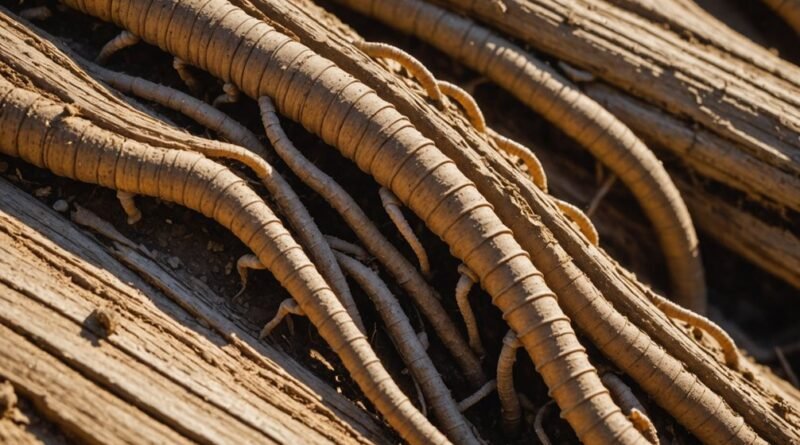
You’ll spot termite mud tubes as pencil-width tunnels made of dirt and saliva that snake across your home‘s foundation, walls, or ceilings. These intricate structures protect termites from light and predators while maintaining the humidity they need to survive. When you find these tubes, don’t disturb them — they’re valuable evidence of termite activity and travel patterns. Understanding these mud highways can help you detect and address infestations before serious termite damage occurs. Knowing the different types, their color, location, and what they signal about your colony helps you act early and choose the right termite control response.
Key Takeaways
- Mud tubes are pencil-width tunnels made of soil, wood fragments, and termite saliva that appear on foundations, walls, and ceilings.
- These protective structures maintain high humidity and shield termites from light while they travel between their colony and food sources.
- Four main types exist: exploratory tubes for scouting, working tubes for feeding, drop tubes for vertical paths, and swarming tubes for reproduction.
- Mud tubes can extend up to 200 feet from the nest and indicate active termite infestations requiring professional pest control intervention.
- The tubes’ intricate engineering features soil pellets and protective layers, creating structures stronger than some man-made concrete materials.
- Early detection of termite tunnels in basements, crawlspaces, beams, and joists can prevent extensive termite damage before extermination becomes a large-scale effort.
Understanding the Basic Structure of Termite Mud Tubes

While termite mud tubes may appear simple at first glance, they’re remarkably complex structures engineered from soil particles, wood fragments, and termite saliva. These pencil-sized tunnels feature an intricate inner scaffolding of dense soil pellets, carefully wrapped with layers of nest cement or feces. You’ll find these tubes are built with precise layering, similar to plaster, where termites create varying densities and hardness levels to optimize protection and moisture control.
The worker termites primarily construct and maintain these protective pathways between their colonies and food sources. The termites shape individual soil pellets with their mandibles before strategically placing them. What’s most impressive is their strength — these structures can actually exceed some man-made concrete in elasticity, with microscale measurements showing a Young’s modulus of up to 45 GPa. The color of mud tubes is typically brown to dark brown, reflecting the soil and wood particles used in construction — though color can vary based on local soil type and the wood sources the termites have been consuming.
Different Types of Mud Tubes and Their Roles

When you inspect a termite infestation, you’ll typically encounter five distinct types of mud tubes, each serving a specific purpose in the colony‘s survival. Understanding what each type signals helps with detection and informs your termite control strategy.
- Exploratory tubes: Thin and fragile, used by workers to scout new food sources. Often found extending from the ground into unexplored areas of your house. These are the earliest signs of a termite presence.
- Working tubes: The most common type, connecting the colony to their food while providing essential protection from predators like ants and wasps. You’ll find these running along foundations, up walls, and across joists and structural beams.
- Drop tubes: Create efficient pathways from above-ground food sources back to the colony. They hang downward from wood structures or beams, sometimes resembling stalagmites hanging from ceilings.
- Swarm castles (swarming tubes): Also called swarm tubes, these support reproductive termite activity. They’re wider than working tubes and may contain swarmers preparing to exit and establish new colonies. You may find discarded wings nearby after a swarm.
- Utility tubes: Function similarly to working tubes but specifically connect soil to structures, often found where wood meets concrete or masonry.
Each tube type is crafted from a mixture of soil, wood particles, saliva, and fecal matter, typically appearing as pencil-thick soil cylinders on walls and foundations. The moisture within tubes helps sustain the termite colony by preventing dehydration. These protective pathways are primarily built by subterranean termites — the most destructive termite species in the United States — enabling safe travel and resource gathering across cellulose-rich wood structures.
Early Warning Signs: Spotting Mud Tubes in Your Home

Spotting termite mud tubes early can mean the difference between minor repairs and catastrophic structural damage. You’ll want to look for pencil-width dirt trails along your foundation, walls, and ceilings. These tubes, made from soil, wood particles, and termite saliva, connect the ground to wooden structures.
Key locations to inspect for termite tunnels and mud tubes:
- Basements and crawlspaces — particularly along foundation walls, floor joists, and subfloors
- Beams, rim joists, and structural wood — subterranean termites travel up from the ground to reach wood
- Baseboards, window frames, and door frames — where wood meets drywall or masonry
- Porches, deck supports, and exterior wood — outdoor termite tunnels are common entry points into the house
- Carpet and floor edges — termites occasionally build tubes under carpet along subfloors
- Around exit holes in wood surfaces — small, pin-sized exit holes with adjacent mud packing indicate active termite activity
- Utility penetrations and cracks in foundations — subterranean termites exploit any gap to travel between soil and wood
Watch for “BB-sized” mud spots on surfaces, as these can indicate termite activity. When inspecting wood surfaces, tap them gently — hollow sounds might reveal hidden tunnels. Testing active tubes involves breaking a small section — if termites are present, they will repair damaged tubes within days, confirming an active infestation. If you discover mud tubes, don’t disturb them. Instead, call a pest control professional immediately for a proper termite inspection.
How Termites Use Mud Tubes for Survival
Deep within their carefully engineered mud tubes, termites create a remarkable survival system that serves multiple essential functions. These tubes act as protective fortresses, shielding termites from deadly light exposure while maintaining nearly 100% humidity to prevent their thin bodies from drying out.
Termite tubes create vital shelters that block lethal light and lock in life-sustaining moisture — climate-controlled air corridors that let colonies travel safely across hundreds of feet.
You’ll find these tubes serve as defensive barriers against numerous predators like ants, birds, spiders, and wasps. They’re fundamentally termite highways, allowing safe travel between nests and food sources up to 200 feet away. Built from soil, saliva, and excrement, these structures can start small but develop into complex networks over time. The initial construction of these protective pathways can be completed in just a few days.
Think of mud tubes as sophisticated climate-controlled tunnels — they regulate temperature, block harmful UV rays, and create the perfect microenvironment these moisture-dependent insects need to thrive and expand their colonies. The air inside active mud tubes is kept humid and warm, providing cellulose-consuming worker termites with the ideal conditions to forage continuously without exposure to the air outside.
Prevention and Control: Dealing With Mud Tube Discoveries
Three key steps form the foundation of effective termite control when you discover mud tubes on your property.
First, don’t disturb the tubes immediately — they’re valuable indicators for pest control professionals to assess the infestation‘s extent during a professional termite inspection. Second, implement moisture control by fixing leaks, improving ventilation, and ensuring proper drainage around your foundation. Third, contact a licensed pest control service to develop a detailed treatment plan.
While waiting for professional help, conduct a thorough inspection of your property. Consider installing metal termite shields on foundation walls and piers as an additional preventive measure. Look for additional signs like termite damage to wood, small holes in walls, or termite droppings that resemble sawdust. Document these findings to help your pest control provider determine the most effective treatment strategy.
Common treatment approaches following mud tube detection include:
- Liquid termiticide barriers: Chemicals applied to the soil around and under your foundation create a treated zone that kills subterranean termites as they travel through it — effective for up to 5–10 years
- Bait systems: Installed around the perimeter of your house, bait stations exploit the foraging behavior of worker termites to spread slow-acting toxicants throughout the entire colony
- Extermination via fumigation: For severe infestations where termite tunnels have spread through extensive structural wood, full-structure fumigation may be required — especially if drywood termites are also present
- Wood treatments: Borate applications to exposed beams, joists, and subfloors provide residual protection against future termite activity
Conclusion
If you’ve spotted mud tubes in or around your home, don’t ignore them. These telltale signs of termite activity require immediate attention to prevent extensive termite damage to your property. Take action by contacting a pest control professional for a thorough termite inspection. While you can remove visible tubes, only proper treatment — using targeted chemicals, bait, or extermination depending on the severity — will eliminate the underlying termite colony and protect your home‘s structural integrity. Early detection of termite tunnels in basements, around foundations, and along structural beams and joists is always less costly than addressing the termite damage that follows an untreated infestation.