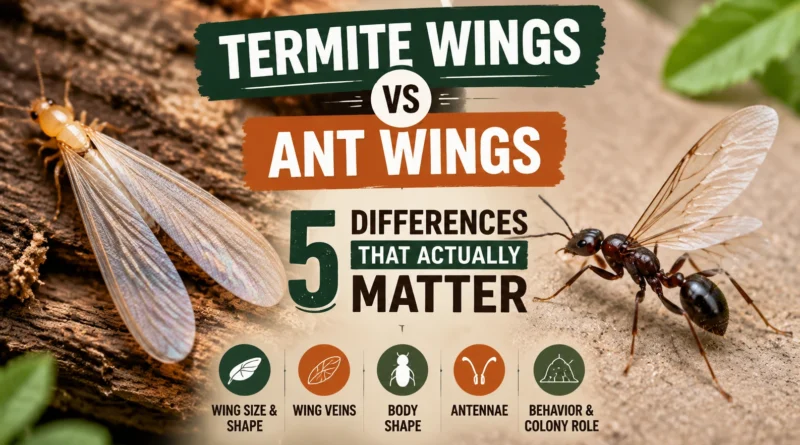
Termite Wings vs Ant Wings: 5 Differences That Actually Matter
<!– TITLE OPTIONS (shorter and eye-catching): 1. Termite Wings vs Ant Wings: 5 Differences That Actually Matter 2. Termite or Flying Ant? How to Tell the Difference Before It's Too Late 3. Found Tiny Wings Indoors? Here Is How to Know If You Have Termites 4. Winged Termites vs Flying Ants: What Every Homeowner Must Know 5. Termite Wings vs Ant Wings: Stop Misidentifying These Costly Pests –>
Most homeowners who spot small wings indoors assume they are dealing with flying ants. That mistake can cost thousands. Termite wings and ant wings look almost identical to the untrained eye, but the differences between them reveal whether you have a harmless nuisance or an active termite infestation quietly destroying your home’s structure. Knowing exactly what to look for gives you a critical head start.
Why Getting This Identification Right Matters
When winged insects appear inside your house, it is almost always a sign that a colony is nearby and maturing. For termites, this event is called a swarm. Reproductive termites, known as swarmers, emerge from an established colony to mate and start new ones. Finding their shed wings near windowsills, door frames, or light fixtures is one of the most overlooked early signs of termite infestation that homeowners miss entirely.
Flying ants also swarm, and they also shed their wings. This is precisely why so many people misidentify the two insects and delay treatment. By the time the error is corrected, a termite colony may have already caused significant structural damage.
The 5 Key Differences Between Termite Wings and Ant Wings
1. Wing Size and Shape
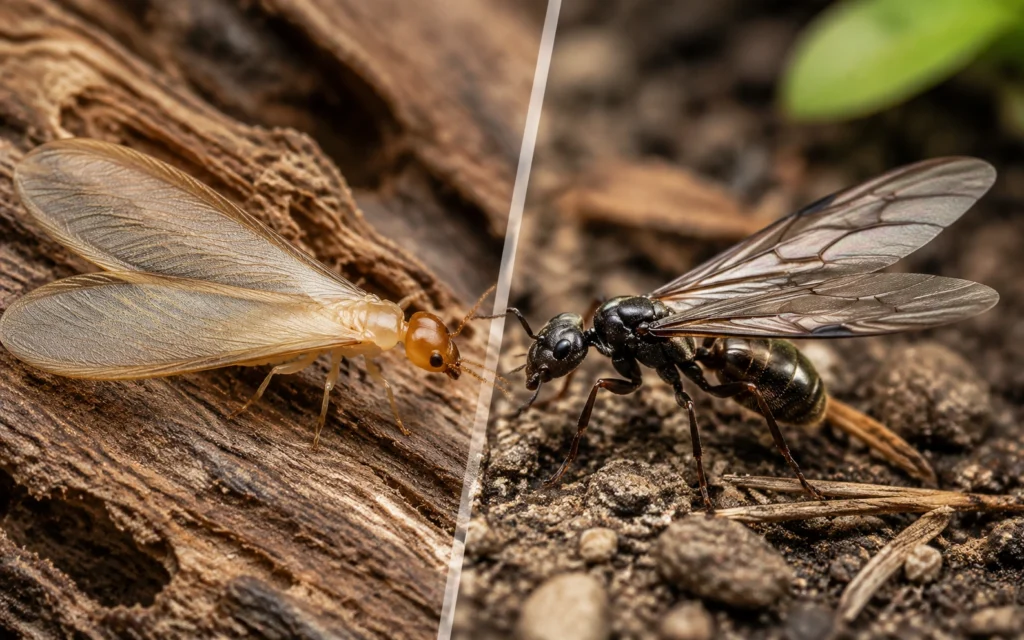
This is the single most reliable visual clue. Termite wings are all the same length. Both the front pair and the rear pair are equal in size, long, and extend well beyond the body. Ant wings are unequal. The front pair is noticeably larger than the rear pair. If the shed wings you find are uniform in size, you are almost certainly looking at termite swarmers rather than flying ants. According to University of Kentucky Entomology, this equal wing length is one of the most definitive identifiers in the field.
2. Body Shape and Waist
Look at the waist of the insect if you can find an intact specimen alongside the wings. Termites have a thick, straight waist with no visible pinch between the thorax and abdomen. Their bodies appear almost rectangular. Ants have a distinctly pinched, narrow waist that gives them the classic hourglass silhouette. This waist difference remains visible even in small specimens and is an excellent secondary check once you have assessed the wings. Understanding how different termite species look is covered in our full termite identification guide.
3. Antennae Shape
The antennae offer another clear point of separation. Termites have straight, beaded antennae that look like a tiny string of uniform dots. Ant antennae are elbowed, meaning they have a sharp bend midway, similar to a bent arm. Even under a basic magnifying glass, this distinction is easy to confirm. If the antennae appear straight and even, termites are the more likely culprit.
4. Wing Texture and Vein Pattern
Termite wings have a milky or smoky appearance. They are relatively uniform in texture and carry only a few simple veins. Ant wings are clearer and more translucent, with a more complex network of visible veins running through them. When you find a pile of shed wings, checking the texture under light can help confirm your suspicion. Termite wings also detach very easily at a weak point near the base, which is why you often find large quantities of loose wings without any insect bodies nearby.
5. Wing Shedding Behavior
Both termites and ants shed their wings after swarming, but termites shed them almost immediately after landing. This means you will frequently find large quantities of detached wings in one concentrated area, often near a single light source or window. With ants, shedding tends to be more scattered. A concentrated pile of equal-length wings near a window is one of the strongest indicators of a termite swarm and should be treated as an urgent warning.
What to Do When You Find Wings Inside Your Home
Do not vacuum the wings and move on. Collect a few samples in a small bag or take a clear photograph and contact a licensed pest control professional for a proper assessment. A swarm inside your house almost always means the colony is already within or immediately adjacent to your structure. Waiting even a few weeks can allow additional damage to occur.
While you wait for your inspection, look for additional signs of termites in walls, floors, and ceilings such as hollow sounding wood, bubbling paint, mud tubes near the foundation, or small frass pellets beneath wooden surfaces. The more evidence you document before the inspection, the easier it is for the technician to locate the colony and assess the damage accurately.
Why Termite Swarmers Appear Indoors
Termite swarmers are not seeking to damage your home directly. They are reproductive members of the colony following light sources as they search for a mate and a new nesting site. However, their presence indoors is definitive proof that a mature termite colony exists somewhere nearby, most likely within your walls, beneath your floors, or in your foundation. Subterranean termites are the most common species to swarm indoors in the United States, particularly in spring and early summer following rain.
Next Steps: Treatment and Prevention
Once you have confirmed termite wings rather than ant wings, the priority shifts to treatment and containment. A professional will assess the extent of the infestation and recommend the right approach. Your full termite treatment options range from liquid barrier applications and bait station systems to localized spot treatments depending on the species and severity.
After treatment, long-term protection depends on consistent prevention. Removing moisture sources, keeping wood away from soil contact, sealing foundation cracks, and scheduling annual inspections are among the most effective steps covered in our termite prevention tips.
Conclusion
The difference between termite wings and ant wings comes down to five things: equal wing length, straight body shape, beaded antennae, milky wing texture, and concentrated shedding behavior. Any one of these clues can point you in the right direction. Together, they give a near-certain identification without specialist tools. If the evidence points to termites, act immediately. A swarm is not a random event. It is a signal that a colony is already established and growing inside or around your property.
{
“@context”: “https://schema.org”,
“@type”: “Article”,
“headline”: “Termite Wings vs Ant Wings: Key Differences Homeowners Miss”,
“description”: “Learn how to tell termite wings from ant wings using 5 key differences every homeowner should spot before calling pest control.”,
“author”: {
“@type”: “Organization”,
“name”: “Termite Control Care”
},
“publisher”: {
“@type”: “Organization”,
“name”: “Termite Control Care”,
“url”: “https://termitecontrolcare.com”
},
“mainEntityOfPage”: {
“@type”: “WebPage”,
“@id”: “https://termitecontrolcare.com/termite-wings-vs-ant-wings-key-differences/”
}
}
{
“@context”: “https://schema.org”,
“@type”: “FAQPage”,
“mainEntity”: [
{
“@type”: “Question”,
“name”: “How do you tell termite wings from ant wings?”,
“acceptedAnswer”: {
“@type”: “Answer”,
“text”: “Termite wings are all the same length with a milky texture and detach easily near the base. Ant wings are unequal in size with the front pair larger than the rear. Termites also have straight beaded antennae and a thick straight waist, while ants have elbowed antennae and a pinched waist.”
}
},
{
“@type”: “Question”,
“name”: “What does it mean when you find termite wings indoors?”,
“acceptedAnswer”: {
“@type”: “Answer”,
“text”: “Finding termite wings indoors, especially in concentrated piles near windows or light sources, is a strong indicator that a termite swarm has occurred inside or near your home. It means a mature colony is already established close to or within your structure and professional inspection is urgently needed.”
}
},
{
“@type”: “Question”,
“name”: “Do termite swarmers cause damage?”,
“acceptedAnswer”: {
“@type”: “Answer”,
“text”: “Swarmers themselves do not cause structural damage. They are reproductive termites looking to mate and start new colonies. However, their presence indoors signals that an existing colony, which is causing damage, is already nearby.”
}
},
{
“@type”: “Question”,
“name”: “When do termites swarm?”,
“acceptedAnswer”: {
“@type”: “Answer”,
“text”: “Most subterranean termites swarm in spring and early summer, often after rain and warm temperatures. Drywood termites may swarm in late summer or fall. Swarms typically last 30 to 40 minutes and occur during daylight hours near light sources.”
}
}
]
}