Subterranean Vs Drywood Termites: How to Tell the Difference
{
“@context”: “https://schema.org”,
“@type”: “FAQPage”,
“mainEntity”: [
{
“@type”: “Question”,
“name”: “What is the main difference between subterranean and drywood termites?”,
“acceptedAnswer”: {
“@type”: “Answer”,
“text”: “The main difference is habitat and moisture requirements. Subterranean termites live underground in soil-based colonies of up to 400,000 members and require constant moisture and ground contact to survive. They build mud tubes to travel between their nests and wood food sources. Drywood termites live entirely within the wood they infest, require no soil contact, extract moisture from the wood itself, and form smaller colonies of roughly 8,500 members per nest. Each species requires a completely different treatment approach.”
}
},
{
“@type”: “Question”,
“name”: “How can I identify subterranean termites?”,
“acceptedAnswer”: {
“@type”: “Answer”,
“text”: “Subterranean termites are identified by their small size (1/8 to 3/8 inch), soft cream-to-black bodies, and the distinctive pencil-thin mud tubes they build along foundation walls, floor joists, and crawl space beams. Soldier subterranean termites have large, rectangular yellowish-brown heads with prominent mandibles. Signs of infestation include mud tubes, damp and soil-filled wood galleries running with the grain, bubbling paint near the foundation, and swarmer wings discarded near ground-level entry points in spring.”
}
},
{
“@type”: “Question”,
“name”: “How can I identify drywood termites?”,
“acceptedAnswer”: {
“@type”: “Answer”,
“text”: “Drywood termites are larger than subterranean species (3/8 to 1 inch), have harder exoskeletons, and range from pale to dark brown in color. The clearest identification sign is their frass: tiny, uniform, six-sided oval pellets that accumulate beneath small exit holes in wood surfaces. Unlike subterranean termites, drywood termites create clean-cut galleries that run across the wood grain, leave no mud tubes, and infest wood above ground including attics, furniture, door frames, and window frames.”
}
},
{
“@type”: “Question”,
“name”: “Which type of termite causes more damage?”,
“acceptedAnswer”: {
“@type”: “Answer”,
“text”: “Subterranean termites cause significantly more damage overall. They are responsible for approximately 73.4% of all termite-related structural damage in the United States, and annual repair costs exceed $1.9 billion nationwide. Their massive colonies of hundreds of thousands of worker termites consume wood rapidly once a colony establishes near a structure. Drywood termite damage is slower and more localized due to smaller colony sizes, but multiple simultaneous infestations in different parts of a home can cause substantial cumulative damage over time.”
}
},
{
“@type”: “Question”,
“name”: “What treatment is used for subterranean termites vs drywood termites?”,
“acceptedAnswer”: {
“@type”: “Answer”,
“text”: “Subterranean termites are treated with liquid termiticide soil barriers applied around and beneath the foundation, which kill or repel termites attempting to travel from their underground nests to wood. Bait station programs are also highly effective at eliminating entire colonies over weeks to months. Drywood termites are treated with localized borate wood treatments or orange oil injected directly into galleries for smaller infestations, and whole-structure tent fumigation with sulfuryl fluoride for widespread infestations. The wrong treatment for the wrong species will not eliminate the problem.”
}
},
{
“@type”: “Question”,
“name”: “Can subterranean and drywood termites infest the same house at the same time?”,
“acceptedAnswer”: {
“@type”: “Answer”,
“text”: “Yes. Both species can be active in the same structure simultaneously, particularly in warm coastal states like Florida and California where both species thrive. Subterranean termites typically attack from the ground up through foundations and crawl spaces, while drywood termites infest from the top down through roof vents, windows, and exterior wood above ground. A professional inspection is necessary to confirm which species are present and develop a treatment plan that addresses both.”
}
}
]
}
Subterranean vs Drywood Termites: Key Differences, Signs, and Treatment
Subterranean and drywood termites are the two species responsible for the vast majority of residential termite damage in the United States. Subterranean termites live underground in massive colonies of up to 400,000 members, require constant soil contact and moisture, and cause approximately 73.4% of all termite-related structural damage nationwide. Drywood termites live entirely within the wood they consume, require no ground contact, and form smaller colonies of roughly 8,500 insects per nest, infesting attics, furniture, and structural wood above ground.
Identifying which species you are dealing with is essential because the treatment approaches, inspection methods, and prevention strategies are completely different for each. This guide covers how to tell the two species apart by appearance, nesting habits, damage patterns, and signs of infestation, along with a comparison of their life cycles and the most effective treatment options for each.
Key Takeaways
- Drywood termites (3/8 to 1 inch) are noticeably larger than subterranean termites (1/8 to 3/8 inch) and have harder exoskeletons.
- Subterranean termites build distinctive mud tubes for travel; drywood termites leave behind frass pellets near infested wood and create no mud tubes.
- Drywood termites create dry, clean-cut galleries across the wood grain; subterranean termite damage appears damp and follows the grain near ground level.
- Subterranean termites require soil contact and high moisture; drywood termites live entirely within wooden structures and extract moisture from the cellulose they consume.
- Subterranean termites cause around 73.4% of U.S. structural termite damage and cost over $1.9 billion in annual repairs; drywood infestations are slower but affect approximately 19.7% of coastal homes each year.
Identifying Subterranean Termites
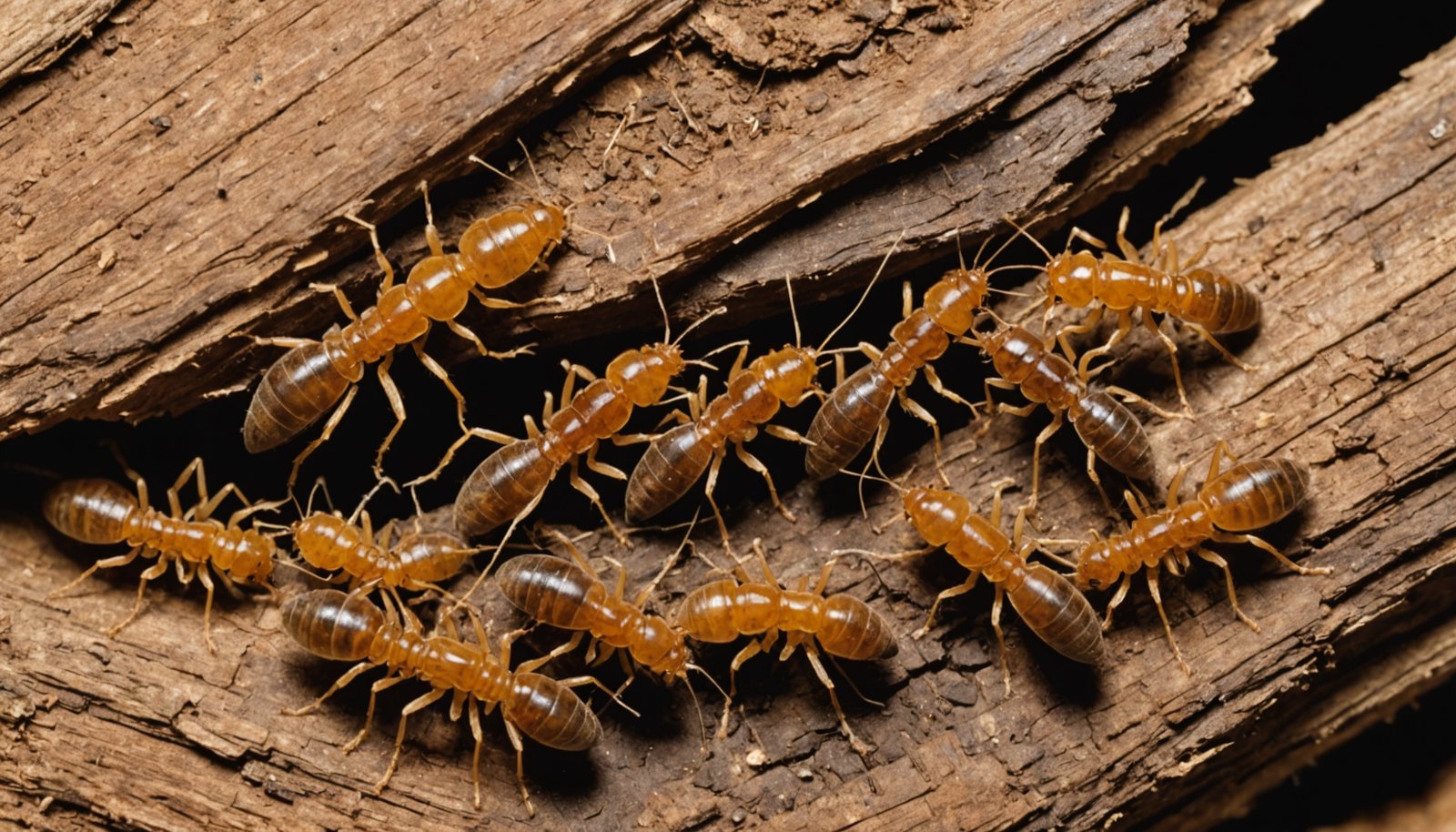
Subterranean termites are the most destructive termite species in the United States and are found in every state except Alaska. Understanding their physical appearance and behavioral habits is the first step toward accurate identification and effective control.
Physical Appearance
Worker subterranean termites are small, measuring 1/8 to 3/8 inch in length, with soft, cream-colored bodies and no wings. Their small size and pale coloring allow them to be mistaken for ant larvae or small beetles when encountered in wood. Soldier termites of this species are easily identified by their large, rectangular yellowish-brown heads and prominent mandibles, which they use to defend the colony against predators including ants. Reproductive alates (swarmers) are darker, ranging from brown to black, with two pairs of equal-length translucent wings that they retain during their nuptial flights before shedding. Subterranean swarmer wings are longer than their bodies and extend noticeably beyond the abdomen.
Nesting Habits and Habitat
Subterranean termites build their primary nests underground in the soil, where they maintain contact with moisture through the earth and construct extensive tunnel networks that can extend hundreds of feet from the main colony. Their nesting habits are defined by the need for continuous moisture; without regular contact with damp soil, worker termites desiccate and die within days. To reach the wood they feed on above ground, they construct the mud tubes that are their most recognizable signature: pencil-width tunnels built from soil, saliva, feces, and wood particles that run along foundation walls, floor joists, crawl space beams, and any surface connecting soil to structure.
The average subterranean termite colony contains approximately 400,000 workers, though mature colonies in warm, humid climates can reach one to two million members. These colony sizes explain why subterranean termites cause damage so much faster than drywood species and why annual repair costs from their infestations exceed $1.9 billion across the United States.
Identifying Drywood Termites
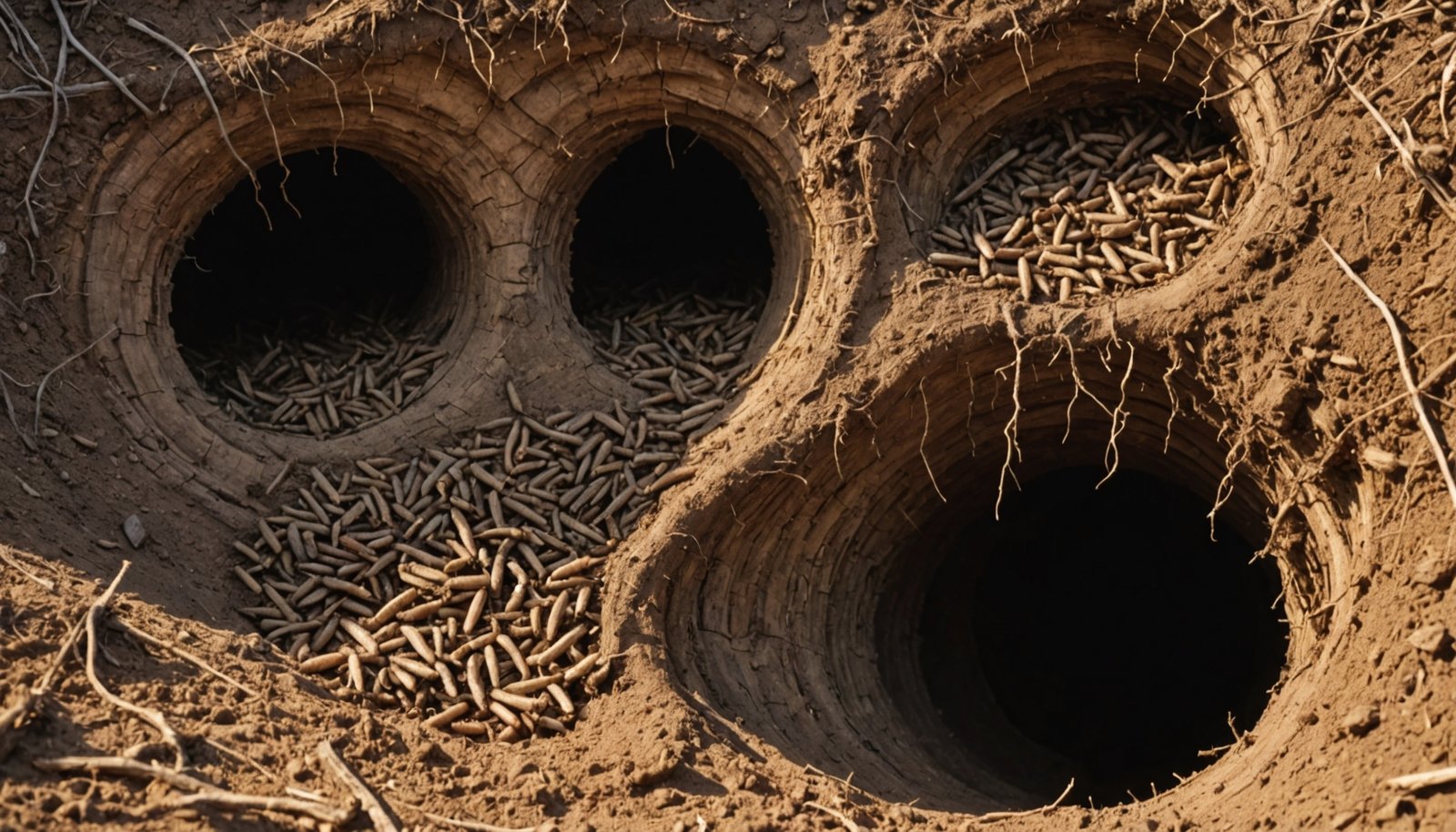
Drywood termites are responsible for approximately 19.7% of termite infestations in coastal regions annually and are the species most commonly found in furniture, attics, and structural wood above ground. They are fundamentally different from subterranean termites in nearly every aspect of their biology, nesting habits, and the evidence they leave behind.
Physical Appearance
Drywood termites are larger than subterranean species, measuring 3/8 to 1 inch in length, with harder exoskeletons and a more robust body shape. Their color ranges from pale cream to dark brown depending on caste and age. Worker drywood termites are cream to pale brown with round heads. Soldier drywood termites have large heads with curved mandibles that project forward, which distinguishes them from subterranean soldiers at a glance. Reproductive alates are darker in color and, unlike subterranean swarmers, drop their wings very shortly after landing, so you will find equal-length discarded wings in small piles near infestation sites rather than on the insects themselves.
Nesting Habits and Habitat
Drywood termites establish their colonies entirely within the wood they infest. They do not need soil contact and extract all the moisture they require from the cellulose in the wood itself, which is why they can survive in dry, elevated locations that subterranean termites cannot reach. A single piece of furniture, a window frame, a roof rafter, or a structural beam can contain a complete, self-sufficient drywood termite colony.
Drywood termite colonies are much smaller than subterranean colonies, typically consisting of roughly 8,500 members per nest. However, a single home can harbor multiple independent infestations simultaneously in different wooden structures, which means the cumulative damage from several small colonies can become significant over years without detection. Drywood termites are most prevalent in warm coastal regions including southern California, Florida, Hawaii, and Gulf Coast states, though they can be transported into any region through infested furniture and wood products.
Colony Structure and Life Cycle
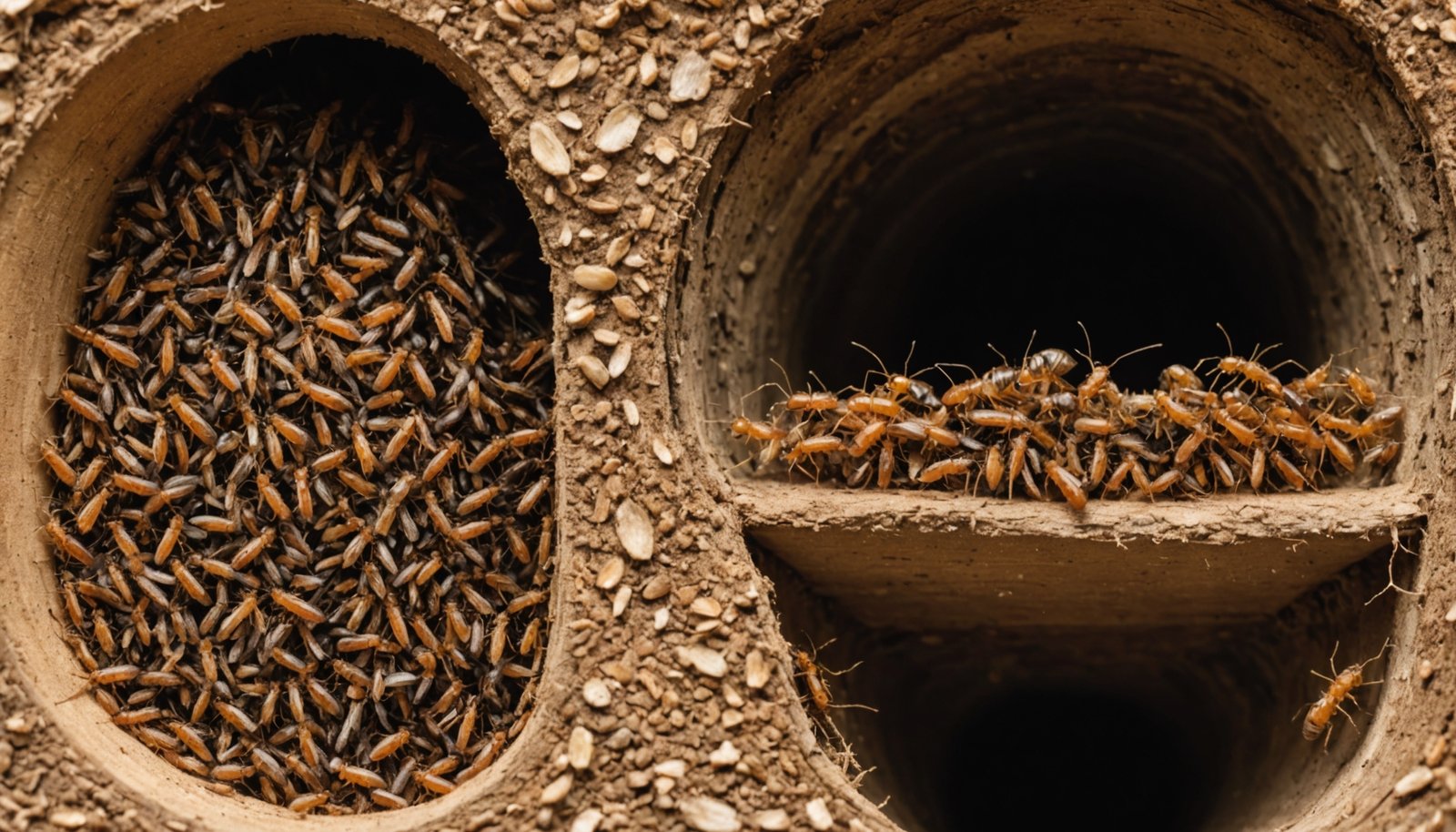
Both termite species maintain a caste-based social structure, but their colony sizes, queen productivity, and lifecycle timelines differ in ways that directly affect how quickly an infestation causes structural damage.
Subterranean Termite Colony and Life Cycle
A subterranean termite colony is founded by a king and queen pair after a swarming event. The queen begins laying eggs within days of establishing a new nest, and a mature queen can produce thousands of eggs per day. The colony grows through three primary castes: workers who forage for food and feed the colony; soldiers with enlarged mandibles who defend against threats; and reproductives including the primary queen, secondary queens, and alates who eventually swarm to start new colonies.
Subterranean termite swarms typically occur in spring, triggered by warm temperatures and rainfall. Alates fly in large numbers, shed their wings, pair off, and seek moist soil to start new colonies. New colonies grow slowly for the first two to three years, with visible structural damage typically not appearing until a colony has been established for several years and worker populations number in the tens of thousands.
Drywood Termite Colony and Life Cycle
Drywood termite colonies are founded when a reproductive pair enters a crack or crevice in wood, seals the entry point, and begins the colony entirely within that piece of wood. The queen lays far fewer eggs than a subterranean queen, and colony growth is gradual. It can take three to five years for a drywood colony to reach maturity and begin producing alates for new swarms.
Drywood termite swarms occur in late summer through early fall in most regions, when winged alates emerge from small holes in infested wood and fly toward light sources including windows and exterior lights. Unlike subterranean swarmers who retain their wings during flight, drywood alates shed their wings almost immediately after landing. The presence of small, equal-length wing piles near windows, on floors, or on furniture is one of the most reliable early signs of a drywood termite infestation establishing nearby.
Life Cycle and Colony Comparison
| Characteristic | Subterranean Termites | Drywood Termites |
|---|---|---|
| Typical colony size | 60,000 to 400,000+ workers | 2,000 to 8,500 members |
| Swarming season | Spring (March to May) | Late summer to fall |
| Wing behavior | Retained during nuptial flight | Shed immediately after landing |
| Time to visible damage | 3 to 5 years from establishment | 3 to 8 years from establishment |
| Moisture requirement | Requires constant soil moisture | Extracts moisture from cellulose |
Identifying Signs of Infestation
Correctly identifying whether you have a subterranean or drywood termite infestation determines which inspections to prioritize and which treatment approach will be effective. The signs each species leaves are distinct enough to identify with a careful visual inspection.
Frass vs. Mud Tubes
The single most reliable way to distinguish between the two species is the type of evidence they leave at or near infested wood. Drywood termites push their frass (fecal pellets) out of small exit holes in wood surfaces, creating neat piles of uniform, oval, six-sided pellets beneath the holes. These pellets are approximately 1 millimeter long, hard, and gritty, and range in color from tan to dark brown depending on the wood species being consumed. Each pile looks remarkably like coarse sawdust but feels hard and pellet-shaped rather than powdery. For a detailed look at identifying these pellets and distinguishing them from other insect debris, see our guide on what termite droppings look like.
Subterranean termites produce no loose frass pellets. Their waste is mixed with soil and saliva and used as construction material for the mud tubes that are the defining evidence of their presence. These tubes are pencil-width channels that run along foundation walls, crawl space beams, floor joists, and any surface connecting soil to structural wood. They protect the termites from desiccation and predators during their commute between underground nests and above-ground food sources.
Damage Pattern Recognition
Damage patterns inside wood also differ clearly between the two species:
- Drywood termite galleries: Run across and against the wood grain in erratic patterns, creating smooth-walled chambers connected by tunnels. The galleries are clean and dry with no soil contamination. Infested wood sounds hollow when tapped and may show discarded wings near small round exit holes.
- Subterranean termite galleries: Follow the softer springwood grain and are packed with a mixture of soil, mud, and feces. Damaged wood appears damp and darkened, and the feeding is most severe at or near ground level. Infested wood often has a layered, honeycombed appearance when broken open, with alternating consumed and intact sections.
- Both species: Cause hollow-sounding wood, bubbling or peeling paint, and sticking doors and windows as structural wood weakens and shifts.
Infestation Location Differences
Where you find evidence of termite activity provides strong clues about which species is responsible. Subterranean termites are almost always found at or near ground level, with mud tubes running from the soil line up foundation walls, across concrete surfaces, and into floor framing. Infestations are concentrated near moisture sources including plumbing penetrations, leaking pipes, damp crawl spaces, and areas where soil contacts wood directly.
Drywood termites infest wood above ground without any connection to the soil. Common infestation locations include attic framing and roof rafters, wooden furniture especially antiques and hardwood pieces, window frames and door frames, hardwood floors, and any exterior wood including fascia boards and siding. Evidence appears as frass piles on floors, windowsills, and furniture surfaces, along with tiny round exit holes in the wood above.
Geographic Distribution and Climate Preferences
Both termite species are found across the United States, but their geographic distribution reflects their different habitat and moisture requirements.
Subterranean termites are present in every state except Alaska and are particularly destructive in the Southeast, Gulf Coast, mid-Atlantic, and Pacific Coast states where warm temperatures and high soil moisture support large colonies year-round. In states like Florida and Texas, subterranean termites are active in every month of the year.
Drywood termites are more restricted geographically, preferring warmer coastal climates. They are most common in southern California, Florida, Hawaii, and along the Gulf Coast, though they can be transported to any region through infested furniture, building materials, and wood products. In states like Florida and California, both species can infest the same property simultaneously, which requires a treatment plan that addresses each species separately.
Treatment Methods and Control Strategies
Because subterranean and drywood termites have completely different nesting habits and biology, the treatment approach that eliminates one will not necessarily affect the other. Correctly identifying the species before treatment begins is essential.
Subterranean Termite Treatment
Subterranean termite control focuses on creating a barrier between the underground colony and the structure and on eliminating the colony through baiting. Liquid termiticide soil barriers are applied by trenching around the foundation perimeter and injecting termiticide at the required volume per linear foot. Repellent termiticides such as bifenthrin keep termites away from treated zones, while non-repellent products such as fipronil and imidacloprid allow foraging workers to pass through the treated soil, pick up a lethal dose, and carry it back to the colony. Bait station programs using insect growth regulators such as noviflumuron or chlorantraniliprole interrupt the molting cycle of worker termites, collapsing the colony over four to ten weeks of consistent feeding.
Drywood Termite Treatment
Drywood termite control targets the wood itself rather than the soil. For localized infestations, borate wood treatments penetrate raw wood and kill termites through ingestion while leaving a long-term residual barrier. Orange oil (d-limonene) can be injected directly into gallery systems for small, accessible infestations. For widespread infestations affecting multiple areas of a structure, whole-structure tent fumigation with sulfuryl fluoride is the most comprehensive solution, penetrating all wood throughout the building and eliminating every termite colony present regardless of location.
Understanding the cost implications of each treatment approach helps homeowners budget appropriately. See our guide comparing termite bonds versus warranties for guidance on what ongoing service agreements cover for each termite type and what protections they provide if treatment needs to be repeated.
Prevention and Maintenance for Both Species
Preventing both types of infestation requires addressing their different vulnerability points simultaneously. For subterranean termites, reduce moisture around the foundation through proper drainage, gutter maintenance, and crawl space ventilation; eliminate wood-to-soil contact; maintain a 6 to 8 inch gap between soil and any wooden structural element; and schedule annual inspections to check for new mud tube activity.
For drywood termites, seal all exposed wood surfaces with paint, varnish, or borate-containing preservatives; seal cracks and crevices in exterior wood, eaves, roof vents, and window frames that could serve as entry points; and inspect attics, furniture, and upper-story framing at least annually for frass piles or exit holes. In high-risk regions where both species are active, an integrated approach combining bait station monitoring for subterranean activity with annual attic and interior inspections for drywood evidence provides the most comprehensive coverage.
Conclusion
The differences between subterranean and drywood termites affect everything from where they nest and what evidence they leave to how they must be treated and prevented. Subterranean termites build massive underground colonies, travel through mud tubes, damage wood near ground level, and are treated with soil barriers and bait systems. Drywood termites live inside the wood they infest, leave frass pellets and exit holes as their primary evidence, infest wood above ground from attics to furniture, and are treated with borate products or fumigation depending on severity. Contact a licensed pest control professional immediately if you spot signs of either species, and confirm the identification before treatment begins.
Frequently Asked Questions
What is the main difference between subterranean and drywood termites?
Subterranean termites live underground in soil-based colonies of up to 400,000 members and require constant moisture and ground contact. They build mud tubes to travel between nests and wood. Drywood termites live entirely within the wood they infest, need no soil contact, extract moisture from cellulose, and form smaller colonies of roughly 8,500 members per nest.
How can I identify subterranean termites?
Look for pencil-thin mud tubes along foundation walls, crawl space beams, and floor joists. Soldier termites have large, rectangular yellowish-brown heads with prominent mandibles. Damage appears damp, runs with the wood grain, and is concentrated near ground level. Swarmers emerge in spring and retain their wings during flight.
How can I identify drywood termites?
The clearest sign is frass: tiny, uniform, six-sided oval pellets beneath small exit holes in wood surfaces. Damage is dry and clean-cut, running across the grain. No mud tubes are present. Drywood termites are larger than subterranean species and shed their equal-length wings immediately after landing, leaving small wing piles near infestation sites.
Which type causes more damage?
Subterranean termites cause significantly more damage, responsible for approximately 73.4% of all U.S. structural termite damage with annual repair costs exceeding $1.9 billion. Their massive colony sizes allow rapid consumption of wood. Drywood termite damage is slower but can be substantial when multiple colonies infest different parts of the same structure simultaneously.
What treatment is used for each species?
Subterranean termites are treated with liquid termiticide soil barriers and bait station programs targeting underground colonies. Drywood termites are treated with borate wood treatments or orange oil for localized infestations and whole-structure fumigation for widespread activity. Using the wrong treatment for the wrong species will not eliminate the problem.
Can both species infest the same house?
Yes, particularly in warm coastal states like Florida and California where both species are common. Subterranean termites attack from the ground up through foundations and crawl spaces; drywood termites infest from above through roof vents, windows, and exterior wood. A professional inspection is needed to confirm which species are present and develop a plan that addresses both.