Termite Soldiers Vs Workers: What Each Role Means for Your Home
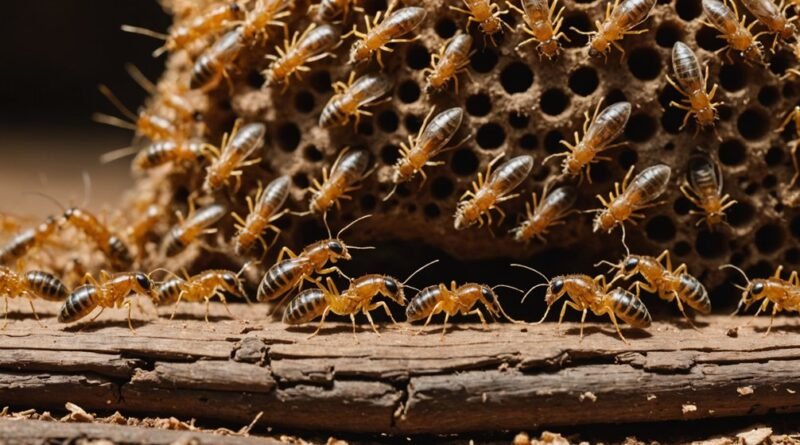
When you spot termites in your home, two castes account for nearly all activity: pale, soft-bodied workers that actively destroy wood, and darker, large-headed soldiers that defend the colony. Workers are responsible for all structural damage. Soldiers cannot even feed themselves. Understanding the physical differences, roles, and behavior of each caste helps you recognize an active infestation and explains why effective pest control needs to target the right individuals in the colony population.
Key Takeaways
- Worker termites make up roughly 82% of the colony population and cause all wood consumption and structural damage.
- Soldier termites make up around 7% of the colony and defend the nest against predators like ants and wasps, but cannot feed themselves.
- Workers are pale creamy-white with small rounded heads; soldiers are darker orange-brown with enlarged, hardened heads and powerful mandibles.
- Both castes are sterile and wingless. Neither can reproduce. Reproduction belongs to the alates and the queen.
- Spotting workers indicates active wood damage. Spotting soldiers or swarmers signals an established colony requiring immediate pest control.
Physical Differences: Termite Soldiers vs Workers
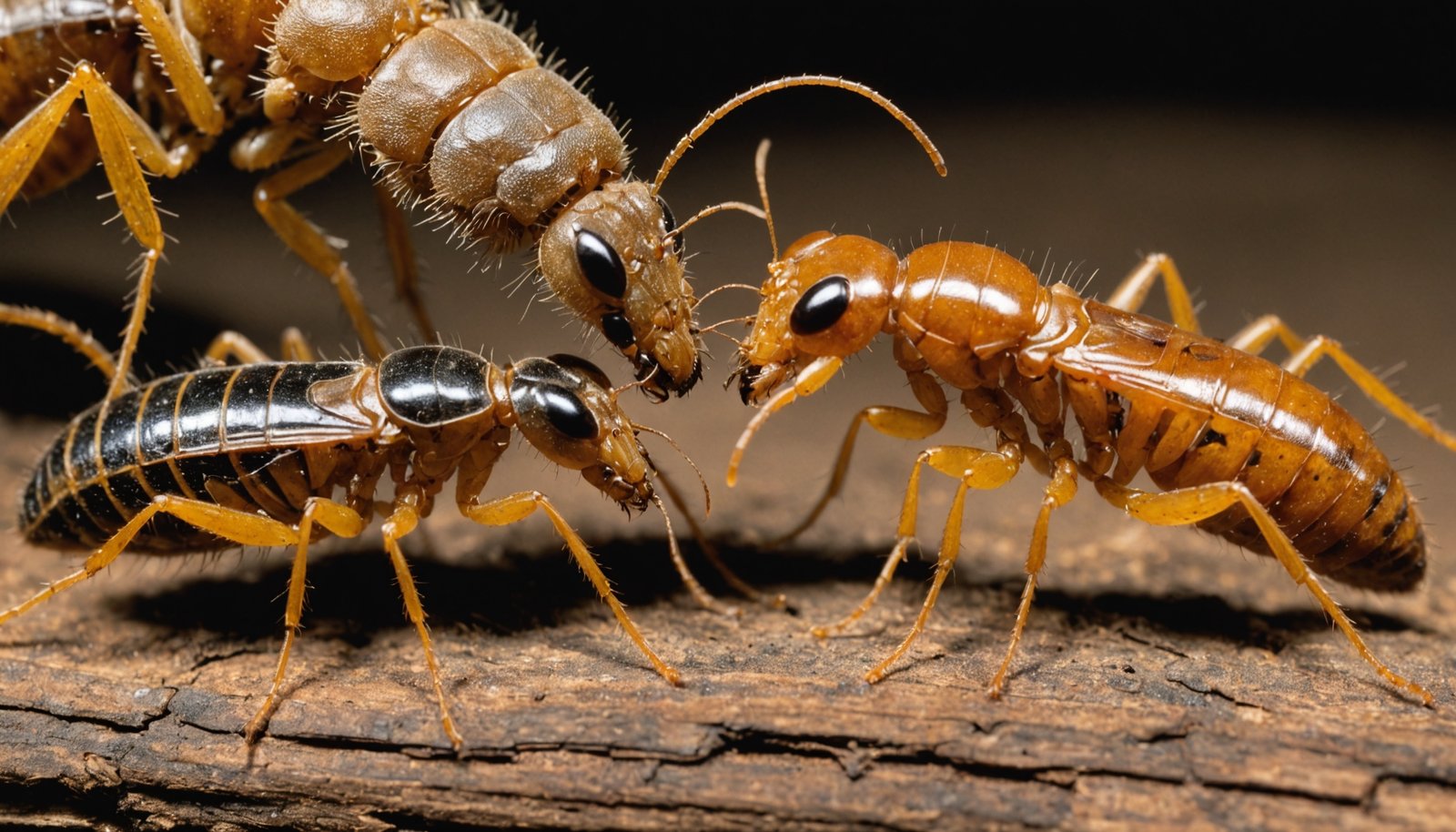
The physical differences between workers and soldiers are distinct once you know what to look for. Workers appear pale and soft, blending into the wood and tunnels they inhabit. Soldiers stand out immediately with their disproportionately large, hardened heads and oversized mandibles built for combat rather than construction.
| Feature | Worker Termites | Soldier Termites |
|---|---|---|
| Color | Pale creamy-white | Darker orange-brown |
| Head size | Small, rounded | Large, hardened |
| Mandibles/Jaws | Small, saw-toothed | Large, powerful |
| Wings | None | None |
| Can feed itself? | Yes | No |
| Primary role | Foraging, building, feeding colony | Defense against predators |
Soldiers also possess a rigid exoskeleton that provides extra protection during defensive encounters. Some species have a frontal gland and nasus used to secrete toxic or sticky substances at invaders. Both castes share basic insect features: six legs, straight antennae, and no wings. Neither caste can reproduce. The colony habitat would collapse without both working together.
Colony Roles: What Each Caste Does
Worker Termite Duties
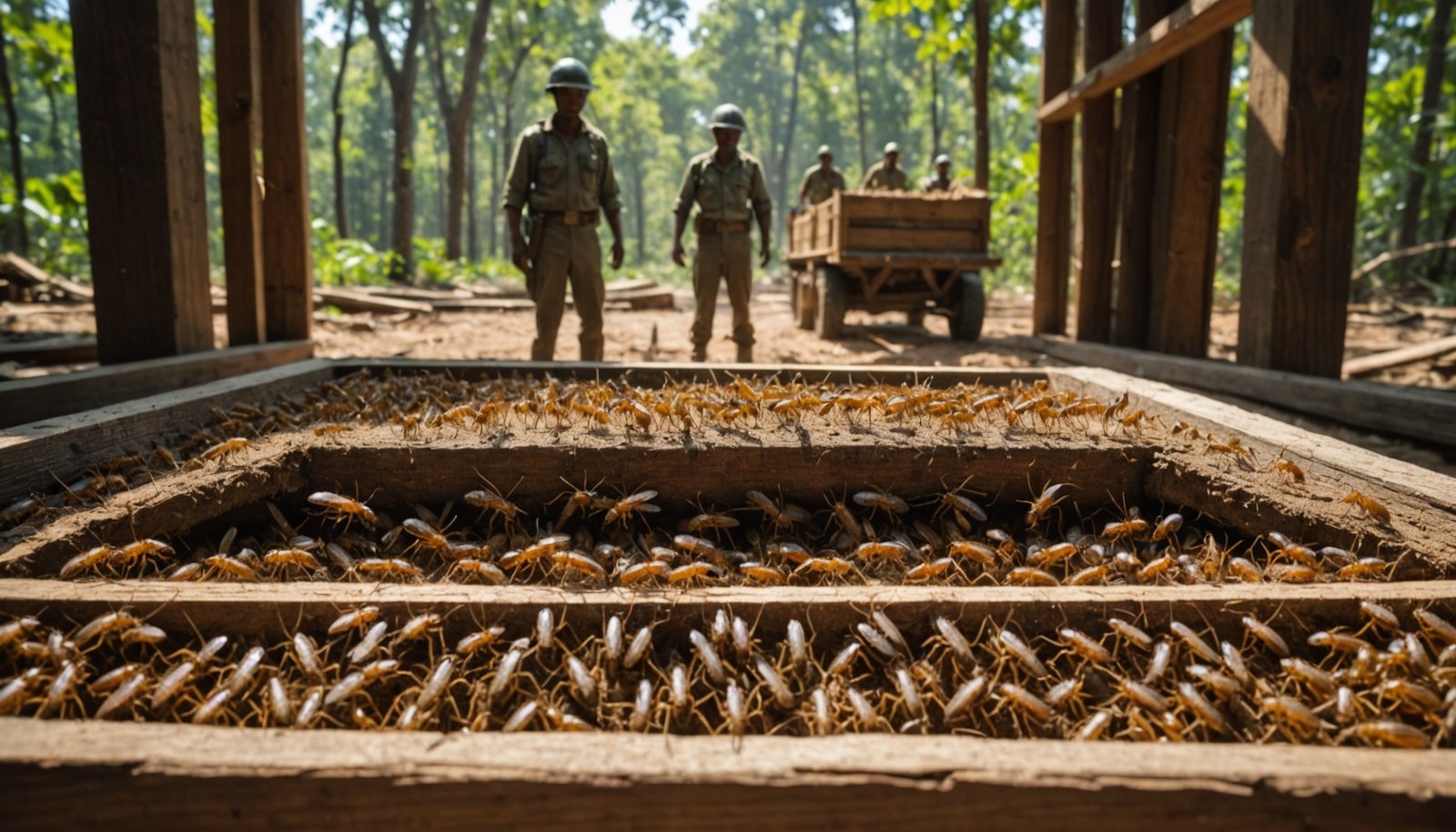
Workers are the engine of the termite colony. They forage for cellulose, consume wood, build and repair tunnels, regulate moisture and temperature inside the nest, and care for eggs, larvae, and nymphs. They are the only individuals in the colony with the gut bacteria required to digest cellulose, so they also feed all other members through trophallaxis, a mouth-to-mouth food-sharing process.
The damage workers cause accumulates fast. A single colony of 60,000 workers can consume a foot-long section of lumber within five months. They travel up to 300 feet from the ground-level nest to reach food sources, following chemical trails left by other workers. Workers remain hidden inside tunnels and wood almost entirely, which is why infestations often go undetected until structural damage is severe. Their behavior is the direct cause of the billions of dollars in property damage termites cause annually across the United States.
Soldier Termite Defense
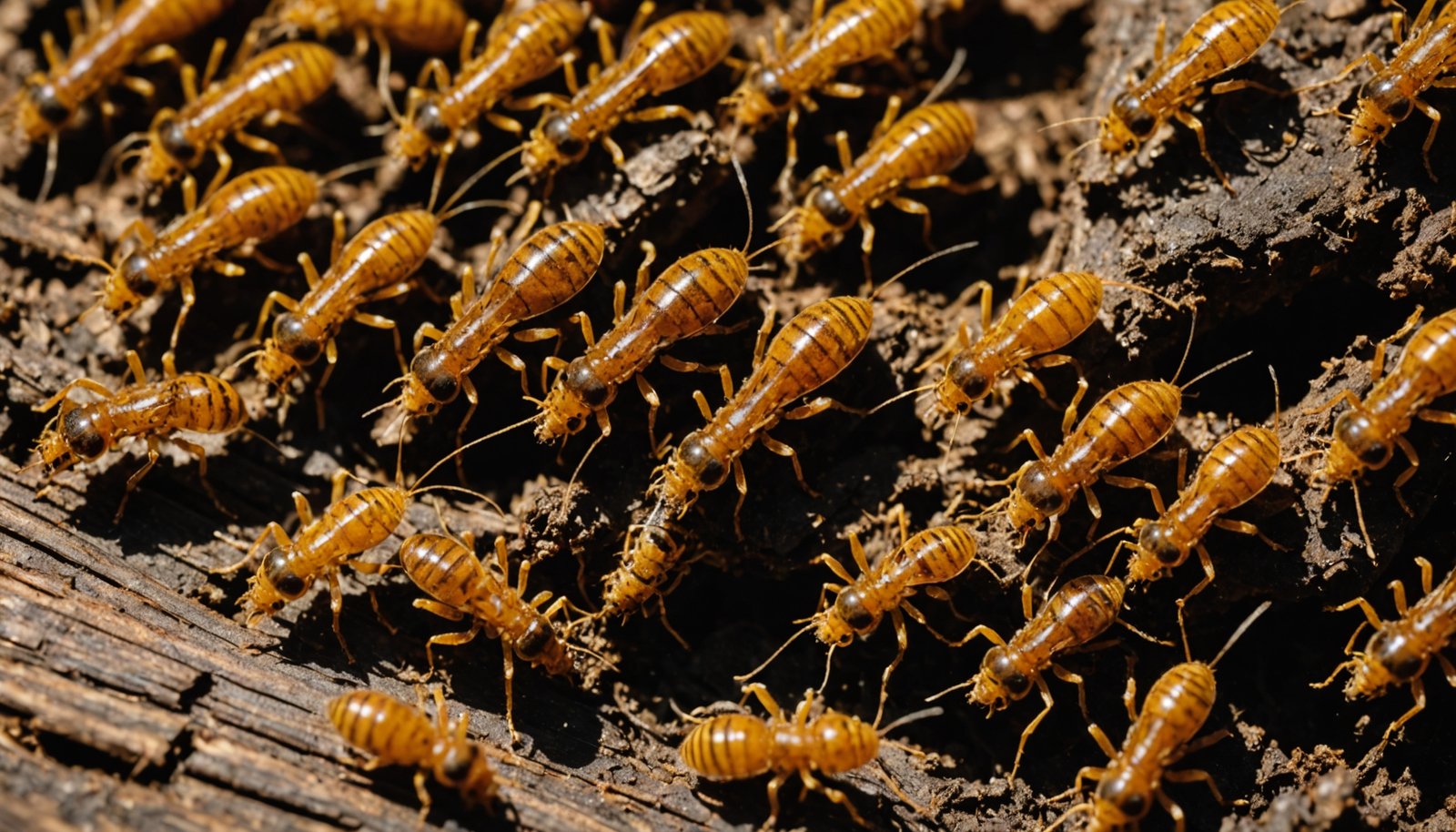
Soldiers exist solely to protect the colony. Their large mandibles allow them to crush, slash, and grip invaders, primarily ants, which are the termite colony’s most persistent natural predators. When a threat is detected, soldiers use head-banging vibrations to alert other members of the nest and release defensive pheromones to coordinate the response.
Despite their formidable appearance, soldiers are entirely dependent on workers for survival. They cannot forage or digest food independently. Workers must feed them through trophallaxis at all times. This dependency makes soldiers a reliable indicator of colony health: a high ratio of soldiers to workers typically signals a mature, established colony that has invested in defense because it has significant resources to protect.
How Workers and Soldiers Depend on Each Other
The relationship between workers and soldiers is one of mutual dependency within a rigid caste hierarchy. Workers provide food, colony maintenance, and structural upkeep. Soldiers provide security at tunnel entry points and nest perimeters so workers can forage without disruption from predators. Workers also alert soldiers to threats through chemical signals, giving soldiers time to position at key locations before an attack reaches the nest.
Nymphs, the immature individuals in the colony, can develop into either workers or soldiers depending on the colony’s current population needs, regulated by pheromone signals from the queen and existing adults. This flexibility allows the colony to dynamically adjust its caste balance as the habitat and threat environment change.
The Broader Caste System and Warning Signs for Homeowners

Workers and soldiers are the two castes homeowners encounter most often, but understanding the full termite lifecycle helps explain where infestations come from and how they grow. The complete caste system includes:
- Workers — largest caste by population; responsible for all foraging, construction, feeding, and colony maintenance
- Soldiers — defensive specialists; fed by workers; approximately 7% of total colony population
- Reproductives (alates/swarmers) — winged individuals that leave mature colonies to mate and establish new nests; the most visible sign of a nearby established colony
- Queen and king — founding reproductives; the queen lays up to 1,000 eggs daily in a mature colony
- Nymphs and larvae — immature individuals tended by workers; capable of developing into any caste based on colony needs
Swarmers, or alates, are often the first warning sign homeowners across the United States notice. Finding discarded wings near windowsills, doorframes, or baseboards after a swarm event confirms a mature colony nearby. Other key warning signs of active worker damage include:
- Mud tubes along the foundation or crawlspace, built by subterranean termites traveling between the ground and wood sources
- Hollow-sounding wood when tapped, indicating internal tunneling by workers
- Small uniform pellets of frass near wooden surfaces, a sign of drywood termite worker activity
- Bubbling paint, sagging floors, or stuck doors and windows caused by structural damage from worker feeding
- Musty odors near walls or wooden structures, often from moisture damage associated with active colonies
If you spot any combination of these signs, contact a pest control professional immediately. Identifying whether you are dealing with subterranean, drywood, or dampwood termite species determines the treatment approach, since each species has different colony behavior, habitat requirements, and caste proportions. High-risk states including North Carolina, South Carolina, California, Louisiana, Tennessee, and Maryland warrant annual professional inspections even when no visible signs are present, as worker damage accumulates for years before becoming apparent.
Frequently Asked Questions
Do termite soldiers eat wood?
No. Soldier termites cannot digest cellulose and do not eat wood. They are fed entirely by worker termites through trophallaxis. Workers are the only caste with the gut bacteria needed to break down wood and cellulose.
Can termites change from worker to soldier?
Yes. Nymphs, which are immature individuals, can develop into any caste depending on colony population needs. Pheromone signals from the queen and existing soldiers regulate how many nymphs become workers versus soldiers as the colony grows.
Why do termite soldiers have large jaws?
Soldier mandibles evolved specifically for defense against predators, particularly ants. The enlarged jaws allow soldiers to crush, grip, and slash invaders at colony entry points. Some species supplement mandible defense with chemical secretions from a frontal gland.
What percentage of a termite colony are workers vs soldiers?
Workers make up approximately 82 to 90% of a typical colony population. Soldiers account for around 7%. The remaining individuals are reproductives, the queen, the king, nymphs, and larvae.
{
“@context”: “https://schema.org”,
“@graph”: [
{
“@type”: “Article”,
“headline”: “Termite Soldiers vs Workers: Key Differences and Roles Explained”,
“description”: “Learn the physical differences between termite soldiers and workers, the role each caste plays in the colony, and what spotting either one means for your home’s structural safety.”,
“image”: “https://termitecontrolcare.com/wp-content/uploads/2025/10/soldiers_defend_workers_maintain_jr31q.jpg”,
“author”: {
“@type”: “Organization”,
“name”: “Termite Control Care”
},
“publisher”: {
“@type”: “Organization”,
“name”: “Termite Control Care”,
“logo”: {
“@type”: “ImageObject”,
“url”: “https://termitecontrolcare.com/wp-content/uploads/termitecontrolcare-logo.png”
}
},
“datePublished”: “2025-10-01”,
“dateModified”: “2026-05-19”
},
{
“@type”: “BreadcrumbList”,
“itemListElement”: [
{
“@type”: “ListItem”,
“position”: 1,
“name”: “Home”,
“item”: “https://termitecontrolcare.com/”
},
{
“@type”: “ListItem”,
“position”: 2,
“name”: “Termite Soldiers vs Workers”,
“item”: “https://termitecontrolcare.com/termite-soldiers-vs-workers/”
}
]
},
{
“@type”: “FAQPage”,
“mainEntity”: [
{
“@type”: “Question”,
“name”: “Do termite soldiers eat wood?”,
“acceptedAnswer”: {
“@type”: “Answer”,
“text”: “No. Soldier termites cannot digest cellulose and do not eat wood. They are fed entirely by worker termites through trophallaxis. Workers are the only caste with the gut bacteria needed to break down wood and cellulose.”
}
},
{
“@type”: “Question”,
“name”: “Can termites change from worker to soldier?”,
“acceptedAnswer”: {
“@type”: “Answer”,
“text”: “Yes. Nymphs, which are immature individuals, can develop into any caste depending on colony population needs. Pheromone signals from the queen and existing soldiers regulate how many nymphs become workers versus soldiers as the colony grows.”
}
},
{
“@type”: “Question”,
“name”: “Why do termite soldiers have large jaws?”,
“acceptedAnswer”: {
“@type”: “Answer”,
“text”: “Soldier mandibles evolved specifically for defense against predators, particularly ants. The enlarged jaws allow soldiers to crush, grip, and slash invaders at colony entry points. Some species supplement mandible defense with chemical secretions from a frontal gland.”
}
},
{
“@type”: “Question”,
“name”: “What percentage of a termite colony are workers vs soldiers?”,
“acceptedAnswer”: {
“@type”: “Answer”,
“text”: “Workers make up approximately 82 to 90% of a typical colony population. Soldiers account for around 7%. The remaining individuals are reproductives, the queen, the king, nymphs, and larvae.”
}
}
]
},
{
“@type”: “VideoObject”,
“name”: “Termite Soldiers vs Workers: Key Differences and Roles Explained”,
“description”: “A visual guide to the physical differences between termite soldiers and workers, how each caste functions within the colony, and what finding either one means for homeowners.”,
“thumbnailUrl”: “https://termitecontrolcare.com/wp-content/uploads/2025/10/soldiers_defend_workers_maintain_jr31q.jpg”,
“uploadDate”: “2025-10-01”,
“publisher”: {
“@type”: “Organization”,
name”: “Termite Control Care
}
}
]
}