Termite Treatment for New Construction
Termite treatment for new construction means applying preventive termite control measures during the building process, before a structure is complete. It is far more effective and cost-efficient than treating an active infestation after the fact. Pre-construction termite treatment protects the structural integrity of a building from the ground up, making it the industry-recommended approach for any new build.
Why Termite Prevention Starts Before the Foundation
Most people think of pest control as something you deal with after problems appear. With termites, that thinking is costly. Subterranean termites, the most destructive species in the United States, live underground and travel upward through soil to reach wood. A new construction site provides exactly the conditions they need: disturbed soil, wood framing close to the ground, and moisture from fresh concrete.
Treating the soil and structure before the slab is poured creates a chemical barrier that termites cannot cross without dying. Once walls are up and finishes are applied, access to the vulnerable areas is gone. That is why pre-construction treatment is not just an upgrade. It is the baseline standard for any builder serious about long-term structural protection.
Types of Termite Treatment Used in New Construction
There are several proven methods used at different stages of the building process. Each has its place depending on the structure type, soil conditions, and local termite pressure.
Soil Treatment with Liquid Termiticide
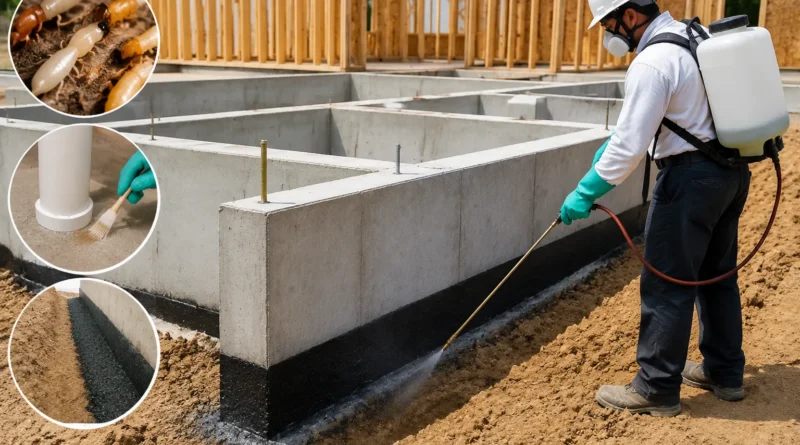
This is the most widely used method. A liquid termiticide is applied to the soil beneath and around the foundation before the concrete slab is poured. Products like Termidor (fipronil) or Altriset (chlorantraniliprole) bond with soil particles and create a continuous chemical barrier. Subterranean termites moving through treated soil either die on contact or carry the chemical back to the colony.
The application happens in stages. The soil under the slab gets treated first, followed by the soil along the inside perimeter of the foundation. After the slab is poured, the exterior perimeter and any expansion joints receive a final application. This layered approach closes all potential entry points.
Physical Termite Barriers
Physical barriers are non-chemical systems installed during construction that block termite movement. Common types include:
- Stainless steel mesh installed around pipes, conduits, and expansion joints
- Crushed granite or basalt particle barriers placed under slabs, which termites cannot tunnel through
- Plastic sheeting systems like Kordon, which contain a built-in termiticide
Physical barriers are popular in areas with restrictions on chemical use and in green building projects. They require zero reapplication but must be installed with precision. Any gap or tear compromises the entire barrier.
Termite Borate Wood Treatment
Borate-based treatments like Tim-bor or Bora-Care are applied directly to wood framing before drywall and insulation cover it. Borates penetrate the wood and make it toxic to termites that eat it. This treatment also protects against wood-decay fungi, giving it a dual protective function.
Borate treatment is particularly effective for high-risk wood like sill plates, floor joists, and wall framing within the first few feet of the ground. It is a natural compound with a low toxicity profile for humans and pets, making it a preferred option for health-conscious builders and homeowners.
In-Ground Baiting Systems
Some contractors install termite bait stations around the perimeter of new construction as an ongoing monitoring and control system. Stations are placed in the soil every 10 to 20 feet and contain cellulose bait laced with a slow-acting insect growth regulator. Termites consume the bait and carry it to the colony, eventually collapsing the entire population.
Baiting systems are low-impact and highly targeted but require regular professional monitoring, typically every 3 to 6 months. They work best as a complement to a chemical or physical barrier, not as a standalone solution for high-pressure termite zones.
When Each Treatment is Applied During Construction
Timing is everything in pre-construction termite treatment. Applying the right treatment at the wrong phase wastes money and leaves gaps in protection. Here is the standard treatment timeline for most new construction projects.
Pre-Slab Stage
Before the concrete foundation is poured, the subgrade soil is treated with liquid termiticide. This is the most critical application because it protects the area that will be permanently covered and inaccessible. Any wood forms or debris in the soil should be removed beforehand, as buried wood attracts termites and reduces treatment effectiveness.
During Framing
Once the slab is cured and framing begins, borate wood treatments are applied to all exposed lumber, especially near grade level. Physical barrier materials are also installed around pipe penetrations and conduit entries at this stage, before they are concealed behind walls.
Post-Construction Perimeter Treatment
After the foundation is backfilled and landscaping begins, the exterior soil perimeter receives a final liquid termiticide application. This reinforces the barrier and addresses any gaps left by construction activity. Bait stations, if included in the treatment plan, are installed at this point as well.
How to Choose the Right Treatment for Your Build
The best termite treatment for new construction depends on your location, soil type, and the specific risks in your area. Here are the key factors to evaluate.
- Termite pressure: Coastal, southeastern, and southwestern states have higher subterranean termite activity. In these regions, a combination of chemical soil treatment and borate wood treatment is the standard recommendation.
- Soil type: Sandy soils allow chemicals to migrate and dilute faster. Clay soils hold termiticide longer but require higher application volumes to achieve full coverage.
- Green building requirements: LEED-certified projects or owner preferences for reduced chemical use point toward physical barriers and borate treatments.
- Budget and long-term cost: Liquid chemical treatments are lower upfront but may require reapplication every 5 to 10 years. Physical barriers cost more initially but require no reapplication if installed correctly.
- Local regulations: Some municipalities require specific treatment types or product registrations. A licensed pest control operator in your area will know the local code requirements.
What the Treatment Process Looks Like
If you are coordinating termite treatment for a new construction project, here is what to expect from start to finish.
The process begins with hiring a licensed pest control operator early in the planning phase, not after the foundation is already poured. The PCO will inspect the site, identify the termite species present in the area, and recommend an appropriate treatment protocol. They will pull any required permits and document the treatment with a warranty.
On treatment day, the crew applies termiticide to the subgrade before the concrete contractor pours the slab. This must happen within a specific window, typically 24 hours before the pour, to prevent soil disturbance from washing the chemical out of position. After the pour, the perimeter and any penetration points are treated on schedule. The PCO provides documentation of all applications, which is often required by building inspectors and future homebuyers.
Long-Term Protection and Warranty Coverage
Most pre-construction termite treatments come with a renewable warranty that covers retreatment at no charge if termites are found within the protected area. Standard warranty terms range from one year to lifetime coverage, depending on the product and company. Annual inspections are typically required to maintain the warranty.
Homeowners and builders should keep all treatment documentation on file. This paperwork is often required during real estate transactions and may affect the appraised value of the property. A documented, professionally applied pre-construction termite treatment is a meaningful selling point for any home.
Common Mistakes to Avoid
A few missteps can compromise the effectiveness of even a well-designed termite treatment plan.
- Waiting until after construction to treat: By then, the most vulnerable areas are sealed off and the window for pre-treatment protection is closed.
- Skipping borate treatment on wood framing: Soil barriers protect from below, but termites can also enter through exterior wall penetrations. Borate treatment adds a second line of defense.
- Disturbing treated soil: Landscaping, irrigation installation, or grading after treatment can break the chemical barrier. Any post-construction soil work near the foundation should be coordinated with the PCO.
- Using unlicensed applicators: Termiticide application is regulated in most states. Unlicensed applications may void product warranties and create liability issues.
Termite treatment for new construction is one of the few investments in a build that pays for itself many times over. The cost of a comprehensive pre-construction treatment is a fraction of what even minor termite damage costs to repair. Getting it right at the start is the most reliable way to protect a structure for decades.
Frequently Asked Questions
Is termite treatment required for new construction?
Requirements vary by state and municipality. In high-risk areas like Florida, Texas, and California, pre-construction termite treatment is often required by building code. Even where it is not legally required, most lenders and insurers strongly recommend it.
How long does pre-construction termite treatment last?
Liquid soil treatments typically remain effective for 5 to 10 years depending on the product and soil conditions. Physical barriers last indefinitely if undisturbed. Borate wood treatments are permanent as long as the treated wood stays dry.
Can I treat for termites after construction is complete?
Yes, but post-construction treatment is significantly more expensive and less thorough. Drill-and-inject methods are used to reach soil beneath the slab, and not all areas can be accessed. Pre-construction treatment is always the more cost-effective and reliable option.
What is the best termite treatment for new construction?
A combination of liquid soil termiticide applied before the slab pour and borate wood treatment applied during framing offers the most comprehensive protection for most builds. High-risk zones may also benefit from perimeter bait stations as an ongoing monitoring layer.
How much does pre-construction termite treatment cost?
Costs vary by property size, treatment method, and region. Liquid soil treatment for a standard single-family home typically ranges from $500 to $1,500. Adding borate wood treatment may add $300 to $700. Physical barrier systems can run $1,000 to $3,000 depending on complexity.