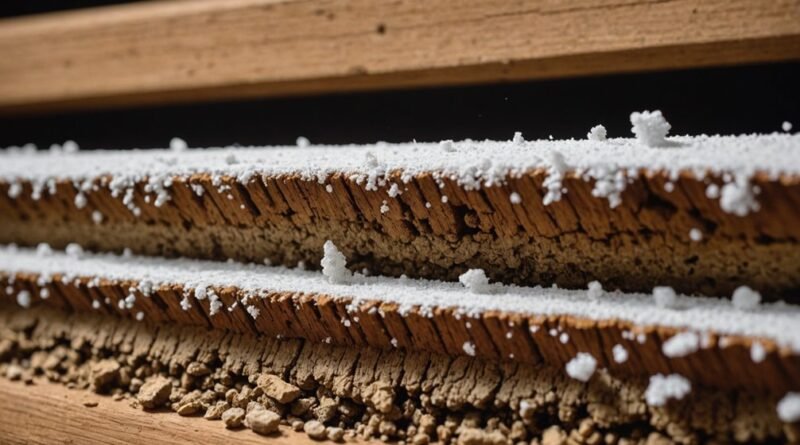
Does Boric Acid Kill Termites
Boric acid does kill termites, but it’s not a complete solution on its own. When termites ingest it or make direct contact, it disrupts their digestion and destroys the gut microbiome they need to survive. It works best as a preventive measure and performs better against drywood termites than subterranean species. Hidden colonies and protected queens often escape treatment entirely. Keep going to understand exactly where boric acid succeeds, where it fails, and what actually works alongside it.
Key Takeaways
- Boric acid kills termites by acting as a stomach poison, disrupting digestion and destabilizing the gut microbiome essential for cellulose breakdown.
- It is confirmed lethal to Eastern subterranean and Formosan termites, with significant mortality observed at high concentrations after seven days.
- Boric acid is more effective against drywood termites than subterranean species, which often remain hidden and unexposed to treated surfaces.
- Hidden nests and protected queens frequently survive treatment, making colony-wide eradication difficult and limiting boric acid to a preventive role.
- Pairing boric acid with bait stations and complementary methods significantly improves overall effectiveness for comprehensive termite control.
Does Boric Acid Actually Kill Termites?
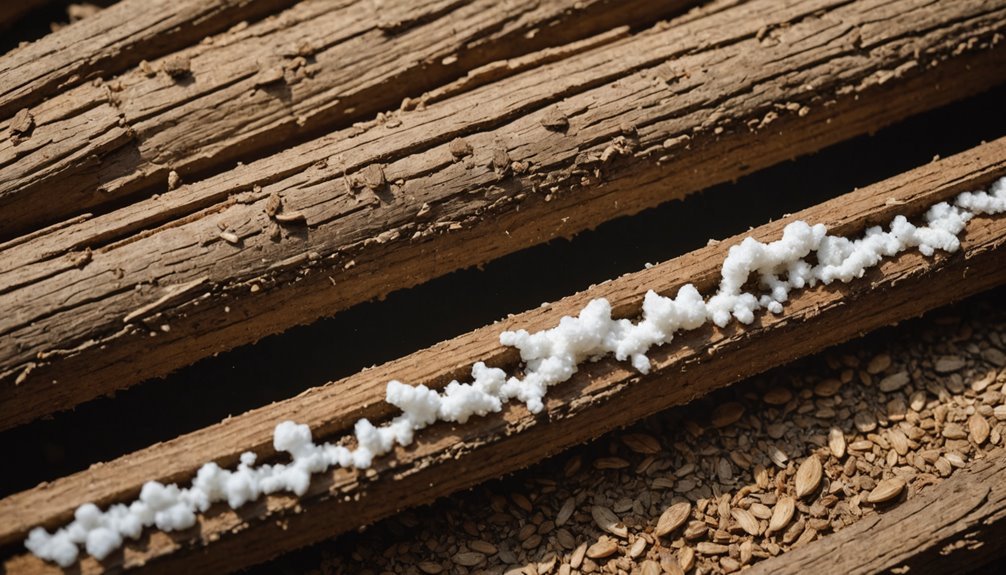
Yes, boric acid can kill termites, but only under the right conditions. When termites ingest it or come into direct contact with it in controlled settings, it’s reliably lethal.
Studies confirm it kills Eastern subterranean and Formosan termites under specific test conditions.
The real problem isn’t whether boric acid can kill termites; it’s whether you can expose enough of them. Most termites stay deep inside wood galleries or underground, far from any treated surface.
Only termites that directly contact the treated material will die. The rest of the colony carries on untouched. Termite colonies can quickly reproduce, making it even harder to achieve meaningful control with surface-level treatments.
How Boric Acid Attacks the Termite’s Body
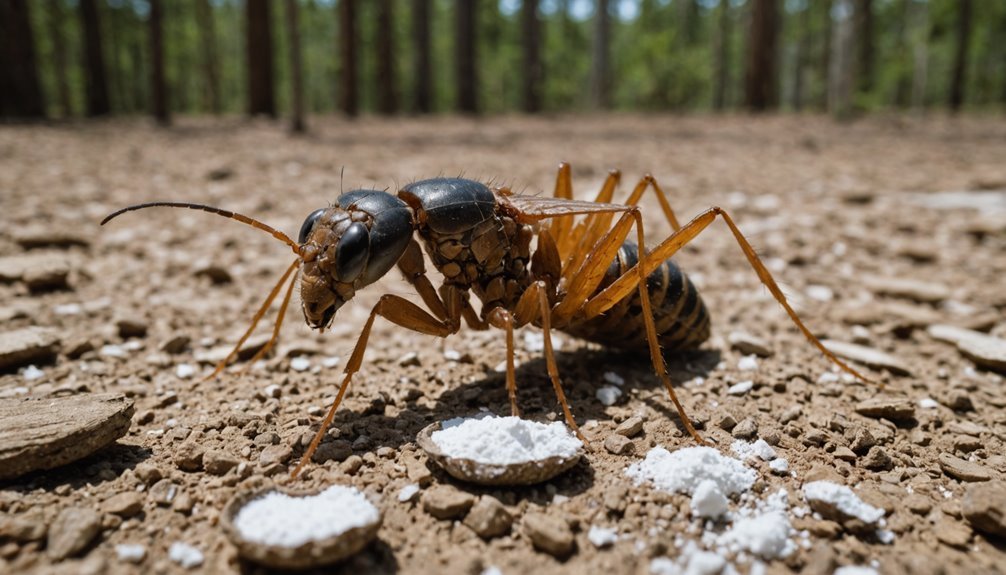
When boric acid does reach a termite, it attacks on multiple fronts. It acts as a stomach poison, disrupting digestion and reducing feeding before death occurs.
The damage doesn’t stop there. Boric acid also destabilizes the termite’s gut microbiome, wiping out beneficial bacteria that help process cellulose and absorb nutrients. As helpful symbionts decline, opportunistic pathogens move in, compounding the stress.
At higher concentrations, boric acid suppresses symbiotic gut protozoa, the microorganisms termites depend on to break down wood. Without them, the termite can’t properly digest what it eats.
Boric acid wipes out the gut protozoa termites rely on to digest wood, leaving them unable to process food.
You’re looking at a cascading breakdown: toxic poisoning, gut dysbiosis, weakened digestion, and rising pathogen load, all hitting simultaneously. The termite’s ability to recover drops sharply as each system fails. Studies have recorded significant termite mortality at the highest boric acid concentrations, with doses reaching 203.7 µg/cm² proving especially lethal after just seven days of exposure.
Why Boric Acid Rarely Wipes Out a Full Colony
Boric acid can kill termites, but colony-wide eradication is a different challenge entirely. It only works when termites directly contact or ingest treated material.
Hidden nest members, protected queens, and workers deep inside walls or soil often never encounter it.
Even when some termites die, survival pockets form because exposure across the colony stays uneven. Treated wood may slow feeding without delivering a lethal dose to every termite present.
Transfer through grooming helps, but only if exposed termites return to the nest before dying.
Large, established colonies can keep feeding from untreated sections while one gallery gets affected. You’re more likely to suppress activity than eliminate the infestation entirely.
For deeply embedded colonies, boric acid works better as a preventive tool than a stand-alone solution. Boric acid is most effective against drywood termites and offers limited reach against subterranean species whose colonies are buried far underground.
Signs Your Termite Infestation Needs Professional Treatment
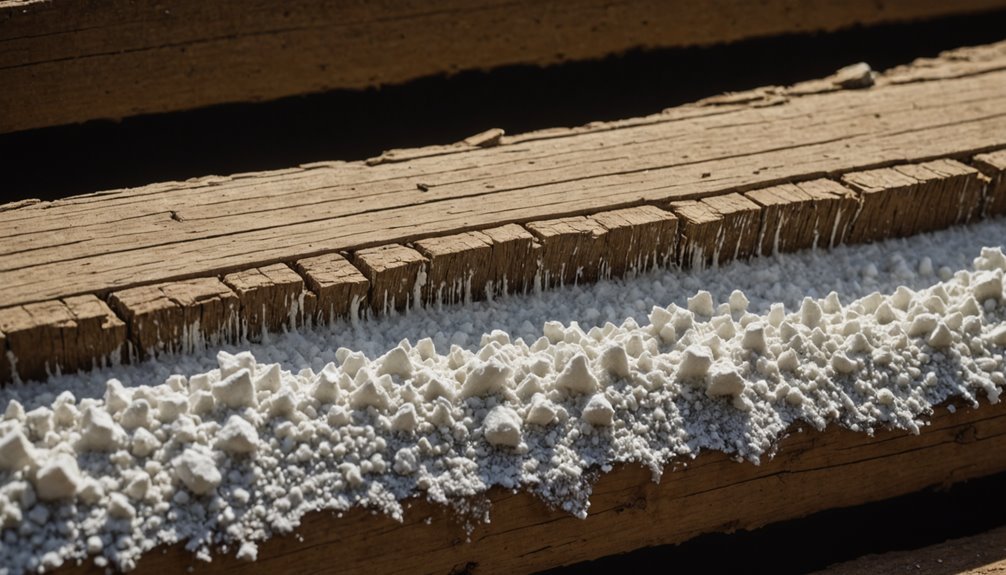
Mud tubes climbing your foundation walls are one of the clearest warnings that subterranean termites have already found a food source inside your structure. These pencil-sized tunnels signal concealed activity that boric acid simply can’t reach.
If tapping your beams or floors produces a hollow sound, termites have likely eaten through the interior, leaving only a thin shell behind.
Winged swarmers emerging indoors or piles of discarded wings near windows indicate an established colony reproducing inside your walls.
Frass resembling sawdust or tiny pellets near wood confirms active drywood termite feeding.
Doors or windows that suddenly stick, bubbling paint, or sagging floors suggest structural damage is already advancing. Unlike temporary DIY solutions, professional exterminators provide comprehensive treatment plans that address both the current infestation and prevent future risks.
At this stage, professional treatment isn’t optional; it’s necessary to stop further destruction.
Where Does Boric Acid Work Best Against Termites?
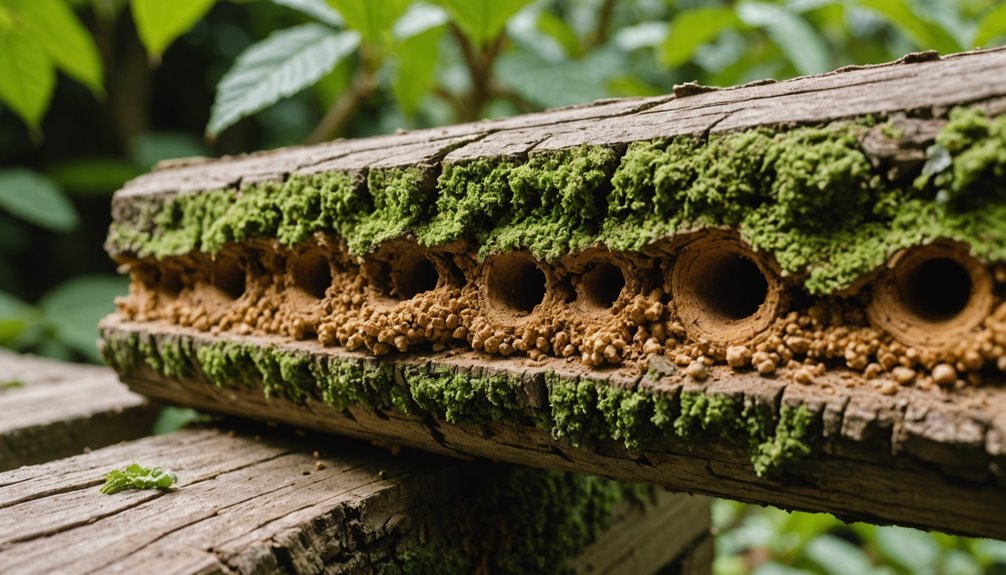
Understanding where boric acid performs best helps you use it more strategically rather than wasting time and money on applications that won’t deliver results. It works best on accessible, unfinished wood with localized drywood termite activity, particularly when you apply it directly into holes, galleries, or tunnels where termites actively travel.
| Best Conditions | Why It Works |
|---|---|
| Bare, unfinished wood | Solution penetrates and contacts termites directly |
| Localized drywood activity | Termites must move through the treated area |
| Holes, tunnels, galleries | Concentrates exposure where activity is highest |
You’ll also get stronger results using boric acid preventively on vulnerable wood before an infestation develops. Pairing it with other control methods improves performance notably, especially for anything beyond small, contained infestations. For severe or widespread termite problems, contacting a pest control specialist gives you access to more comprehensive treatment plans tailored to your specific situation.
How Do You Apply Boric Acid to Termite-Affected Wood?
Knowing where boric acid works best only gets you so far. How you apply it determines whether termites actually contact enough of it to die.
Knowing where to apply boric acid matters, but how you apply it determines whether termites actually die.
For cracks, holes, and visible mud tubes, dust the powder directly using a puff applicator or squeeze bottle.
For exposed wood surfaces, mix boric acid with water and brush on two coats, letting the wood dry between each. Treat all sides of unfinished beams, joists, and raw wood to maximize coverage.
If the wood is sealed or the infestation is deeper, drill small angled holes and inject the solution using a syringe to reach internal galleries.
For spray treatments, some instructions recommend applying every other day for one to two weeks, since repeated contact is what makes boric acid effective.
Does Boric Acid Repair Termite Damage or Just Stop Feeding?
Once boric acid stops termites from feeding, it’s tempting to assume the wood recovers on its own. Boric acid is an insecticide, not a repair product. It kills termites through ingestion and disrupts their gut microbiome, which stops further feeding and slows damage spread.
What it can’t do is rebuild chewed wood fibers or restore lost structural strength.
If termites have already compromised your framing, joists, or sill plates, that damage stays until you physically repair or replace the affected material. Boric acid won’t correct hidden deterioration inside walls or floors.
After treating with boric acid, you still need a full inspection to assess what’s structurally compromised. Think of boric acid as a control tool, not a fix for what termites already destroyed.
Is Boric Acid Safe to Use During Termite Treatment?
Boric acid can stop termites from feeding, but that still leaves the question of whether it’s safe to use around your home while treatment is underway. For adults, it’s generally low risk when handled correctly.
Wear gloves, goggles, and a mask during application, and work in a well-ventilated area to limit dust inhalation. Keep children and pets away from treated surfaces until they’re dry or no longer hazardous, since closer floor contact increases their exposure risk.
Wear protective gear during application and keep children and pets away from treated surfaces until dry.
Avoid applying it anywhere a pet or child could lick or chew. Use controlled amounts, follow the product label, and clean up any excess residue promptly.
When you keep application targeted and localized, you reduce unnecessary exposure without compromising its effectiveness against termites.
What Works Alongside Boric Acid Without Undermining It?
Getting the most out of boric acid means pairing it with strategies that support how it actually works rather than working against it.
Apply it directly to unfinished wood or exposed galleries where termites feed, since penetration into those zones is what makes it effective.
Use crack-and-crevice dusting to reach hidden voids where termites travel, keeping the treatment in the path of activity.
Add bait stations to target colony-wide suppression, since boric acid alone won’t reliably reach the entire colony.
Correct moisture problems in treated areas, because damp conditions undermine surface treatments over time.
Finally, seal entry points after applying boric acid so termites stay in contact with treated surfaces instead of rerouting around them.
Frequently Asked Questions
How Long Does Boric Acid Remain Active Inside Treated Wood?
Boric acid stays active in your treated wood as long as boron remains in the wood’s cellular structure. It’s condition-dependent, lasting indefinitely in dry, interior wood but shortening markedly with moisture exposure.
Can Termites Develop Resistance to Boric Acid Over Repeated Exposures?
You don’t need to worry about termites developing resistance to boric acid. No evidence shows they adapt to repeated exposures. Studies consistently report high mortality rates, and termites can’t evolve immunity to its enzyme-disrupting mechanism.
Does Rain or Moisture Reduce Boric Acid’s Effectiveness Outdoors?
Yes, rain and moisture do reduce boric acid’s effectiveness outdoors. They’ll wash it away, dilute it, and prevent it from penetrating wood properly, so you’ll need to reapply after wet weather.
Are Borate-Treated Wood Products Available for Purchase at Hardware Stores?
You can find borate-treated wood products at hardware and home-improvement stores, though availability varies by location. Some stores stock borate wood preservatives for surface treatment, while others carry pre-treated lumber for construction use.
How Does Boric Acid Compare in Cost to Professional Termite Treatments?
Boric acid is much cheaper than professional treatments. You’ll spend just $3–$8 per pound on materials, while professional services cost considerably more because they include inspection, colony identification, and thorough treatment planning for your entire infestation.
Conclusion
Boric acid can be a useful tool in your fight against termites, but it’s not a standalone solution. It’ll kill individual termites on contact, yet it won’t penetrate deep enough to eliminate an entire colony. You’re better off using it as part of a broader treatment strategy. If your infestation is severe, don’t wait. Call a licensed pest control professional before the damage gets worse.