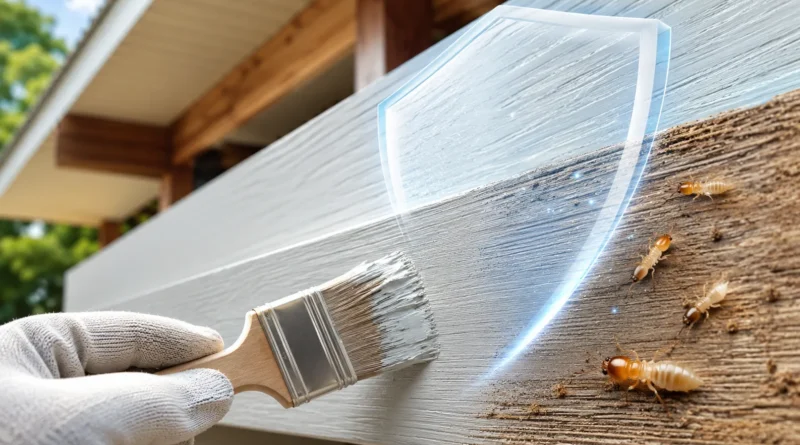
Termite Resistant Paints and Coatings: Do They Work and Which Ones to Choose
How Termite Resistant Paints and Coatings Work
Not all termite resistant products work the same way. Some rely on active insecticidal ingredients that kill termites on contact, while others create a hard physical barrier that termites cannot chew through easily. A few newer formulations combine both approaches, delivering a chemical deterrent embedded in a durable surface coating.
Understanding the mechanism behind the product you choose helps you apply it correctly and set realistic expectations. A paint that kills termites on contact behaves very differently from a borate-based penetrating treatment that makes the wood itself toxic to insects.
Types of Termite Resistant Coatings Available
The market offers several categories of termite resistant coatings, each suited to different applications and levels of protection. Choosing the right type depends on where you are applying it, the type of wood involved, and whether the surface will be visible or hidden inside a wall or floor structure.
Borate-Based Wood Treatments
Borate treatments are among the most widely used and scientifically validated termite resistant coatings available. Products like Tim-bor and Boracare penetrate deep into the wood grain, making the entire piece of timber toxic to termites, fungi, and wood-boring beetles. Termites that consume treated wood are unable to digest their food properly and die within days.
Borate treatments are odorless, low in toxicity to humans and pets, and extremely long-lasting when the wood is not exposed to ongoing moisture or rain. They are particularly popular during new construction when structural timber can be treated before walls are closed up. However, borates are water-soluble, so they are not suitable for wood that will be exposed to outdoor weather without a topcoat to seal them in.
Insecticidal Paints and Primers
Insecticidal paints contain active chemical compounds, most commonly permethrin or bifenthrin, suspended in a paint base. When applied to wood surfaces, these paints release small amounts of insecticide over time, creating a contact-kill zone that deters and kills termites attempting to tunnel into or across the surface.
These products are particularly useful on exposed timber, wooden furniture, skirting boards, and door frames. They look and apply like conventional paint, making them easy to incorporate into normal decorating work. Reapplication is typically required every few years as the insecticidal compounds break down over time.
Epoxy and Resin Coatings
Epoxy-based coatings provide a hard, dense physical barrier over the wood surface. While they do not contain insecticidal ingredients, the extreme hardness of a cured epoxy layer makes it physically difficult for termites to penetrate. These coatings are commonly used on concrete and masonry surfaces adjacent to wood, on the undersides of floor joists, and on wooden structures in high-humidity environments.
Epoxy coatings are highly durable and waterproof, making them a strong choice for basements, garages, and crawl spaces. Their limitation is that they only protect the coated surface; if termites find an uncoated entry point, they can still reach the timber inside.
Neem Oil and Natural Coatings
For those seeking an eco-friendly alternative, neem oil based wood coatings have shown genuine effectiveness as a termite deterrent. Neem oil contains azadirachtin, a natural compound that disrupts the hormonal and digestive systems of insects including termites. It is non-toxic to humans, biodegradable, and safe to use indoors.
Natural coatings are best suited to furniture, indoor woodwork, and decorative timber rather than structural applications. They require more frequent reapplication than synthetic alternatives and perform best when used as part of a broader pest prevention strategy.
Best Surfaces to Apply Termite Resistant Coatings
Termite resistant paints and coatings are most effective when applied to surfaces that termites commonly target. Knowing where to focus your application ensures you get maximum protection from the products you use.
- Wooden floor joists, beams, and structural framing, especially in crawl spaces and basements where subterranean termites are most active.
- Skirting boards, door frames, and window frames that make direct contact with floors or walls touching the ground.
- Wooden furniture legs and the undersides of tables, shelves, and cabinets that sit on or near flooring.
- Exterior timber cladding, fascia boards, and deck timbers that face moisture and soil contact.
- New construction timber before installation, which allows full coverage of all surfaces including hidden faces.
Limitations of Termite Resistant Paints
Termite resistant coatings are a useful preventive tool, but they come with important limitations that every homeowner should understand before relying on them as the sole line of defense.
Surface Coverage Only
Most paints and coatings only protect the surface they are applied to. Termites are highly skilled at finding gaps, joints, cracks, and untreated entry points. A single missed area can allow an entire colony to bypass your protective coating entirely and reach the wood beneath.
Not a Cure for Active Infestations
Termite resistant coatings are preventive products, not treatments for existing infestations. If termites are already active inside your walls or floors, applying a surface coating will do nothing to eliminate the colony. You need professional pest control treatment first, followed by coatings as a long-term preventive measure.
Durability and Reapplication
The effectiveness of insecticidal paints decreases over time as the active compounds break down through exposure to light, moisture, and temperature changes. Most products recommend reapplication every two to five years. Failing to maintain the coating reduces protection and can create false confidence about your home’s termite resistance.
How to Apply Termite Resistant Coatings Correctly
Proper application is critical to getting full value from any termite resistant paint or coating. Even the most effective product will underperform if it is applied incorrectly or to inadequately prepared surfaces.
- Clean and dry the wood surface thoroughly before application. Dust, grease, and moisture prevent the coating from bonding properly to the timber.
- Sand rough surfaces lightly to open the wood grain and allow deeper penetration, especially when using borate-based treatments.
- Apply multiple coats as directed by the manufacturer. A single thin coat is rarely sufficient for full protection.
- Pay special attention to end grain, joints, and cracks where termites most commonly enter. These areas absorb more product and need extra coats.
- For borate treatments used outdoors or in wet areas, always seal the surface with a waterproof topcoat to prevent the borate from leaching out over time.
- Wear appropriate protective equipment, including gloves and a mask, especially when applying solvent-based insecticidal products in enclosed spaces.
Termite Resistant Coatings vs Professional Termite Treatment
A common question homeowners ask is whether termite resistant coatings can replace professional pest control treatments. The honest answer is no, but they work very well together.
Professional treatments, such as soil barriers, baiting systems, and chemical injections, target the colony and its foraging network across a wide area. Coatings and paints protect individual surfaces and components. Using both gives you a layered defense: the professional treatment addresses the colony-level threat while surface coatings provide ongoing protection to specific high-risk timber elements.
If you are building a new home or renovating, this is the ideal time to combine both approaches. Treat structural timber with borate products before installation, then work with a licensed pest controller to install a soil barrier or baiting system around the perimeter of the building.
Choosing the Right Product for Your Situation
The best termite resistant coating for your home depends on several practical factors. Consider the following before making a purchase:
- Indoor or outdoor use: borate treatments need a waterproof seal outdoors, while insecticidal paints are more straightforward for exposed surfaces.
- New construction vs existing structures: new builds benefit most from full borate treatment of all timber; existing structures may need targeted insecticidal primers on accessible surfaces.
- Health and environmental preferences: if you prefer low-toxicity options, borate or neem-based products are the safest choices for indoor use.
- Budget: borate concentrates are cost-effective for large timber volumes, while insecticidal paints are priced similarly to premium conventional paints.
- Aesthetic requirements: insecticidal paints are available in a range of colors and finishes, making them suitable for visible surfaces where appearance matters.
Final Thoughts on Termite Resistant Paints and Coatings
Termite resistant paints and coatings are a smart investment for any homeowner serious about protecting their property. They are not a magic solution, but as part of a comprehensive termite management strategy they add meaningful and lasting protection to the wooden elements that termites most commonly attack.
Apply them during construction when access is easiest, maintain them on a regular schedule, and combine them with professional inspections and treatments. This layered approach is the most reliable way to keep termites out of your walls, floors, and furniture for the long term.