
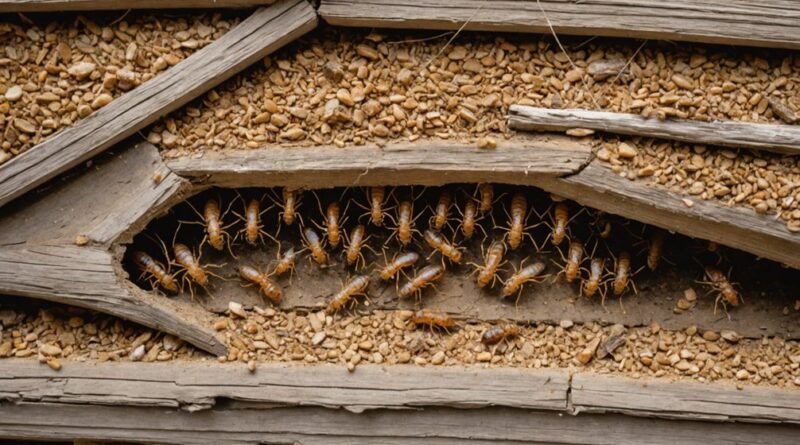
Termites and Foundation Damage Signs to Watch
Termites won’t eat your foundation, but they’ll use every crack and hollow space in it to reach the wood inside your home. Signs of trouble include mud tubes along concrete walls, discarded wings near entry points, hollow-sounding wood, and sagging floors near crawl spaces. Even a hairline crack gives them the access they need. Knowing what to look for early can mean the difference between a minor fix and a major structural repair, and there’s a lot more to uncover.
Key Takeaways
- Mud tubes on foundation walls are a primary sign of subterranean termite activity and indicate an active or recent infestation.
- Hairline cracks in foundations serve as entry points, giving termites concealed access directly to wooden structural components.
- Widening cracks in walls or foundations may signal structural weakening caused by termite damage to internal wood supports.
- Hollow-sounding wood, sagging floors, and buckling near crawl spaces indicate advanced termite damage to foundational structural elements.
- Discarded wings near foundation entry points suggest established termite colonies actively expanding within the structure.
What Termites Actually Do to Foundation Structures
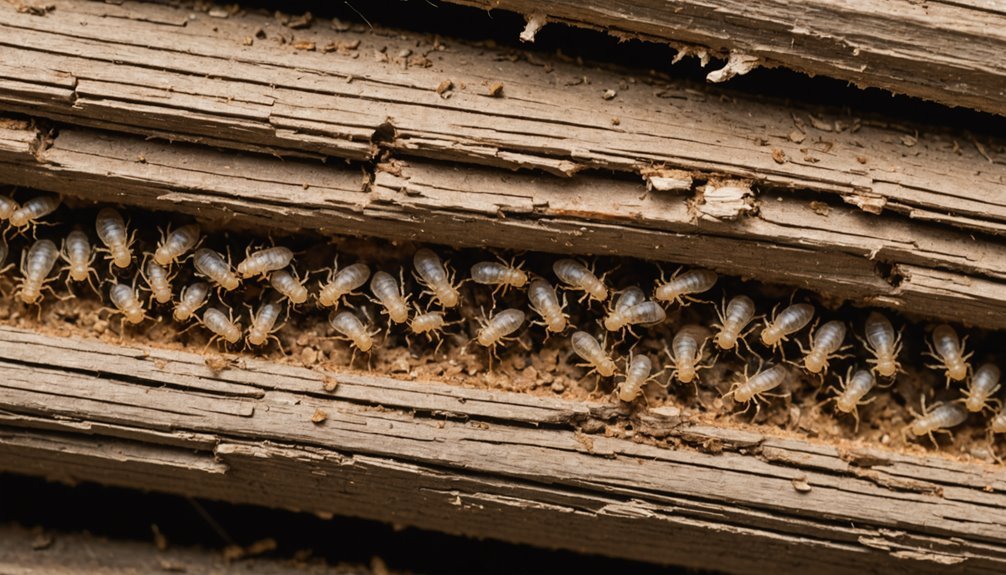
Termites don’t eat concrete, but that doesn’t mean your foundation is safe. They use it as a highway to reach the wood inside your home. Cracks as small as 1/32 of an inch, roughly the width of a business card, give them all the entry they need.
Termites don’t eat concrete, they use it as a road map straight to the wood inside your home.
Hollow spaces inside concrete block or brick walls provide concealed travel routes that are nearly impossible to spot without a close inspection.
Once inside, subterranean termites build mud tubes along foundation walls, crawl spaces, and basement areas. These shelter tubes protect them from light and dry air while they move between soil and wood.
They’ll tunnel deep into structural members near your foundation, feeding from the inside out and leaving a thin outer shell intact. The resulting honeycomb-pattern damage weakens load-bearing wood long before you’ll notice any visible signs of structural failure. Termites primarily target cellulose from wood and plants, making any structural timber connected to your foundation a direct food source.
High-Risk Conditions That Draw Termites to Your Foundation
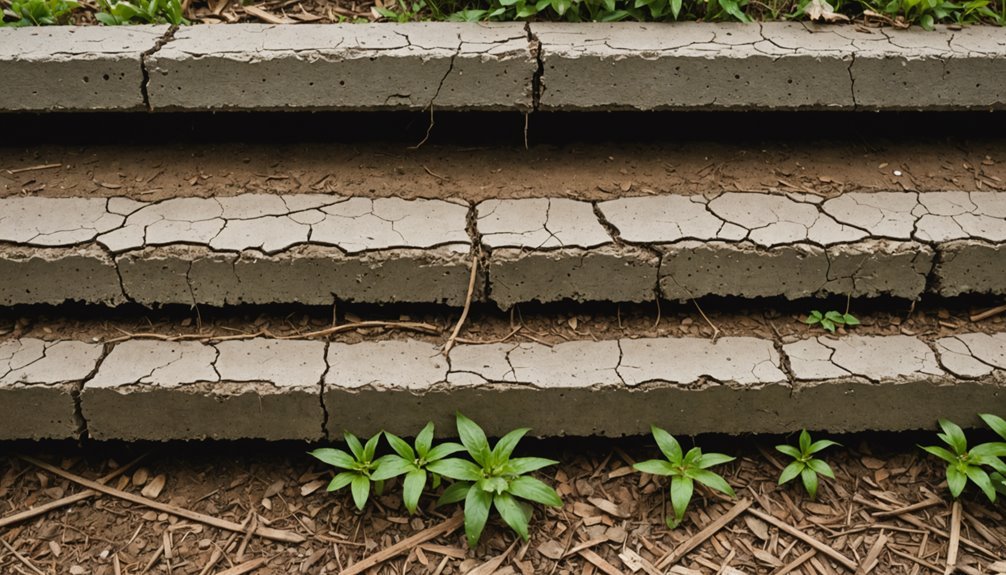
Your foundation doesn’t attract termites by accident, specific conditions make it a target. Moisture is the biggest draw. Standing water against your foundation breaks down termiticide barriers, while poor grading, faulty gutters, and irrigation overspray keep soil persistently damp, exactly what termites need.
Wood-to-soil contact creates direct access points. If soil or mulch touches your siding, termites don’t need to work hard to find their way in. Firewood piles, old stumps, and wood debris near the foundation give them an easy cellulose source to establish activity close to your home.
Inside the structure, roof leaks, plumbing failures, and poor crawl-space ventilation create humid wood that termites actively target.
Even your landscaping works against you, dense vegetation, thick mulch, and vines trap moisture against the structure. When these conditions combine, you’re effectively signaling to termites that your foundation is worth attacking. Trees planted too close to your home can have roots that grow under the foundation, creating hidden pathways for termite entry and structural compromise.
Can Foundation Cracks Let Termites Inside?
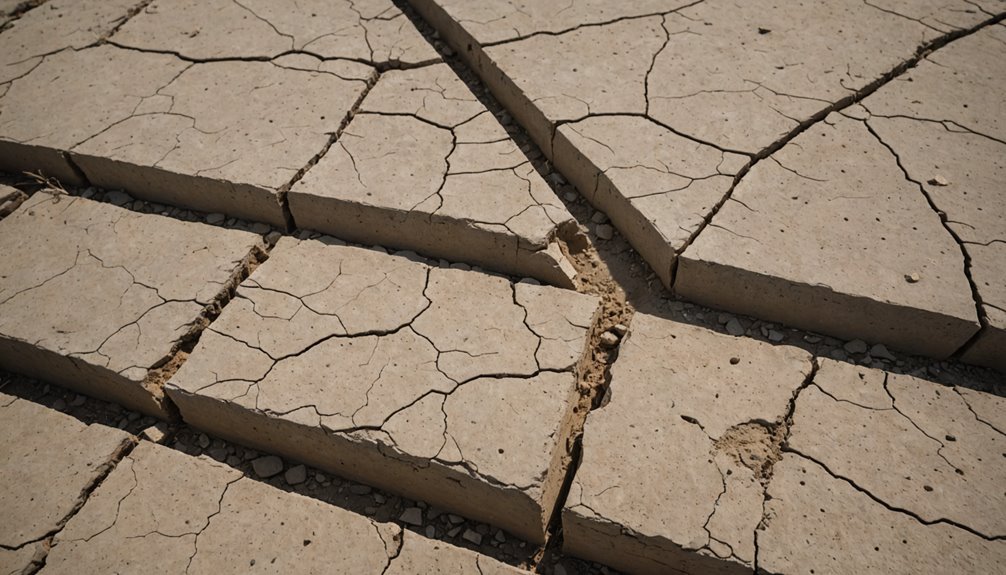
If your foundation has cracks, termites can absolutely use them to get inside, since subterranean termites need only about 1/32 of an inch to squeeze through.
Moisture makes the problem worse by softening soil and wood near your foundation, giving termites an easier path and better conditions to survive once they’re in.
You can reduce this risk considerably by sealing cracks with epoxy or polyurethane and addressing any moisture issues around your foundation. Termites also commonly build mud tubes along foundations as hidden pathways to reach wooden structures inside your home.
Cracks as Entry Points
Even a hairline crack in your foundation can let subterranean termites inside. Worker termites squeeze through openings as small as 1/32 of an inch—roughly a credit card’s thickness.
These routes include:
- Slab cracks caused by settling over time
- Expansion joints between foundation sections
- Wall and basement foundation cracks
- Gaps connecting to hidden interior voids
Concrete and brick aren’t food sources, but cracks in them lead termites directly to the wooden structures above or behind your foundation.
Cracks larger than 1 cm carry greater risk, though openings under 1/8 inch are still documented entry points. The real danger isn’t just the visible crack—it’s where that crack connects internally, creating a concealed path straight into your home’s wooden substructure. Termites are further drawn to these areas when moisture near cracks raises the likelihood of sustained colony activity beneath your foundation.
Moisture Worsens the Risk
Moisture dramatically amplifies the threat that foundation cracks already pose. When wet soil surrounds your foundation, subterranean termites thrive, traveling easily through damp earth and slipping through cracks as narrow as 1/32 inch.
Water intrusion softens nearby wood, making hidden damage faster and harder to detect.
Poor drainage compounds the problem. Standing water near your crawlspace or foundation creates exactly the conditions termites favor. If your gutters, grading, or downspouts aren’t directing water away from the structure, you’re inadvertently supporting termite activity.
Don’t wait until an infestation is obvious to address moisture. Fix leaky pipes, improve drainage, and ventilate crawlspaces now. Termite colonies rely on chemical pheromone trails to guide workers through moist soil and into accessible cracks, making wet conditions around your foundation especially dangerous.
Pairing moisture control with routine inspections — especially after heavy rains — gives you the best defense against termites exploiting vulnerable cracks.
Sealing Cracks Prevents Access
Fixing drainage and sealing up moisture problems goes a long way, but you also need to look at the foundation itself. Cracks as thin as a credit card can let subterranean termites inside, and sealing them reduces those entry points.
However, sealing alone won’t eliminate the risk. Here’s why:
- Termites still access structures through below-grade gaps you can’t see from outside.
- Cracks can hide live colonies, tunneling, and past damage behind intact surfaces.
- Other small openings around the structure remain even after you seal the visible cracks.
- Professional treatment addresses active threats that sealant can’t stop.
Think of crack sealing as a preventive layer, not a complete solution. You still need regular inspections and monitoring to stay ahead of termite pressure.
Early Warning Signs of Termite Activity Around the Foundation
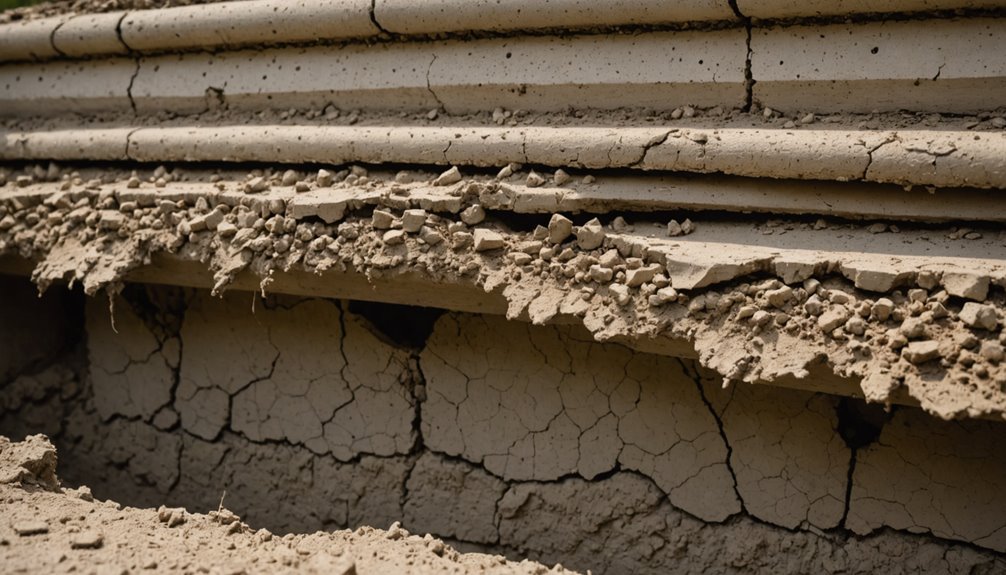
If you’re watching for early signs of termite activity around your foundation, three warning signs deserve your immediate attention.
You’ll want to check for mud tubes climbing your foundation walls, discarded wings collecting near windows or entry points, and cracks or gaps where termites may be slipping inside.
Catching any one of these signs early can mean the difference between a manageable treatment and extensive structural damage.
Mud Tubes Near Foundation
One of the earliest and clearest warning signs of subterranean termite activity near your foundation is the presence of mud tubes. Termites build these pencil-thin, earth-colored structures from soil, wood particles, and saliva to travel between underground colonies and wood sources while avoiding dry air and predators.
You’ll commonly find mud tubes in these locations:
- Along the base of concrete slabs and foundation walls
- Up piers, posts, and crawl-space supports
- Inside subfloor areas and crawl spaces
- Near cracks, gaps, and hidden entry points
To check for active infestation, break a section of the tube. If termites repair it within a few days, you’re dealing with a live colony.
Don’t wait—schedule a professional inspection immediately.
Discarded Wings and Swarmers
Finding discarded termite wings around your foundation or inside your home is a serious warning sign—one that signals an active, mature colony rather than a minor or passing threat.
Swarmers are winged reproductive termites that emerge when a colony has matured enough to expand, so their presence means the infestation is already established, likely inside walls or structural framing.
Check window sills, door frames, baseboards, and foundation-adjacent openings, since swarmers are attracted to light and often shed their wings near these spots.
Small piles are more significant than a single wing, especially when combined with other signs.
Don’t confuse termite wings with flying ant wings—termite wings are equal in size, while ant wings aren’t.
Collect a sample and schedule a professional inspection immediately.
Foundation Cracks and Gaps
Foundation cracks and gaps are more than structural concerns—they’re potential termite highways. Subterranean termites exploit existing openings to travel from soil into your structure. Inspect these high-risk areas carefully:
- Foundation perimeter cracks, especially where walls meet soil or slab junctions
- Crawl space and basement walls, where termites commonly move upward from ground contact
- Gaps around pipes and utility penetrations along foundation interfaces
- Seams where decks, porches, or wooden steps connect to foundation surfaces
Watch for mud tubes climbing through cracks, these dirt-and-saliva tunnels confirm active termite movement.
Also check for bubbling paint, brownish drywall discoloration, and new cracks near baseboards, as these surface changes often signal hidden activity behind finished walls.
A rebuilt mud tube after breaking it strongly indicates an active infestation.
Wood Damage Signs Near Your Foundation
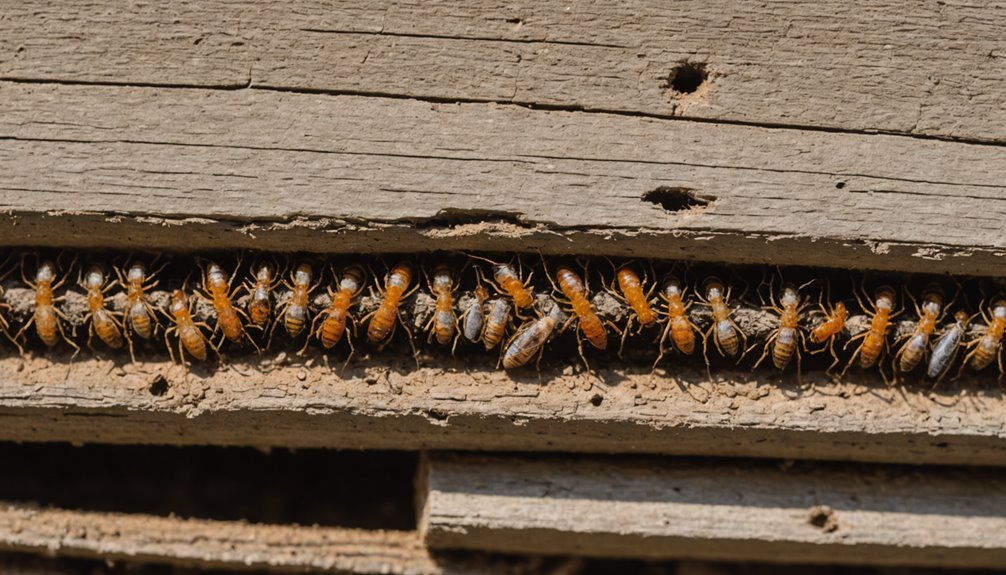
Termites are skilled at concealing their activity, but wood near your foundation often carries telltale signs if you know what to look for. Tap sill plates, framing, and trim near the foundation, hollow sounds suggest internal feeding with only a thin outer shell remaining.
Wood that feels papery, crumbles under light pressure, or appears soft and brittle points to damage from the inside out.
Watch for surface clues too. Blistered paint, bubbling finishes, sagging wood, and warped or rippled surfaces can all indicate hidden termite activity beneath. Darkening that resembles water staining sometimes accompanies this deterioration.
Don’t overlook secondary signs. Mud tubes traveling up foundation walls or crawl-space supports confirm active movement between soil and wood.
Discarded wings near entry points, frass resembling sawdust near trim, and doors or windows that suddenly stick can all indicate that nearby wood has been structurally compromised.
Signs the Damage Has Already Gone Deep
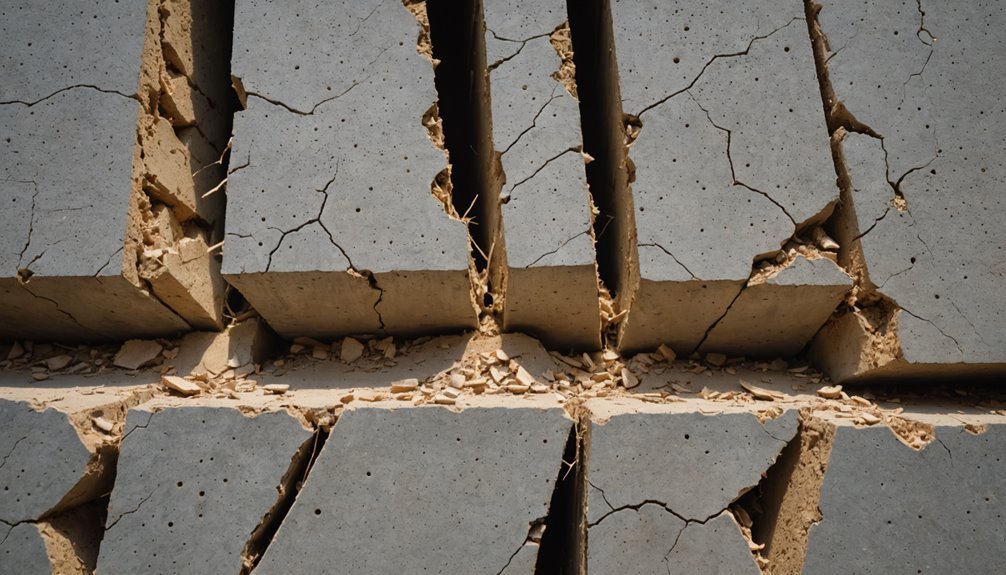
Early surface clues like hollow-sounding wood or blistered paint are concerning, but they don’t always reveal how far the damage has actually gone.
When termites move deeper into your structure, the signs shift from cosmetic to structural.
Watch for these indicators of advanced damage:
- Sagging or warped floors near crawl spaces suggest compromised joists or subflooring beneath.
- Cracked walls or foundation that continue widening point to hidden framing losing load-bearing strength.
- Ceiling sagging signals that termite activity has reached broader structural supports beyond surface wood.
- Rapid mud tube regrowth after removal confirms an active colony still accessing deep structural wood.
You should also probe soft wood with a screwdriver.
If it punctures easily or reveals internal voids, cellulose loss has already advanced well beyond the surface.
At that point, a professional inspection isn’t optional—it’s urgent.
How to Inspect Your Foundation for Termites
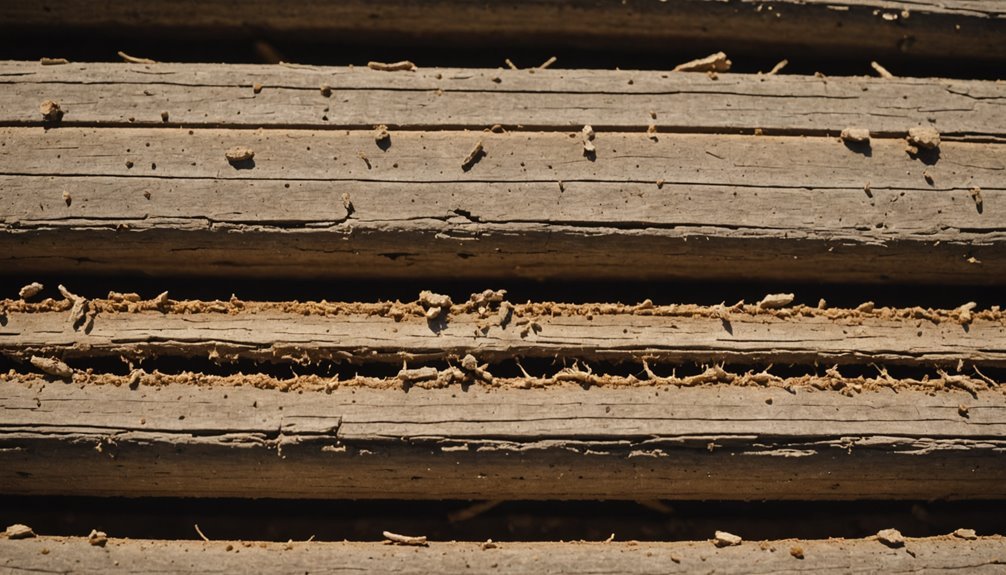
Knowing where to look makes all the difference when inspecting your foundation for termite activity. Start by walking the full perimeter and scanning where soil meets masonry or siding for mud tubes.
Check concrete, mortar joints, and expansion joints for cracks that could serve as entry points. Anywhere wood contacts soil—deck posts, fence posts, ground-level framing—deserves close attention.
Probe exposed wood with a flathead screwdriver. Soft, hollow, or crumbling sections signal feeding damage. Tap suspicious areas and listen for a dull thud, which indicates internal tunneling.
Examine window frames, sills, fascia boards, and any wood contacting slabs or steps.
Inside, walk slowly across floors and note any spongy or buckling spots. Inspect baseboards, wall bottoms, and cabinet framing for holes or discoloration.
Use a flashlight in closets and darker corners. Don’t assume you’re clear just because you don’t see mud tubes—termites often move through concealed routes.
When to Call a Professional Termite Inspector
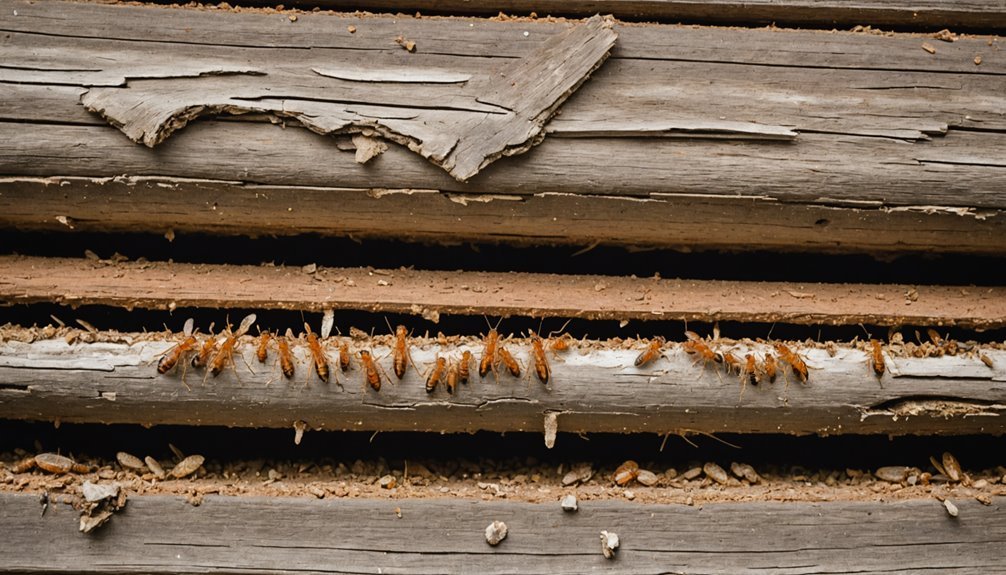
While a thorough DIY inspection gives you a solid starting point, certain signs demand professional attention immediately. If you spot mud tubes on your foundation, discarded wings near windows, frass near wood surfaces, or hollow-sounding wood, don’t delay — call a licensed termite inspector the same day.
Structural red flags also require urgent professional evaluation:
- Buckling floors or warped doors suggesting compromised framing
- Damage to load-bearing beams or structural timbers
- Wood rot in door and window frames indicating concealed infestation
- Large or spreading damage beyond a small, isolated area
Moisture problems plumbing leaks, poor crawl-space ventilation, or drainage issues near your foundation, further elevate your risk and justify faster scheduling.
You should also call before buying or selling a home, after failed DIY treatments, or following repeated termite sightings indoors.
Annual inspections remain the standard recommendation for most homes, with higher frequency in termite-prone regions.
How to Protect Your Foundation From Termites
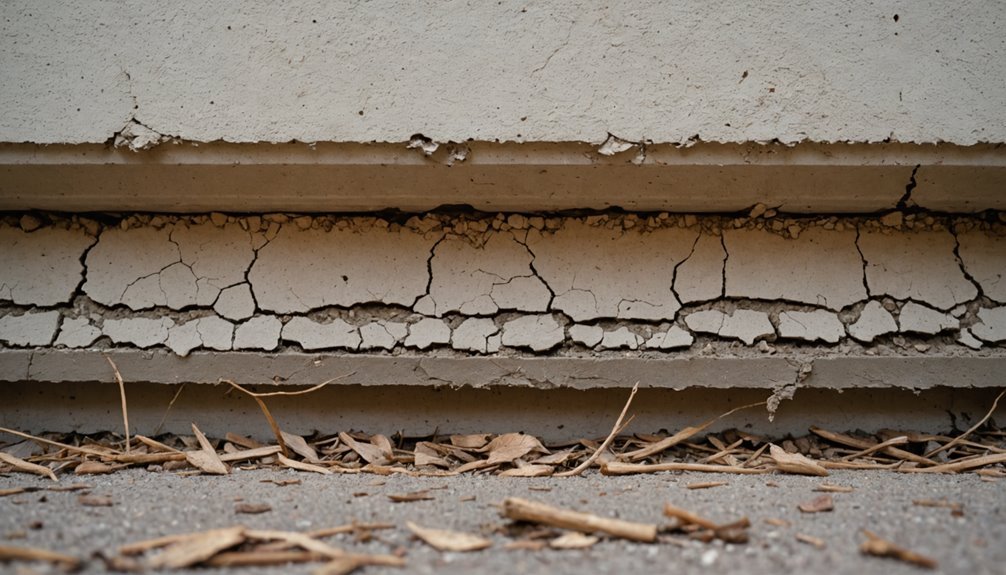
Once you’ve called in a professional and addressed an active infestation, the next step is making your foundation as hostile to termites as possible. Focus on four core areas: materials, clearance, moisture, and barriers.
Keep wood siding and framing at least 6 inches above soil, and maintain 18 inches of crawlspace clearance—36 inches in high-hazard zones. Fix leaking pipes, regrade soil to drain away from your foundation, and cover crawlspace soil with 4–6 mil polyethylene sheeting.
| Protection Area | Action | Goal |
|---|---|---|
| Foundation materials | Use solid masonry or concrete-filled block | Limit crack-based entry |
| Wood separation | Eliminate wood-to-soil contact | Remove food source access |
| Moisture control | Fix leaks; improve drainage | Reduce termite-attracting dampness |
| Physical barriers | Install sand, basalt, or metal mesh | Block subterranean movement |
| Sealing | Caulk utility penetrations and cracks | Close hidden entry points |
Remove firewood, stumps, and debris from the foundation perimeter, and keep mulch pulled back to reduce harborage.
Frequently Asked Questions
How Quickly Can Termites Cause Serious Structural Damage to a Home?
You’re looking at serious structural damage in as little as 3 to 5 years with untreated infestations. Aggressive Formosan termites can cause major harm in just 6 months under ideal conditions.
Are Certain Geographic Regions More Vulnerable to Termite Foundation Infestations?
Yes, you’re at higher risk if you live in Florida, Georgia, Texas, or California. Warm temperatures, humidity, and moisture near foundations make these regions prime targets for subterranean termite infestations.
Does Homeowners Insurance Typically Cover Termite-Related Foundation Damage Repairs?
Your homeowners insurance typically won’t cover termite-related foundation damage. Insurers classify it as a preventable maintenance issue, not a sudden accidental loss, so you’ll usually pay out of pocket for treatment and structural repairs.
Can Termites Infest Concrete or Masonry Foundations Directly?
Termites can’t infest concrete or masonry foundations directly, they don’t eat these materials. However, they can enter through cracks, gaps, and pipe penetrations, reaching the wood components inside your home.
What Time of Year Are Termites Most Actively Targeting Home Foundations?
You’ll see termites most actively targeting your home’s foundation from March through August. Warm, humid conditions drive subterranean termites toward moisture-rich soil near foundations, and you’ll likely spot mud tubes and swarmers during spring’s peak activity.
Conclusion
Your foundation is your home’s backbone, and termites won’t hesitate to compromise it. You’ve learned the warning signs, the risk factors, and the inspection steps that can save you thousands in repairs. Don’t wait until the damage goes deep. Act on what you’ve noticed, protect the vulnerable areas around your foundation, and bring in a professional when you’re unsure. Early action is always your best defense.

Pingback: Does Rain Wash Away Termite Treatment? What to Know Before You Reapply - Termite Control Care
Pingback: Do Termites Fly? (Only the Reproductives Do — Here's Why) - Termite Control Care