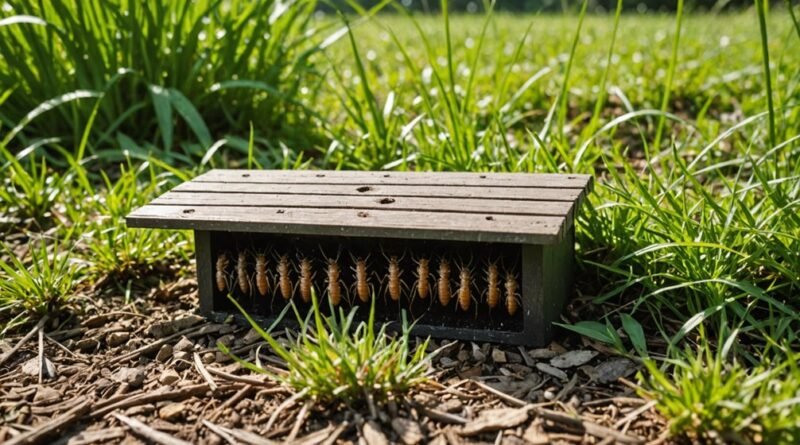
Do Termite Bait Stations Work
Termite bait stations do work, but they won’t deliver the overnight results you might be hoping for. They use a slow-acting termiticide that termites carry back to their colony, eventually wiping it out from the inside. Less than 5% of the colony needs to consume the bait for it to be effective. Results can take months, and success depends on proper placement and maintenance. Keep going to find out everything you need to know.
Key Takeaways
- Termite bait stations work by using slow-acting termiticide that workers carry back, spreading it colony-wide through food-sharing behavior called trophallaxis.
- Less than 5% of a colony needs to consume the bait to effectively eliminate it, disrupting molting and development.
- Results are not immediate; colony elimination can take several months, making bait stations a long-term pest management strategy.
- Effectiveness depends on proper placement, regular monitoring, timely bait replacement, and consistent service documentation throughout the treatment period.
- Bait stations excel at full colony elimination rather than barrier creation, making them ideal for environmentally sensitive or hard-to-reach areas.
Do Termite Bait Stations Actually Work?
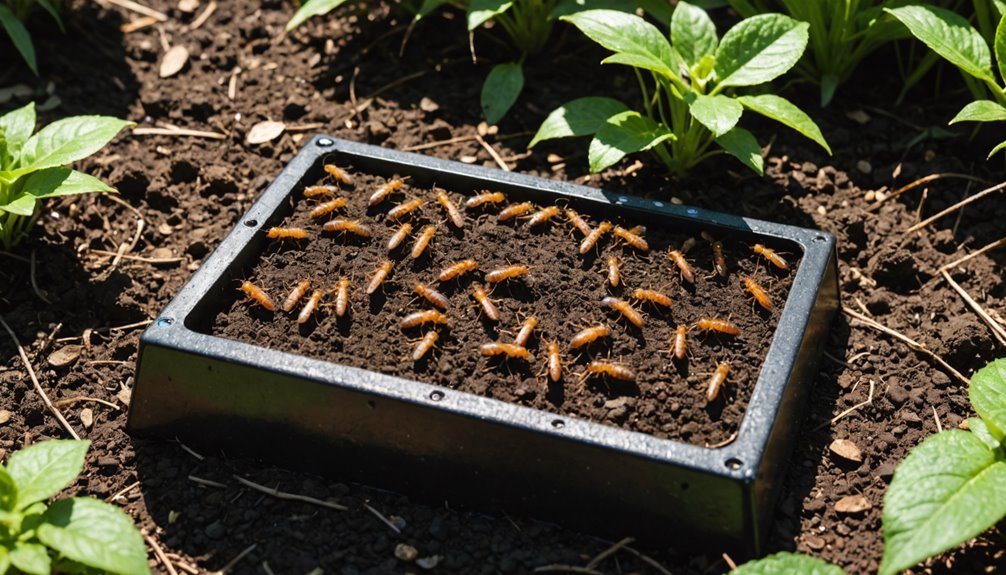
Termite bait stations can work, but their effectiveness depends almost entirely on how well you maintain them. They use cellulose-based material laced with a slow-acting termiticide, which lets termites feed and carry the poison back to the colony before dying. That delayed action is what makes colony-level control possible.
However, you shouldn’t expect instant results. A colony can take up to a year to even contact a station, and no system is 100% successful.
Termite bait stations aren’t a quick fix — colonies can take up to a year to even find one.
Spacing stations correctly, checking them every 60 to 120 days depending on bait status, and replacing consumed bait are all non-negotiable steps. If you install them and walk away, they’ll likely fail.
Consistent servicing is what separates a working system from a wasted investment. Among the available options, Trelona ATBS is widely regarded as the top-rated termite bait system on the market.
How Bait Stations Actually Kill an Entire Termite Colony
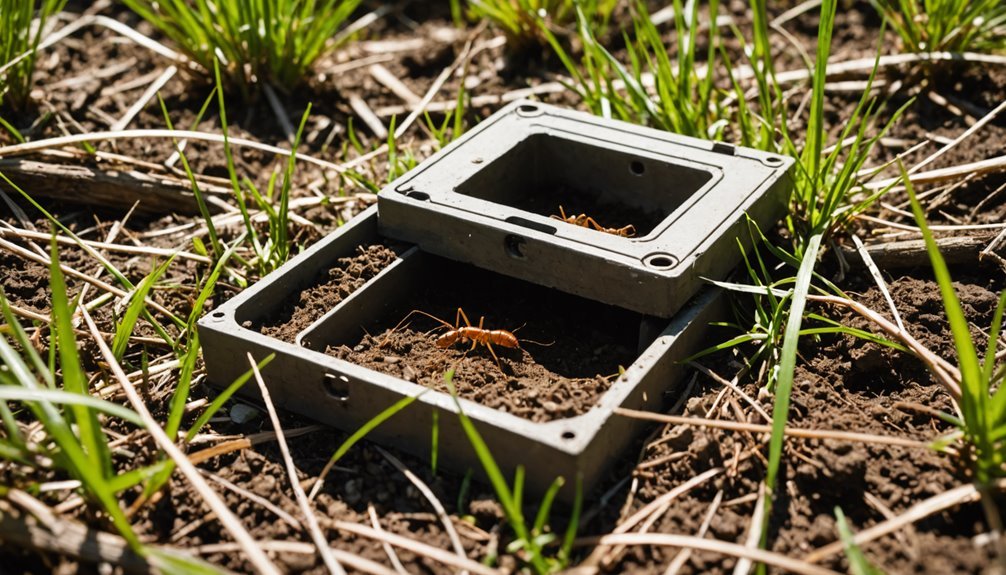
When foraging workers find a bait station, they don’t just eat and die on the spot—they carry the slow-acting toxicant back to the colony and share it through trophallaxis, a process where termites pass food directly among nestmates.
That feeding behavior turns every worker into an unwitting distributor, spreading the bait to soldiers, reproductives, and other workers who never visited the station.
Research shows that less than 5% of a colony’s population needs to feed on the bait to trigger complete colony elimination.
Slow-Acting Bait Design
Bait stations don’t kill termites quickly, and that’s by design. The active ingredient is typically an insect growth regulator (IGR) that disrupts molting, a process termites must complete to survive and develop.
Because the effect is slow, termites don’t associate the bait with harm and keep feeding on it.
This delayed action serves a critical purpose. Worker termites continue their normal behavior after consuming the bait, which means they carry it back to the colony and share it with others before dying.
If the toxicant killed them immediately, the bait would never spread beyond the workers that found the station. The slow-acting formula is what transforms a small feeding event at a bait station into a colony-level threat that can cause widespread collapse over weeks or months. This process of food sharing among colony members, known as trophallaxis, is what allows the poisoned bait to reach the queen and ultimately collapse the entire colony.
Colony Collapse Through Trophallaxis
Once a termite feeds at a bait station, a social behavior called trophallaxis takes over and does the rest of the work.
Worker termites carry the bait back to the nest and share it through mouth-to-mouth feeding, spreading the active ingredient far beyond the original feeders. Even the queen can be reached through this transfer chain.
Cannibalism near the central nest amplifies the spread further when the first affected termites get consumed by nestmates.
Scientists report that a small fraction of foragers can deliver a colony-wide lethal dose within days. From there, full colony collapse can occur within three to twelve months.
That’s what separates bait stations from liquid treatments, which only kill termites that directly contact treated soil. Bait stations also serve as an early warning system, alerting professionals to new termite activity before it becomes a serious structural threat.
How Termites Carry Bait Back and Collapse the Colony
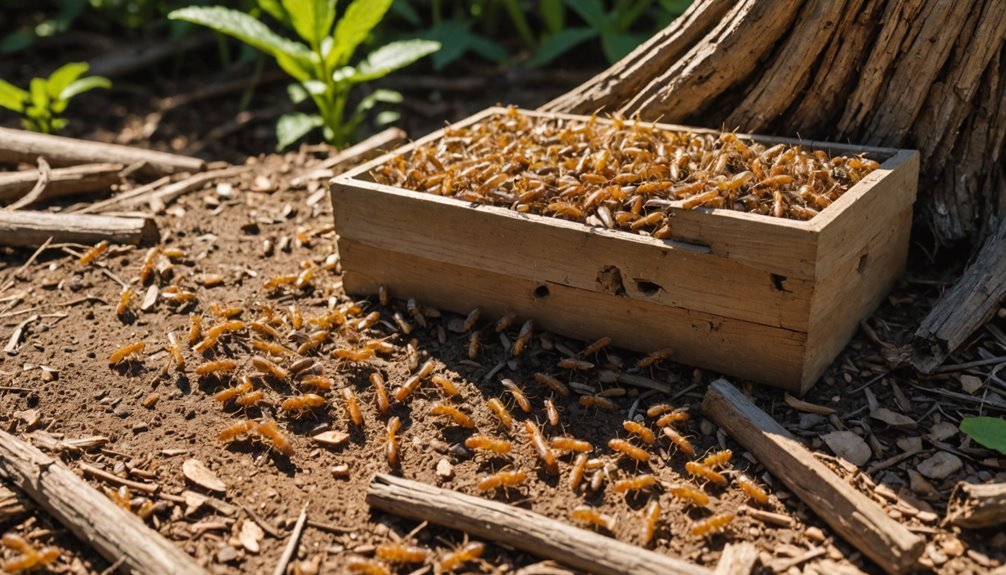
When a worker termite feeds at a bait station, it carries the slow-acting toxicant back to the nest and shares it with nestmates through trophallaxis, spreading the active ingredient far beyond the original feeders.
This social transfer reaches the queen, whose exposure eventually cuts off egg production and replacement of workers and soldiers.
Once the colony can no longer replenish its population, it collapses entirely.
Worker Termites Spread Bait
Worker termites do the heavy lifting once a bait station is accepted as a food source. They feed on the cellulose-based bait, then carry it back into the colony through normal feeding behavior.
You don’t need to do anything extra to trigger this process — it happens naturally as workers share resources throughout the nest.
The slow-acting ingredients are what make this spread possible. Because the bait doesn’t kill immediately, workers survive long enough to return and pass it to termites that never visited the station. The active ingredient works by containing an insect growth regulator that disrupts molting and development throughout the colony.
Reproductives, soldiers, and other colony members receive the bait secondhand. Over time, this reaches enough of the population to reduce worker numbers, which then cuts off food and care to the rest of the colony.
Trophallaxis Enables Colony Sharing
The process behind this colony spread has a name: trophallaxis. It’s the social feeding behavior termites use to pass food mouth-to-mouth among nest mates.
When a forager feeds at your bait station, it doesn’t just die on the spot. It carries the active ingredient back into the nest and shares it directly with workers, soldiers, and immature termites that never visited the station.
This is why slow-acting bait matters. If the toxicant killed quickly, sharing would stop before exposure reached deep into the colony. Instead, termites continue normal feeding patterns long enough for bait to circulate through the entire social network.
You’re fundamentally turning the colony’s greatest strength—cooperative food sharing—against itself.
That’s what makes bait stations a colony-control tool, not just a contact killer.
Queen Dies, Colony Collapses
Once foragers carry bait back to the nest, the colony’s own food-sharing network does the rest. Bait keeps circulating deeper into the colony until it reaches the queen.
That’s the turning point. Once reproductive function is disrupted, the colony can’t recover through egg production, and collapse becomes inevitable rather than temporary.
The brood feels the effects first. Because larvae and nymphs molt frequently, they’re especially vulnerable to IGRs like hexaflumuron or chlorfluazuron.
Studies report brood collapse within 20–30 days after foragers first feed at the station. The wider colony typically collapses around the three-month mark.
That timeline matters because it’s slow enough to allow full distribution but fast enough to prevent recovery. The colony eliminates itself from within.
How Long Do Termite Bait Stations Take to Work?
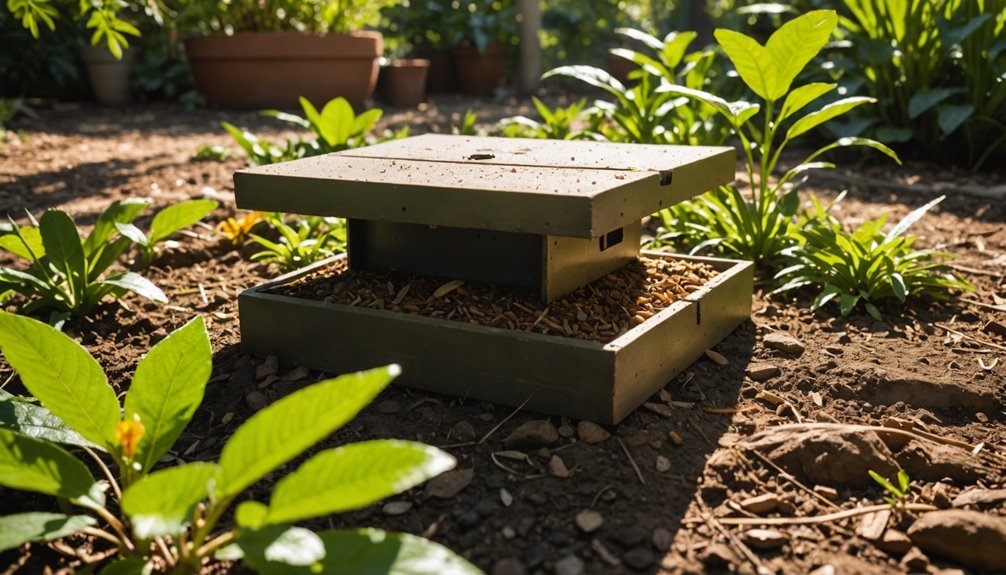
How long termite bait stations take to work depends on several variables, and there’s no single fixed timeline.
First, termites must find the stations through routine foraging, which you can’t predict or control. Once they start feeding, the slow-acting bait spreads through the colony before killing it.
According to UK Entomology, colony elimination can take several months or longer. NC State Extension confirms that baiting is a long-term approach, not a quick fix.
Termite colony elimination can take several months or longer — baiting is a long-term approach, not a quick fix.
Factors like colony size, termite pressure, temperature, and station placement all influence the timeline.
You should expect months, not days or weeks. Regular monitoring keeps stations ready so that when termites do find them, the bait remains active and effective throughout the elimination process.
How to Tell If Your Bait Stations Are Actually Working?
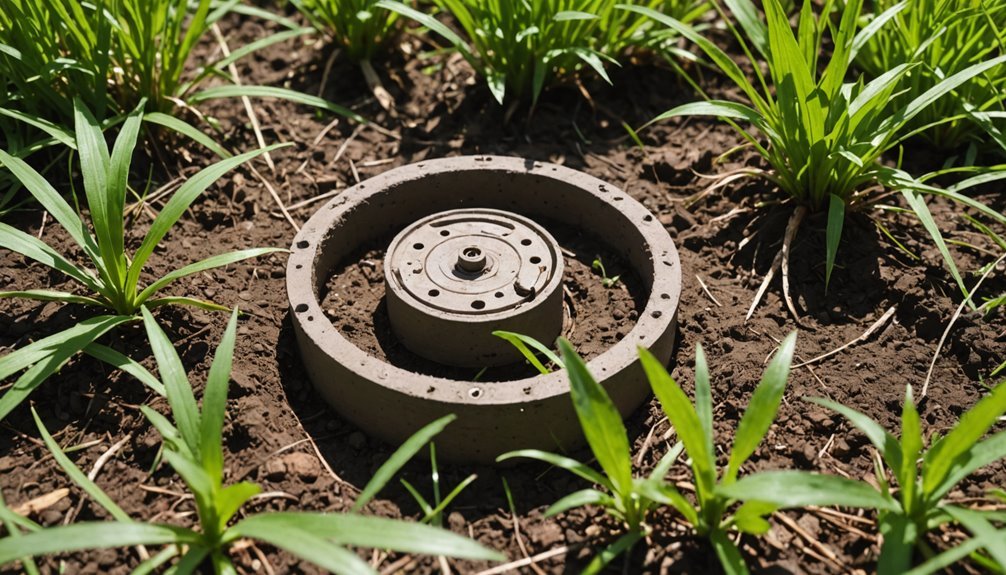
Knowing whether your bait stations are actually working comes down to a few key indicators you can check during each inspection.
First, look for visible bait consumption—if the bait level has dropped or the monitoring wood shows damage, termites have likely visited the station. Live termites, mud trails, or frass inside the station confirm active interception. Some systems include an indicator marker that disappears after feeding occurs.
Don’t overlook your service records.
Consistent inspection logs, timely bait replacements, and documented activity patterns across multiple stations tell you whether the system is functioning as intended. If stations haven’t been opened regularly or records are missing, you can’t trust what you’re seeing.
A working system leaves a clear paper trail alongside physical evidence.
Bait Stations vs. Liquid Treatments: Which Is Better?
When choosing between bait stations and liquid treatments, the answer depends less on which method is “better” and more on what your situation actually requires.
If termites are actively inside your home, liquid treatment gives you faster results. Bait stations work slowly by design, making them better suited for long-term colony suppression than immediate knockdown.
| Factor | Bait Stations | Liquid Treatment |
|---|---|---|
| Speed | Slow-acting | Faster results |
| Upfront Cost | Lower | Higher |
| Annual Renewal | Higher over time | Lower |
Cost also shifts depending on your timeline. Bait systems may cost less upfront, but recurring monitoring fees can double your annual expense compared to liquid renewal. Both methods work—your infestation’s urgency and budget will determine the right fit.
When Bait Stations Make More Sense Than Spraying
Bait stations aren’t the right tool for every situation, but they outperform liquid treatments in a few specific scenarios.
If your property has a sensitive landscape or hard-to-reach foundation, placing stations around the perimeter is far less disruptive than saturating the soil with liquid termiticide.
You’ll also prefer baiting when your goal is colony elimination rather than just blocking termites at the barrier. Liquid treatments kill what crosses the line; bait works from the inside out, reaching the entire colony.
If you already have a routine inspection schedule, the ongoing monitoring that baiting requires becomes an advantage rather than a burden.
And if environmental impact matters to you, baiting’s targeted, low-impact approach makes it the stronger choice over broad soil treatment.
Frequently Asked Questions
Can Termite Bait Stations Work Against Drywood Termites?
You can’t use termite bait stations against drywood termites. They don’t forage in soil, so they’ll never reach ground-based stations. You’ll need fumigation or spot treatments instead.
How Deep in the Soil Should Bait Stations Be Installed?
You’ll want to install bait stations so the housing sits about 3 to 4 inches below grade. Dig the hole roughly 9 inches deep, keeping the top cap flush with ground level.
Do Bait Stations Need to Be Replaced After Eliminating a Colony?
You don’t need to replace bait stations after eliminating a colony. Keep them in place to monitor for new termites from neighboring colonies. Replace bait cartridges when consumed and wood bases annually, based on condition.
Can Homeowners Install and Monitor Termite Bait Stations Themselves?
You can install DIY bait stations yourself, but you’ll need to place them correctly and monitor them regularly. Improper placement creates a false sense of security, so professional installation’s often the safer, more reliable choice.
Are Termite Bait Stations Safe for Children, Pets, and the Environment?
Yes, termite bait stations are safe for your children, pets, and environment. They’re tamper-resistant, use low-mammal-toxicity ingredients, and target only termites without contaminating soil or harming wildlife when you follow label directions.
Conclusion
Termite bait stations genuinely work, but they’re not an overnight fix. You’ll need patience since colonies can take months to collapse completely. They’re especially effective when you’re dealing with hard-to-treat areas or want to avoid chemical barriers. Whether you choose bait stations or liquid treatments, you’re making a smart move by tackling termites head-on. Don’t wait until the damage worsens—act now before termites compromise your home’s structural integrity.