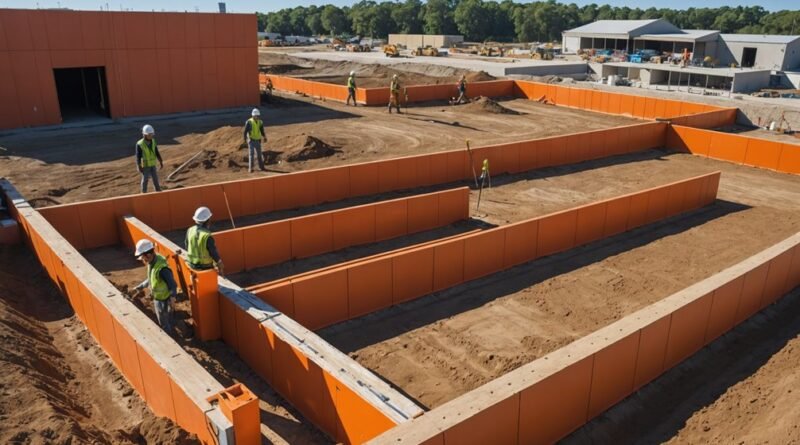
Termite Barriers for New Construction
You need termite barriers in new construction to prevent costly damage from subterranean termites. Consider using both physical and chemical barriers for thorough protection. Physical options like metal shields and stainless steel mesh, alongside site preparation, guarantee termites can’t sneak in. Choose termite-resistant materials such as treated wood or termite-repellent alternatives like cedar. By taking these steps, you’ll protect your investment and enhance your building’s longevity, learn more about choosing the right solutions for your project.
Key Takeaways
- Combine physical and chemical barriers for comprehensive termite protection in new construction.
- Metal shields and stainless steel mesh prevent termite entry through visible areas.
- Chemical soil treatments create protective zones around building foundations.
- Use termite-resistant materials like pressure-treated wood and natural options like cedar.
- Ensure proper site preparation and foundation design to reduce termite access and moisture build-up.
Why Termite Barriers Are Essential From the Start
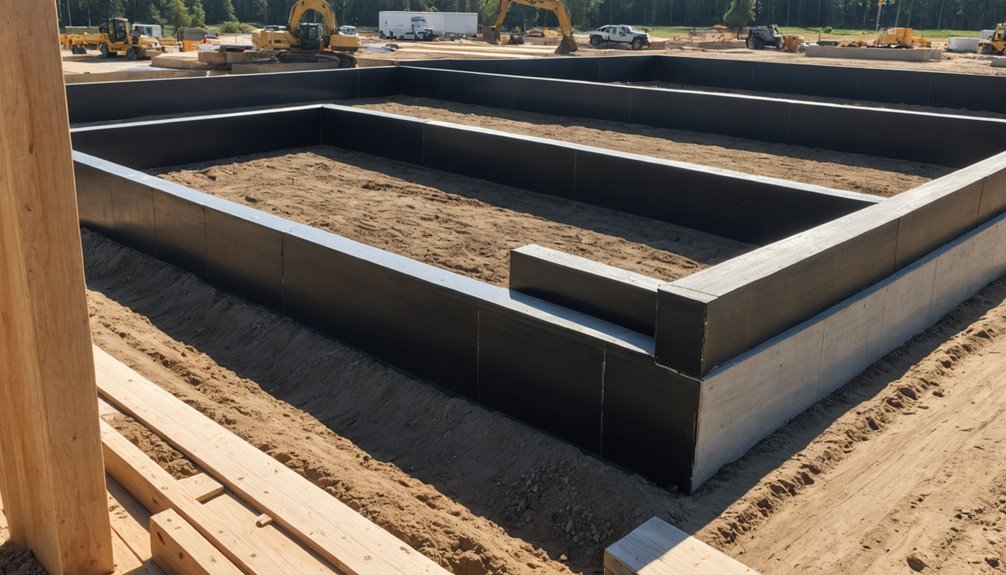
When it comes to new construction, guaranteeing termite barriers are in place from the start is essential. You want to prevent subterranean termites from reaching your wood, not deal with damage later.
During construction, it’s the perfect time to block termite access because foundation details and utility penetrations are still open. By incorporating prevention into your design, pretreatment, and site preparation, you reduce the risk of hidden entry through slabs, crawl spaces, and walls. Subterranean termites account for about 95% of termite damage, making early prevention crucial.
Moisture control plays a vital role, as termites thrive in damp conditions. Proper grading, gutters, and ventilation help manage water and moisture.
Eliminating wood-to-soil contact is also key; keep wood above grade and remove debris. Early installation of barriers guarantees effective, uninterrupted protection and meets building regulations.
Types of Termite Barriers in New Construction
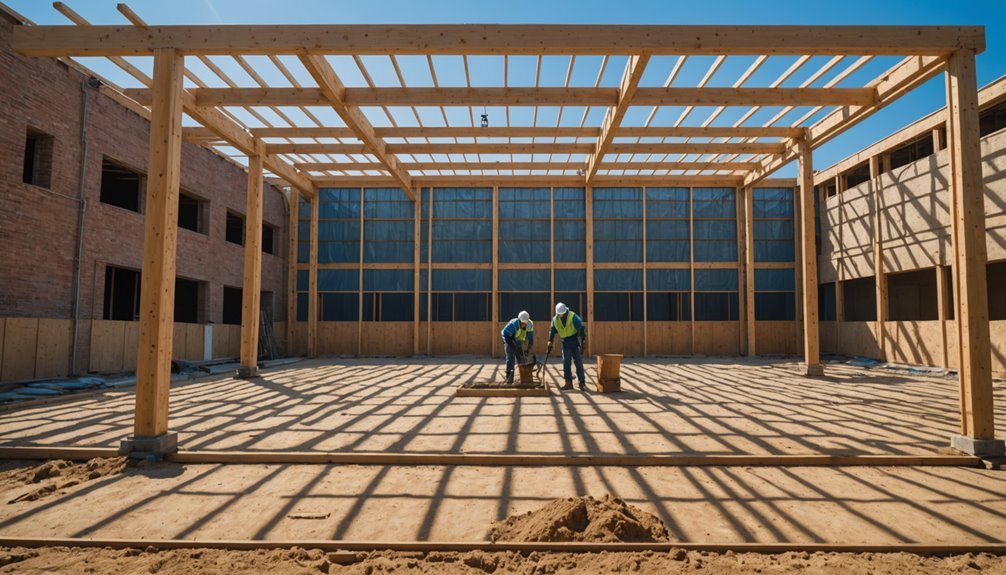
When planning new construction, you’ll want to explore both physical and chemical termite barriers to protect your investment. Physical barriers like metal termite shields and stainless steel mesh block termites from entering unnoticed, while sand and stone options provide non-chemical alternatives. Chemical barriers, applied as soil treatments, form a protective zone around your foundation, often working best in combination with physical methods for thorough defense. Incorporating termite-resistant materials such as pressure-treated wood and steel framing can further enhance your building’s resilience.
Physical Barrier Options
Although termites pose a significant threat to new construction, several physical barrier options can effectively deter these pests. You’ll find that each method targets termites in unique ways:
- Metal Termite Shields: Installed between the foundation wall and sill plate, these shields, made of galvanized steel or sheet copper, force termites into visible areas, aiding inspection. Confirm there are no gaps to prevent entry.
- Stainless Steel Mesh Barriers: Fine mesh installed under slabs and around penetrations blocks termites physically. It’s a non-chemical, continuous barrier that protects joints and walls. Installing these barriers is crucial in high-risk areas to ensure maximum protection.
- Sand and Crushed Stone Barriers: Using finely graded particles, these barriers prevent termites from moving through or tunneling. Installed around foundations, they create a stable, impenetrable zone.
Chemical Barrier Techniques
If you’re considering termite protection for new construction, chemical barrier techniques offer a highly effective solution. You’ll apply conventional liquid treatments to the soil around the foundation, creating a continuous barrier.
In new builds, termiticide is applied under slabs and around footings, pipes, and conduits. This forms vertical and horizontal barriers, protecting all sides of foundation elements like chimney bases and pillars.
In North Carolina, mix the insecticide with water, applying at a rate of 4 gallons per 10 linear feet, per foot of depth.
Critical structural wood can also be treated with disodium octoborate-tetrahydrate products like Bora-Care before siding. For best results, avoid soil-to-wood contact, control moisture, and guarantee proper drainage to support barrier effectiveness.
Site Preparation for Termite Barrier Success
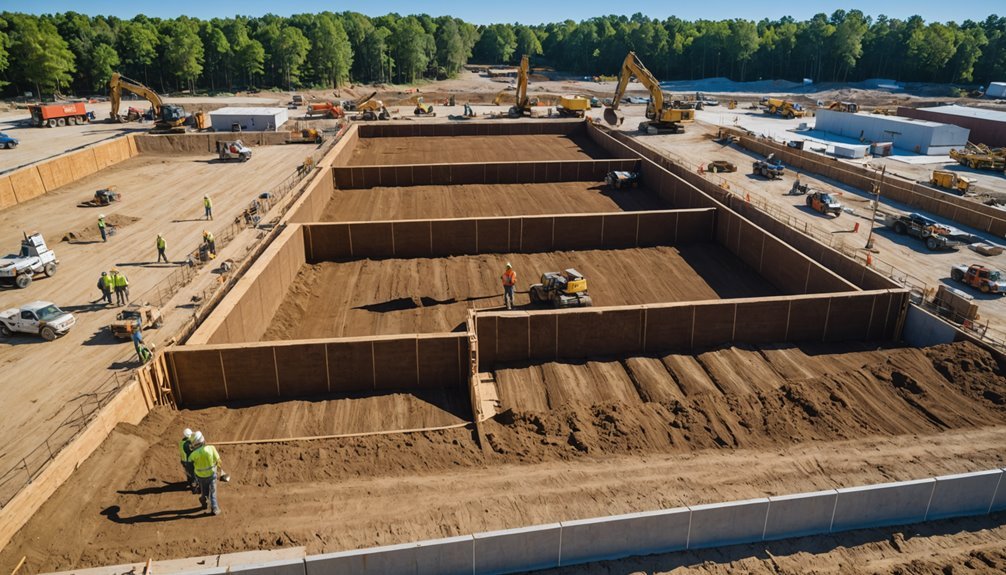
To guarantee termite barriers are effective, start with meticulous site preparation. First, clear the site of all potential termite food sources. Remove stumps, roots, and logs, and confirm no wood scraps or form boards are buried within 50 feet of the building.
Next, focus on soil and grade preparation:
- Use free-draining backfill to prevent moisture build-up.
- Maintain a 5% slope over 10 feet to direct water away from the structure.
- Confirm the exterior grade slopes away from the foundation to avoid ponding.
Finally, create proper crawl space and clearance conditions:
- Maintain at least 18 inches of clearance for inspections.
- Keep structural wood at least 8 inches above soil to prevent termite access.
Following these steps guarantees a robust termite barrier.
Designing Foundations to Prevent Termite Entry
To effectively prevent termites from entering your new construction, focus on minimizing concrete cracks and sealing utility penetrations.
Reinforce your slabs and use sound construction practices to control shrinkage and reduce potential entry points.
Additionally, guarantee all utility penetrations are sealed properly to eliminate gaps that termites could exploit.
Minimizing Concrete Cracks
While designing foundations to prevent termite entry, minimizing concrete cracks is essential. Cracks can become pathways for termites, so it’s vital to focus on the right techniques.
Start by ensuring the concrete cures slowly, ideally for at least seven days, to reduce shrinkage. Use proper mix design and reinforcing for larger foundations to prevent cracking.
Here are steps you can visualize:
- Reinforce slabs properly: This reduces movement and drying shrinkage, preventing service cracks.
- Apply topical curing compounds: Especially for smaller slabs, this helps decrease cracking.
- Inspect and repair promptly: Any foundation crack, no matter how small, should be addressed quickly to prevent termite access.
Sealing Utility Penetrations
Preventing termite entry involves more than just addressing concrete cracks; utility penetrations also require careful attention. Pipes, conduits, and wiring can create direct pathways for termites. To block these, seal small gaps with foam, spackle, or caulking.
For larger openings, use corrosion-resistant copper or stainless steel mesh, possibly combined with foam. Install termite-proofing collars on penetrations in slab foundations before pouring concrete.
Use epoxy around pipe penetrations and cover sealed areas with metal flashing for added security. Confirm construction details allow easy access for sealing and inspection, especially in crawl spaces.
Regularly inspect and maintain these seals, as even minor failures can reopen access for termites, compromising your home’s defenses.
Choosing the Right Physical Barrier for Your Build
When selecting the right physical barrier for your build, it’s crucial to evaluate both material and installation precision.
Consider sand or basalt barriers for their effectiveness in deterring termites at the foundation perimeter. Proper installation is key, ensure depth and width specifications are met to avoid gaps.
Metal mesh systems are another option, offering solid protection at the foundation level. Precision is critical; even minor seams can become entry points.
Here are three key considerations:
- Foundation Perimeter: Use sand or basalt barriers at least 4 inches deep and 20 inches wide.
- Metal Mesh Systems: Use stainless steel mesh with tight seams to block termites.
- Slab Penetrations: Seal around utility penetrations to prevent termite access.
Keep these factors in mind to protect your build effectively.
What Materials Work Best Against Termites?
After selecting the right physical barriers for your build, it’s important to focus on materials that stand up to termite threats. Use pressure-treated wood, like CCA, ACQ, or borate-treated lumber, especially for wood in contact with soil.
Borate treatments protect unfinished wood from termites and decay when applied early.
Opt for natural termite-resistant woods such as cedar and redwood. For structural components, concrete, steel, brick, and stone are excellent choices as they don’t attract termites.
Fill hollow-block foundations with concrete to prevent entry.
Consider stainless steel mesh barriers, using grade 304 or 316 wire for added protection in foundations and wall penetrations.
Finally, sand and crushed basalt barriers can effectively block termite movement around foundations. Choose materials wisely to guarantee robust protection.
Frequently Asked Questions
How Do Termite Barriers Affect Construction Timelines?
Termite barriers can extend construction timelines by adding steps like trenching, drilling, and coordinating with slab and utility work. You’ll need to plan carefully to avoid delays, especially with complex foundation layouts and crawlspace preparations.
Can Termite Barriers Be Retrofitted to Existing Buildings?
Yes, you can retrofit termite barriers in existing buildings. It’s more complex than new construction but feasible. Options include physical, chemical, and bait systems. Access, design, and cost considerations will influence your approach and success.
What Is the Cost Range for Installing Termite Barriers?
You’ll find termite barrier costs range from $1,500 to $6,000, depending on the type and size of your home. Physical and chemical options differ, and factors like location and complexity can influence pricing.
How Do Termite Barriers Impact Property Value?
Termite barriers protect property value by preventing infestations, reducing future damage risks. They help maintain resale value, boost buyer confidence, and avoid costly repairs. Early prevention guarantees your property stays marketable and attractive to potential buyers.
Are There Eco-Friendly Termite Barrier Options?
You’ve got eco-friendly options like sand barriers and borate treatments. These methods block termites without chemicals, making them safer for the environment. Guarantee proper installation for effectiveness, and they’ll enhance sustainability in construction projects.
Conclusion
By incorporating termite barriers from the start, you guarantee your new construction remains protected and durable. Choose from various barrier types and focus on proper site preparation to maximize effectiveness. Design your foundations thoughtfully and select the right physical barriers to prevent termite entry. Use materials known for their resistance to termites, and you’ll create a strong defense. Remember, a proactive approach now saves you from costly repairs and damage later. Stay vigilant, and your investment will thrive.