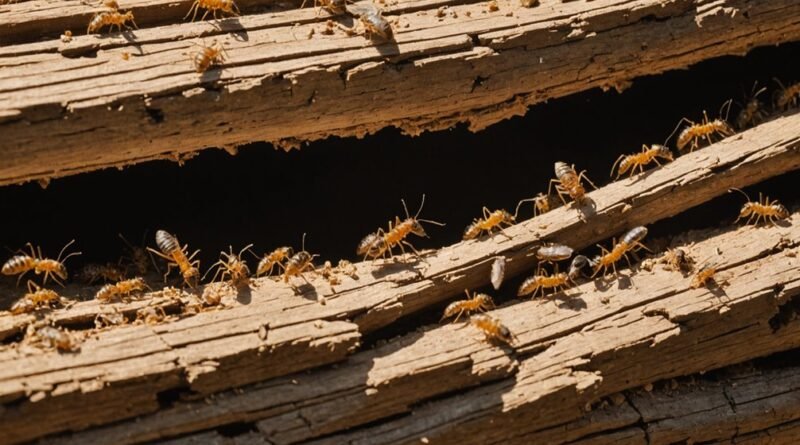
How Much Structural Damage Can Termites Do
Termites can seriously damage your home’s structure, eating away at support beams, walls, and floors. Within just a year, large colonies can cause significant harm, potentially leading to thousands in repairs. You’ll notice signs like hollow wood, sagging floors, and misaligned windows. Catching them early through regular inspections can save you from hefty costs. If you’re curious about minimizing risks and understanding treatments, more information awaits.
Key Takeaways
- Termites can seriously damage structural components like beams and joists within 3 years.
- Large colonies may cause visible damage in just 6 to 12 months.
- Extreme cases can lead to home destruction in 1 to 2 years.
- Annual U.S. property damage from termites totals approximately $5 billion.
- Repair costs vary, with major structural repairs exceeding $10,000.
The True Impact of Termite Damage on Your Home
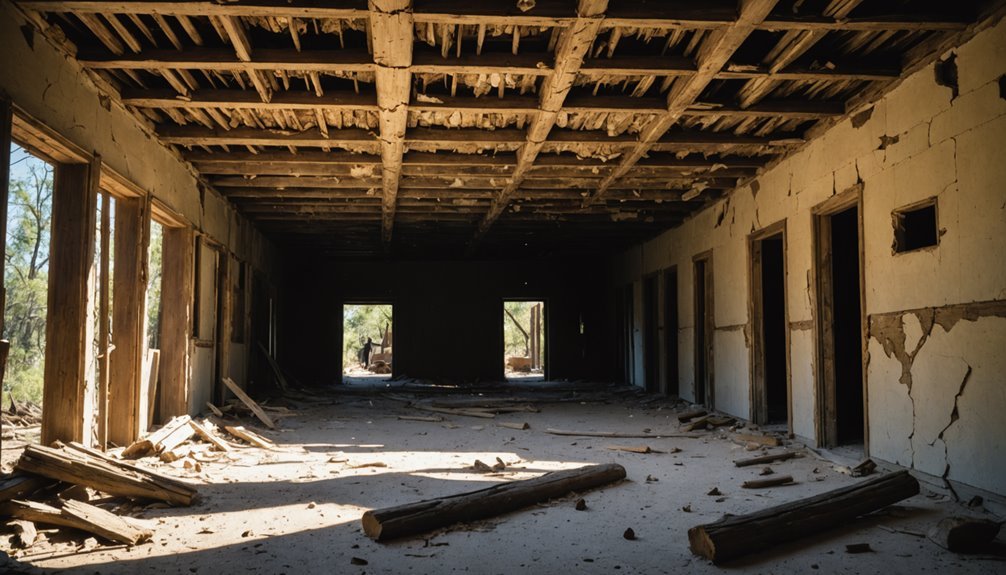
While termites might seem like a minor nuisance, their impact on your home can be devastating. In just three years, these pests can transform hidden wood consumption into serious structural damage. They target support beams, load-bearing walls, and floor joists, jeopardizing your home’s stability.
You mightn’t notice the damage immediately, as it often develops from the inside out, leaving surfaces intact while compromising internal framing. Homeowners in humid climates, like Eastern NC and Tidewater VA, are particularly at risk due to the year-round termite pressure.
Annually, termites cause about $5 billion in property damage across the U.S. Repairing termite damage can cost thousands, with floor joists and structural beams being particularly expensive.
Signs of damage include hollow-sounding wood and soft, sagging floors. Doors and windows might stick as frames warp. Ignoring these signs can lead to your home becoming unsafe or even uninhabitable.
How Termites Weaken Your Home
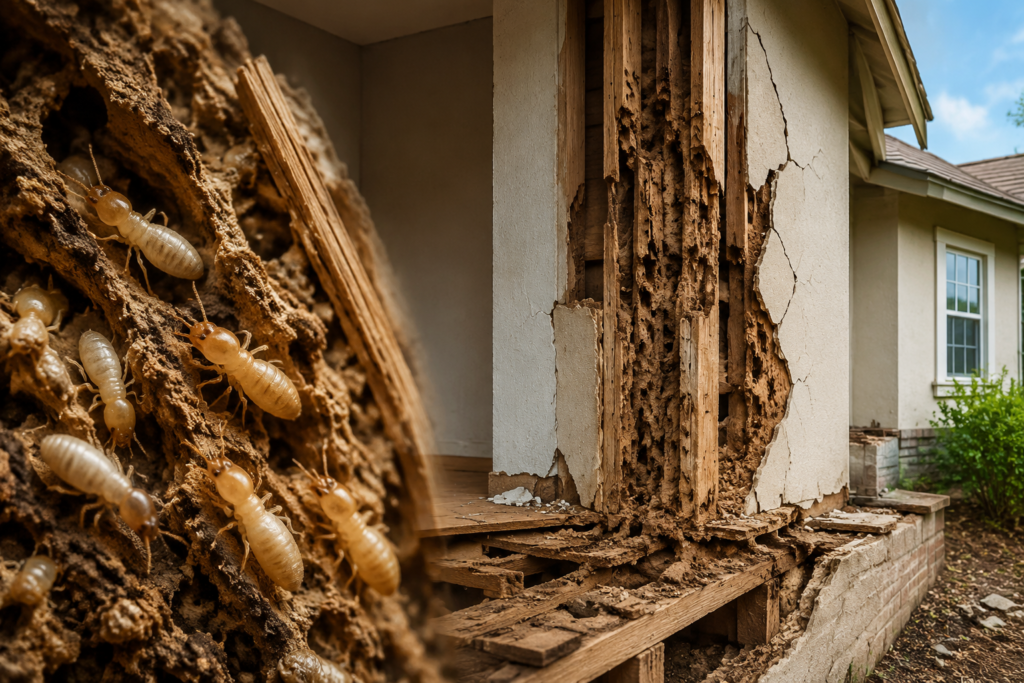
When termites invade your home, they create havoc by hollowingout the interior of wooden structures while leaving the surface deceptively intact. They tunnel through beams, joists, and studs, weakening your home’s core without obvious surface damage.
You might notice a hollow sound when tapping wood, which signals internal structural loss. This hidden damage makes beams and supports vulnerable to sagging and failure.
Subterranean termites often attack foundation-adjacent wood, leading to misaligned door and window frames. Their tunneling can introduce moisture, accelerating decay and mold growth, especially in damp areas like basements. Formosan subterranean termites can even establish aerial colonies, making them a significant threat due to their aggressive feeding habits.
Moisture issues, combined with termite activity, compromise structural integrity faster, making your home susceptible to serious damage and costly repairs.
The Speed of Termite Destruction
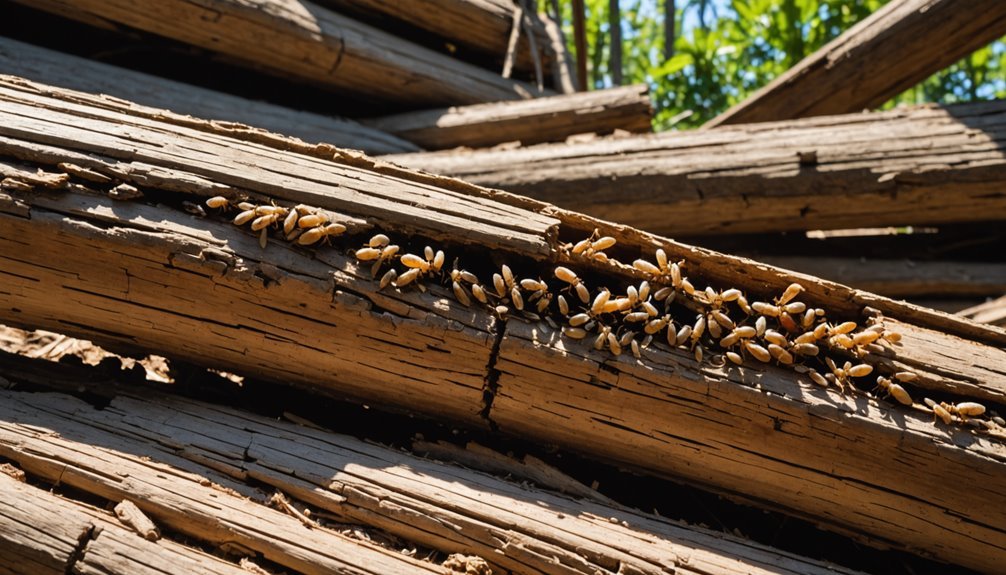
Termites can wreak havoc on your home surprisingly fast. If left untreated, you might notice damage in just 3 to 8 years. However, some infestations can cause visible destruction in as little as 6 to 12 months, especially with large colonies or aggressive species like Formosan termites. A mature colony with about 100,000 to 2 million termites can consume a pound of wood per day, hastening structural damage within months. In extreme cases, these pests might even destroy a home in 1 to 2 years. Early signs include hollowed wood, sticking doors, and sagging floors. Even smaller groups steadily cause damage, but larger colonies accelerate destruction markedly. Quick detection and action are vital to prevent severe outcomes. Homeowners insurance typically does not cover termite damage, making early intervention even more crucial.
Where Termites Cause Damage
Understanding how quickly termites can cause destruction highlights the importance of knowing where they typically inflict damage.
Start by checking the foundation and crawl spaces. Termites use mud tubes to access wood, particularly near foundation cracks and crawl spaces with excess moisture.
Flooring and subflooring are also vulnerable. You might notice buckling, blistering, or squeaky floors, indicating damage beneath.
Walls and drywall often show bubbling or blistered paint, with hollow-sounding sections hinting at hidden activity.
Inspect door and window frames for misalignment or soft spots, as termites often tunnel near utility openings.
Finally, look at roof framing and attics, where discarded wings or hollow wood could signal trouble.
Exterior wood, like decks, may also suffer damage.
How Do Subterranean and Drywood Termites Differ?
Ever wondered how subterranean and drywood termites differ? Subterranean termites live in soil, building vast underground colonies, while drywood termites reside entirely inside wood. The former requires high moisture, thriving in soil, whereas the latter survives in low-moisture environments, drawing water from wood itself.
Here’s a quick comparison:
| Feature | Subterranean Termites | Drywood Termites |
|---|---|---|
| Habitat | Soil-based | Inside dry wood |
| Colony Size | Hundreds of thousands | Few thousand |
| Moisture Requirement | High, soil-dependent | Low, wood-dependent |
| Feeding Behavior | Eats between the grains | Eats across the grain |
Subterranean termites cause faster damage due to larger colonies, while drywood termites work slowly yet persistently. Both can wreak havoc if left unchecked.
Spot Early Signs of Termite Infestation
Curious about identifying termite troubles early on? Look for pencil-width mud tubes on foundations or walls. These dirt tunnels protect termites from dry air as they travel. Break a tube; if termites appear or it’s repaired soon, you’ve got an active infestation.
Notice swarmers or piles of discarded wings near windows? It’s a sign of a nearby colony. Tap wood, if it sounds hollow, termites might be feeding inside. Soft, papery wood or visible tunnels indicate damage.
Swarmers or piles of discarded wings near windows suggest a nearby termite colony. Hollow-sounding wood may indicate hidden feeding.
Watch for bubbling paint, warped floors, or sticking doors, all pointing to structural changes. Frass, resembling tiny pellets, signals feeding activity, while soft clicking noises from walls suggest termites moving.
Stay alert to musty smells, hinting at moisture and infestation.
Understanding the Cost of Termite Repairs
When dealing with termite damage, costs can vary widely depending on the extent of the destruction. Minor repairs might just involve patching drywall or replacing small wood sections, costing around $250–$1,000. Moderate damage could mean walls or flooring repairs, with costs ranging from $1,000 to $5,000. Major structural issues like beams or load-bearing walls can soar to $3,000–$10,000+.
| Repair Type | Cost Range | Common Areas Affected |
|---|---|---|
| Minor | $250–$1,000 | Drywall, small wood sections |
| Moderate | $1,000–$5,000 | Walls, flooring, framing |
| Major Structural | $3,000–$10,000+ | Beams, load-bearing walls |
Foundation repairs can be even more expensive, sometimes exceeding $30,000, especially if extensive reconstruction is needed.
How to Prevent Termite Infestations
Addressing the costs of termite damage highlights the importance of taking preventive steps to avoid these expenses.
Start by reducing moisture around your home. Fix leaks in faucets, pipes, and AC units promptly. Make sure crawl spaces and attics are well ventilated, using vapor barriers or dehumidifiers as needed.
Eliminate wood-to-soil contact by keeping wood at least six inches above ground and replacing damaged wood with termite-resistant materials.
Remove cellulose food sources like firewood and debris, storing them far from your home.
Seal entry points by patching cracks and closing gaps around water and utility lines.
Finally, support inspection and maintenance by scheduling annual termite inspections and staying alert for signs like mud tubes and hollow wood.
Effective Treatments for Termite Control
When tackling termite problems, you’ve got a range of chemical treatment options like liquid termiticides and bait systems that effectively target and eliminate colonies.
These chemical barriers and baits work by poisoning termites and disrupting their life cycles.
For a greener approach, consider natural prevention methods, such as maintaining proper moisture levels and using termite-resistant materials to keep these pests at bay.
Chemical Treatment Options
Few challenges in home maintenance are as intimidating as combating termite infestations, but effective chemical treatments can offer a robust defense. You can choose from various options depending on the situation. For soil treatments, termiticides like Fipronil and Imidacloprid are popular for their lasting impact. Wood treatments often use Borate products like Bora-Care for protection. Foam and dust treatments, such as Termidor Foam, target localized infestations effectively.
| Treatment Type | Chemical | Application |
|---|---|---|
| Soil | Fipronil | Perimeter |
| Soil | Imidacloprid | Foundation |
| Wood | Borate | Pre/Post-Construction |
| Foam | Termidor Foam | Indoor |
| Bait | Diflubenzuron | Colony Suppression |
Baiting systems, using Diflubenzuron, focus on colony-wide control. Choose your approach based on your specific needs.
Natural Prevention Methods
While battling termites can be intimidating, embracing natural prevention methods offers an eco-friendly solution to safeguard your home. Start by managing moisture, as termites thrive in damp environments. Fix leaks and install vapor barriers in basements.
Next, focus on landscaping. Keep mulch away from foundations and use gravel instead of wood. Trim vegetation to maintain airflow. Seal any cracks in your structure and treat wood with termite-resistant coatings.
Consider natural deterrents like orange oil and diatomaceous earth, which can be applied directly to infested areas. Finally, employ biological controls, such as introducing nematodes to your garden.
- Moisture Control: Fix leaks, install vapor barriers.
- Landscaping: Use gravel mulch, trim vegetation.
- Natural Deterrents: Apply orange oil, use diatomaceous earth.
When to Call a Pro for Termite Inspection
Visible structural damage means the problem is serious.
Sagging floors or drooping drywall indicate potential load-bearing issues.
If you’ve tried DIY solutions but see repeated signs, it’s time for professional help.
Regular inspections, especially in high-risk areas or after remodeling, can catch issues early and save you from costly repairs.
Frequently Asked Questions
Can Termites Cause Damage to Non-Wood Materials?
Yes, termites can damage non-wood materials. They tunnel through plaster, drywall, insulation, and certain plastics to reach cellulose. Even if they’re not eating these materials, their search for food and moisture can cause harm.
How Do Termites Affect Home Resale Value?
Termites considerably reduce home resale value. You might face a 20% to 30% drop due to infestations. Repairing damage and obtaining a termite-free certificate can help, but history can still lower value by 5% to 10%.
Are Certain Climates More Prone to Termite Infestations?
Yes, you’re more likely to face termite infestations in warm, humid climates. These conditions support their activity and expansion, especially in the Southeast and coastal areas. Keep an eye on moisture levels to reduce risk.
What Is the Lifespan of a Termite Colony?
A termite colony can last from a few years to several decades. Queens and kings live the longest, up to 70 years, while workers and soldiers typically live 1 to 2 years, supporting colony longevity.
Can Insurance Cover Termite Damage Repairs?
Insurance usually doesn’t cover termite damage repairs, as it’s seen as preventable maintenance. However, if secondary damage involves a covered peril, like fire or collapse, your policy might help with those specific costs.
Conclusion
Termites can wreak havoc on your home, causing significant structural damage if not addressed quickly. They weaken wood, compromising your home’s integrity, and can work alarmingly fast. Whether dealing with subterranean or drywood termites, the costs can add up quickly. Prevent infestations by staying vigilant, using effective treatments, and knowing when to call a professional for inspections. Protect your investment by taking proactive steps to keep these destructive pests at bay.