Does FHA Loan Require Termite Inspection
With an FHA loan, a termite inspection isn’t automatically required, but several factors can trigger one. If there’s evidence of a termite issue or state and local laws demand it, expect an inspection. Often, in areas prone to termites or when appraisers note suspicious conditions, inspections become necessary. Lenders might also request one based on property risks. To understand the nuances and how they affect your FHA loan process, continue exploring further.
Key Takeaways
- Termite inspections for FHA loans are not universally required but depend on infestation signs or local/state laws.
- High-risk areas on the Termite Infestation Probability Map are more likely to require inspections.
- Lenders may mandate inspections based on internal policies or geographic norms, even without visible infestation signs.
- FHA appraisers may request inspections if they notice signs like mud tubes, damaged wood, or water damage.
- Some states, like Florida, require termite inspections for all FHA-financed properties.
Do I Need a Termite Inspection for My FHA Loan?
Wondering if you need a termite inspection for your FHA loan? It’s not automatically required for every loan.
FHA guidelines mandate a wood-destroying insect inspection only when there’s active infestation, state or local rules demand it, it’s customary in your area, or the lender requests it. Inspections might also be necessary if the appraiser notes evidence of infestation on the appraisal forms.
Wood-destroying insect inspections are required by FHA only if there’s an active infestation, local rules, area customs, or lender requests.
Existing properties don’t universally need this inspection under FHA rules. Remember, FHA pest inspections focus on wood-destroying insects that threaten structural components and are separate from standard home inspections.
Lenders might have stricter rules than FHA, so requirements can differ. Always check your lender’s specific conditions.
If you’re in a termite-prone region or where it’s standard practice, anticipate this inspection being part of the process.
What Triggers an FHA Termite Inspection?

When you’re securing an FHA loan, several factors can trigger a termite inspection. Visible signs of infestation, such as damage or evidence of previous treatment, will prompt further scrutiny. Additionally, local laws and lender discretion can mandate inspections, ensuring the property’s integrity and compliance with regional requirements. It’s important to note that licensed professionals are required for conducting these inspections in termite-prone areas to ensure reliability and accuracy.
Evidence of Infestation
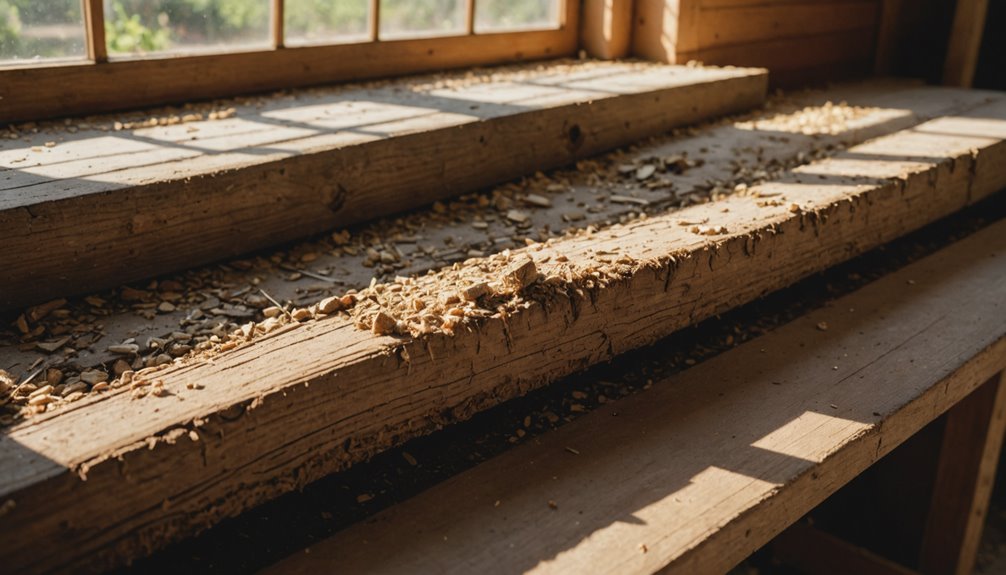
If you’re maneuvering the FHA loan process, it’s crucial to understand what triggers a termite inspection. The most direct trigger is evidence of active wood-destroying insect infestation. Look for signs like live insects, mud tubes, frass, or damaged wood. The FHA mandates an inspection only if there’s evidence of such activity. Appraisers and lenders will often flag suspicious conditions, like decay or damage from past infestations, that could also prompt an inspection. Even without visible signs, lenders might request an inspection at their discretion. Conditions that suggest risk, such as water damage or wood touching the ground, can raise concerns. In regions identified on the Termite Infestation Probability (TIP) Map as high-risk, inspections are more likely to be required. If infestation is confirmed, treatment and repairs must be completed before closing to guarantee compliance with FHA requirements.
Local Law Requirements
Maneuvering the world of FHA loans involves understanding local law requirements, especially when it comes to termite inspections. State and local laws often dictate if an inspection is necessary.
For instance, state statutes require termite inspections for all FHA-financed properties, regardless of what an appraiser finds. In Florida, due to high infestation rates, inspections are mandatory. Similarly, Nevada’s real estate licensing laws demand pest inspections for FHA transactions.
In California, coastal properties need proof of termite protection under local ordinances. Customary practices also trigger these inspections; in the Southeast and Midwest, it’s standard to include them in FHA packages.
Federal guidelines align with state laws, ensuring termite inspections where infestation risks are documented, especially in high-risk zones like the Southeast and Southwest.
Lender Discretion
Although not every FHA loan requires a termite inspection, certain triggers make it necessary, and lender discretion plays an essential role.
Lenders can require an inspection even when other mandatory triggers aren’t present. They might impose it as a condition of underwriting or closing, based on their internal policies or risk tolerance. In some cases, lenders request a termite inspection waiver signed by both buyer and seller if it’s waived contractually.
Your lender’s requirements may be stricter than FHA’s baseline standards, especially in termite-prone areas or older homes with visible moisture issues.
If any concerns arise during appraisal, a lender might follow up with an inspection request. This proactive approach guarantees the property meets FHA guidelines before closing.
Key FHA Guidelines for Termite Inspections

When you’re maneuvering through FHA guidelines for termite inspections, understanding the triggers is essential.
Inspections typically kick in if there’s evidence of infestation, if regional laws demand it, or if it’s a common local practice.
Make certain to take these factors into account to guarantee compliance and prevent any loan processing delays.
Inspection Triggers Explained
Understanding when a termite inspection is required for an FHA loan is essential for guiding the process smoothly. FHA doesn’t automatically require a termite inspection for every loan. It’s determined by specific triggers that can vary based on several factors.
Here’s what you need to know:
- Evidence of active infestation by wood-destroying insects is a primary trigger.
- State or local laws might mandate a termite inspection.
- Inspections can be customary in certain local markets or geographic areas.
- Lenders can require an inspection at their discretion, even without FHA’s automatic requirement.
- Appraisers may trigger an inspection if they notice signs of infestation during their review.
Infestation Evidence Requirements
Recognizing the triggers for termite inspections is just the beginning; knowing the specific evidence requirements for an FHA loan is equally important.
FHA demands a termite inspection when there’s clear evidence of active infestation. This includes visible signs of pests, as noted by an appraiser, and significant damage linked to infestation.
It’s not about the property’s age but observable conditions. If active infestation is confirmed, a licensed pest control inspection is necessary, and treatment must occur before loan closing.
The property needs certification as free of active infestation. Documentation from these inspections becomes part of the lender’s review.
Regional Inspection Practices
In the domain of FHA loan inspections, regional practices play an essential role in determining the need for termite reviews. You’ll find that requirements aren’t automatic but vary based on several factors:
- Local laws: Some areas have mandates for termite inspections.
- Customary practices: If it’s typical in your region, an inspection might be expected.
- Geographic termite pressure: Warmer regions often see more inspection requests.
- Appraiser’s notes: Signs of infestation during appraisal can trigger an inspection.
- Lender discretion: Even without direct evidence, lenders might still necessitate it.
Understanding these regional practices helps you navigate the FHA loan process effectively.
Whether in the termite-prone South or the cooler North, knowing local norms guarantees you’re prepared for any inspection needs.
How Does Your Region Affect Inspection Requirements?
When it comes to FHA loan termite inspections, your region plays a significant role in determining the requirements. In termite-prone areas like the Southeast and Southwest, inspections are more common due to higher infestation risks.
For instance, in Florida, inspections are almost routine. State and local laws also influence whether an inspection is necessary; some areas mandate it regardless of FHA guidelines.
If your property is in a high-risk zone, lenders might order inspections even if FHA doesn’t require them universally. An appraiser’s findings can trigger an inspection, especially if they notice signs of infestation.
What Are FHA Inspectors Looking For?
Although the FHA appraisal isn’t a full home inspection, it plays an essential role in identifying potential termite issues. FHA appraisers focus on visible signs of active or past infestations. They’re not just looking for termites; they’re evaluating conditions that might lead to damage.
- Mud tubes, termite wings, and damaged wood: These are immediate red flags.
- Wood-to-soil contact: A major concern since it encourages termite access.
- Excess moisture: Look for roof or water leaks; these attract pests.
- Structural damage: Any existing termite damage must be repaired.
- Documentation: Evidence of prior treatment or the need for a pest control report.
What Happens After a Termite Inspection?
After a termite inspection, several key steps determine the next phase of your FHA loan process. If no issues are found, you can usually continue without pest-related conditions. However, if problems like active infestations are discovered, further inspection and professional treatment are necessary before closing. The property must be certified free of active infestation, and any damage must be repaired. Here’s what to expect:
| Situation | Action Required |
|---|---|
| No infestation found | Continue loan process |
| Active infestation found | Professional treatment needed |
| Structural damage detected | Repairs required before closing |
| Appraiser flags concerns | Delay until issues are resolved and documented |
Clear documentation guarantees your loan proceeds smoothly, meeting FHA’s standards for closing.
Are There FHA Inspection Exemptions?
Curious about FHA inspection exemptions? You’re not alone. FHA doesn’t have a one-size-fits-all exemption rule. Instead, exemptions depend on a few specifics:
- New Construction: If there’s local code enforcement, a building permit and certificate of occupancy can replace some FHA inspections.
- Fully Complete New Builds: When local inspections are done, and a certificate of occupancy is issued, FHA may waive additional inspections.
- Existing Construction: Generally requires just one inspection for structural repairs.
- Local Jurisdiction: Acceptable documentation from local authorities can bypass certain FHA inspections.
- Jurisdiction Without Code Enforcement: Three inspections are mandatory, so exemptions won’t apply.
These rules guarantee the property serves as suitable security for an FHA loan.
How Lenders Influence Termite Inspection Requirements
When managing FHA loans, understanding how lenders influence termite inspection requirements is key. FHA rules don’t automatically mandate termite inspections, but lenders can add them as a condition. If a lender requires it, you’ll need to complete the inspection for the loan to proceed.
Lenders often impose stricter standards than FHA, especially in termite-prone areas, based on prudent underwriting. During appraisals, signs of pests can trigger mandatory inspections. Even without visible issues, some lenders request inspections as a precaution.
Geographic norms and local laws also shape requirements, with pest-prone regions often seeing more inspections. If infestations are found, treatment and repairs must be completed before closing.
Lender overlays can introduce these requirements, impacting loan timelines and approval.
Tips for a Smooth FHA Loan Process
Steering the FHA loan process can feel overwhelming, but with the right preparation, you can make it much smoother.
Start by understanding your eligibility and gathering necessary documents early. Here are some tips to help:
- Check Your Credit Score: Aim for 580+ to qualify for a 3.5% down payment.
- Review Financials: Keep your debt-to-income ratio below 43% and have a stable two-year employment history.
- Organize Documents: Collect W-2s, pay stubs, tax returns, and ID.
- Prep for Appraisal: Verify the property meets HUD standards and schedule inspections early.
- Compare Loan Offers: Get Loan Estimates from several lenders to find the best deal.
Frequently Asked Questions
Who Pays for the Termite Inspection in an FHA Loan?
In an FHA loan, who pays for the termite inspection is negotiable. You should address it in the purchase agreement. Typically, the seller covers the cost, but it can also fall on the buyer or lender.
Can I Waive the Termite Inspection Requirement?
You can’t waive the termite inspection requirement for an FHA loan if it’s mandated. The decision relies on the appraiser’s findings, local laws, or lender discretion. Skipping it when required risks loan denial or delay.
How Long Is a Termite Inspection Report Valid for FHA Loans?
A termite inspection report for FHA loans is valid for 90 days. Make sure you schedule the inspection close to your closing date to avoid expiration, and check with your lender for any specific timing requirements.
What if I Disagree With the Termite Inspection Findings?
If you disagree with the termite inspection findings, get a second opinion from a licensed pest-control company. Submit a written rebuttal with supporting documents to the lender. Request a reinspection if needed to challenge inaccuracies.
Are Termite Inspections Required for FHA Refinancing?
Termite inspections aren’t automatically required for FHA refinancing. They’re needed if the appraisal shows evidence of infestation, or if state laws or your lender demand it. Streamline refinances typically don’t require them unless specified by the lender.
Conclusion
When you’re managing an FHA loan, understanding termite inspection requirements can save you time and hassle. Always check if your region mandates an inspection and what specific signs inspectors look for. If issues arise, knowing the next steps helps you stay on track. Remember, lenders might have additional requirements, so communication is key. By staying informed and preparing accordingly, you’ll guarantee a smoother loan process and protect your investment.