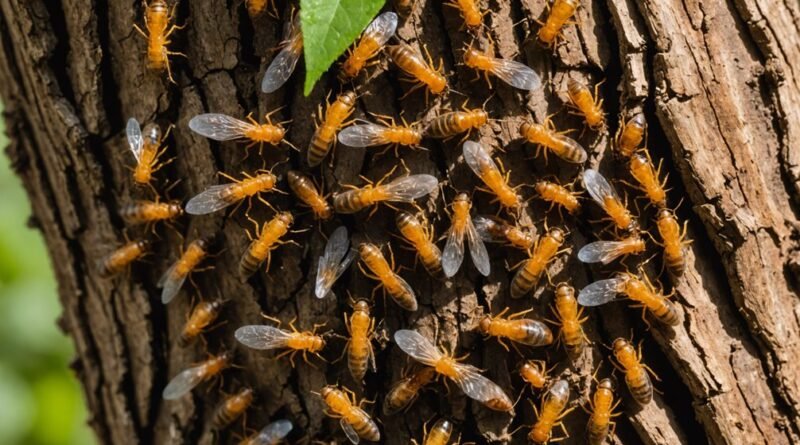
Termite Season Explained: When Your Home Is Most at Risk
Termite activity follows a seasonal rhythm you need to understand to protect your home. It peaks in spring and summer when warmth and moisture accelerate colony growth, swarming, and feeding. Different species strike at different times, subterranean termites swarm in early spring, while drywood termites emerge in late summer and fall. Your region’s climate also shapes how long and intense the season gets. Keep exploring to see exactly when your risk is highest.
Key Takeaways
- Termite activity peaks from early spring through late fall, with summer being the most active season due to warmth and humidity.
- Subterranean termites swarm March through June, Formosan termites swarm in late spring evenings, and drywood termites swarm late summer through November.
- Warmer climates sustain year-round termite activity, while colder northern states experience a narrow spring activity window.
- Seasonal warning signs include swarmers and mud tubes in spring, hollow wood in summer and fall, and shelter tubes in winter.
- Rain followed by warm weather creates ideal colony growth conditions, often triggering visible termite surface activity and swarming behavior.
Termite Season: When Activity Peaks and Why
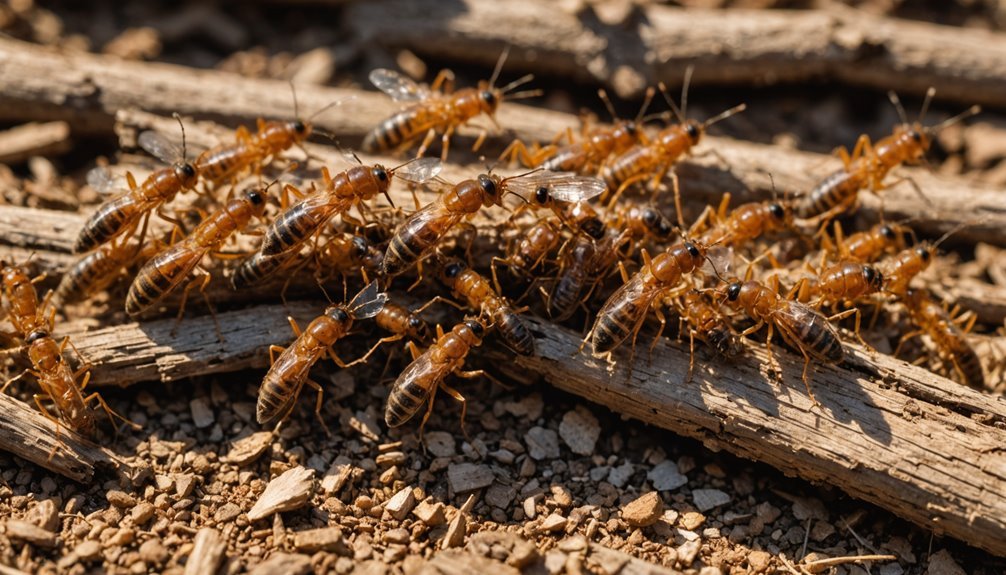
Termite activity doesn’t follow a fixed schedule, but it does follow a predictable one. You’ll see the most activity from early spring through late fall, with summer typically marking the peak.
Warmer temperatures accelerate colony growth and feeding, so the hotter the season, the more aggressive the activity becomes.
Moisture plays an equally important role. When rain precedes warm weather, you’re looking at near-ideal conditions for termites to forage, feed, and swarm. That combination drives some of the most visible activity of the year.
Rain before warmth doesn’t just set the mood, it sets the table for termites to do their worst.
Spring is when things usually kick off. Colonies that survived winter emerge as temperatures and humidity climb, and mature colonies begin releasing swarmers.
If you spot a swarm, it’s not a random event, it signals an established colony already nearby.
Fall brings a gradual slowdown, and winter pushes activity underground or into sheltered wood.
But that doesn’t mean they’ve stopped entirely. In warmer climates, termites can remain active throughout the entire year with no true dormant period.
Which Termites Swarm in Spring, Summer, and Fall
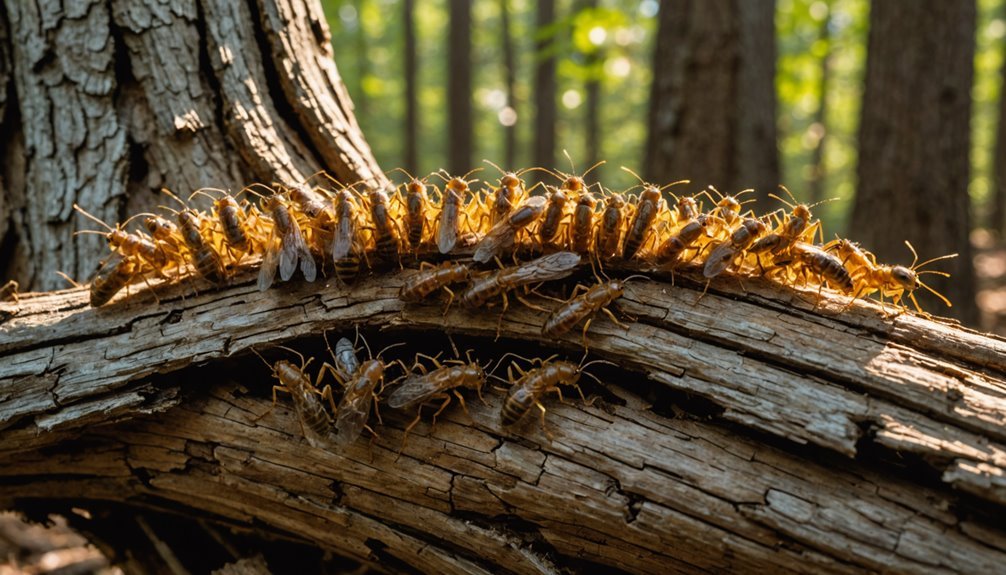
Not every termite swarms at the same time of year, and knowing which species swarms when can tell you a lot about what you’re dealing with.
Here’s a quick breakdown by season:
| Season | Species | Timing Details |
|---|---|---|
| Spring | Subterranean | March through June, often midday |
| Late Spring | Formosan | Evening swarms, warmer regions |
| Fall | Drywood | Late summer through November, evening |
Subterranean termites dominate spring activity, typically swarming on warm days after rain during morning or midday hours. If you’re in the Northeast, expect peak swarms in April and May.
Formosan termites follow closely behind, swarming in the evening during late spring. Drywood termites wait until late summer or fall, and they’re more likely to appear near lights after dark.
The season and time of day both help you identify which species you’re facing. In warmer regions like Florida, swarming can begin as early as February, which means homeowners in the Southeast may need to start monitoring sooner than those in other parts of the country.
Why Heat and Moisture Make Termite Season Worse
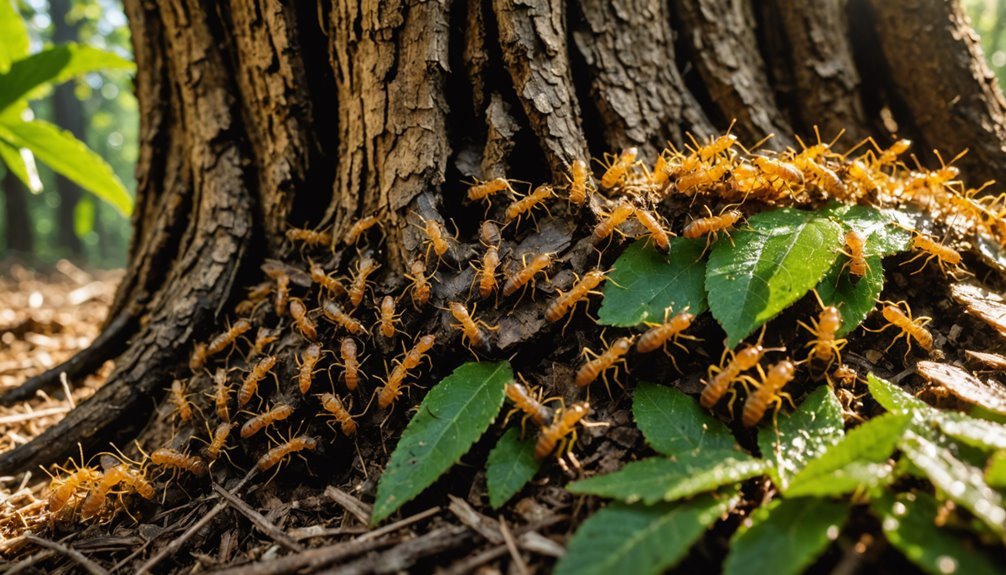
When temperatures rise, termites move faster, forage more aggressively, and swarm in greater numbers.
Moisture compounds the problem by giving colonies the damp soil and decaying wood they need to establish and expand near your home.
Together, heat and moisture don’t just make termites more active, they make infestations harder to stop once they’ve started. Homes with moisture issues or poor drainage face a significantly higher risk of termite infestations taking hold.
Heat Triggers Termite Movement
As temperatures climb, termites don’t stay put, they move. They respond quickly to temperature shifts, repositioning themselves along gradients as conditions change.
Lab studies show they avoid temperatures above 35°C and rarely settle in the coldest zones. When warmth combines with humidity, their movement becomes harder to ignore.
Here’s what rising heat triggers in termite behavior:
- Increased repositioning within and around structures as termites track warmer zones
- Avoidance of temperature extremes, keeping colonies within preferred thermal ranges
- Expanded foraging into accessible feeding areas made more reachable by warmth
- Visible surface activity, including winged termites near windowsills and discarded wings
Temperature appears to be the stronger movement cue, humidity alone doesn’t noticeably shift where termites prefer to be. Moisture and heat working together, however, create conditions that accelerate termite foraging and feeding behavior throughout a structure.
Moisture Fuels Colony Growth
Heat moves termites, but moisture is what lets them thrive. Without it, colonies can’t expand, swarmers can’t survive, and foraging slows dramatically.
Moisture softens wood fibers, making them easier to consume and tunnel through, while keeping termites hydrated enough to avoid desiccation.
When heat combines with humidity, you get the worst-case scenario. Warm, moist conditions trigger reproductive activity, support new colony establishment, and keep soil damp enough for subterranean species to move freely near your foundation.
Rainfall followed by warm weather is especially dangerous because the soil stays moist long after the rain stops.
Leaks, poor drainage, and unventilated crawl spaces all create persistent moisture that sustains infestations year-round.
If you’re managing moisture, you’re removing one of termites’ most essential survival resources. Winged reproductive termites, known as alates, depend heavily on humid conditions to survive long enough to establish new colonies after swarming.
How Regional Climate Shapes Termite Season
Where you live shapes your termite risk more than almost any other factor.
In warm, subtropical regions like the Gulf Coast, termites stay active year-round, while colder northern states see activity shrink to a narrow spring window or suppress almost entirely through winter.
If your climate sits somewhere in between, you’re likely seeing a season that’s expanding as milder winters remove the cold-weather barrier that once kept colonies in check.
Warm Climates Extend Seasons
Warm climates stretch termite seasons well beyond what cooler regions experience, keeping colonies active and feeding for much of the year.
Without sustained cold periods to slow activity, termites maintain pressure on structures across extended windows. You’ll face higher infestation risk when your region supports these four conditions:
- Temperatures between 75°F and 95°F sustained for multiple months
- Milder winters that shorten cold interruptions to swarming and colony growth
- High humidity or frequent rainfall reducing desiccation risk year-round
- Heated indoor spaces like insulated crawl spaces that offset outdoor temperature drops
If you live in a warm climate, don’t limit inspections to peak spring months.
Termites can remain actively feeding and expanding well into fall and winter.
Cold Regions Suppress Activity
Cold regions impose a seasonal ceiling on termite activity that warmer climates never experience. When temperatures drop, colonies retreat deeper into soil or move into heated structures, where conditions stay stable enough to keep feeding.
You won’t see much surface activity during cold months, but that doesn’t mean the colony has stopped—it’s just hidden.
Prolonged freezing periods shrink suitable habitat and push termite presence out of marginal regions entirely. Colonies without access to deep soil, crawl spaces, or insulated walls face the sharpest declines.
However, milder winters are weakening this suppression effect. Shorter freezing periods mean longer active windows, and regions that once relied on harsh winters to limit termite pressure are now seeing that buffer erode as climate patterns shift.
Subtropical Year-Round Presence
While cold regions impose a ceiling on termite activity, subtropical climates remove it almost entirely. If you live in Florida or a similar coastal region, you’re not dealing with a seasonal threat—you’re dealing with a permanent one.
Four conditions explain why subtropical environments sustain termites year-round:
- Mild winters prevent colonies from entering full dormancy.
- Year-round humidity of 60–80% keeps moisture levels consistently high.
- Sandy, moisture-retaining soils support large underground colonies.
- Warm temperatures allow both subterranean and drywood species to stay active simultaneously.
In Miami, swarming can continue into November, with secondary swarms triggered by summer storms.
You won’t find a defined start or end to termite season here—only varying levels of ongoing pressure throughout the year.
When Termites Are Most Active During the Day
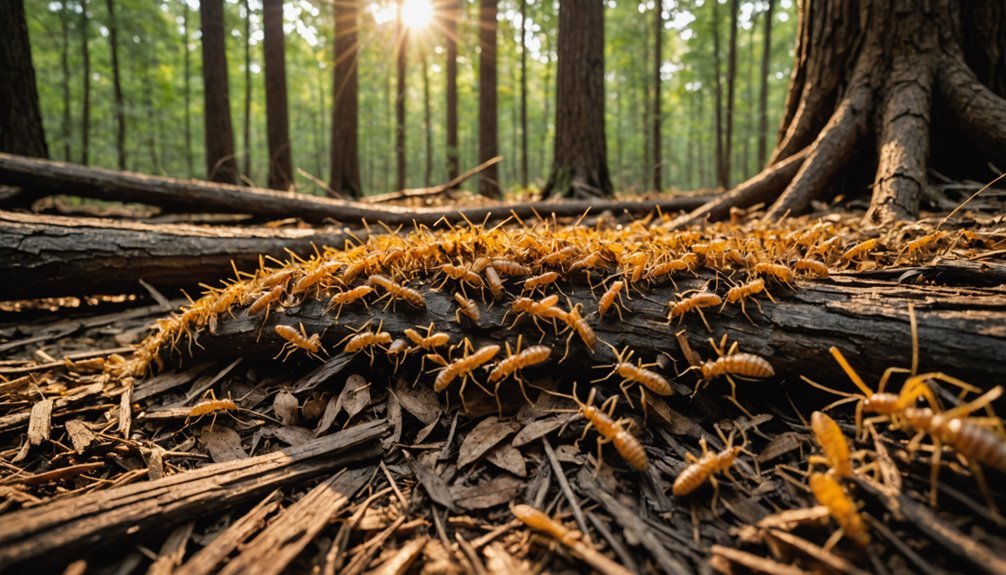
Termites don’t follow a strict schedule, but their daytime activity depends heavily on temperature, moisture, and species. You’re most likely to spot surface movement when temperatures fall between 70°F and 90°F, especially after rainfall.
Warm, humid conditions push termites into more visible foraging, while cold or dry weather keeps them hidden in protected spaces.
Humidity draws termites out to forage. Cold, dry conditions push them deep into hiding.
Most species avoid exposed surfaces during daylight, staying active inside wood, soil, or wall voids where conditions stay favorable. Subterranean termites are your best chance for daytime sightings, particularly during spring swarming events that often follow rain.
Drywood and Formosan termites lean toward nighttime emergence, so you’re less likely to catch them during daylight hours.
If you’re inspecting for activity, focus on warm spring and summer mornings after recent rain. That’s when daytime movement peaks and visible signs become easier to detect.
Termite Warning Signs to Watch for Each Season
Knowing when termites are most active helps narrow your search, but catching an infestation early comes down to recognizing what they leave behind. Each season brings specific warning signs worth watching for:
- Spring and Summer: Look for swarmers near windows or lights, discarded wings on windowsills, and mud tubes along foundation walls.
- Summer into Fall: Watch for buckling floors, stiff doors, hollow-sounding wood, and frass or pellet-like droppings near wooden structures.
- Fall: Tiny holes in drywall, clicking sounds in walls, and increasingly hollow wood signal active feeding that’s been progressing since warmer months.
- Winter: Indoor swarmers in heated spaces, shelter tubes in crawl spaces, and damp or weakened wood can all point to a continuing infestation.
Year-round, mud tubes, discarded wings, and blistering paint are your most reliable indicators.
Don’t wait for visible damage before scheduling an inspection.
When to Schedule a Termite Inspection Each Year
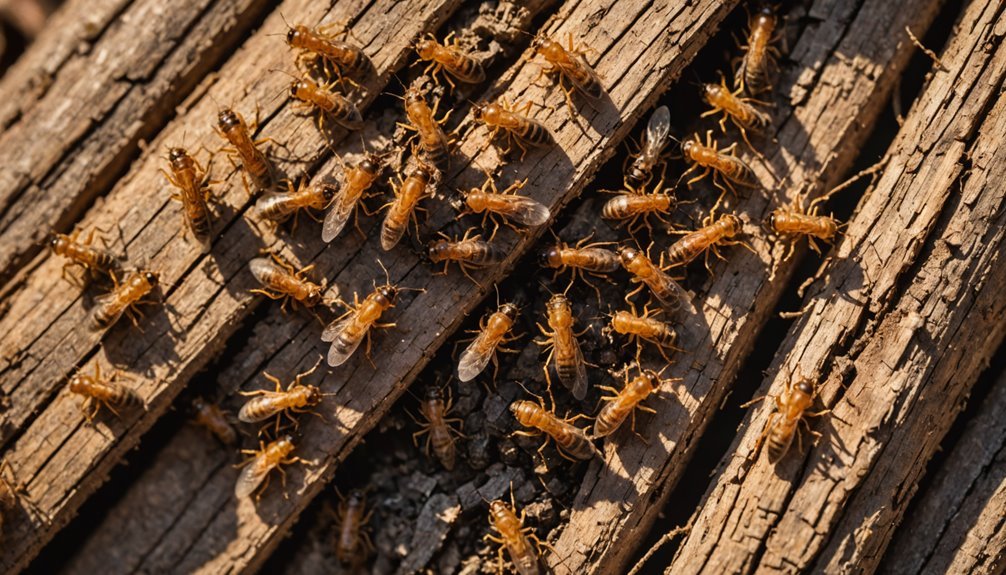
Scheduling a termite inspection at the right time of year can mean catching a colony before it spreads. For most homes, once a year is the standard baseline.
If your home is older than 20 years, has a prior termite history, or sits in a high-pressure region like coastal California, you’ll want inspections more frequently.
Early spring is generally the best window because rising temperatures push colonies into more detectable activity.
Late summer is another strong option since termite pressure peaks during warmer months.
In cooler climates, aim for late spring through early fall when termites are most active.
If you’re in a warmer climate, seasonal timing matters less because termites stay active year-round, making consistent annual scheduling more important than hitting a specific month.
After heavy rain is also a smart time to act, since moisture conditions accelerate termite activity and potential colony expansion.
Frequently Asked Questions
Can Termites Survive Inside Walls During Freezing Outdoor Temperatures?
Yes, termites can survive inside your walls during freezing temperatures. Your home’s warmth creates a stable microclimate where they’ll keep feeding and reproducing, even when it’s well below freezing outside.
How Long Does a Termite Colony Typically Live Before Dying Out?
A termite colony can live for decades—sometimes up to 100 years—but it’ll typically die out once the queen dies. You’re looking at queens surviving 25 to 50 years under ideal conditions.
Do Termites Ever Become Dormant, or Do They Stay Active Year-Round?
Termites don’t truly become dormant—they stay active year-round. In winter, you’ll find them retreating deeper into soil or inside heated structures, continuing to feed and maintain their colony even when you can’t see them.
What Time of Year Do Termites Cause the Most Structural Damage?
You’ll see the most structural damage from spring through fall. Warm temperatures and humidity accelerate termite feeding, tunneling, and reproduction. Summer’s heat can make damage occur up to 10 times faster than cooler months.
Can Seasonal Termite Treatments Wear off Before the Next Active Season?
Yes, seasonal termite treatments can wear off before the next active season. Liquid termiticides typically last 5–10 years, but soil disturbance, moisture problems, and construction gaps can reduce your barrier’s effectiveness much sooner.
Conclusion
You now know that termite activity doesn’t stop just because the calendar changes. Whether it’s spring swarmers, summer underground colonies, or fall moisture seekers, you’re dealing with year-round threats. Don’t wait until you spot visible damage to take action. You’ll protect your home best by scheduling seasonal inspections, watching for warning signs, and understanding what’s driving termite behavior in your specific region and climate.