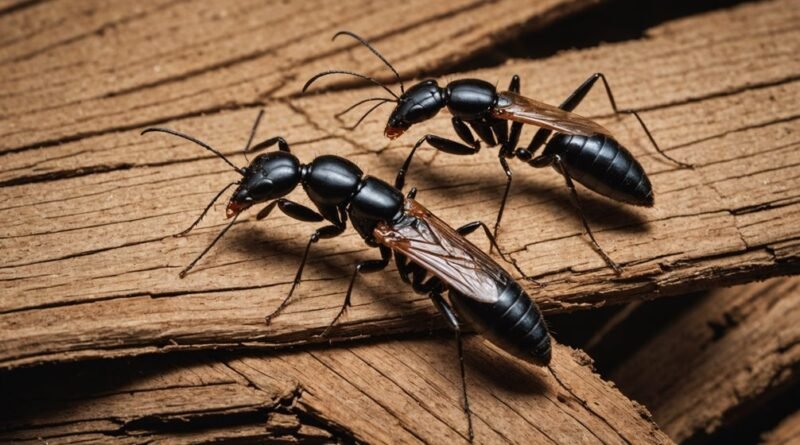
Termite Vs Carpenter Ant
When identifying termites versus carpenter ants, you’ll want to check their waist shape, antennae, and wing length. Termites eat wood from the inside out, while carpenter ants hollow it out for nesting—both can seriously damage your home’s structure. You can spot them by their frass, mud tubes, or discarded wings. Knowing the differences helps you act fast, and there’s much more to uncover about prevention, treatment, and which pest poses the bigger threat.
Key Takeaways
- Termites have straight antennae and equal-length wings, while carpenter ants have elbowed antennae and longer front wings.
- Termites consume wood for cellulose, causing severe structural damage; carpenter ants only hollow wood out for nesting.
- Carpenter ants leave sawdust-like frass near entry holes; termites leave mud tubes and discarded wings.
- Termite damage follows the wood grain with rough tunnels; carpenter ant galleries are smooth and run in multiple directions.
- Both pests target moisture-damaged wood, making leak repairs and proper soil grading essential prevention strategies.
How Do You Tell a Termite From a Carpenter Ant?
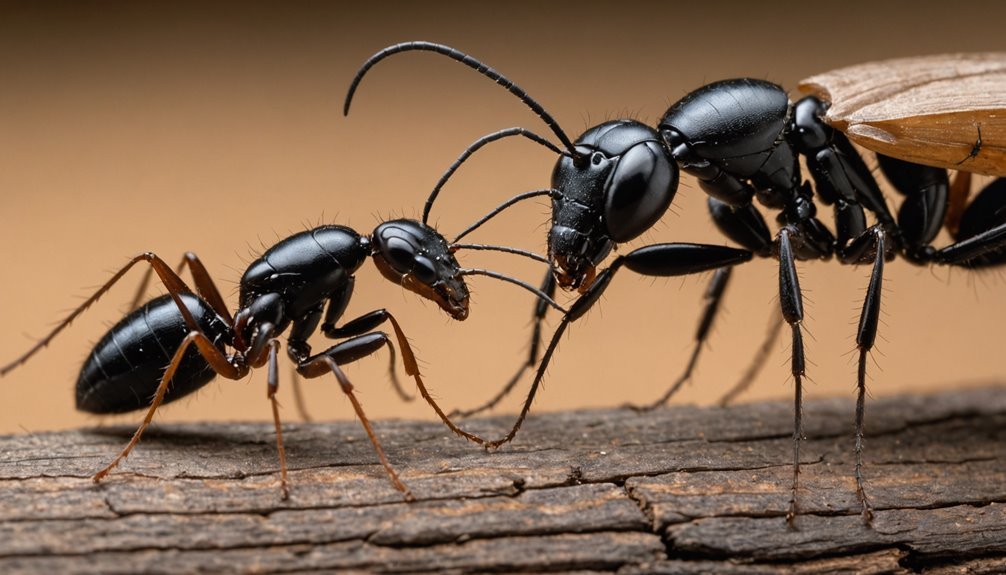
Telling a termite from a carpenter ant comes down to a few physical traits you can check quickly.
Look at the waist first — carpenter ants have a pinched, clearly segmented waist, while termites have a thicker, more uniform one.
Next, check the antennae. Carpenter ants have elbowed antennae, and termites have straight ones.
If you’re looking at winged insects, carpenter ants have front wings longer than their hind wings, while termites have four equal-length wings that extend beyond their body.
You can also look for frass, which is sawdust-like debris near openings, pointing to carpenter ants, or mud tubes along foundations, which strongly indicate termites.
Carpenter ants are typically large, ranging from ¼ to ½ inch, and are usually dark brown or black, while termites appear smaller and pale or translucent.
Using two or three of these checks together gives you a much more reliable identification.
How Does Each Pest Actually Damage Wood?
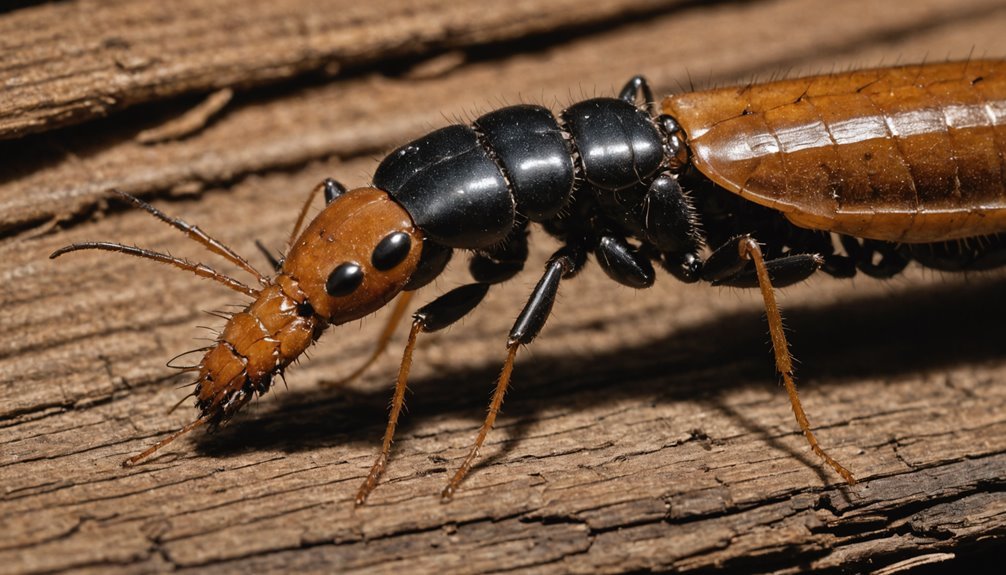
When a carpenter ant moves into your wood, it’s not eating it — it’s hollowing it out to build smooth, clean galleries for nesting.
Termites, on the other hand, actually consume the wood itself, feeding on cellulose while tunneling inward and leaving behind a weakened, hollow shell.
Understanding how each pest operates helps you identify which one you’re dealing with and what kind of damage you can expect. Because termites rely on cellulose for survival, wood found in walls, support beams, and floorboards is especially at risk of being targeted.
Carpenter Ant Tunneling Methods
Unlike termites, carpenter ants don’t actually eat wood—they chew through it to carve out nesting galleries. They use their mandibles to excavate smooth, clean tunnels, typically targeting damp, decaying, or water-damaged wood because it’s easier to break down.
You’ll notice their galleries run both with and against the grain, which helps distinguish them from termite damage.
As they tunnel, ants push out sawdust-like frass, which often collects near entry holes or below infested areas. You might also hear faint scraping or chewing sounds inside affected walls or frames.
Damage stays hidden until galleries become extensive, slowly hollowing out structural wood and reducing its strength. Large colonies can cause significant localized harm even though they never consume a single wood fiber. Despite the destruction they cause to homes, carpenter ants play a role in decomposing decaying trees within natural ecosystems.
Termite Wood Consumption Patterns
While carpenter ants simply excavate wood and leave it behind, termites actually consume it. They digest cellulose, the structural carbohydrate in wood, breaking it down for nutrition. This makes their damage fundamentally more destructive than tunneling alone.
Termites typically target softer, interior wood first, hollowing it out while leaving outer surfaces intact. By the time you notice damage from the outside, the interior may already be heavily compromised.
They’re especially drawn to wood softened by fungal decay, which makes it easier to process. In forest ecosystems, this preference is well documented, with studies showing termites consume decomposing wood faster than sound wood due to microorganisms like fungi that enhance digestibility.
A mature colony can consume more than 5 kg of wood per month. That feeding rate, combined with their hidden approach, means structural weakening can happen faster than you’d expect before any visible warning signs appear.
Where Do Termites and Carpenter Ants Nest in a Home?
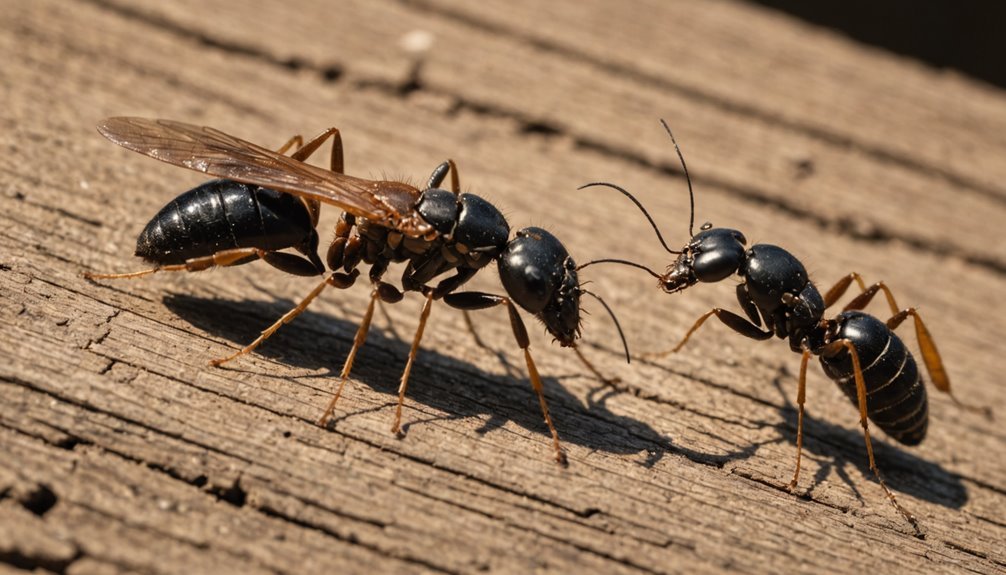
When you’re dealing with carpenter ants, check moisture-damaged wood first—windowsills, doorframes, bath traps, and areas near plumbing or roof leaks are their most common nesting sites.
Termites, by contrast, typically maintain ground-connected nests and travel through mud tubes to reach the wood they consume inside your home.
Carpenter ants also establish satellite colonies in addition to their parent nests, which can spread an infestation to multiple locations throughout a structure.
Knowing where each pest prefers to nest helps you target your inspection and identify the right treatment faster.
Carpenter Ant Nesting Locations
Carpenter ants don’t nest the same way termites do—instead of eating wood, they excavate it, hollowing out galleries to shelter their colonies. They target damp, decaying, or moisture-compromised wood, so you’ll often find nests near roof leaks, plumbing failures, or poor ventilation.
Inside your home, check wall voids, attics, crawl spaces, and basement joists. Bathrooms and kitchens are especially vulnerable because of persistent moisture under sinks, tubs, and drains.
Window frames, door sills, and hollow doors are also common nesting spots.
What you’re likely finding indoors is a satellite nest. The parent colony typically lives outside in a stump, log, or dead tree.
Eliminating only the indoor nest won’t solve the problem—you’ll need to locate the outdoor source too.
Termite Nesting Locations
Termites nest differently—and in more varied locations depending on the species.
Subterranean termites live underground in moist soil near your home’s foundation. They travel into the structure through mud tubes, targeting foundation walls, expansion joints, plumbing penetrations, and concrete cracks.
You’ll also find them in crawl spaces, basements, and structural voids where moisture is present, damaging sill plates, joists, and wall framing from the inside out.
Drywood termites behave differently. They don’t need soil contact or moisture to survive. Instead, they colonize attic rafters, roof framing, and dry structural lumber, nesting entirely inside the wood they consume.
Exterior wood also matters. Deck joists, fence posts, and foundation-adjacent siding can serve as entry points, letting colonies move from outside into your home’s core structure.
What Signs of a Termite or Carpenter Ant Infestation Should You Watch For?
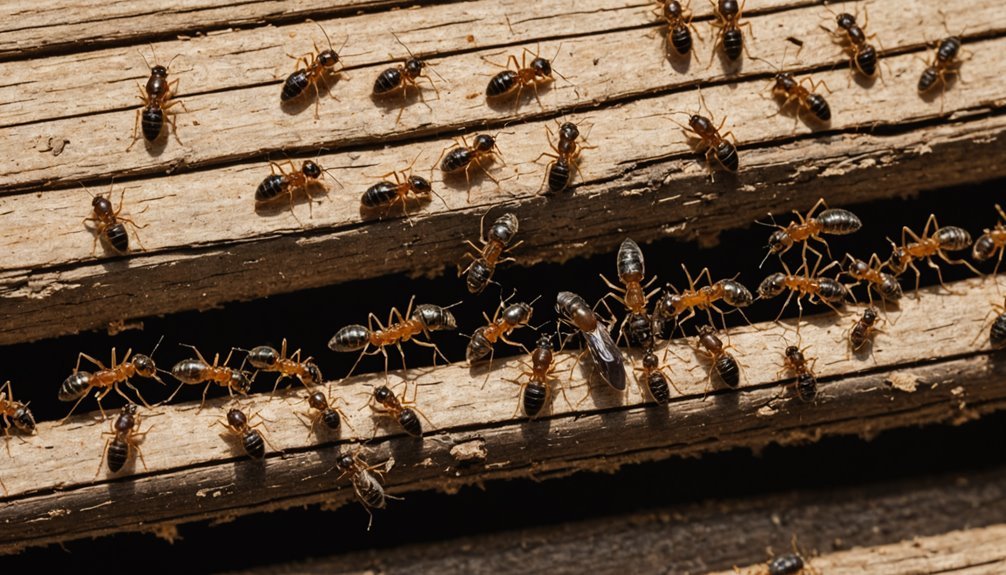
Both termites and carpenter ants can cause serious damage before you ever spot an insect, so knowing what to look for is your best defense.
Hidden damage can happen long before you see a single insect—knowing the warning signs is everything.
For termites, watch for discarded wings near windowsills and doors, pencil-sized mud tubes along foundations, and hollow-sounding wood when tapped. Tiny holes in drywall, bubbling paint, and small piles of frass resembling sawdust also signal termite activity.
Sagging floors or stuck windows can indicate advanced structural damage.
Carpenter ants leave cleaner, smooth-walled galleries and push out coarse sawdust-like debris called frass mixed with insect parts. You might also notice rustling sounds inside walls or spot workers trailing along baseboards at night.
Either pest warrants prompt inspection—the sooner you act, the less damage you’ll face.
Termite vs Carpenter Ant: Which One Does More Structural Damage?
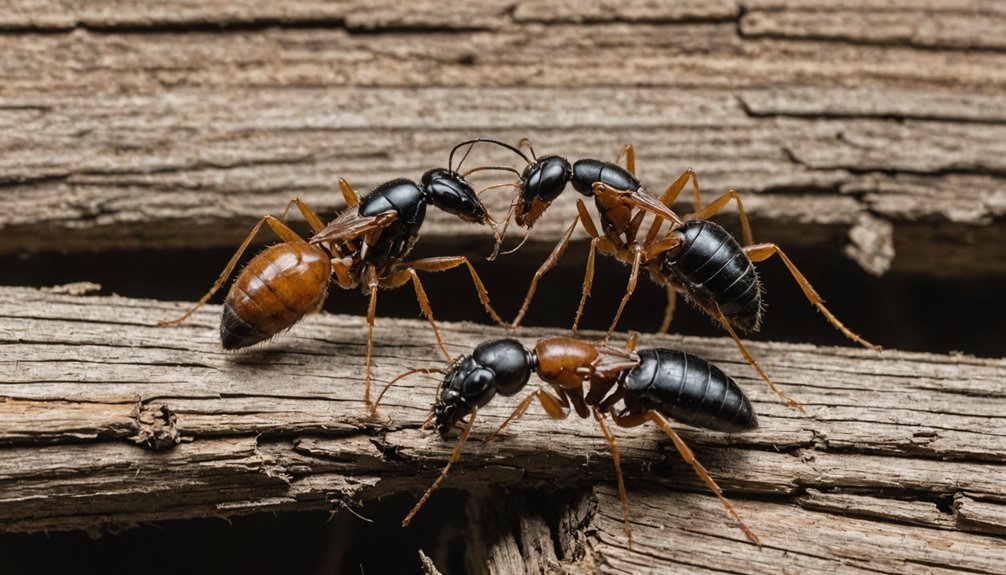
You’ll also notice the damage differently. Carpenter ants leave smooth, clean galleries and sawdust-like frass.
Termites leave rough tunnels, packed debris, and hollowed wood. Both pests weaken your home’s framing over time, but termites are the higher-priority threat—carpenter ants are a serious secondary concern, not the main event.
How to Prevent and Get Rid of Both Pests
Knowing which pest causes more damage only matters if you can stop them before they get that far. Fix leaks, grade soil away from your foundation, and seal cracks around pipes and utility penetrations. Store firewood off the ground, trim branches away from rooflines, and remove dead stumps near the structure.
| Prevention Step | Applies To |
|---|---|
| Fix leaks and dry moisture-damaged wood | Both pests |
| Seal foundation cracks with caulk or grout | Termites |
| Inspect at dusk for foraging trails | Carpenter ants |
| Remove standing water and decaying wood | Both pests |
For treatment, locate the carpenter ant nest first. Use labeled dust insecticides in wall voids and non-repellent baits so workers carry product back to the colony.
Frequently Asked Questions
Can Carpenter Ants and Termites Infest the Same Home Simultaneously?
Yes, carpenter ants and termites can infest your home at the same time. They’re both drawn to moisture-damaged wood and can occupy different structural zones, making simultaneous infestation entirely possible.
Are Termites or Carpenter Ants More Active During Certain Seasons?
Yes, both pests have peak seasons. You’ll notice carpenter ants most in late spring through summer, while termites become more active during warm, damp periods and after rainfall. Both can remain active indoors year-round.
How Long Does a Termite or Carpenter Ant Infestation Take to Develop?
You’ll typically notice termite damage within 1–3 years, though serious structural harm can develop in 3–8 years. Carpenter ant infestations usually take longer to become obvious, often remaining hidden for multiple seasons before you’ll spot visible signs.
Do Carpenter Ants or Termites Pose Any Health Risks to Humans?
Neither carpenter ants nor termites pose a significant direct health risk to you. They’re primarily structural pests. Carpenter ants can bite if disturbed, causing brief pain, but you’re mostly at risk of property damage from both.
Can Pets Detect the Presence of Termites or Carpenter Ants Indoors?
Your dog can detect termites indoors, showing 95.93% accuracy in studies. They’ll sniff, scratch, or linger near infested areas. However, carpenter ant detection isn’t as well-established, so you shouldn’t rely solely on pet behavior.
Conclusion
Whether you’re dealing with termites or carpenter ants, you don’t want to wait to take action. Both pests can cause serious damage to your home’s structure, and the longer you ignore the problem, the worse it’ll get. You’ll want to inspect your home regularly, address moisture issues, and call a pest control professional at the first sign of trouble. Don’t let either of these destructive insects compromise the safety of your home.