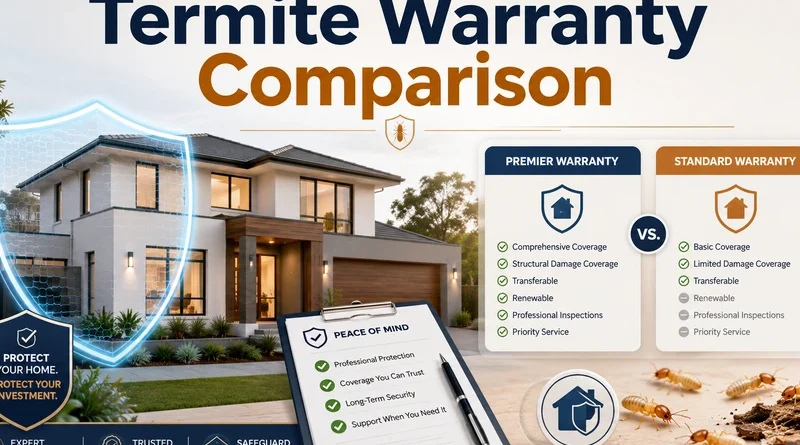
Termite Warranty Comparison: What Every Homeowner Needs to Know
Termites cause an estimated $5 billion in property damage across the U.S. every year, and standard homeowners insurance covers none of it. A termite warranty is often the only financial protection standing between your home and a five-figure repair bill. But not all warranties are the same. This guide explains exactly what they cover, how they compare, and what to ask before you sign.
What Is a Termite Warranty?
A termite warranty (also called a termite bond or termite guarantee) is a service contract between a homeowner and a licensed pest control company. It specifies what the company will do if termites return or cause damage after treatment.
Most termite warranties cover one or both of the following:
- Retreatment coverage: The pest control company returns and re-treats at no extra charge if live termites are found during the warranty period.
- Repair coverage: The company pays for structural repairs (up to a defined dollar limit) if termites cause damage while the warranty is active.
Types of Termite Warranties

1. Retreat-Only Bond
The most basic and affordable form of coverage. If termites return, the company re-treats at no cost. All repair costs remain with the homeowner.
- Best for: Lower-risk zones, budget-conscious buyers
- Typical annual cost: $100–$300
- Limitation: Average termite repair costs $3,000–$8,000. This plan covers none of that.
2. Retreat and Repair Bond (Complete Bond)
Covers both retreatment and structural repairs up to a defined dollar ceiling. This is the plan most pest control professionals recommend for homes in termite-prone regions.
- Best for: Southeast, Gulf Coast, Southern California, and homes with prior termite history
- Typical annual cost: $300–$700 above a retreat-only plan
- Coverage limits: Range from $50,000 to $1,000,000 depending on provider and plan
3. New Construction Warranty
Applied to homes pre-treated with soil termiticides or physical barriers during construction. Often required by local building codes. Typically covers the structure for 1–5 years post-build with renewal options.
4. Transferable Warranty
A warranty that can be assigned to a new homeowner upon sale. Increasingly requested by buyers and required by lenders in high-risk markets. Transferable warranties can meaningfully support a home sale.
Termite Warranty vs. Home Warranty vs. Homeowners Insurance
| Feature | Termite Warranty | Home Warranty | Homeowners Insurance |
|---|---|---|---|
| Covers termite damage | Yes (with repair bond) | Rarely (add-on only) | No |
| Covers retreatment | Yes | Sometimes | No |
| Covers structural repair | Yes (repair bond) | Usually no | No |
| Annual inspections included | Usually yes | No | No |
| Transferable at sale | Often yes | Sometimes | No |
| Typical annual cost | $150–$700 | $400–$900 | $800–$2,000 |
Major Provider Comparison: Terminix vs. Orkin
The two largest national termite control companies in the U.S. both offer termite warranties but differ meaningfully in coverage structure and repair limits.
| Feature | Terminix | Orkin |
|---|---|---|
| Repair coverage limit | Up to $250,000 | Up to $1,000,000 |
| Coverage type | Retreat + Repair | Retreat + Repair |
| Transferability | Fully transferable | Available (confirm in writing) |
| Annual renewal required | Yes | Yes |
| Free re-treatments | Unlimited while plan is active | Free between scheduled visits |
| Free inspection | Yes | Yes (fee for real estate transactions) |
| 30-day guarantee | Yes (up to 6 months in some cases) | Yes: last service payment refunded |
Terminix is best for homeowners wanting a documented repair warranty with unlimited retreatments and full transferability bundled into one plan. Orkin is best for homeowners who prioritize maximum repair coverage and fast local scheduling. For both providers, always request your full coverage terms in writing before signing.
What Termite Warranties Typically Don’t Cover
| Exclusion | Why It Matters |
|---|---|
| Pre-existing damage | Damage present before treatment is never covered. Document everything before signing. |
| Lapsed coverage | Any damage after a missed renewal is excluded, even by one day. |
| Inaccessible areas | Damage inside walls or areas the inspector cannot access is often excluded. |
| Cosmetic damage | Many plans cover structural repairs only, not flooring finishes, paint, or trim. |
| Secondary moisture/mold damage | Even if caused by a termite entry point, water damage may not be covered. |
| Outdoor structures | Fences, decking, and detached garages may require a separate rider. |
| Non-covered species | Some plans only cover one termite species. Confirm which types are included. |
How Much Does a Termite Warranty Cost?
| Plan Type | Initial Treatment | Annual Renewal |
|---|---|---|
| Retreat-Only Bond | $200–$800 | $100–$300 |
| Retreat + Repair Bond | $400–$1,500 | $300–$700 |
| New Construction Pre-Treatment | $500–$2,000 (one-time) | $150–$350 |
| Bait System (e.g., Sentricon) | $1,200–$3,500 | $250–$500 |
Costs are higher in termite-heavy regions such as Florida, Texas, Georgia, Louisiana, and Southern California due to elevated infestation risk and more frequent service needs.
10 Questions to Ask Before Signing Any Termite Warranty
- What species of termites does this warranty cover: drywood, subterranean, dampwood, or all three?
- Does coverage include structural repairs, or retreatment only?
- What is the maximum repair dollar limit? Is it per incident or lifetime?
- What inspection and renewal fees are required to keep the warranty active?
- What happens if I miss a renewal payment? Is there a grace period?
- Is the warranty transferable if I sell my home? Is there a transfer fee?
- Which areas of the home are excluded (attic, crawl space, detached structures)?
- How long does a repair claim take, and who performs the repairs?
- Is there a waiting period after signing before coverage becomes active?
- Does coverage exclude pre-existing damage found during the initial inspection?
When Should You Get a Termite Warranty?

Buy one if:
- You live in a high-risk termite zone (Southern states, Pacific Coast, subtropical climates)
- Your home has a crawl space, slab foundation with wood contact, or history of prior infestation
- You are buying or selling (lenders and buyers increasingly require active warranties)
- Your home has significant wood framing, hardwood floors, or structural wood to protect
- You want predictable annual costs instead of unpredictable large repair bills
You may not need one if:
- You live in a northern region with very low termite pressure
- Your home is primarily steel or concrete construction with minimal wood contact
- You are a short-term occupant or investor flipping a property quickly
Red flags to watch for:
- No written contract provided before or at time of service
- Coverage that does not specify repair dollar limits in writing
- Companies that will not confirm transferability in the contract
- Renewal terms buried in fine print that allow sudden price increases
Termite Warranties and Home Sales
VA and FHA mortgage lenders often require a Wood Destroying Insect (WDI) inspection report (also called a termite letter) as part of the loan approval process. In many markets, buyers and their agents request evidence of an active, transferable termite warranty before finalizing a purchase.
Sellers: An active, transferable warranty can speed up closing and increase buyer confidence. Renewing before listing is a low-cost move with measurable upside.
Buyers: Confirm the warranty type (retreat-only vs. retreat+repair), the coverage cap, transferability, and renewal costs before closing. An untransferable warranty has no value to an incoming owner.
Frequently Asked Questions
What is the difference between a termite bond and a termite warranty?
A termite bond emphasizes prevention, scheduled inspections, and guaranteed retreatment. A termite warranty functions more like an insurance agreement, covering both retreatment and structural repairs when termites cause damage after treatment. The terms are often used interchangeably by providers, so always read the actual contract.
Does homeowners insurance cover termite damage?
No. Standard homeowners insurance universally excludes termite damage, classifying it as a preventable maintenance issue. A dedicated termite warranty is your primary protection.
Can I get a termite warranty on an older home?
Yes, but the company will typically require a full inspection first, and any pre-existing damage will be excluded from coverage. The older the home and the higher the termite pressure in your region, the more important a retreat-and-repair bond becomes.
How often do termite warranties need to be renewed?
Most warranties require annual renewal, including an inspection and renewal fee. Missing a renewal, even briefly, can void coverage entirely. Some regional providers offer multi-year plans that reduce renewal frequency.
What happens to the warranty if I sell my home?
Many warranties are transferable to the new owner, but not all. Transfer fees, re-inspection requirements, or waiting periods may apply. Confirm all transfer terms in writing before listing your home.