Do Termites Fly? (Only the Reproductives Do — Here’s Why)
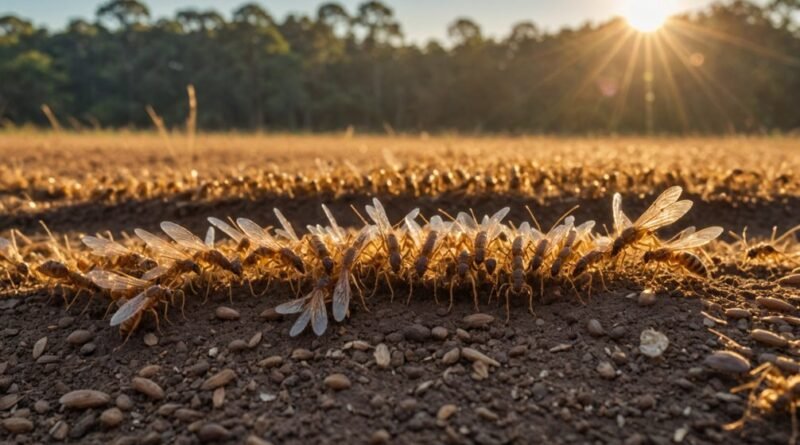
Termites do fly, but only during a short phase as winged reproductives called swarmers (or alates). You’ll see them on warm, humid days, often after rain, when hundreds leave a mature colony to mate and start new ones. These weak fliers quickly shed their wings, pair up, and disappear into cracks or soil to become kings and queens. If you’ve seen flying termites or piles of wings, you’re about to uncover what that really means for your home.
Key Takeaways
- Only reproductive termites, called alates or swarmers, grow wings and can fly; workers and soldiers remain wingless their entire lives.
- Termite flight is brief and weak, serving mainly to disperse future kings and queens from the parent colony to start new colonies.
- Colonies produce alates only after maturing for about 3–5 years, usually triggering swarms in warm, humid weather after rain.
- During a swarm, hundreds to thousands of winged termites emerge together, then quickly shed their wings after landing to become colony-founding pairs.
- Seeing flying termites or piles of shed wings indoors signals a nearby mature colony and the need for prompt professional inspection.
Do Termites Really Fly?
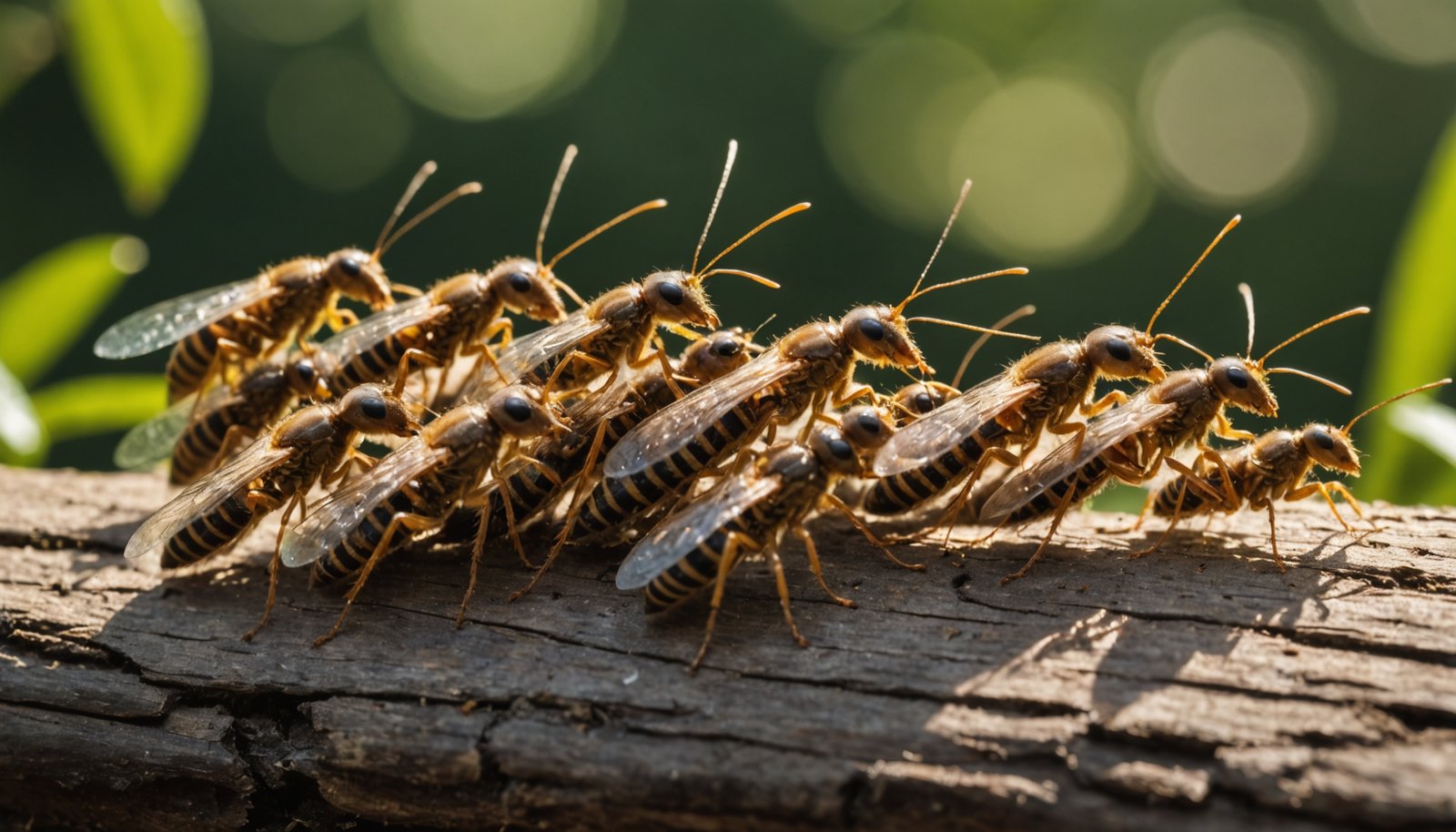
Although people often talk about “flying termites” as if they’re a separate kind of bug, termites only fly during a short, specific phase of their lives—and only certain members of the colony ever grow wings. When you see termites in the air, you’re looking at alates, also called swarmers or winged reproductives. These are future kings and queens, not workers or soldiers.
You won’t ever see workers or soldiers fly; they stay wingless inside wood or underground. Only primary reproductives grow wings, and both males and females join the swarm flight. They’re weak fliers and don’t go far, but they don’t need to—flight’s just a brief dispersal step. In places like Florida, these swarming flights often happen after warm rain and increased humidity, especially in spring and early summer.
Only winged reproductives ever fly—briefly—while workers and soldiers remain hidden, wingless, in wood or soil.
The colony produces alates only when it’s mature enough to expand. After landing, these termites shed their long, equal-sized wings, pair up, and become colony founders.
Shed wings indoors are a classic sign that this process has begun.
Flying Termites or Ants? How to Tell
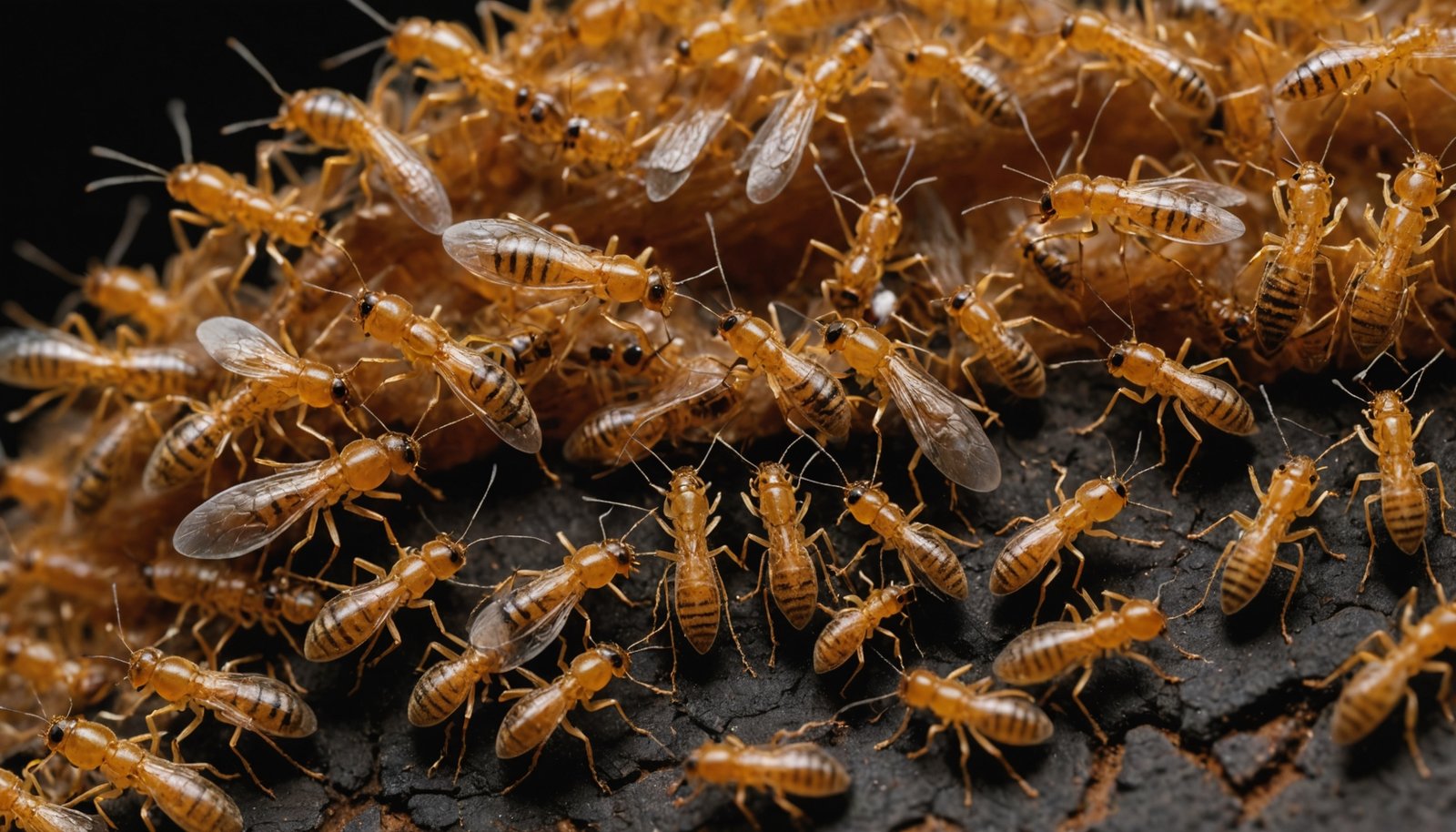
Ever notice “ants with wings” around your home and wonder if they’re actually termites? Start with the wings. Termite swarmers have four wings of equal length—pale, translucent, and similar in shape. Termites lack the distinct body segmentation seen in ants, so their bodies often look more uniformly wide.
Flying ants also have four wings, but the front pair is clearly longer and may look slightly brown. If you find loose piles of matching wings, you’re probably dealing with termites, which shed them easily.
Next, check the antennae. Termites have straight, bead-like, stringy antennae. Flying ants have elbowed antennae that bend at a sharp angle near the head.
Now look at the waist. Termites have a thick, straight body with no pinched waist, so their segments connect broadly. Flying ants show a narrow, “hourglass” waist and more obvious segment breaks.
Color helps but doesn’t decide it. Termites are usually blackish-brown to black; ants may be black, brown, or reddish with more variation between body parts.
Which Termites Become Flying Swarmers
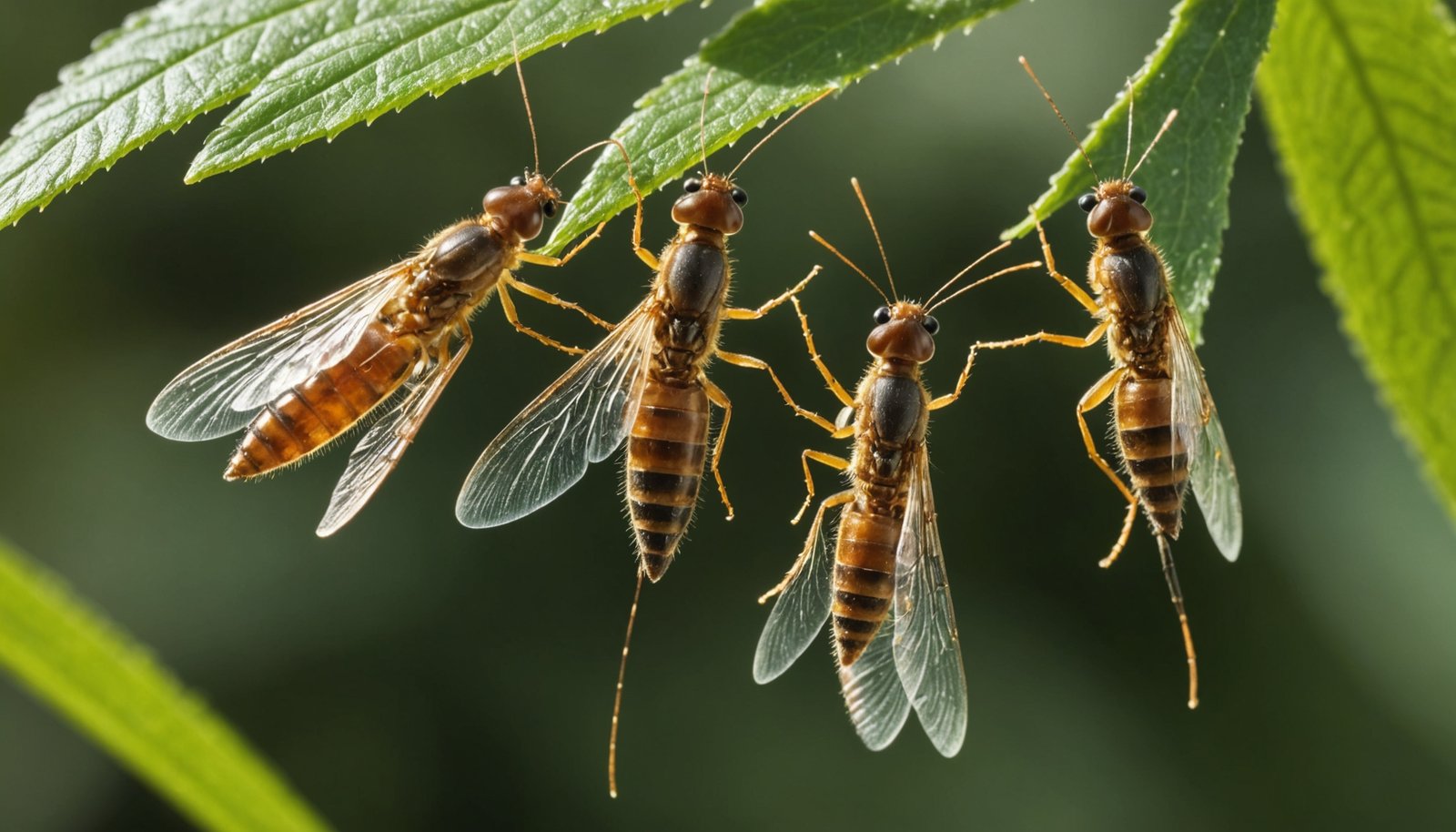
So which termites are the ones you actually see flying? Those are the winged reproductives, called alates. They’re adult male and female termites whose only job is reproduction and dispersal. They’re not workers or soldiers; they’re the potential kings and queens. [Because indoor alate activity often points to established colonies inside a structure, seeing a swarm indoors can be an early warning of a mature infestation.]
Those flying termites you see are alates—the future kings and queens whose sole mission is reproduction and dispersal
When a colony matures—often after 3–5 years and tens of thousands of termites—it finally has enough resources to produce these swarmers.
Inside the nest, larvae can develop into workers, soldiers, or nymphs. Nymphs are the line that leads to future swarmers. Under the right species‑specific and environmental conditions, these nymphs complete development into alates just before swarming season.
During a swarming event, hundreds or thousands of alates leave the nest at once. Their wings are single‑use: they fly briefly, find mates, then shed their wings.
Once a pair lands, they become the founding king and queen of a new colony.
When Flying Termites Swarm Around Your Home
Once you know that only reproductive alates can fly, the next concern is what it means when they show up at your house. A swarm usually means there’s a mature colony nearby, not a few random insects blown in by the wind. Swarming often follows warm, rainy weather, and you’ll typically see termites gathering around lights, windows, or doors. Discarded wings left on windowsills or near doorways are another strong clue that a swarm has occurred and that termites may be close by.
Indoor swarmers or piles of shed wings are bigger red flags, because they suggest termites are inside or right against the structure.
If a swarm happens, close interior doors to contain it, then vacuum the insects you can see. Save a few termites or wings in a sealed bag or jar for identification, and mark where they emerged.
Don’t rip into walls or rely on bug spray. Dispose of the vacuum contents outdoors. Whenever you see swarmers or wings indoors, schedule a licensed termite inspection as soon as possible.
Why Termites Swarm and Leave the Colony
Although a termite swarm can look chaotic, there’s a clear purpose behind it: it’s how a mature colony reproduces and spreads. A colony spends years growing until it’s strong enough to “invest” in winged reproductives, called alates. Instead of producing only workers, it now produces these unmated males and females that’ll leave, pair up, and attempt to start new nests.
You see swarming when internal readiness lines up with the right outside conditions. Warm temperatures, high humidity, and seasonal timing all help trigger flight, especially after rain. Stress can push things along too—disturbance, lack of moisture, or damage may encourage reproductives to exit. Indoors, the sudden appearance of swarmers or piles of discarded wings around windows and lights is often one of the first visible signs that a hidden termite colony is active in your home.
Think of a swarm as the colony’s expansion project:
- Reduce crowding in the parent nest
- Spread the species into nearby areas
- Mix genes as swarmers from different colonies interbreed
- Escape unfavorable or treated environments
- Launch multiple potential new colonies at once
What Happens After Flying Termites Shed Their Wings
Once flying termites shed their wings, you’re seeing alates shift into their ground-based life where pairing and nest initiation begin.
You can expect these new kings and queens to search quickly for mates and protected spots to start tiny, hidden colonies.
You’ll also want to understand the early survival challenges these young colonies face, because that’s when an infestation can be easiest to detect and manage.
Pairing And Nest Initiation
After the brief burst of flight ends and the winged termites drop to the ground, they snap off their fragile wings and rapidly shift from fliers to founders. By shedding their wings, they stop dispersing and start searching. The female often releases a sex attractant, and a male locks onto her trail. You’ll see them move in tandem, the male following closely as they look for a safe, humid crack in soil or softened wood.
- Wings break at preset weak points, so dealation’s quick and efficient.
- The female’s scent keeps the male near during courtship.
- Tandem walking links mate choice with nest searching.
- Paired founders excavate a tiny nuptial chamber together.
- Once inside, they seal the entrance and become king and queen.
Early Colony Survival Challenges
Even though shedding their wings marks the start of a new colony, it also plunges termite pairs into their most dangerous stage of life. Once grounded, they’re soft-bodied, slow, and exposed, so predators, dehydration, and temperature swings kill many within days. Without workers or nest infrastructure, they can’t buffer stress or repair damage, so early failures are common.
You’ll see how critical moisture and shelter become here. If the pair can’t quickly seal themselves in damp soil, wood, or a crevice, they often die before laying viable eggs. Pathogens add more pressure, because there’s no “social immunity” from workers yet.
| Early Threat | Why It’s Deadly | Outcome |
|---|---|---|
| Desiccation | Soft bodies lose water fast | Rapid collapse |
| Predators | No soldiers or workers | Pair eliminated |
| Pathogens | No grooming or immunity | Hidden infections |
Flying Termites in Your Home: What to Do Next
If you suddenly see flying termites or piles of discarded wings indoors, you need to recognize those swarm signs quickly and stay calm.
Your first steps are to contain the area, protect your home from further spread, and avoid actions that scatter insects or debris.
Then you’ll decide when it’s time to call in termite professionals for inspection and treatment.
Spotting Termite Swarm Signs
One of the clearest early warnings of a termite problem is a swarm of flying termites—called swarmers or alates—gathering around your windows, doors, or lights.
These winged reproductives usually appear suddenly, often after warm, humid weather or rainfall, and they’re strongly attracted to indoor and outdoor light sources.
Watch for:
- Small, equal-length wings scattered on windowsills, countertops, or floors
- Piles of discarded wings in spider webs, along baseboards, or near fixtures
- Flying termites emerging from cracks in walls, ceilings, or flooring
- Buckling floors, hard-to-open windows, or hollow-sounding wood near swarm sites
- Mud tubes along foundations or in crawl spaces appearing around the same time
Seeing these swarm signs indoors usually means a mature, established colony is already close by.
Immediate Safety Precautions
Two quick priorities keep you in control when flying termites suddenly appear indoors: contain the swarm and stay safe while you clean up.
Close the door to the affected room, shut nearby interior doors, and place a towel along the threshold. If the swarm is heavy, turn off HVAC vents in that room and keep it isolated until you’re done.
Don’t spray store‑bought insecticides, open walls, poke trim, or seal an active exit hole while termites are still emerging.
Vacuum visible termites and wings, then empty the canister or discard the bag in an outdoor trash bin right away.
Collect a few swarmers and wings in a sealed container, and photograph or note the exact emergence point.
Turn off nearby lights and close windows and doors.
When To Call Professionals
Once you’ve contained the swarm and cleaned up the mess, the next step is deciding when to bring in a licensed termite professional.
Flying termites indoors usually mean a colony’s already in or under your home, so don’t wait for more obvious damage.
You should schedule an inspection promptly if you notice:
- Swarmers or piles of shed wings around windowsills, lights, doors, or baseboards
- Termites emerging from outlets, baseboards, or wall cracks
- Mud tubes on foundations, walls, piers, or interior surfaces
- Hollow, blistered, or tunneled wood, frass, or tiny exit holes
- A prior treatment with no current inspection or warranty coverage
A professional will confirm the species, track colony sources, reveal hidden damage, and outline targeted treatment before problems escalate.
Conclusion
When you see flying termites, you’re not just spotting random bugs—you’re witnessing a new colony in the making. Those winged swarmers are a warning sign that termites may already be nearby or inside your home. Now that you know how to tell them from ants, why they swarm, and what happens after they land, don’t ignore the signals. Act quickly, check for damage, and contact a professional to protect your home.