What Do Termites Eat? (Wood, Drywall, and Other Surprising Materials)
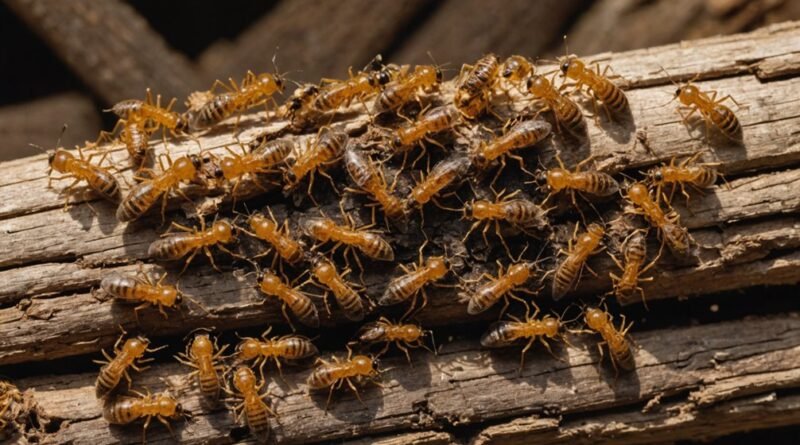
Termites don’t just eat wood in your home—they’re after any cellulose they can find. They’ll feed on framing lumber, drywall paper, cardboard boxes, books, old files, and even natural fabrics like cotton or linen. They also tunnel through paper-faced insulation and foam to reach hidden wood. Moist, decaying wood is especially attractive, so leaks and poor ventilation raise your risk. If you want to protect your home, it helps to know every material they quietly target.
Key Takeaways
- Termites primarily eat cellulose, found in wood, paper, cardboard, some fabrics, and the paper facing on drywall.
- They do not consume metal, plastic, concrete, or gypsum, but tunnel through or around them to reach cellulose-rich materials.
- In homes, termites favor structural wood framing, stored cardboard boxes, books, documents, and other paper products.
- Moist, decayed, or water-damaged wood is especially attractive because it’s easier to chew and often supports fungal growth.
- Termites can tunnel through foam board and spray foam as hidden passageways, even though these materials are not their primary food.
What Termites Eat in Your Home (Quick Overview)
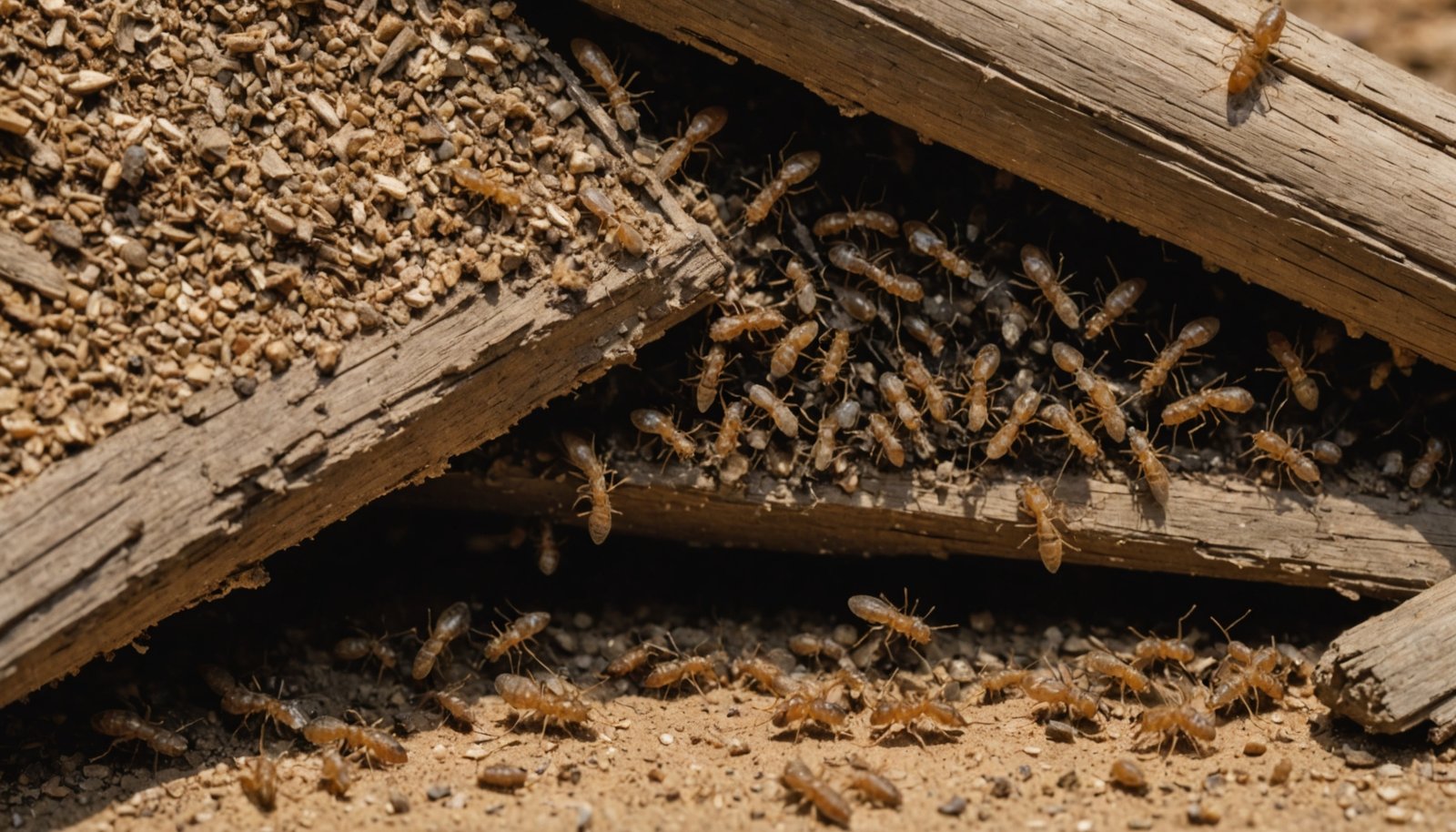
In your home, termites zero in on anything that contains cellulose—paper, cardboard, wood-based products, certain fabrics, drywall paper, and even the paper facing on insulation—while ignoring non-cellulose materials like metal, plastic, concrete, gypsum, and foam except when they’re chewing through them to reach a better food source.
You’ll find many of their favorites in storage areas: cardboard boxes, books, old files, and stacked paper in closets, attics, and garages. They also play an important role outdoors by helping break down dead plant material, but inside your home that same behavior can translate into damage if they find similar cellulose sources.
They also target drywall paper and the paper backing on insulation. Termites usually start inside walls, consuming the paper layers while leaving the outer surface looking normal until you notice blistering, soft spots, or hollow-sounding areas.
Hidden behind walls, termites silently devour drywall paper and insulation backing, leaving only subtle blisters and hollow spots behind
You should also watch cellulose-based fabrics and finishes.
Cotton, linen, some carpet backings, and organic insulation with paper or plant fibers can all be at risk, especially where moisture, clutter, or hidden spaces let termites feed undisturbed.
Why Termites Prefer Wood in Houses
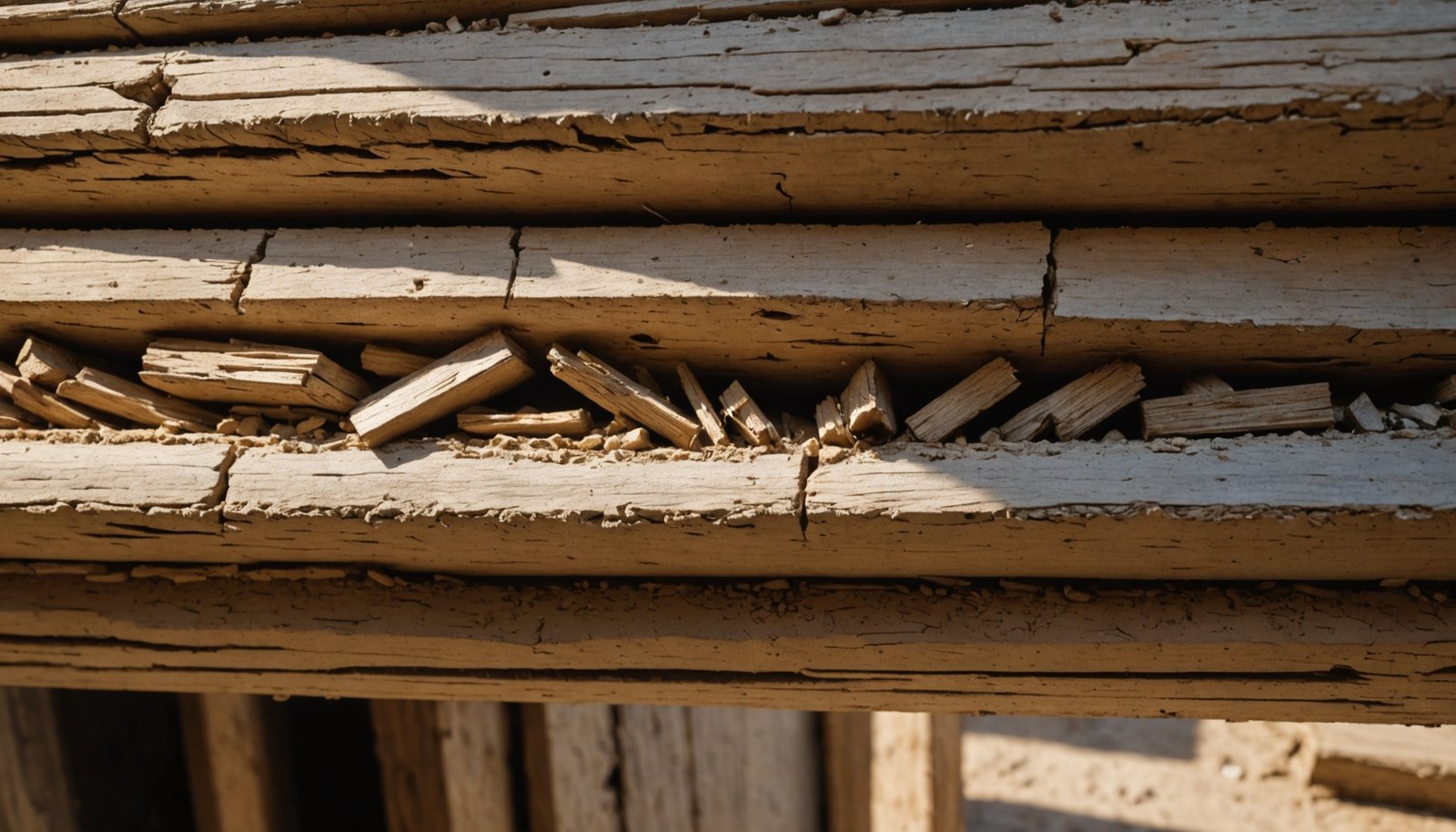
When termites target your home, they’re zeroing in on cellulose-rich structural framing that acts as both food and framework.
They’re also attracted to any moisture and wood decay that soften lumber and make it easier to chew. Mulch near foundations can also draw termites by trapping moisture against your home and giving them an easy pathway to wood.
Once inside, they exploit hidden interior wood access points, feeding out of sight while protected within walls, floors, and voids.
Cellulose-Rich Structural Framing
Termites treat a home’s wood framing like an all‑you‑can‑eat buffet because it’s packed with cellulose, the plant fiber they depend on for energy and colony growth. They’re not chasing flavor; they’re after dense, reliable cellulose, and your studs, joists, and beams deliver it in bulk.
Once termites locate wood framing, they can feed for years. They move inside boards, hollowing them from the center out and often leaving paint or outer surfaces looking normal. That’s why you may not notice damage until it’s extensive. By living and feeding directly within wood in places like hidden structural cavities, termites can remain active for long periods without being detected.
Termites rely on gut microbes—protozoa and bacteria—to break cellulose into usable sugars, letting them exploit framing, plywood, sheetrock paper, cardboard, and other cellulose-based materials throughout your home’s structure.
Moisture And Wood Decay
Although wood framing supplies the food, moisture is what really turns your home into prime termite habitat. Subterranean and dampwood termites both depend on water, so they zero in on damp, softening wood instead of dry framing.
Leaks, wet soil, condensation, flooding, and poor ventilation all raise wood moisture, often enough to support both termites and decay fungi.
Once wood hovers around 25%–30% moisture content, fungi can colonize and start breaking it down. Decayed wood is more attractive to termites, increasing the likelihood that an infestation will follow long‑term moisture problems in the same area. That decay weakens the fibers and makes the wood easier for termites to chew and tunnel through, accelerating structural damage.
In a well‑built, dry home, framing usually stays near 15%–18% moisture—too low for serious decay. Your best defense is simple: keep wood dry and fix moisture problems fast.
Hidden Interior Wood Access
Keeping wood dry helps a lot, but it doesn’t stop termites from slipping into the parts of your home you never see. Subterranean termites build shelter tubes that bridge soil, foundations, and masonry, letting them reach interior framing while staying hidden from light and air. These tubes, often called “shelter tubes,” are made of soil and termite saliva and allow termites to safely travel between the soil and wood.
Hollow block foundations, rock walls, slab cracks, and gaps around plumbing or electrical lines can all become concealed highways into plates, joists, and sill beams.
Once inside, termites stay tucked in the wood, carving galleries through flooring, wall studs, and headers while the surface still looks sound. You might only notice faint mud tubes on piers or walls, hollow‑sounding boards, or indoor swarmers and discarded wings—often after termites have already spread through hidden structural cavities.
Do Termites Eat Drywall and Sheetrock Paper?
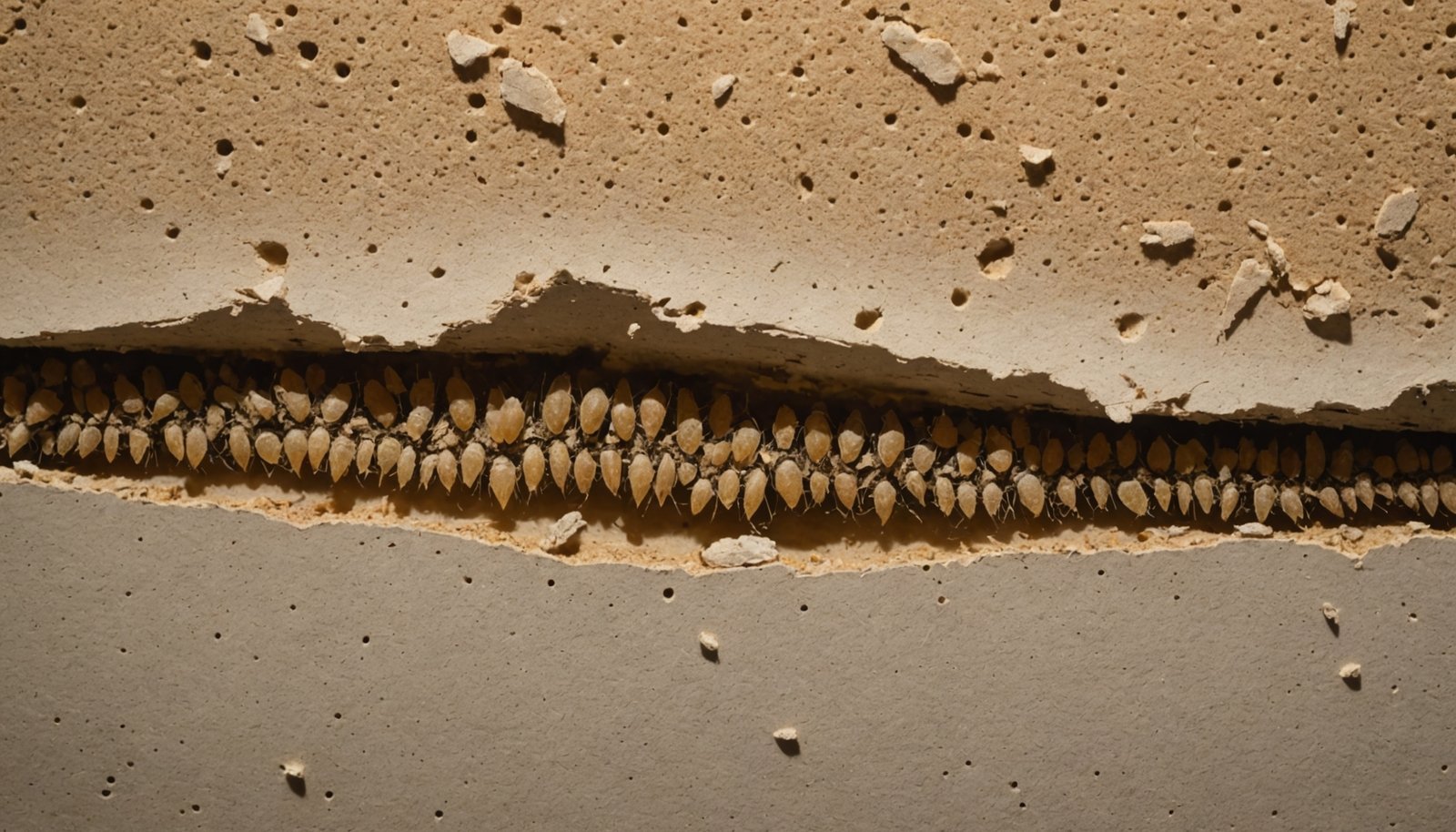
So where does drywall actually fit into a termite’s menu—are they really eating your walls? In a way, yes. Termites don’t digest the gypsum core in drywall or Sheetrock, but they do go after the paper facings that sandwich that core. Those paper layers contain cellulose, so termites target them while using the board itself as a convenient highway inside your walls.
You’ll often see the board described as “eaten,” but technically termites are consuming the paper and damaging the drywall as they tunnel. They can slip in from soil, work inside wall cavities, and hollow out the backing paper while the painted surface still looks normal.
Early clues include tiny pinholes, faint tunnel lines, soft or bubbling paint, or sagging spots where the paper’s been destroyed. When you notice these changes, assume termites may already be moving beyond the drywall toward nearby wood framing and other structural components.
Paper, Cardboard, Fabric, and Other Cellulose Termites Eat
When you think about termites, you probably picture them eating wood, but paper, cardboard, and fabric in your home can be just as tempting.
You’ll see why paper products attract hungry colonies, how cardboard storage habits increase your risk, and which fabrics and fibers are most vulnerable.
Understanding these hidden food sources helps you decide what to protect, where to store it, and what to keep away from moisture and soil contact.
Why Paper Attracts Termites
Paper, cardboard, and even some fabrics draw termites for a simple reason: they’re all loaded with cellulose, the plant-based carbohydrate these insects are built to eat. You might think paper’s too processed to interest termites, but it’s still just plant fiber.
Once termites reach it, their gut microorganisms get to work, breaking that cellulose into sugars and acids they can absorb.
Moisture makes paper even more attractive. Damp pages soften, so termites chew and tunnel through them faster, and the humidity often signals a sheltered, favorable spot.
Books, documents, wallpaper, and stored paper near wood or soil can all become part of a feeding zone. If you see hollowed, layered, or scraped paper surfaces, you may be looking at active termite feeding, not simple age or wear.
Cardboard Storage Risks
Cardboard boxes might look harmless in storage, but to termites they’re both a food source and a hiding place. Because cardboard is packed with cellulose, it lets termites feed while staying hidden, especially when boxes sit in garages, basements, crawlspaces, or other quiet corners.
Damp cardboard is an even bigger problem. Moisture softens the fibers, making it easier for termites to chew through and tunnel along, turning box piles into bridges that lead them toward wood, books, or even wall materials.
Cardboard alone won’t start an infestation, though. Subterranean termites still need a route from the colony, usually through soil contact, foundation cracks, or nearby structural wood.
Once they’ve that access, neglected storage boxes can quickly become part of their feeding network.
Vulnerable Fabrics And Fibers
Termites don’t stop at boxes and beams; they’ll move on to almost anything made from plant-based fibers. Because they digest cellulose, they’ll quietly hollow out paper, cardboard, and natural fabrics while surfaces look normal.
You’re most at risk wherever moisture, darkness, and long-term storage come together.
Watch these vulnerable items:
- Paper: books, documents, and newspapers, especially damp stacks or stored near leaks.
- Cardboard: corrugated boxes and packaging that double as food and hidden tunnels.
- Natural fabrics: cotton, linen, hemp, silk, and burlap in closets or trunks.
- Household textiles: towels, sheets, quilts, and curtains made from plant-based fibers.
- Cellulose-based items: wallpaper, insulation with paper facing, tissues, and drywall paper.
Keep these dry, elevated, and away from known termite activity.
Insulation and Other Home Building Materials Termites Damage
Behind your walls, a surprising range of building materials can suffer termite damage, not just the obvious wooden studs and trim. Subterranean termites often tunnel through rigid foam board, spray foam, and loose-fill insulation to reach hidden wood. They usually don’t eat the foam itself, but they carve out galleries, stripping paper facings and any cellulose they find along the way.
| Material / Area | How Termites Damage It |
|---|---|
| Rigid foam board | Tunneling removes material and creates hidden highways |
| Spray foam near soil | Becomes a passageway into wall and floor assemblies |
| Below-grade foam board | Conceals entry points into foundations and framing |
| Paper-faced insulation | Paper provides cellulose food and travel routes |
| Drywall paper facing | Eaten or tunneled as termites move between studs and cavities |
As tunneling spreads, insulation can lose significant R‑value, moisture can collect in voids, and your heating and cooling costs can quietly climb.
Materials Termites Don’t Eat in Your Home (But Chew Through)
Plastic, foam, drywall, and even thin metal sheets might look like solid defenses, but termites often treat them as obstacles to chew through rather than food to eat. They’re after cellulose, so anything in the way is fair game, even if it’s not edible to them.
You’ll see this “chew-through” behavior with several common materials:
- Plastic barriers: Termites can gnaw through thin plastic sheeting, packaging, or vapor barriers to reach nearby wood or paper.
- Foam insulation: They tunnel through rigid foam boards, using them as moist shelter and travel paths, sometimes stripping away insulation value.
- Drywall cores: They don’t eat the gypsum, but they mine through it to reach the paper facing and hidden wood.
- Metals, mortar, and sealants: Thin copper, lead, mortar joints, asphalt, and rubber membranes can be breached or exploited.
- Paper, cardboard, and cloth: These aren’t surprises; their cellulose content makes them true targets, not just obstacles.
Conclusion
Now that you know termites don’t just eat wood, you can look at your home differently. You’ll recognize vulnerable materials—like drywall paper, cardboard, fabric, and insulation—and spot early warning signs faster. Focus on reducing moisture, limiting cellulose contact with soil, and sealing cracks. If you suspect activity, don’t wait. Call a professional for an inspection and targeted treatment so you can protect your home’s structure—and everything inside it—from hidden termite damage.