DIY Termite Prevention Tips for Homeowners
Termites thrive where moisture, wood, and easy entry points exist so your best defense starts with eliminating those conditions. Fix leaky pipes, keep gutters clear, and guarantee soil slopes away from your foundation. Maintain at least 6 inches of clearance between exterior wood and ground. Seal foundation cracks with caulk or expanding foam, and store firewood away from your home. Spot-check regularly for mud tubes, hollow wood, or frass. Keep going to learn everything you need to protect your home.
Key Takeaways
- Fix leaks promptly and use dehumidifiers in crawl spaces to eliminate the moisture that attracts termites.
- Maintain at least 6 inches of clearance between exterior woodwork and soil to prevent direct termite access.
- Seal foundation cracks, utility penetrations, and gaps around doors and windows using caulk or expanding foam.
- Store firewood away from the home and remove dead stumps, roots, and wood debris near the foundation.
- Confirm active termite signs like mud tubes, frass, or hollow-sounding wood before applying any treatment.
What Makes Your Home Vulnerable to Termite Infestation
Termites don’t just wander into a home by chance, they exploit specific weaknesses in your home’s structure, landscaping, and maintenance habits. Understanding these vulnerabilities helps you take targeted action before an infestation takes hold.
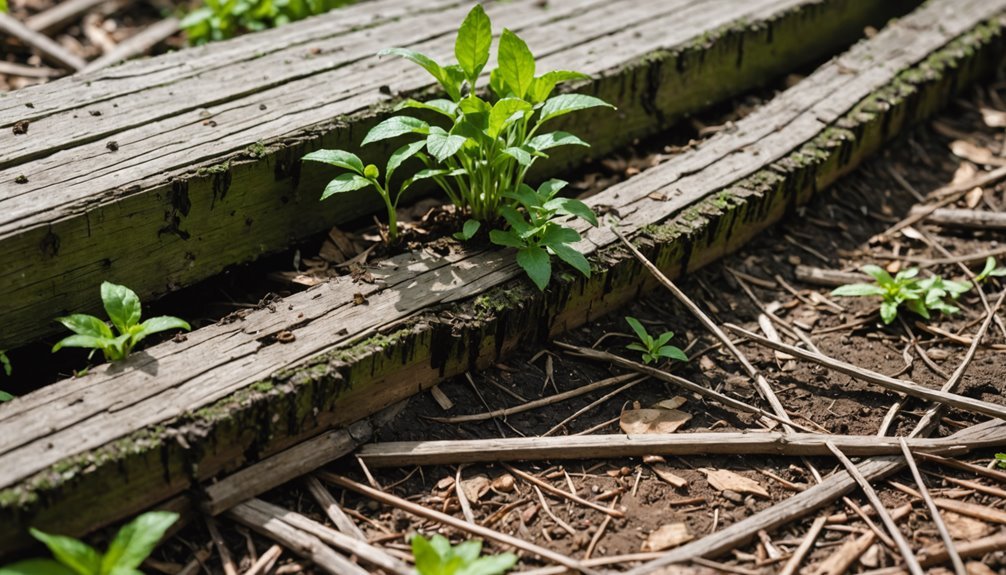
Wood that contacts soil gives subterranean termites a direct path into your structure. Foundation cracks, gaps around plumbing, and unsealed openings let them move from soil into wall cavities undetected.
Subterranean termites need just one point of contact between wood and soil to silently invade your home.
Moisture compounds the risk, leaky pipes, poor drainage, and humid crawl spaces create ideal conditions for termite activity.
Your yard matters too. Firewood stacked against the house, nearby stumps, and mulch pressed against the foundation all attract termites and keep them close to your home.
Overgrown shrubs and tree branches touching your roofline trap moisture and create additional entry points.
Older homes and properties with prior termite damage face even greater risk, since existing structural gaps make re-entry easier. Outdated construction practices in these homes often lack the modern termite barriers and treatments that newer builds incorporate as standard protection.
Fix Moisture Problems Before Termites Find Them
Termites thrive where moisture collects, so fixing leaks and managing drainage are two of the most effective ways to make your home less inviting to them.
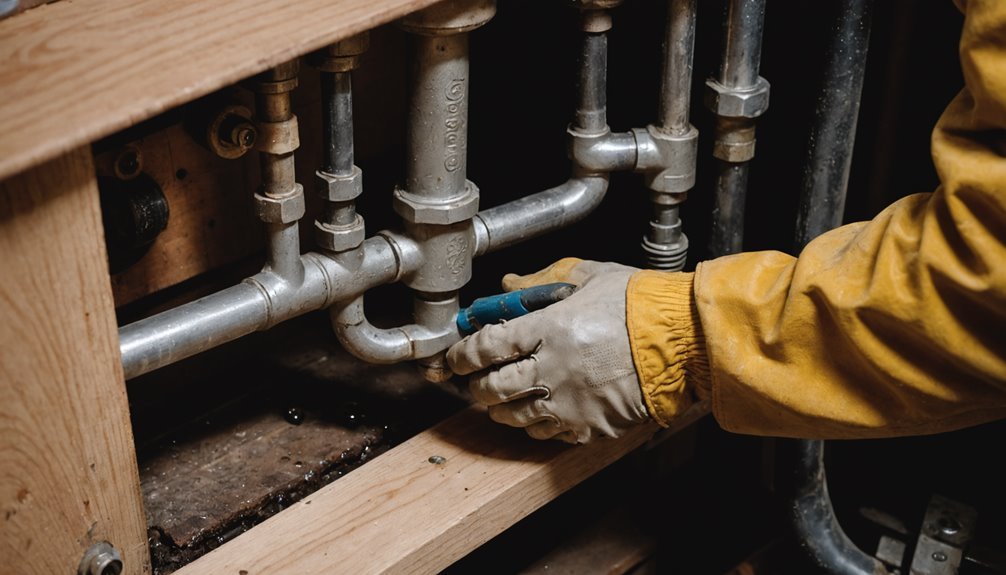
Check under sinks, behind appliances, and along rooflines for dripping water, stained surfaces, or damaged fittings, and repair any problems before seepage reaches wood or insulation.
At the same time, keep your gutters clear and direct downspouts to discharge water at least 10 feet from the foundation, since pooling water near exterior walls creates exactly the damp conditions termites seek.
Subterranean termites require moisture to survive, and without it they can quickly dry out and die, which is why eliminating damp conditions in your home is one of the most direct ways to deter them.
Control Drainage and Gutters
Moisture is one of the biggest factors that draws termites to your home, so controlling drainage is one of the most effective prevention steps you can take.
Keep your gutters clear so water doesn’t overflow and pool near your foundation. Make sure downspouts discharge water well away from your walls and crawlspaces, and repair any leaky or damaged sections promptly.
Check that the soil around your home slopes away from the foundation so rainwater moves away rather than collecting at the base. Poor grading lets water pool exactly where termites thrive.
Also verify that your sump pump discharges away from the house and that your drainage systems aren’t failing. Eliminating persistent wet soil around your foundation removes one of the key conditions that support subterranean termite colonies.
Leaky garden hoses are another overlooked source of moisture buildup near your foundation, so regularly inspect them for damage and keep hoses turned off when not in use.
Repair Leaks Promptly
Leaky faucets, pipes, and roof damage don’t just raise your repair bills. They create the damp conditions termites need to survive and spread. Fix leaks immediately once you spot them, before moisture reaches walls, floors, or your home’s substructure.
| Leak Source | Risk Area | Repair Priority |
|---|---|---|
| Faucets & supply lines | Wall voids, flooring | Immediate |
| Interior pipes | Substructure, framing | Immediate |
| Roof damage | Attics, insulation | Urgent |
| A/C condensate | Siding, soil, foundation | High |
| Water heaters | Utility areas, floors | High |
After repairs, use dehumidifiers in crawl spaces and guarantee proper attic ventilation. Dry conditions make it harder for termites to build mud tubes and establish colonies. Termites cause approximately $5 billion in damage annually in the U.S., much of which stems from moisture-related infestations that proper leak maintenance could have prevented.
Cut Off Every Wood-to-Ground Contact Point
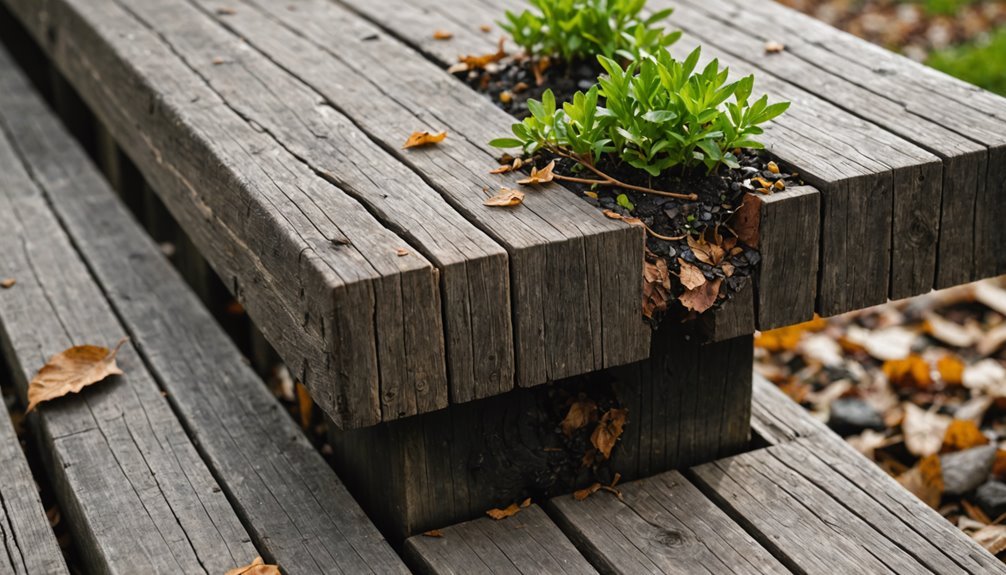
One of the most direct ways subterranean termites reach your home’s structure is through wood that touches the soil. They travel from underground nests through soil contact, so eliminating that access point is essential.
Keep all exterior woodwork at least 6 inches above ground, and make sure crawl space beams sit at least 18 inches above the soil. This improves inspect ability and reduces exposure. Also, leave at least 6 inches of clearance between the ground and any wooden decks, porches, or patios.
Remove stumps, roots, dead wood, and construction debris from around your home. Don’t store cardboard or wood in crawl spaces, and never stack excavated soil against wood-frame elements.
Where soil contact is unavoidable, use pressure-treated or borate-treated lumber rated for ground contact. You can also replace wood supports entirely with concrete or metal.
Pair all replacements with proper drainage and grading to keep the surrounding soil dry. Subterranean termites access structures by building shelter tubes through soil, so disrupting those pathways at every potential entry point is a critical part of long-term prevention.
Seal the Cracks and Entry Points Termites Exploit
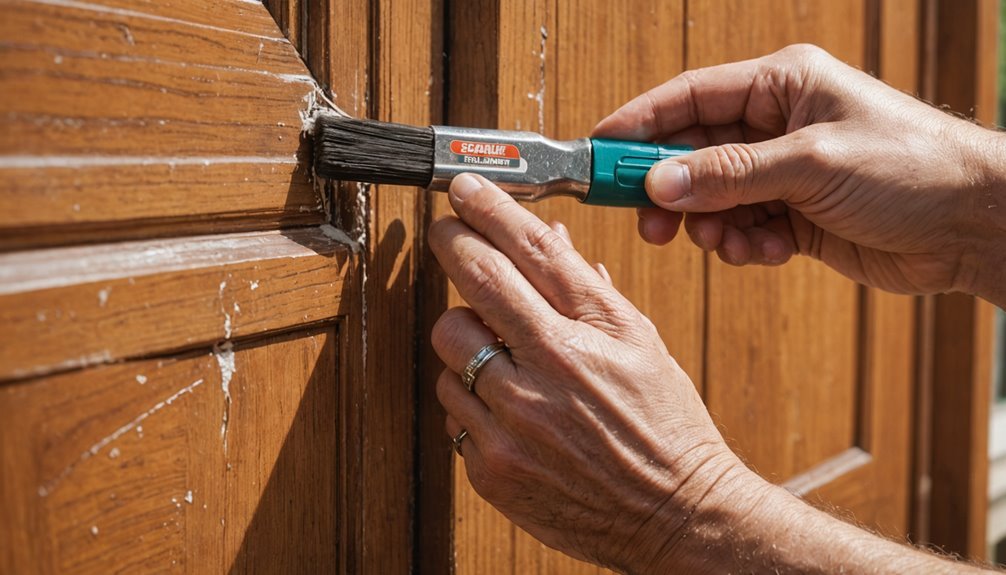
Even small cracks in your foundation, walls, and floors can give termites a way in, so sealing those openings is a straightforward but critical line of defense.
Inspect both interior and exterior surfaces thoroughly, using a flashlight to spot hairline cracks and hidden gaps. Then seal every opening before termites find it first.
A flashlight and a sharp eye are your first tools, find every crack before termites do.
Focus on these four common entry points:
- Foundation cracks – Fill hairline cracks and crevices with silicone caulk, expanding foam, or cement.
- Windows, doors, and thresholds – Apply weatherstripping, door sweeps, and caulk to eliminate visible gaps and light leaks.
- Utility penetrations – Seal around pipes, wires, and vents with caulk or expanding foam, plugging larger gaps with steel wool or copper mesh first.
- Expansion and structural joints – Apply continuous sealant around slab edges and joints where different materials meet.
Reinspect regularly, since sealants and weatherstripping deteriorate and need prompt replacement.
Spot the Early Warning Signs of Termite Activity
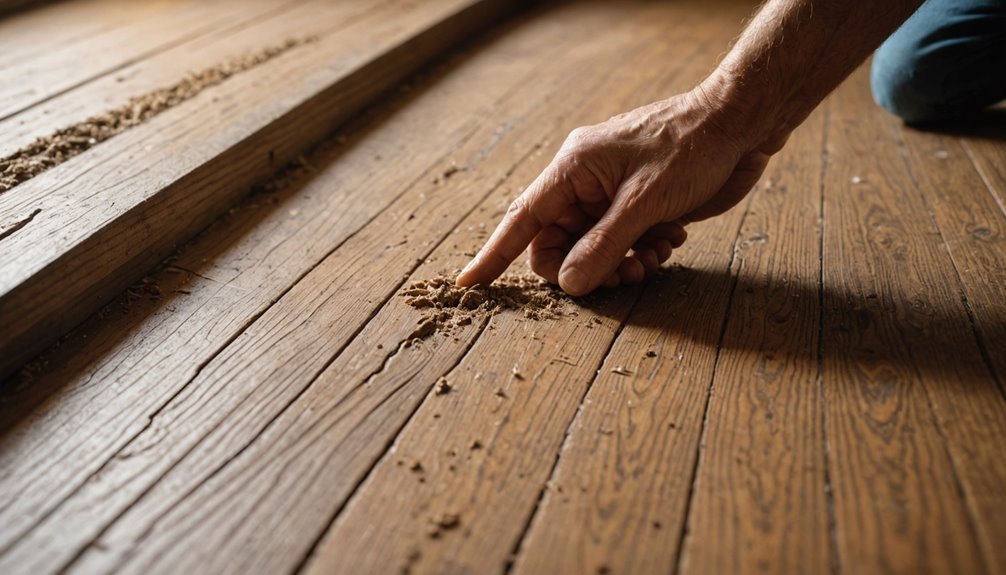
Sealing entry points keeps termites out, but knowing what to look for helps you catch an infestation before it becomes a costly structural problem. Check these five warning signs regularly:
| Warning Sign | What to Look For |
|---|---|
| Mud tubes | Pencil-sized tunnels on foundations or piers |
| Hollow wood | Tapping reveals a dull, empty sound |
| Swarmers | Winged termites or discarded wings near windows |
| Frass | Sawdust-like pellets beneath small wood holes |
| Paint changes | Bubbling or peeling without an obvious moisture source |
If you break a mud tube and see it repaired within days, the colony’s active. Floors that buckle, doors that stick, or walls that produce clicking sounds are also serious indicators. Inside swarmers signal an active infestation, not just old damage. Focus inspections on crawl spaces, sill plates, floor joists, and any wood contacting soil.
How to Treat Termites Yourself If You Find Evidence
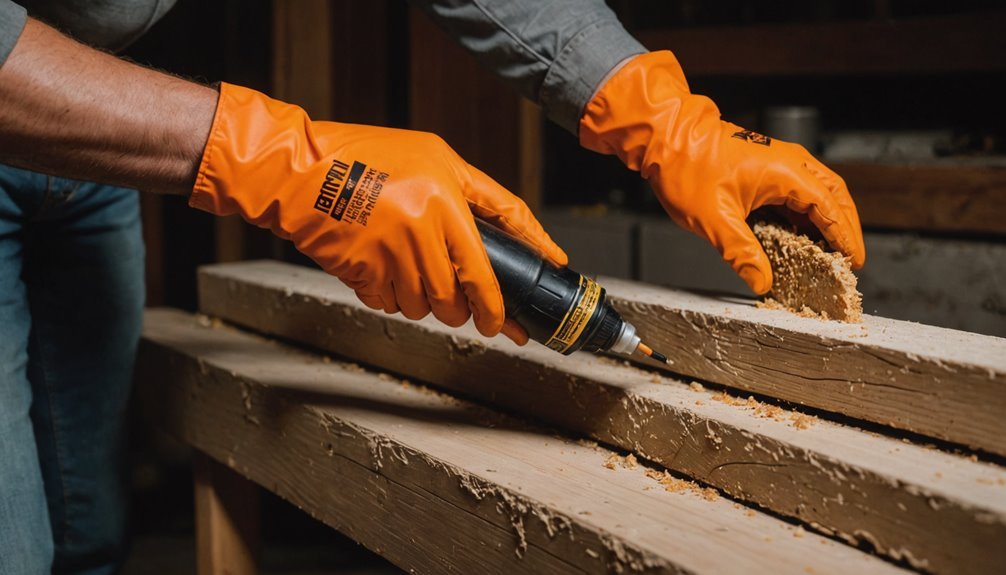
Once you’ve spotted signs of termite activity, confirm the infestation is active in wood, soil, or structural voids before reaching for any treatment product.
For mild, localized infestations, you can choose between soil termiticides like fipronil or imidacloprid for perimeter control, foams or dusts for hidden galleries, or borate products for direct wood treatment.
Always read the pesticide label first, since it’s the legal standard governing dilution rates, application methods, and safety requirements.
Confirm Termite Activity First
Before you treat for termites, you’ll need to confirm there’s actually active termite activity in your home.
Don’t waste time or money treating old damage. Look for these four key signs of a current infestation:
- Live termites or swarmer’s inside the building, or piles of discarded wings near windows and doors
- Mud tubes on foundation walls, piers, or slab edges that rebuild within a few days after you break them
- Fresh frass resembling sawdust or small wood-colored pellets near baseboards or trim
- Hollow-sounding wood when tapped, combined with visible tunneling or surface damage
Historic damage without live termites, fresh tubes, or frass may indicate a previously controlled infestation.
Confirm current activity before you take any treatment steps.
Choose Appropriate Treatment Products
If you’ve confirmed active termite activity, your next step is choosing the right treatment product for your situation.
Soil treatments using fipronil or imidacloprid work best for subterranean termites by creating a chemical barrier around your foundation.
For hidden voids and wall cavities, foams and dusts reach areas that liquid sprays can’t.
Bait stations are better suited for monitoring and long-term colony suppression rather than immediate knockdown.
Surface sprays only kill on contact and won’t reach nests buried inside wood or soil.
If you prefer lower-toxicity options, boric acid dehydrates and disables termites, while essential oils like orange, neem, and clove act as deterrents.
Match your product choice to the infestation’s location and severity for the best results.
Apply Treatments Correctly
Applying termite treatments correctly starts with confirming you’re dealing with active termite evidence before spending money on products. Look for mud tubes, hollow-sounding wood, discarded wings, or frass near baseboards and walls.
Once confirmed, follow these application steps:
- Trench the perimeter along the foundation at roughly 6 inches wide by 6 inches deep, applying termiticide at labeled rates typically 4 gallons per 10 linear feet.
- Wet soil evenly rather than saturating it, then backfill and retreat over replaced soil.
- Inject foam into voids or hidden galleries where liquid products can’t reach.
- Drill access points at cold joints, piers, or structural gaps needing soil treatment coverage.
Always read the product label before applying anything, it defines exact rates, risks, and reentry timing.
Frequently Asked Questions
How Much Does Professional Termite Treatment Typically Cost Compared to DIY Methods?
Professional termite treatment typically costs you $600–$700 on average, reaching $5,000+ for fumigation. DIY methods can save you up to 80% upfront, though they’re less reliable for active infestations.
Are Certain Geographic Regions More Prone to Termite Infestations Than Others?
Yes, you’re at higher risk if you live in warm, humid regions like the Southeast or Southwest. States like Florida, Louisiana, and Texas see the most termite pressure due to heat and moisture.
Does Homeowner’s Insurance Usually Cover Termite Damage Repairs?
Your homeowners insurance usually won’t cover termite damage repairs. Insurers classify termite infestations as a preventable maintenance issue, not a sudden accidental loss, so you’ll typically need to cover repair costs out of pocket.
How Long Does a Standard Termite Colony Take to Cause Significant Structural Damage?
A standard termite colony typically takes 3 to 8 years to cause significant structural damage to your home. However, if you’re dealing with a large or aggressive colony, you could see serious harm develop much sooner.
Can Termites Return After a Successfully Completed DIY Treatment?
Yes, termites can return even after you’ve successfully completed a DIY treatment. If you leave moisture problems, wood-to-soil contact, or nearby wood debris unaddressed, new or surviving colonies can easily reinfest your home.
Conclusion
Protecting your home from termites doesn’t have to be overwhelming. You’ve learned how to eliminate moisture problems, remove wood-to-ground contact, seal entry points, and recognize early warning signs. By staying consistent with these prevention habits, you’re making your home a much harder target. Don’t wait until you spot serious damage, start applying these DIY strategies today and keep termites from ever getting a foothold.