
How to Termite-Proof a New Build
To termite-proof a new build, start by clearing the site of wood debris and ensuring proper drainage. Use termite-resistant materials like teak or pressure-treated wood, and prevent wood-to-soil contact by maintaining clearances. Install barriers, seal utility penetrations, and manage moisture with vapor barriers and drainage systems. Ventilate crawlspaces effectively and conduct regular inspections. Understanding these steps will protect your investment and keep your building safe. Discover further insights to enhance your termite protection strategy.
Key Takeaways
- Remove all wood debris and stumps from the construction site to deter termites.
- Use termite-resistant materials like teak and pressure-treated wood for construction.
- Ensure a minimum 6-inch clearance between wood structures and soil.
- Install metal termite shields and apply liquid termiticide around foundations.
- Maintain effective drainage and ventilation to reduce moisture and prevent infestations.
Preparing Your Site for Construction: Essential First Steps
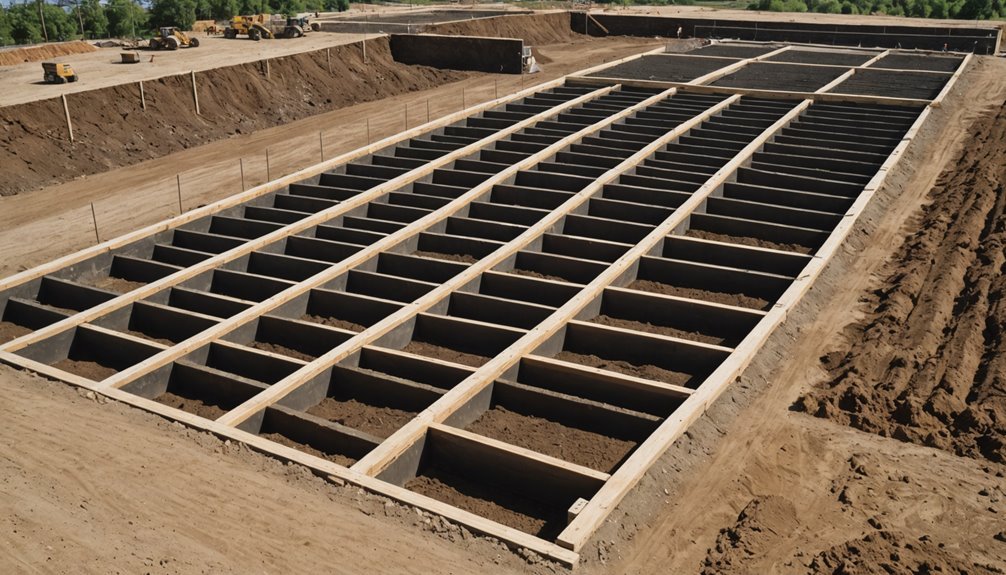
Before you begin construction, preparing your site is vital to prevent future termite problems. Start by removing all stumps, roots, logs, and wood scraps. These materials attract termites and can lead to infestations.
After construction, confirm all wooden stakes and form boards are cleared away to avoid hidden pathways for termites. During excavation, keep the area free of unfinished wood, and inspect the site thoroughly before grading to verify no wood-based materials remain.
Remove wooden stakes and form boards post-construction to eliminate concealed termite pathways.
Proper drainage is essential; grade the site to prevent water accumulation near foundations. Install gutters and downspouts to direct water away. In crawlspaces, maintain an 18-inch clearance between wood and soil, and make sure foundation vents are well-designed to prevent termite entry and allow proper ventilation.
Incorporating termite-resistant design and materials can significantly reduce the risk of infestations, especially in high-risk areas.
Choosing Termite-Resistant Materials for Your Build
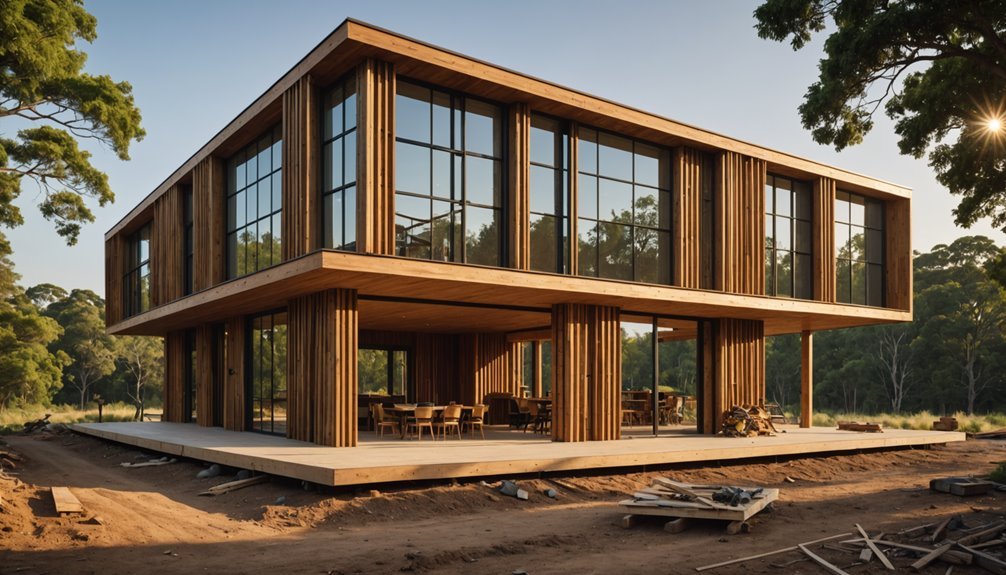
When you’re choosing materials for your new build, focus on termite-resistant options like naturally resistant timber species and composite alternatives. Consider using heartwood from species like Western red cedar or redwood, which are known for their natural defenses against pests. Additionally, composite materials such as fiber cement and wood-plastic composites offer effective protection and durability. It’s important to utilize pressure-treated wood for any materials in contact with soil to prevent termite damage.
Selecting Resistant Wood Species
Choosing the right wood species is essential to termite-proofing your new build. Opt for naturally resistant woods like teak, merbau, cedar, redwood, and cypress. Teak and merbau offer outstanding resistance, with merbau showing 0% weight loss in tests. Cedar and redwood are also smart choices to minimize termite risk in residential spaces. Pressure treated wood is another excellent option, as it creates a termite-resistant chemical barrier, which is particularly valuable in areas where the wood is near soil.
Here’s a quick comparison:
| Wood Species | Resistance Level |
|---|---|
| Teak | Resistant |
| Merbau | Very Resistant |
| Cedar/Redwood | Resistant |
Avoid species like pine, which are poorly resistant. Selecting heartwood-grade lumber can also boost durability, offering better protection. Make these choices thoughtfully, as selecting the right wood is key to keeping termites at bay in your new build.
Utilizing Composite Alternatives
While constructing a termite-resistant new build, utilizing composite alternatives can be a game-changer.
Wood-plastic composites (WPCs) and oriented strand board (OSB) offer greater resistance compared to solid wood, reducing termites’ food value. Choose materials like soy-substituted resin OSB and abaca fiber-reinforced polypropylene composites for enhanced protection.
Vinyl siding and rigid plastics eliminate cellulose, deterring termites. Consider aluminum, steel, and fiber cement for termite-resistant exteriors as they lack wood content.
Laminated and fiber boards also help reduce termite access to cellulose.
Resin formulation is essential, opt for those with zinc borate or acetylated wood flour for improved resistance.
Eliminating Wood-to-Soil Contact in Your Foundation
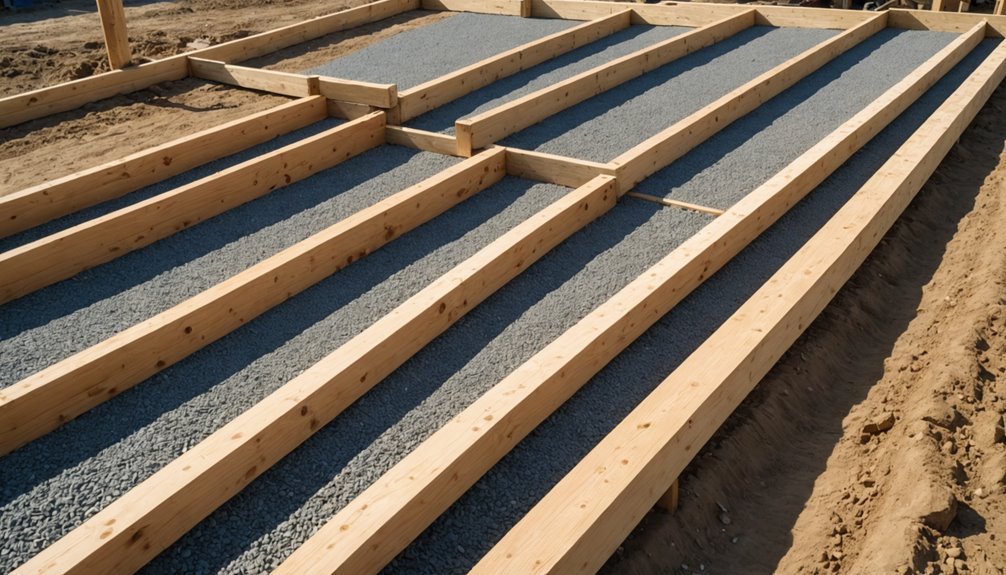
To effectively termite-proof your new build, focus on eliminating wood-to-soil contact in your foundation.
Keep wood siding, door, and window frames at least 6 inches above grade. Avoid wood touching soil at access openings, including trim and framing. Pressure-treated wood still needs clearance and shouldn’t touch soil.
Ensure wood siding, door, and window frames maintain a 6-inch clearance from soil to prevent termite access.
Remove wood form boards and stakes after the foundation cures. Clear wood scraps and debris from around the building.
Raise wooden skirting around crawlspaces to at least 8 inches above grade. Use concrete piers for deck posts and porch supports.
Separate wood from soil with post bases or standoff hardware. Install termite-proofing collars around slab penetrations.
Verify all structural wood is clear of soil to prevent termite access.
Effective Moisture and Drainage Management Techniques
To keep termites at bay, start by ensuring the ground slopes away from your foundation with a 5% grade.
Install vapor barriers beneath slabs and crawl spaces to block moisture.
Effective drainage systems, including well-maintained gutters and downspouts, will direct water away, keeping the soil dry and less appealing to termites.
Slope Grades Properly
Making certain proper slope grading is essential for effective moisture and drainage management in new builds. Start by grading the soil so it slopes away from the foundation. Aim for a 6-inch drop within the first 10 feet to prevent water from pooling near your home.
Extend this slope beyond the immediate perimeter, including patios and walkways, to direct water away. If the slope isn’t enough, consider using a drainage swale to safely channel water. Use free-draining soil for backfill to minimize moisture retention.
Confirm gutters and downspouts lead water away from the foundation, as concentrated runoff increases termite risk. Keep exterior woodwork at least 6 inches above ground and maintain proper crawl space ventilation to deter termites.
Install Vapor Barriers
Proper slope grading sets the stage for effective moisture control, and the next step focuses on installing vapor barriers. Under-slab vapor barriers block ground moisture, reducing humidity that attracts termites. Confirm the barrier is sealed to the entire slab perimeter using the manufacturer’s closure method.
In crawl spaces, use 4–6 mil polyethylene sheeting to cover about 75% of the soil, reducing soil evaporation. This installation can lower crawl-space vent requirements considerably, enhancing moisture control.
Pay attention to sealing around pipes and utilities with epoxy or mesh barriers to prevent leaks. Remember, vapor barriers are part of a broader strategy, working best when combined with other measures like soil-contact prevention and proper ventilation.
Ensure Effective Drainage
When building a termite-resistant home, managing moisture through effective drainage is essential. Start by sloping the ground away from the house, ensuring a 5% grade over at least 5 feet. This helps drain water from rain, irrigation, and snowmelt. Use drainage swales and a low-permeability soil cap to direct water away.
For roof water, install well-designed gutters and downspouts, directing discharge far from the building. Clean them regularly to maintain flow.
Implement foundation perimeter drainage with crushed stone and a perforated pipe below footing level. Add a drainage layer against the foundation wall.
| Technique | Description |
|---|---|
| Site Grading | 5% slope for 5 feet |
| Roof Gutters | Direct away from house |
| Foundation Drainage | Perforated pipes below footing |
| Swales | Route water around house |
| Soil Cap | Low-permeability, 6 feet from structure |
Installing Termite Barriers and Treatments
Before diving into the construction of your new build, it’s crucial to focus on installing termite barriers and treatments to safeguard your investment.
Start by removing stumps, roots, and wood debris from the site. Make sure woodwork is at least 6 inches above soil grade for slabs and 18 inches for crawl spaces to prevent termite access.
Install metal termite shields and stainless steel mesh barriers at key points like foundation walls and utility penetrations. Use sand barriers with precise particle sizes at the foundation’s base.
Apply liquid termiticide after slab prep and before vapor barrier installation. For utility penetrations, seal gaps with caulk or grout and use termite-proof collars.
Maintain drainage and compact backfill to keep barriers intact.
Ensuring Proper Ventilation and Monitoring
Although it might seem like an afterthought, guaranteeing proper ventilation and monitoring in your new build is essential for termite prevention.
Start by ventilating crawlspaces with at least 1 square foot of vent per 500 square feet, placing vents within 36 inches of corners to avoid dead air. Cross-ventilation with openings on opposite sides enhances airflow, while exhaust fans and dehumidifiers manage indoor moisture.
Regularly check for plumbing leaks and guarantee condensation lines discharge outside. Keep vents clear of debris and overgrown plants to maintain airflow.
Monitor crawlspaces for musty odors and inspect vent screens for blockages. Proper drainage, with downspouts directing water away, complements ventilation, minimizing moisture that attracts termites.
Why Worry About Termites? Understanding the Threat
Termites pose a significant threat to your property, causing extensive damage that often remains hidden until it’s severe. These wood-destroying insects feed from the inside out, leaving a deceptive outer shell.
In the U.S., termite damage costs about $5 billion annually, impacting your home’s structure, framing, floors, and walls are all at risk. Infestations can lead to warping floors, sticking doors, and compromised support beams.
Termites are hard to detect, often working unnoticed in walls and crawl spaces. Look for signs like mud tubes, discarded wings, and frass.
Even new builds aren’t immune; termites thrive in 49 states, exploiting moisture and wood-to-soil contact. Protecting your new home from termites is essential to maintain structural integrity and avoid costly repairs.
Frequently Asked Questions
How Do You Identify Early Signs of Termite Infestation?
Check for hollow-sounding wood, warped floors, and blistered paint. Notice swarmers or discarded wings near windows. Look for mud tubes, frass, and debris. Listen for clicking sounds and inspect moisture-prone areas for any signs of termites.
What Are the Costs Associated With Termite-Proofing a New Build?
You’ll find termite-proofing a new build costs between $0.50–$2.00 per square foot in the U.S. Expect to pay $1,000–$4,000 depending on home size, treatment type, and risk level. Choose the best method for lasting protection.
Can Termite-Proofing Measures Be Applied to Existing Structures?
Yes, you can apply termite-proofing measures to existing structures. Remove cellulose debris, improve drainage, seal cracks, and use chemical barriers. Verify wood-soil separation and consider professional installations like metal barriers for thorough protection against termites.
How Do Climate and Location Affect Termite-Proofing Strategies?
Climate and location impact your termite-proofing strategies by determining termite activity levels and species present. In warm, humid areas, focus on moisture control and local pest identification for effective prevention. Adjust methods based on regional conditions.
Are There Eco-Friendly Termite-Proofing Options Available?
Yes, you can use eco-friendly options like borate treatments, metal or sand barriers, and moisture control. Try low-toxicity methods like nematodes, diatomaceous earth, and botanical oils to protect your build sustainably.
Conclusion
By following these termite-proofing steps, you’re protecting your new build from potential infestations. Start by preparing the site and choosing termite-resistant materials. Eliminate any wood-to-soil contact to reduce risk. Manage moisture and drainage effectively to keep your foundation dry. Install reliable termite barriers and treatments for added defense. Guarantee proper ventilation and keep monitoring for signs of termites. Understanding the threat helps you stay proactive, safeguarding your investment for years to come.