How Fast Do Termites Spread
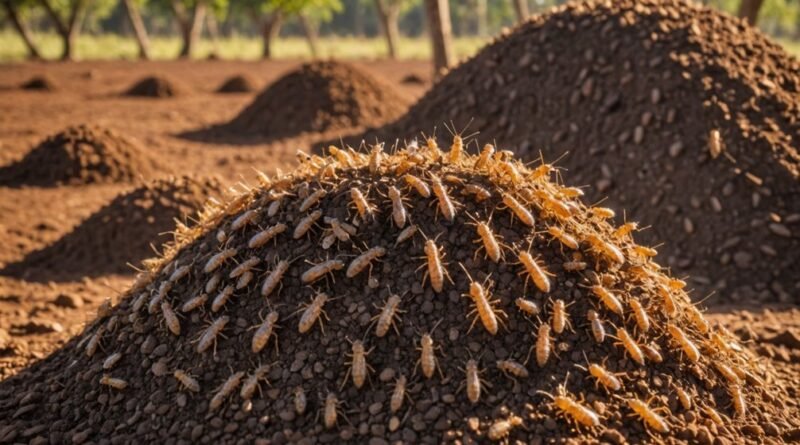
Termites can spread quickly, especially in warm, moist conditions. They use swarming to form new colonies and subterranean tunnels to infiltrate unnoticed. Their rapid reproduction means a colony can quickly grow, consuming wood and causing damage. Moisture is key, as it boosts their activity and survival. By addressing leaks and ensuring proper drainage, you can slow their spread. Want to stay ahead of these silent invaders? There’s more to uncover.
Key Takeaways
- Termites spread quickly through swarming, especially in warm and humid conditions during spring and summer.
- Subterranean tunneling and mud tubes enable undetected movement from soil to structures.
- Rapid reproduction allows colonies to grow swiftly, with queens laying thousands of eggs.
- Moist environments and direct wood-to-soil contact facilitate faster termite expansion.
- Human transport of infested materials can rapidly introduce termites to new locations.
How Termites Spread and Thrive
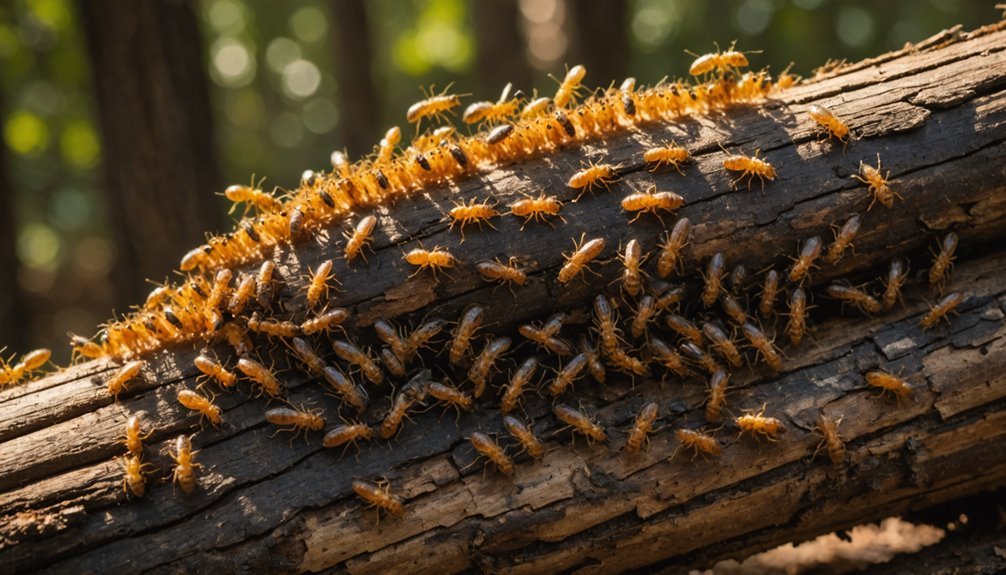
While termites might seem elusive, they spread and thrive in surprisingly efficient ways. Swarming is a key method, with winged termites leaving mature colonies during warm, moist periods, mainly in spring and summer. They use subterranean tunneling and mud tubes to move from soil into structures, often hidden and undetected. Human transport can also introduce termites to new locations through infested materials like firewood and furniture. Termites thrive in environments rich in moisture and warmth, such as areas with leaks or poor drainage. Wood-to-soil contact and abundant cellulose support their colonies. Queens lay many eggs, ensuring rapid growth. In Missouri, established colonies consume more material and spread aggressively. Social organization and pheromone communication enable efficient foraging and expansion. This complex behavior allows termites to spread quickly and quietly.
Signs of Termite Infestation to Watch For
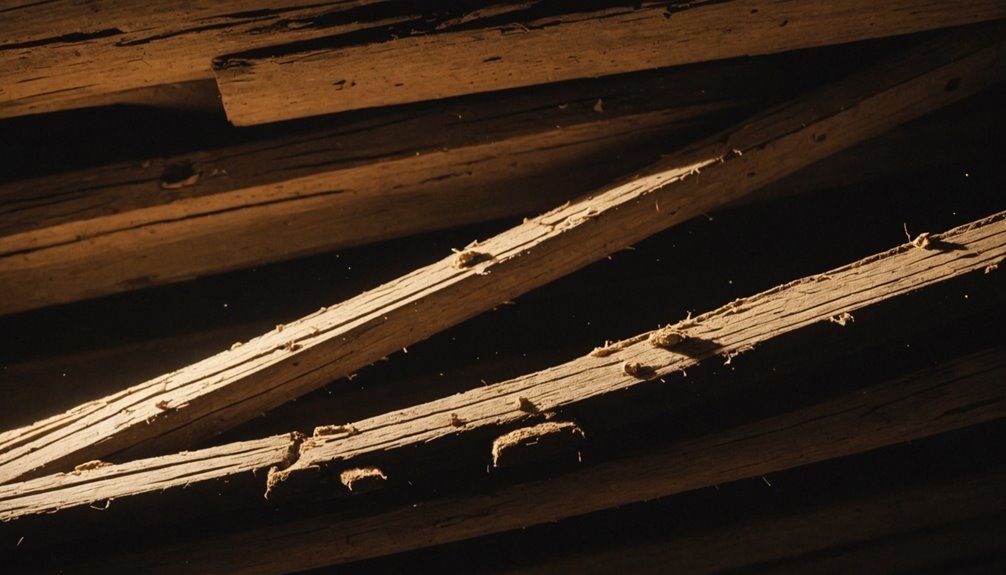
Spotting the signs of a termite infestation early can save you from extensive damage and costly repairs.
Look for pencil-sized mud tubes on foundations or walls, as they’re a clear indicator of subterranean termite activity. Break a tube; if you find live termites, it’s active.
Notice any winged termites or piles of discarded wings? These suggest an active infestation.
Check wood for hollow sounds or damage like blistered surfaces. Bubbling paint or fragile wallpaper might hide termite tunnels underneath. Annual inspections are recommended for buildings in areas known to have Formosan termites.
Frass, or tiny droppings, near small holes can also signal trouble.
Listen for faint sounds in walls, and be wary of stuck windows and doors, these might mean termites are causing warping.
Stay vigilant to protect your home.
Key Factors Influencing Termite Spread
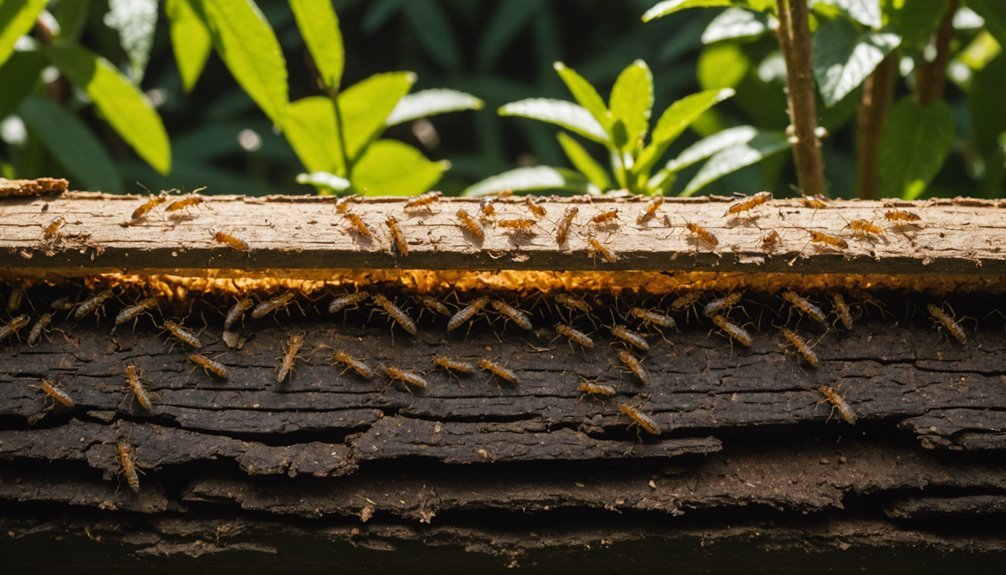
Understanding the factors that influence termite spread can help you protect your home more effectively. Termite colonies grow rapidly; a single queen can lay thousands of eggs, boosting their numbers swiftly. As colonies mature, they consume up to a pound of wood daily, increasing damage and spread. Warm temperatures and high humidity accelerate termite activity, making environments around 75°F to 95°F particularly susceptible. Furthermore, easy access to cellulose-rich food and wood-to-soil contact facilitates faster spread.
Understanding termite spread is key; a queen’s thousands of eggs rapidly expand colonies, posing significant risks.
- Rapid reproduction: Thousands of eggs increase colony size quickly.
- Climate impact: Warm, humid conditions boost activity and spread. Environmental conditions like moisture and temperature affect reproduction, significantly impacting how fast termites spread.
- Food access: Direct wood contact and abundant food sources aid expansion.
Keeping these factors in mind helps in planning effective termite prevention strategies.
Why Moisture Helps Termites Thrive
You might be surprised at how essential moisture is for termites to thrive and spread.
Moist environments not only provide the hydration termites need but also create ideal conditions for them to move and infest new areas.
Moisture’s Role in Spread
Moisture plays an essential role in termite survival and expansion. It supports colony function, enabling termites to thrive in damp environments. Even a small amount of moisture can greatly impact their ability to spread and persist.
- Termites need moisture to maintain colony health. In dry conditions, they quickly perish, while just 5% sand moisture guarantees survival.
- Moisture aids movement through soil and structures. At 1% sand moisture, termites can tunnel effectively, while 0% moisture halts their progress.
- Damp wood increases feeding efficiency. Termites find it easier to excavate and consume, which supports sustained colony growth.
Ideal Conditions for Infestation
While moisture plays a significant role in termite survival and expansion, the conditions that promote infestation are equally important. Subterranean termites thrive in moisture-rich soil, which rainfall and poor drainage can exacerbate by softening the ground.
Water-collecting areas like drains and condensation lines become hotspots for termite activity. Leaks from roofs and plumbing, along with air conditioner drips, create damp spots, attracting termites. Poor drainage leaves puddles and damp soil, fostering infestation-friendly environments.
Crawl spaces and foundation cracks offer termites access to moisture-rich zones. Blocked vents and poor ventilation increase humidity, boosting infestation risk.
Direct wood-to-soil contact and moisture-trapping materials like mulch and debris further attract termites. Keep wood piles away from buildings and maintain proper drainage to mitigate these risks.
Underground Tunnels: How Termites Spread
Subterranean termites primarily spread through extensive underground tunnels, which serve as their main travel system. These tunnels let termites reach wood without exposing themselves to air and light, allowing them to move undetected. The networks can extend up to 100 feet from the colony, supporting quick spread across properties.
Subterranean termites travel undetected through underground tunnels, extending up to 100 feet, enabling rapid property invasion.
You’ll notice:
- Mud tubes: Visible along walls, these indicate active tunneling.
- Soil contact: Cracks and utility gaps help tunnels extend into structures.
- Continuous systems: Termites can travel across long distances, making entire neighborhoods vulnerable.
Termites often spread quietly, making early detection tough. Keep an eye out for mud tubes and confirm foundations are sealed.
How Swarming Creates New Colonies
When you notice winged termites, or swarmers, they’re on a mission to start new colonies.
These events often happen during warm, humid conditions, especially after rain, signaling potential new infestations.
Swarmers’ Role in Colonies
Swarmers, or alates, play a crucial role in termite colonies by facilitating the creation of new colonies. They’re the reproductive caste, leaving the parent colony in a nuptial flight to mate. Once paired, they shed their wings and establish a new colony, becoming the king and queen.
- Dispersal: Swarmers spread termites into new areas, ensuring species expansion.
- Flight: A synchronized flight allows males and females to find mates outside the original colony.
- Colony Foundation: After mating, pairs create a small chamber in the soil to start a new colony.
Swarmers primarily come from mature colonies, signaling their readiness to expand. Their role is fundamental in spreading termites across properties, helping the species thrive in diverse locations.
Signs of Swarming Activity
As you observe swarmers leaving their colonies to start new ones, it’s important to recognize the signs of swarming activity that may indicate a burgeoning termite problem. Look for winged insects around windows, doors, or light fixtures. Discarded wings often remain near these points, signaling recent swarm events. Swarmers emerging from structures suggest an active colony inside.
| Signs of Swarming | Description |
|---|---|
| Winged insects indoors | Near windows and lights |
| Discarded wings | On windowsills and floors |
| Swarmers emerging | From walls or ceilings |
| Clustered dead swarmers | Indicate a recent swarm |
Environmental Triggers for Swarming
Although temperature alone doesn’t dictate termite swarming, rising warmth signals the start of favorable conditions for their reproductive journey.
Termites need a combination of factors to optimize swarming and colony formation. Warm temperatures, usually between 70°F to 80°F, coupled with increased humidity, create the perfect environment.
Moisture plays a vital role, with swarming often occurring 24 to 48 hours after rain, when the soil is damp, aiding dispersal and nesting.
Longer daylight hours in spring and early summer also trigger swarms, aligning with seasonal changes.
- Temperature and humidity: Ideal swarming conditions occur with a blend of warmth and moisture.
- Rainfall cues: Swarming often follows rain, enhancing moisture levels.
- Seasonal timing: Spring and early summer are prime swarming seasons.
How Environment Speeds Up Termite Spread
When it comes to termite spread, environmental conditions play an essential role in accelerating their expansion. High moisture levels, such as those from leaky pipes or damp crawl spaces, create ideal conditions for termites to thrive and travel further.
Moisture allows them to move swiftly through wood, establishing colonies in stagnant, humid areas beneath homes. Direct wood-to-soil contact offers easy access to food and moisture, speeding up infestation. Storing firewood against the house or letting mulch touch foundation walls can create bridges for termites.
Additionally, mature colonies expand faster, with thousands of workers searching for new feeding areas. Warm, humid climates further boost their activity, increasing metabolism and reproduction, leading to rapid spread across properties.
Practical Tips to Prevent Termite Spread
To prevent termite spread effectively, you need to tackle moisture problems first. Fix any leaks, clean your gutters regularly, and make certain water runoff is directed away from your home. Use dehumidifiers or vents in damp areas to keep humidity low.
Address moisture issues to prevent termites: fix leaks, clean gutters, and direct water away from your home.
Next, block wood-to-soil contact by keeping wood components off the ground and using termite-resistant materials. Elevate decks and porches to minimize risk.
Finally, remove termite food sources by keeping firewood away from your home and clearing dead wood or stumps.
- Seal entry points: Close cracks and gaps with caulk or cement.
- Inspect regularly: Check for mud tubes or hollow wood and schedule professional inspections annually.
- Maintain drainage: Ensure proper soil grading to direct water away.
Frequently Asked Questions
How Do Termites Communicate Within Their Colony?
Termites communicate using pheromones for trail following and reproductive control, tactile contact like antennal tapping for information exchange, and vibrations for alarms. You’ll see how they maintain colony cohesion and coordinate tasks effectively.
What Natural Predators Do Termites Have?
Termites face predators like ants, spiders, and birds. You’ll find aardvarks, anteaters, and pangolins targeting them too. Even nematodes and fungi act as natural enemies. Diverse threats keep termite populations in check naturally.
Can Termites Survive in Colder Climates?
Yes, termites can survive in colder climates. You’ll find that species like subterranean termites adapt by burrowing deeper into soil or retreating into heated structures. They slow metabolism and remain a threat even in winter.
How Long Do Termite Colonies Typically Last?
Termite colonies can last from 1 to over 100 years, depending on the species. You’ll find queens live the longest, driving growth for decades, while worker and soldier termites generally survive 1 to 2 years.
Are There Non-Toxic Ways to Control Termites?
You can control termites non-toxically by using boric acid, borate-treated wood, and diatomaceous earth. Employ physical barriers like steel mesh, maintain dry soil, and repair leaks to prevent infestations effectively. Regular inspections help too.
Conclusion
You’ve learned how termites spread and thrive, so it’s essential to stay vigilant. Watch for signs of infestation and remember, moisture is a termite’s best friend. Be aware of their underground tunnels and the role swarming plays in creating new colonies. Your environment can speed up their spread, so take proactive steps to protect your space. By staying informed and taking action, you can prevent termites from taking over your home.