Termite Damage to Hardwood Floors Repair
To repair termite damage to hardwood floors, first identify signs like blistering finishes or small holes. Control the termites by eliminating the colony with termiticides or bait systems. For minor damage, clean out debris and use wood filler, then sand and seal. Severely damaged boards need replacing; remove them carefully and install new ones. Finally, refinish for a seamless look by matching finishes and grain direction. Discover how to make your floors look flawless again.
Key Takeaways
- Inspect hardwood for warping, small holes, and frass to identify termite damage.
- Eliminate termite colonies using termiticides and ensure moisture control before repairs.
- Use wood filler or putty for minor damage, sanding and sealing for a uniform finish.
- Replace severely damaged boards by cutting beyond visible damage and securing new boards.
- Sand and refinish the floor, ensuring color and grain match for visual consistency.
Identifying and Addressing Termite Damage
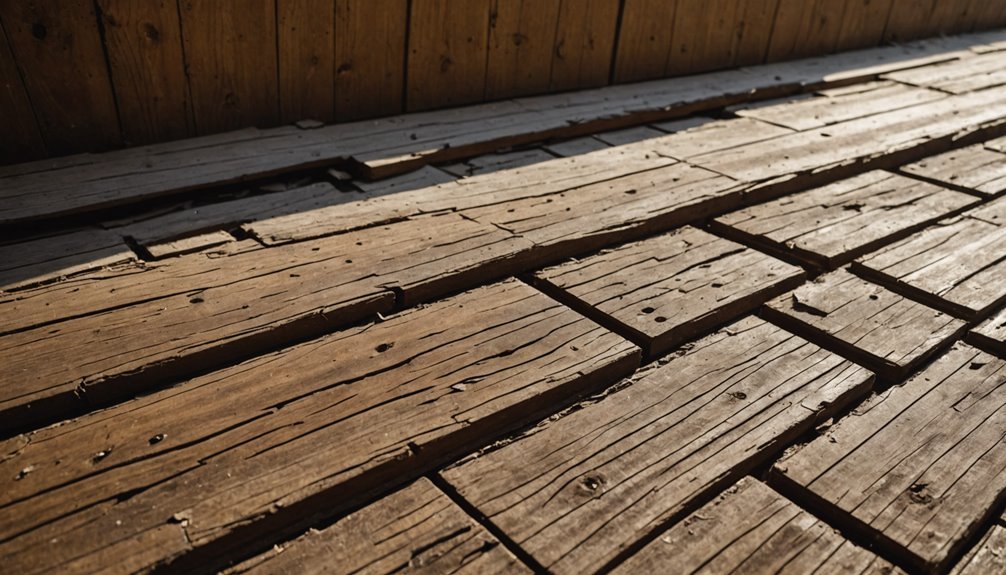
How do you spot termite damage before it becomes a major problem? Start by examining hardwood surfaces for blistering or bubbling finishes. These can indicate termites consuming wood from beneath. Look for warping or rippling boards, which are common changes caused by infestations. Notice small holes in the flooring, entry or exit points for termites. Check for frass, which looks like sawdust or tiny pellets, near damaged areas. Peeling paint near baseboards might indicate moisture-related damage. Perform sound and feel tests: tap wood with a screwdriver handle to detect hollow areas, indicating internal damage. Soft spots or springy flooring suggest weakened subflooring. Inspect structural elements like baseboards, crawl spaces, and foundations for mud tubes or visible tunnels. Regular checks can prevent extensive damage. Termites prefer softer wood components, often targeting subfloors first, making it crucial to address these signs promptly.
Control Termites Before Repairs
Spotting termite damage early is vital, but addressing the issue before repairs is even more important. You need to eliminate the termite colony first; otherwise, they’ll keep causing damage. Professional exterminators commonly use chemical termiticides and baiting systems. For drywood termites, boric acid baits or injecting pesticides into infested wood is effective. Subterranean termites often require a liquid barrier around your home. Termites avoid light, creating tunnels inside wood for protection, so it’s crucial to identify these hidden risks early on. Don’t forget moisture control, it’s a major termite attractant. Fix plumbing leaks and guarantee good drainage around your foundation. Remove any wood-to-soil contact by using concrete footers for supports and sealing cracks in your floors and walls. Regular inspections and monitoring confirm control, making sure you’re ready for repairs without the risk of further infestation.
Fixing Small Termite Damage in Your Floors
When tackling small termite damage in your floors, it’s essential to assess the extent of the problem before deciding on a repair method.
For minor damage like small holes or surface voids, options include wood filler, epoxy filler, or wood putty.
Start by cleaning out termite frass and any loose debris. Use a chisel to remove weak fibers, creating a stable surface for the filler. The area must be dry for proper adhesion. Termites can infest subflooring under laminate flooring, making it crucial to address underlying issues.
Fill the cavities completely with your chosen material, then sand the patch smooth once it’s dry. Confirm the repair blends seamlessly with the surrounding floor.
If needed, stain or seal the area to match the existing finish. This approach maintains both appearance and integrity.
How to Replace Severely Damaged Floorboards
Replacing severely damaged floorboards starts with a thorough assessment and preparation. First, identify and mark the damaged area, extending the cut line beyond visible damage. Remove or drive down any exposed nails to protect your tools. Measure the floor’s thickness and set the saw depth slightly less to avoid cutting into the subfloor.
Plan your replacement, considering the board’s profile and joinery.
To remove the damaged boards, drill starter holes, then make parallel relief cuts. Lift out the center strip, and use a chisel to pry the edges free. Stagger end joints if replacing multiple boards to maintain floor strength.
Prepare the replacement board by trimming and ensuring a tight fit. Dry fit before applying adhesive, and secure the new board properly.
Refinishing Your Floors for a Seamless Look
Achieving a seamless floor look after repairs requires meticulous refinishing. Start by thoroughly removing dust through vacuuming and tack-cloth wiping.
Sand in the grain direction using progressive grits, from coarse to fine, guaranteeing you feather-sand beyond repair boundaries for a natural blend. Pay attention to edges and corners with an edger or hand-sanding.
Match undertones and grain direction for visual harmony, and make certain the finish sheen aligns with the existing floor. Layered staining offers better control over color changes. Test spot with water to check if further refinishing is needed.
Apply thin, even coats of finish. Use oil-based for three coats or water-based for four, lightly sanding between each with 220-grit paper.
Respect drying intervals for a flawless finish.
Frequently Asked Questions
How Can I Prevent Future Termite Infestations in My Home?
Fix leaks promptly, keep areas dry, and direct rainwater away from your home. Remove wood debris, seal entry points, and maintain exterior barriers. Trim vegetation and schedule annual inspections to prevent future termite infestations.
What Are the Signs of Termite Activity in Other Areas of My Home?
You’ll notice signs like mud tubes on walls, discarded wings near windows, tiny holes in drywall, warped doors, hollow-sounding wood, and musty odors. These indicators suggest termite activity elsewhere in your home.
Is Termite Damage Covered by Homeowner’s Insurance?
Your homeowner’s insurance typically won’t cover termite damage since it’s seen as a preventable issue. However, if a covered peril like fire results from termite damage, you might get some coverage. Always check your policy details.
How Often Should I Have My Home Inspected for Termites?
You should have your home inspected for termites at least once a year. If you’re in a high-risk area or have a history of termites, consider inspections every 6 months for added protection.
What Are the Costs Associated With Professional Termite Treatment?
You’ll find termite treatment costs can vary. Typically, you’ll pay between $380 and $1,750. Factors include infestation severity and property size. Regional differences and chosen methods, like fumigation or bait systems, will affect pricing.
Conclusion
You’ve tackled termite damage head-on by identifying and controlling the pests before diving into repairs. For minor damage, simple fixes can restore your floors. When the damage is severe, replacing floorboards becomes necessary. Finally, refinishing guarantees everything looks seamless, blending old with new. By taking these steps, you’re not just repairing your hardwood floors, you’re preserving the beauty and integrity of your home for years to come. Don’t let termites win; your floors deserve the best care.