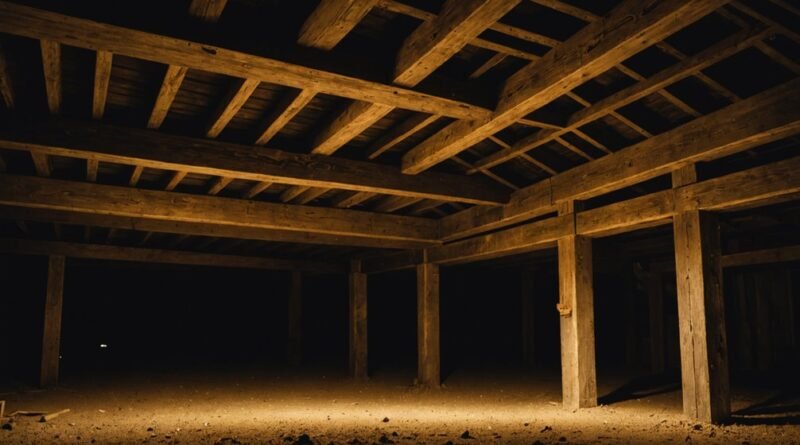
Signs of Termites in Garage
Look for termite signs in your garage by checking for mud tubes on foundation walls and listening for hollow sounds in wood. Spot tiny sand-like pellets, known as termite frass, and be aware of discarded wings near windows or lights, indicating swarming. Inspect areas prone to moisture and poor ventilation for damage. Examine cracks, gaps, and seals around doors and utility lines. Ensuring proper ventilation and wood elevation helps. Discovering these subtle hints can guide you to uncover more.
Key Takeaways
- Look for mud tubes on foundation walls or garage floors indicating termite presence.
- Tap wood for hollow sounds and check for soft, brittle areas that crumble easily.
- Identify termite frass, resembling light tan to dark brown sand-like pellets, near wood trim.
- Spot swarmers or discarded wings near light sources or window sills, signaling recent termite activity.
- Inspect for moisture-prone areas and ensure proper ventilation to deter termite attraction.
How to Identify Termite Mud Tubes
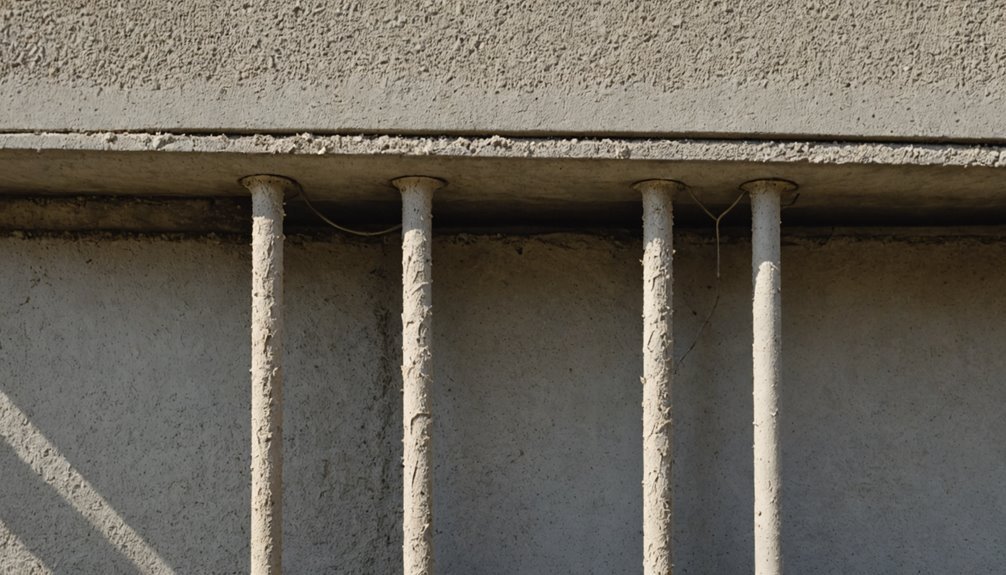
When you’re trying to spot termite mud tubes, keep an eye out for those narrow, earthen tunnels made from soil, saliva, and fecal material. These tubes are typically brown or tan, blending with nearby soil. You’ll notice their rough, crumbly texture, often about pencil-width.
Look for them on foundation walls, piers, or concrete, appearing as vertical or branching lines. Mud tubes serve to maintain temperature and humidity, which is crucial for termite survival.
Check common garage locations like along the foundation wall, expansion joints, and near utility penetrations. Inspect behind baseboards, cracks, and around weep holes.
To check if a tube is active, break a small section and see if it’s repaired in a few days. Soldier termites might emerge quickly if disturbed.
Document appearance with photos and examine nearby areas for more tubes.
Spotting Hollow and Weakened Wood
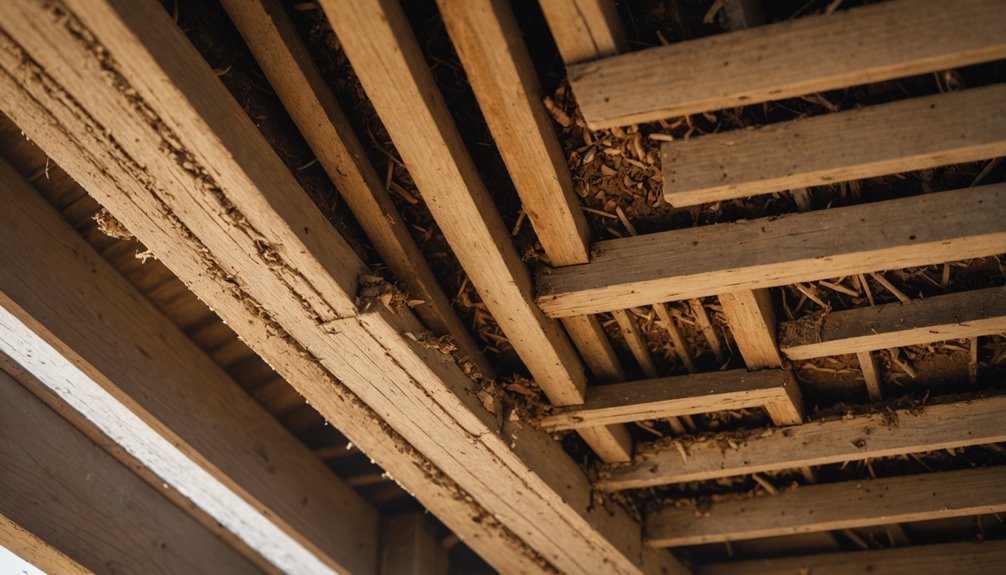
Detecting termite damage involves checking for hollow and weakened wood, a common sign of infestation.
Tap on door frames, studs, and window frames near the garage. A hollow sound indicates termites may have eaten the wood from the inside, leaving it papery and weak.
Tap on wood near the garage; a hollow sound suggests termites have hollowed it out, leaving it weak.
Soft or brittle wood that crumbles under light pressure is another giveaway. Press a screwdriver into suspect areas; if it sinks in easily, termites might be to blame.
Look for surface blisters or warping, as these can signal hidden damage. Subterranean termites often create tunnels that allow them to work from the inside out, making detection challenging until significant damage is done.
Inspect areas in contact with concrete or moisture, as they’re especially vulnerable. These signs suggest it’s time for a closer inspection.
Identifying Termite Frass and Debris
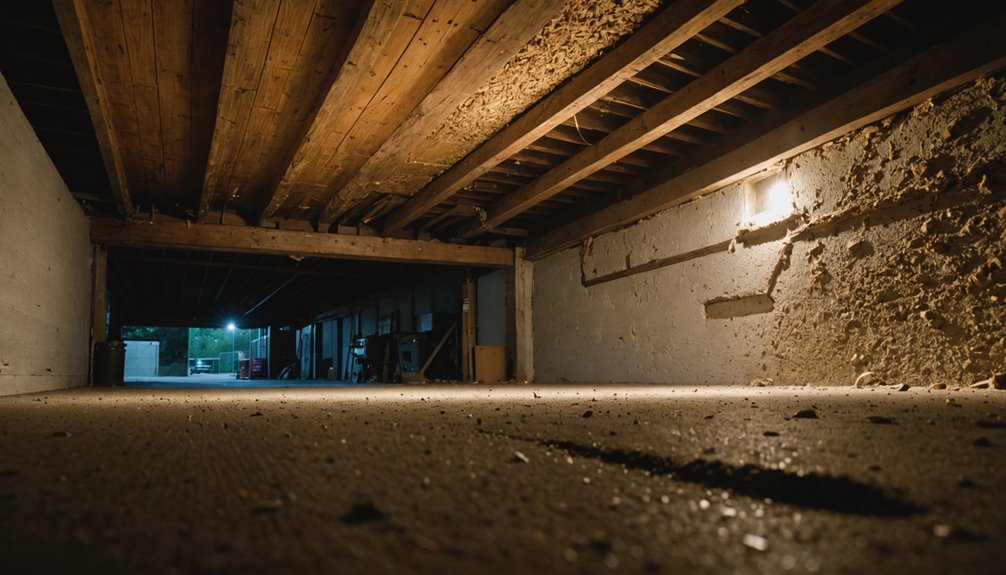
When you’re identifying termite frass, look for tiny, sand-like pellets that range from light tan to dark brown. Check quiet garage areas like wood trim or baseboards where frass might accumulate in small piles. If you notice new pellets appearing, it’s a sign of active termite activity rather than past presence. The presence of frass suggests active termite nests nearby, indicating the need for immediate attention to prevent further infestation.
Recognizing Termite Pellet Appearance
Spotting termite pellets, also known as frass, is essential for identifying termite activity. These tiny droppings are usually about 1 millimeter long, taking on an oval to barrel-like shape with rounded ends and six concave sides.
You’ll notice their texture is hard, dry, and granular, unlike powdery dust. When you roll them between your fingers, they feel gritty, similar to coarse sand or fine wood shavings.
Pellets vary in color, ranging from light brown or tan to dark brown or nearly black. Their appearance often resembles coffee grounds, pepper, or sawdust, but unlike these, frass forms small, uniform piles of distinct pellets.
Recognizing these specific features helps distinguish termite frass from ordinary garage debris.
Locating Frass Accumulation Areas
Ever wondered where termite frass might accumulate in your garage? Knowing where to look can help you spot these unwelcome signs early. Frass, the tiny pellets termites leave behind, often collects in specific areas.
- Wooden studs: Check below infested sections.
- Garage walls: Look for visible droppings here.
- Door and window sills: Small piles may appear from upper wood members.
- Trim and baseboards: Debris can trap where termites are active.
- Attached porches: Frass may shed into adjacent areas.
Pay attention to high-probability spots like cracks in drywall or behind stored items.
Look upward from any pile you find to trace the source. Consistent frass accumulation signals active infestation, so regular inspection is key.
Assessing Ongoing Termite Activity
Having pinpointed areas where termite frass tends to accumulate, it’s vital to identify and assess ongoing termite activity. Look for tiny, six-sided pellets that resemble coffee grounds or fine sand. If you notice recurring piles after cleanup, it indicates active termites. Fresh accumulations near wood surfaces or kick-out holes are strong signals of a nearby colony.
| Feature | Indicator of Termites |
|---|---|
| Pellet Shape | Six-sided, uniform |
| Color | Tan to black |
| Texture | Hard, dry |
| Debris Pattern | Recurring, fresh |
| Location | Near wood surfaces |
Reappearing pellets and fresh debris suggest continued feeding. Differentiating termite frass from other debris is important. If frass keeps returning or appears with other signs like exit holes, consider a professional inspection.
Recognizing Swarmers and Discarded Wings
Recognizing termite swarmers and discarded wings in your garage is essential for identifying a potential infestation. Swarmers, the flying reproductive termites, often appear near light sources during warm, humid evenings or before rain.
They’ve straight, beaded antennae and uniform tube-like bodies. Their wings are equal in length and typically brownish or grayish. After their mating flights, they shed these wings, which you might find on garage floors or window sills.
These discarded wings resemble fish scales under light.
- Swarmers prefer light sources, often gathering near garage lights.
- Termite wings are all equal in length, unlike those of ants.
- Discarded wings indicate recent swarming events.
- Swarmers have straight bodies, unlike ants with pinched waists.
- Beaded antennae distinguish swarmers from ants.
Detecting Paint and Surface Abnormalities
While it might seem like simple water damage, paint and surface abnormalities can often signal termite activity. Termites can cause bubbling, peeling, or blistered paint by trapping moisture between the wood and paint.
Bubbling or peeling paint might indicate termites trapping moisture beneath the surface, mimicking water damage.
You might notice uneven textures as termites hollow out wood beneath. Watch for tiny pinholes or exit holes in painted surfaces, which can indicate termites have eaten through the wood or drywall.
Discoloration resembling water damage, such as brownish stains, is another red flag. Termite activity can also warp, buckle, or dent painted areas, creating visible deformations.
Cracking or flaking around trim and baseboards can be early signs, especially if paired with a hollow sound when tapped. These clues may reveal hidden termite damage.
Where to Check for Termites in Your Garage
When checking for termites in your garage, focus on common inspection areas and high-risk entry points.
Start by examining the garage perimeter and foundation for mud tubes and gaps where termites might enter.
Don’t forget to inspect door frames, baseboards, and around plumbing for any signs of termite activity.
Common Inspection Areas
A thorough termite inspection of your garage involves several key areas you shouldn’t overlook.
Start with the inside perimeter, moving storage away from walls to expose hidden activity. Inspect the base of foundation walls for mud tubes and check cracks between the slab and wall. Look for shelter tubes along the floor line, and scan the entire foundation wall for signs of termite movement.
Don’t forget to examine the garage door frame and threshold for damage, especially at the lower sections. Stored items, exposed wood framing, and moisture-prone areas also demand attention.
- Inside perimeter walls and slab edges
- Garage door frame and threshold
- Stored items and wall-adjacent materials
- Exposed wood framing and support members
- Moisture-prone and utility-adjacent areas
High-Risk Entry Points
Identifying high-risk entry points for termites in your garage is crucial to preventing infestations. Start by examining foundation cracks and slab gaps. These can serve as direct routes for subterranean termites, especially around expansion joints and slab penetrations. Seal these with concrete caulk or patch kits.
Next, check utility line penetrations. Gaps around plumbing, electrical, and HVAC lines can be risky, especially if they connect damp soil to wall cavities. Use expanding foam or silicone caulk to seal them.
Inspect garage doors and thresholds for worn weatherstripping and damaged seals. Verify door sweeps are intact and edges close fully.
Finally, maintain vents and wall openings with fine mesh screens. Keep exterior wood elevated and away from contact zones to minimize risk.
Frequently Asked Questions
How Can I Prevent Termites From Entering My Garage?
Seal entry points with caulk and weatherstripping. Fix leaks to reduce moisture. Store items in airtight containers, not cardboard. Remove wood and debris around the garage. Apply termiticides and schedule regular inspections for effective prevention.
What Attracts Termites to Garages Specifically?
Termites are drawn to garages by moisture from leaks or poor drainage, wood touching the ground, and stored cellulose materials like cardboard. Unsealed gaps and thick mulch also create inviting habitats for these pests.
Are There Natural Methods to Deter Termites in Garages?
You can use natural methods like essential oils, diatomaceous earth, and neem oil to deter termites in garages. However, these are best for minor issues. For significant infestations, seek professional help to guarantee thorough treatment.
How Often Should I Inspect My Garage for Termites?
Inspect your garage for termites at least quarterly through self-checks, especially in humid areas. Include it in your annual professional home inspection. Look for mud tubes, damaged wood, or discarded wings to catch issues early.
Can Termites Cause Health Issues for Humans?
Yes, termites can cause health issues. You might experience respiratory problems from airborne termite dust and frass. Allergic reactions, skin irritation, and mold growth due to structural damage can also affect sensitive individuals, children, and the elderly.
Conclusion
In your garage, spotting termite signs early is essential to preventing damage. Keep an eye out for mud tubes along walls, listen for hollow sounds in wood, and check for termite frass or debris. Look for discarded wings and swarmers near windows or lights. Paint bubbling or surface abnormalities can also be clues. Regularly inspect these areas to catch any infestations early. With vigilance, you can protect your garage from termite damage.