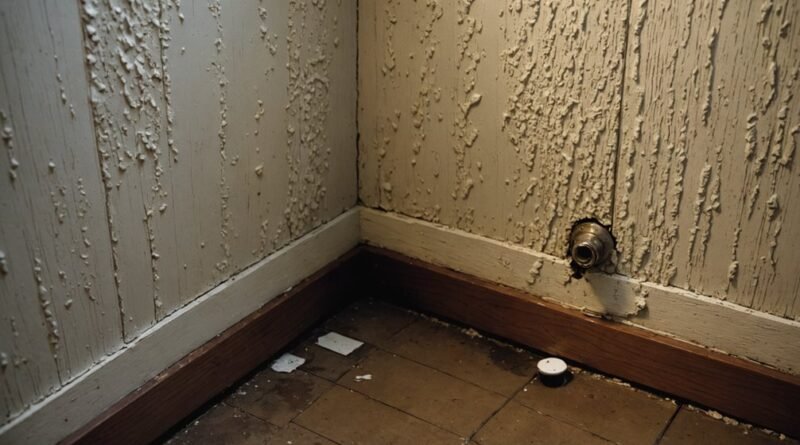
Signs of Termites in Bathroom
Spot signs of termites in your bathroom by looking for mud tubes near baseboards and plumbing, discarded wings around windows and light fixtures, and tiny frass pellets resembling sand. Check for hollow sounds when tapping wood and tiny pinholes in drywall. Listen for soft clicking noises, indicating termite activity. If you notice any of these, address moisture issues immediately, as termites thrive in damp environments. Discover more effective ways to tackle these pesky invaders.
Key Takeaways
- Look for mud tubes on baseboards, plumbing, and foundation walls indicating termite activity.
- Check for discarded wings near windows and light fixtures, signaling a nearby termite colony.
- Identify termite droppings as tiny, dry pellets resembling sand, often found near infested wood.
- Tap wood for hollow sounds and check for surface holes or tunnels following the wood grain.
- Listen for soft clicking or rustling sounds indicating termite activity within walls.
Preventing Termite Infestations in Bathrooms
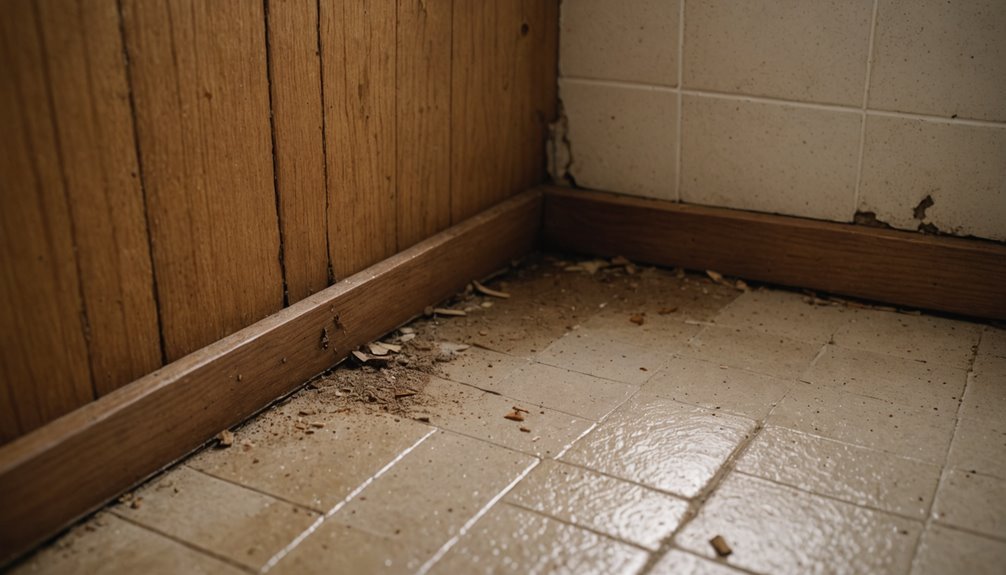
When it comes to preventing termite infestations in bathrooms, focusing on moisture control and leak prevention is essential. You’ll want to fix any plumbing leaks in sinks, faucets, and showerheads immediately. Use dehumidifiers to keep household humidity below 50 percent and install moisture alarms under sinks and near bathroom fixtures. Quickly dry any standing water around floors and drains, and guarantee proper ventilation in poorly ventilated bathrooms to reduce moisture accumulation. Since damp conditions make bathrooms ideal for termites, it’s crucial to address these moisture issues promptly. Seal entry points by caulking all cracks in bathroom tile flooring and along wall voids. Use stainless steel wool to seal pipe, vent, and drain entry points. Make sure you choose termite-resistant materials for renovations, and regularly inspect bathroom wood structures for any signs of changes or new activity.
Identifying Mud Tubes and Their Locations
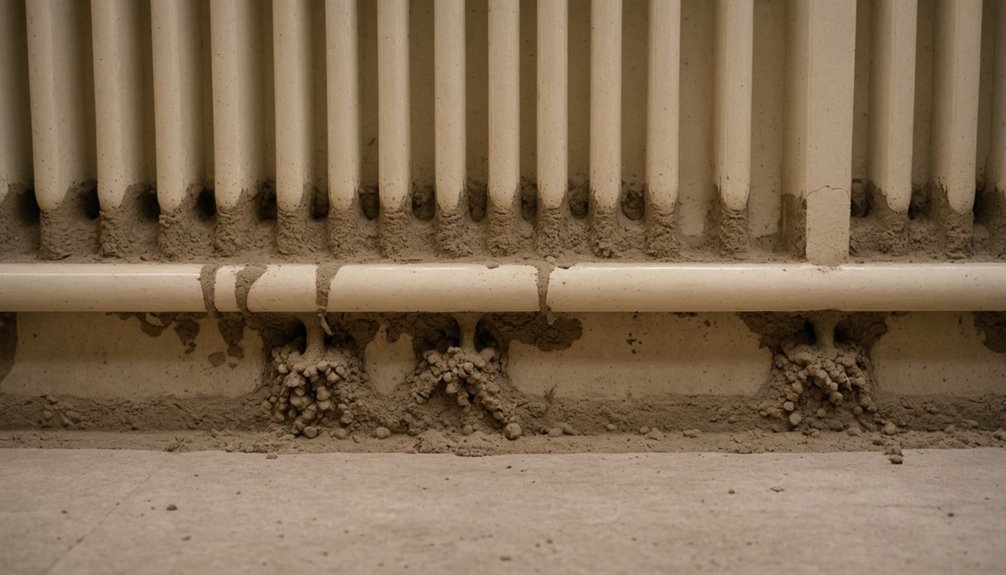
When you’re checking for termite activity, look for mud tubes around plumbing penetrations, baseboards, and utility lines in and near bathrooms. These tubes are pencil-thin and vary in color from light to dark brown, resembling dirt trails. If a tube crumbles easily or you find termites inside, it’s a strong sign of an active infestation. These mud tubes also maintain nearly 100% humidity, crucial for termite survival.
Common Mud Tube Locations
Here’s a quick reference for common locations:
| Location Type | Specific Areas |
|---|---|
| Bathroom-adjacent | Baseboards, plumbing penetrations |
| Foundation and slab | Foundation walls, cracks in concrete |
| Crawl spaces | Floor joists, plumbing lines |
| Exterior and utilities | Utility entry points, wall voids |
Termite mud tubes are essential for termites to travel between colonies and food sources, maintaining their moisture and protection needs.
Spotting Mud Tube Characteristics
Identifying mud tubes is essential in spotting termite infestations early. These tubes usually measure between 1/4 to 1 inch in diameter, often described as pencil-sized. They’ve a rough, earthy exterior made from soil, wood particles, saliva, and waste, and appear brown, tan, or gray.
You’ll find them as thin, elongated structures resembling dirt trails or small tunnels. Look for them running vertically, curving around obstacles, or horizontally along surfaces, especially in moist bathroom areas.
Active tubes feel moist and cool, while inactive ones are dry and brittle. Spotting them near baseboards, plumbing entry points, or drywall gaps can signal a serious issue.
Break a tube to check for live termites, indicating active infestation.
Recognizing Discarded Wings and Their Meaning
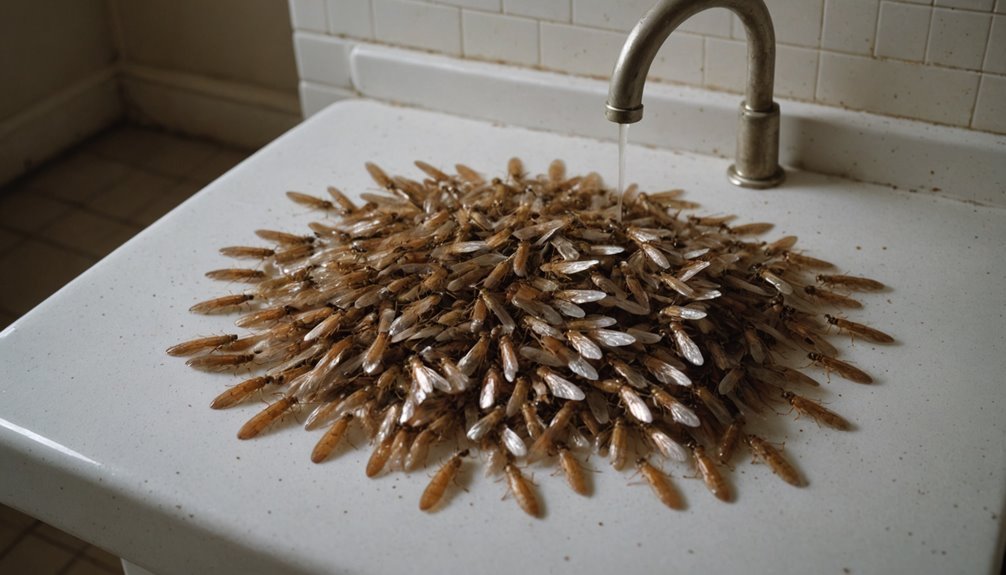
Spotting discarded termite wings can be a crucial indicator of termite activity around your home. These wings are a sign of swarming, suggesting a mature colony is nearby.
Winged termites, or alates, shed their wings after mating as they seek new colony sites. Finding wings in your bathroom might point to activity in your yard, foundation, or wall voids, not just inside.
Winged termites shed wings post-mating, signaling potential termite activity in your yard, foundation, or wall voids.
Check near windows, doors, and light fixtures since swarmers are drawn to light and often shed wings there.
Termite wings differ from ant wings as they’re equal in size and longer than the body. Discovering these wings means the colony is mature and potentially threatening your home’s structure.
Don’t ignore them; they indicate active termites establishing new nests.
Spotting Termite Holes in Drywall
When you spot tiny pinholes in your drywall, it’s a clear signal that termites might be tunneling through.
Look for paper damage around these holes, as termites often leave behind a thin, damaged layer.
Also, inspect for frass, fine, powdery dust, near baseboards, which can indicate active termite presence.
Identifying Tiny Holes
As you inspect your drywall, tiny pinholes might catch your eye, these are potential signs of termite activity.
These small round or oblong holes, often grouped in one area, are common indicators. They can appear along walls, corners, baseboards, or near windows and doors. Some termites create exit holes that are about 1/8 inch or smaller, sometimes capped with soil particles or a brown, plaster-like material.
- Look for faint lines or tunnel patterns, suggesting termites are tunneling behind the surface.
- Notice any surface changes like bubbling or blistering paint, which can occur above termite activity.
- Pay attention to hollow or weakened drywall around the holes, as tapping may produce a hollow sound, indicating internal damage.
Recognizing Paper Damage
If you’re examining your drywall, keep an eye out for signs of paper damage caused by termites. They can eat through the paper coating, leaving small pinholes or missing sections.
You might notice a blistered or roughened surface under paint or wallpaper where the paper backing is compromised. This damage often appears around baseboards, windowsills, and ceilings, especially near moisture sources.
Look for faint lines or small clusters of marks, which may indicate tunneling paths beneath the surface. Blistered areas under paint signal disruption from feeding.
Also, check for bubbling or peeling paint, as these can expose missing paper layers. Spotting these signs early is essential since the damage can occur without obvious structural collapse.
Inspecting for Frass
After examining the signs of paper damage in your drywall, it’s important to inspect for frass and termite holes.
Look for six-sided fecal pellets, known as frass, usually found in small mounds on horizontal surfaces like window sills and baseboards. These pellets resemble sawdust or coffee grounds, varying in color from light brown to black.
Kick-out holes, about 1 to 2 mm in diameter, often appear in joints and cracks. Spotting these can indicate hidden tunneling behind the wall. Use a flashlight to reveal tiny holes and frass in hard-to-see areas.
- Pin-sized holes: Early warning signs of termite activity.
- Piles of frass: Collect below kick-out holes.
- Hollow sounds: Tap walls to detect hollow areas.
Detecting Wood Damage
When trying to detect wood damage caused by termites, listen for a hollow sound when you tap bathroom baseboards, wall panels, and trim with a screwdriver handle or your knuckle. This hollow sound often means termites have eaten the wood from the inside out, leaving only a thin outer shell intact.
Check areas near plumbing, floors, and wall edges where moisture supports termite activity. Look for small holes, mud tubes, or frass nearby, which can confirm your suspicions.
Also, watch for surface holes, grooves, or tunnels following the wood grain. Warping or bubbling paint and sticking doors or windows might indicate hidden damage. Loose tiles or misaligned fixtures can also suggest weakened structures beneath.
Recognizing Sounds Indicating Termite Activity
Ever wondered what those faint noises in your walls might be? Termites can be surprisingly noisy, especially during quiet nighttime hours. You might notice:
- Soft clicking or rustling: This occurs as termites chew through wood or communicate within their colonies.
- Faint buzzing: Swarming termites can produce a subtle swarm-like sound, often paired with piles of discarded wings.
- Hollow thuds: Tapping suspect wood might reveal hollow sounds, indicating termites have been busy inside.
These sounds are more noticeable when the house is quiet, and using a stethoscope or your phone’s microphone can help amplify them.
Identifying Termite Swarms at Entry Points
While the sounds of termites can alert you to their presence, spotting termite swarms at entry points provides visual confirmation of an infestation.
Check windowsills and door thresholds for piles of delicate wings, a telltale sign of recent swarming. Winged termites, attracted to light, often gather near light fixtures or lamps, leaving behind clues.
Look for entry hotspots like gaps around pipes or wires. Remember, termites have straight antennae and equal-length wings, unlike ants.
Structural clues such as mud tubes on foundations and bubbling paint can indicate entry routes and damage. Inspect foundation edges, crawl spaces, and areas around plumbing lines where swarm activity often begins.
Confirm termite identity and schedule a professional inspection if necessary.
What to Know About Termite Droppings
Termite droppings, or frass, are a key indicator of termite activity that you shouldn’t ignore.
These tiny, dry pellets typically measure about 1 mm long and resemble grains of sand. You’ll find them in small piles near infested wood, like windowsills or baseboards. The color varies from light beige to dark brown, depending on the wood consumed.
Unlike other debris, frass is uniform, hard, and lacks any odor. Its presence signals active termites within your structure, indicating hidden wood damage.
- Distinct Shape: Oval pellets with rounded ends and six-sided sides.
- Common Locations: Near wooden trim, behind baseboards, or under damaged ceilings.
- Frass vs. Debris: More uniform and gritty than typical household dirt.
Immediate Steps After Finding Signs of Termites
Once you’ve discovered signs of termites, it’s crucial to act swiftly yet carefully to contain the problem. First, stop disturbing the area, avoid opening walls or removing wood. Instead, document everything: photograph mud tubes and damaged areas. Contain visible termites by shutting the bathroom door and using a vacuum for swarmers. Arrange a professional inspection quickly to determine the termite type and extent of infestation. Finally, reduce moisture by fixing leaks and improving ventilation.
| Action | Details |
|---|---|
| Stop Disturbance | Avoid opening walls; leave evidence intact. |
| Document Evidence | Photograph and record location of signs. |
| Contain Termites | Shut doors; vacuum swarmers; seal the room. |
| Professional Inspection | Contact licensed experts for thorough assessment. |
| Reduce Moisture | Fix leaks; improve bathroom ventilation. |
Frequently Asked Questions
How Do Termites Affect Bathroom Plumbing Fixtures?
Termites damage bathroom plumbing fixtures by invading through cracks and gaps, feeding on wooden cabinets and framing. You’ll notice loose tiles, peeling paint, or bubbling near fixtures. Regular inspections and sealing entry points help prevent infestations.
Can Termites Cause Bathroom Tiles to Loosen?
Yes, termites can cause bathroom tiles to loosen. They damage the wood or subfloor beneath, reducing support. Moisture from their activity weakens adhesive or grout, leading to movement. Check for hollow wood and other termite signs.
What Attracts Termites to Bathroom Environments?
You’re attracting termites to your bathroom with moisture and dampness. High humidity, water accumulation, and inadequate ventilation create ideal conditions. Termites thrive in these environments, feeding on cellulose materials like wood and paper, causing damage.
How Do Termite Infestations Impact Bathroom Cabinetry?
Termite infestations weaken bathroom cabinetry by hollowing out wood, causing warping, swelling, and cracks. You’ll notice doors and drawers sticking, surfaces bubbling, and a hollow sound when tapped. Moisture issues exacerbate damage, leading to structural instability.
Do Bathroom Leaks Increase the Risk of Termites?
Yes, bathroom leaks increase termite risk. You should fix leaks quickly, as moisture attracts termites. Check under sinks, around showers, and plumbing for leaks. Keep the area dry and ventilated to prevent infestations.
Conclusion
If you spot signs of termites in your bathroom, act quickly to prevent further damage. Check for mud tubes, discarded wings, and holes in drywall. Listen for unusual sounds and look for wood damage. Be aware of swarms near entry points and know what termite droppings look like. Once you identify these signs, contact a pest control professional immediately. Prompt action can save your home from costly repairs and keep your bathroom termite-free.